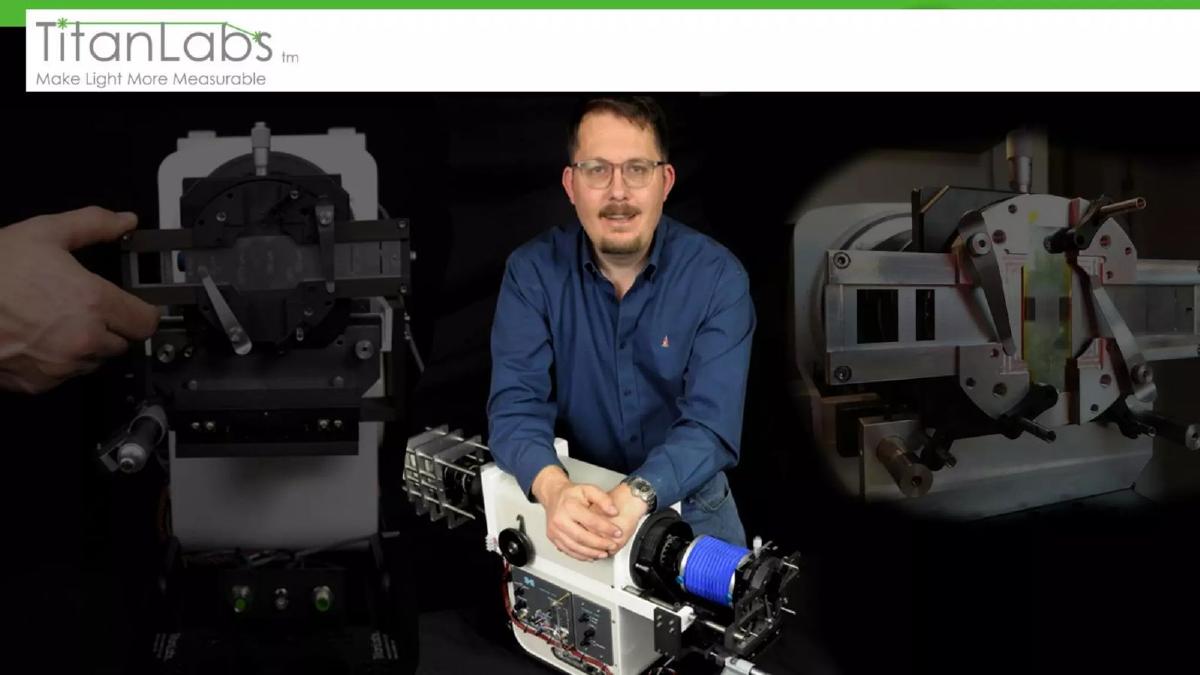
TitanLabs presents a highly technical hardware play focused on streak cameras—instruments capable of capturing optical events in femtoseconds. The deck effectively identifies a stagnant market dominated by five players and proposes a solution that improves temporal resolution to 100 femtoseconds while reducing costs via uncooled sensors. With a modest ask of $250,189 for 14% equity, the company seeks to bridge the gap to SBIR Phase II funding. While the market size is relatively small ($106.3 million globally in 2018), the deck highlights high profit margins of 30-45% and clear validation fro…
Key takeaways
- The global market for streak cameras was valued at $106.3 million in 2018, with five companies controlling 69% of the market (Slide 5).
- TitanLabs aims to achieve a temporal resolution of 100 femtoseconds in a 90ps sweep with less than 15ps jitter (Slide 3).
- Market validation includes a survey where 90% of high-energy density physicists stated that current streak cameras are too expensive (Slide 4).
- The business model projects profit margins between 30% and 45% during the first three years of production (Slide 6).
- The competitive landscape is led by Hamamatsu (17.9%) and Optronis (15.4%), with Sydor holding a monopoly in the comb generator segment (Slides 5 and 7).
- The fundraising ask is precisely $250,189 for a 14% ownership stake, implying a $1.75 million valuation (Slide 11).
- Startup costs are granularly detailed, including $117,000 for a 19-month founder salary and $87,484 for Perseus prototype parts (Slide 12).
- The roadmap targets an exit in 2024 or 2025 with a projected selling price of $20 million (Slide 11).
TitanLabs: A Deep-Dive into Ultra-High-Speed Imaging
TitanLabs operates in the highly specialized field of photonics, specifically targeting the streak camera market. This deck is a prime example of a 'hard tech' pitch where the value proposition is rooted in engineering specifications and niche market dominance rather than mass-market viral growth. The following teardown examines the 14-slide deck, which includes a title slide and a closing 'Questions?' slide, leaving 12 slides of core content.
The Technical Foundation (Slides 0-1)
The deck opens with a title slide featuring a founder and the physical hardware, immediately establishing that this is a tangible product company. Slide 1 serves as a 'What is a streak camera?' primer. This is a crucial inclusion for a specialized product. It defines the instrument as a tool for high-energy density physics and fusion energy. The footnote provides a helpful analogy for the layperson: 'A femtosecond is to a second the same as one minute is to the lifetime of the universe back to the big bang.' This sets the stage for the extreme technical requirements the company aims to meet.
Problem and Solution (Slides 2-3)
Slide 2 identifies four specific pain points in the current market: lack of ease-of-use, the trade-off between resolution and dynamic range, slow speeds, and poor cooling. By quantifying these as '4 big problems,' the founders create a checklist for their solution. Slide 3 addresses these directly, claiming a temporal resolution of 100 femtoseconds and a new class of streak camera. Notably, they mention 'Cost Advancements' through the use of an uncooled sensor, which suggests a path to higher margins or lower entry prices compared to incumbents who rely on expensive cooling systems.
Market Validation and Size (Slides 4-5)
Slide 4 provides strong social proof by naming specific physicists from SLAC and Stanford. The survey data (90% wanting more functionality, 90% citing high costs) validates the problem slide. Slide 5 tackles the market size. The global market is stated at $106.3 million for 2018. While this is small by VC standards, the deck notes that the five dominant companies enjoy 40% profit margins. This suggests a 'lifestyle' business or a highly profitable acquisition target rather than a 'unicorn' play. The mention of 17 DOE National Laboratories and CERN as customers defines a very clear, reachable B2B/B2G sales target.
Business Model and Competition (Slides 6-7)
The business model on Slide 6 is straightforward: direct sales. They project 30-45% profit margins and break down revenue by product line (Perseus, Atlas, and Hyperion). Slide 7 provides a granular look at the competition. Hamamatsu leads with 17.9%, but the market is fragmented. The most interesting note is that Sydor has a 'monopoly' on comb generators, which TitanLabs intends to disrupt with their Hyperion product. Identifying a monopoly in a sub-segment is a classic way to signal an entry point for a new competitor.
Marketing and Team (Slides 8-9)
Slide 8 acknowledges the small customer base, which allows for 'tactical and direct marketing' like direct mail and event marketing at trade shows like Photonics West. This is a realistic approach for high-ticket lab equipment. Slide 9 introduces the team. While it lists co-founders Scott Andrews and Leslie Lukesh, it is notably thin on credentials. In a field as complex as femtosecond imaging, investors typically look for PhDs or decades of specific industry experience. The lack of bios here is a missed opportunity to build technical credibility.
Milestones and Fundraising (Slides 10-11)
The roadmap on Slide 10 is dated (2018-2020), showing plans to secure angel funding, apply for SBIR grants, and start production. Slide 11 is the 'Ask.' It is unusually specific, seeking $250,189. The slide also explicitly states an exit strategy: a $20M sale in 2024 or 2025. This transparency regarding the exit is rare and indicates the founders are looking for investors comfortable with a smaller, more certain return rather than a moonshot. The valuation math is also laid out clearly, offering better terms for larger investments.
Use of Funds (Slide 12)
Slide 12 is perhaps the most honest slide in the deck. It breaks down the 'Startup costs' to the dollar. It includes $117,000 for a 19-month founder salary and specific amounts for prototype parts ($87,484 for Perseus). This level of detail builds trust; it shows the founders have a line-item budget and aren't just pulling a round number out of the air. The slide concludes by stating these funds will carry the company to Q2 2020, providing a clear 'runway' expectation.
What Works in This Deck
Granular Financials: The use of specific numbers (e.g., $250,189) and line-item expenses shows a high level of preparation and fiscal responsibility. It moves the conversation from 'what if' to 'how much.'
Market Realism: By admitting the market is only ~$100M, the founders avoid the 'TAM inflation' trap. They focus on high margins and a realistic $20M exit, which aligns with the specialized nature of the product.
Technical Clarity: The deck explains a complex piece of hardware in simple terms while still providing the 'hard' specs (100 femtoseconds, Team Pedigree: For a company claiming to build a 'new class' of scientific instrument, the lack of academic or professional bios for the founders is a significant gap. Investors need to know why this team can out-engineer Hamamatsu.
Intellectual Property Status: While Slide 12 mentions $20,000 for IP, the deck does not specify if patents are granted, pending, or merely planned. In hardware, the 'moat' is usually the IP, and this deck is vague on that front.
Current Traction: The deck mentions 'demo days' and surveys, but it does not list any Letters of Intent (LOIs) or pre-orders. Even one 'soft' commitment from a DOE lab would significantly de-risk the investment.
Founder's Guide: What to Copy
The 'Problem' Survey: Slide 4's use of a survey among target customers is a brilliant way to prove market need. If you can show that 90% of your target users agree with your problem statement, you've won half the battle.
The Exit Transparency: Most founders are afraid to talk about an exit. TitanLabs leans into it, stating a $20M goal. This attracts a specific type of 'angel' investor who prefers a 10x return on a small cap over a 100x return that never happens.
The Footnote Strategy: Using a footnote to explain a complex term (like the femtosecond analogy on Slide 1) keeps the main slide clean while ensuring the reader isn't left behind by technical jargon.
Frequently asked questions
- What exactly is a streak camera according to the deck?
- As defined on Slide 1, a streak camera is an expensive laboratory instrument used to capture and analyze optical events at high resolution within fractions of a second. It is described as the 'ultimate slow-motion camera,' capable of measuring light moving through space in nanoseconds, picoseconds, and femtoseconds. Its primary applications are in high-energy density physics, fusion energy, and weapons research.
- How does TitanLabs plan to differentiate itself from incumbents?
- TitanLabs focuses on four technical improvements: increasing speed to 100 femtoseconds resolution, improving usability through an Indexed Multiple Slit Slider, reducing costs using uncooled sensors, and enhancing performance by coupling sCMOS sensors directly to image-intensifying MCPs via tapered fiber bundles. These details, found on Slide 3, aim to solve the industry's 'slow and expensive' problem.
- What is the revenue breakdown for their product line?
- According to Slide 6, revenue is generated through direct sales of three main products. The Perseus streak cameras are expected to account for 41% of revenue, followed by Atlas streak cameras at 37%, and Hyperion comb generators at 21%. This diversified hardware approach targets different price points or technical requirements within the lab environment.
- Who are the key people involved in TitanLabs?
- Slide 9 lists Scott Andrews and Leslie Lukesh as the co-founders. The team also includes Peer Hofstra of Hofstra Group Ltd. Co. and Sophia Chen of Light Stream Labs. While the slide provides names and affiliations, it lacks specific biographical details or past successes, which is a common omission in early-stage technical decks.
- What are the specific financial terms of the investment offer?
- TitanLabs offers a tiered investment structure on Slide 11. They are seeking $250,189 in total private investment to complement a $200,000 SBIR grant. The options provided are $140k for 7% ($2M valuation), $185k for 10% ($1.85M valuation), or the full $250k for 14% ($1.75M valuation), showing a valuation discount for larger checks.