The 2014 wndrlust pitch deck presents a vision for a 'home built for fashion' that combines product aggregation with interactive, shoppable media. Targeting a millennial demographic that spends $200 billion annually, the platform aimed to solve the fragmentation of online shopping by centralizing over 600,000 e-commerce sites into a single interface. The business model relied heavily on affiliate revenue sharing (7-20% per transaction) and secondary streams like advertising and creative services. While the deck highlights significant early traction in pitch competitions—winning first place at…
Key takeaways
- The startup identifies a fragmented market with over 600,000 e-commerce sites, leading to a 'frustrating and time consuming' experience for millennials (Slide 4).
- wndrlust positions itself as a hybrid of fashion aggregation and shoppable media, allowing users to buy directly from static images and videos (Slide 5).
- The platform targets a niche millennial market (ages 16-34) that spends an estimated $200 billion per year on shopping (Slide 9).
- Revenue is primarily driven by affiliate sharing, with commissions ranging from 7% to 20% per sales transaction (Slide 11).
- Secondary revenue streams include selling sponsored content and offering content creation services to brands and retailers (Slide 12).
- The company was pre-revenue at the time of the deck, comparing itself to established players like Lyst, ShopStyle, and Farfetch (Slide 10).
- Traction is demonstrated through pitch competition wins in 2013 and 2014, rather than user metrics or sales data (Slide 13).
- The deck lacks a dedicated team slide, though it mentions a predecessor startup, aSociete.com, and provides a contact email for 'Vanessa' (Slides 3, 14).
Introduction and Brand Identity
Slide 1: Title Slide
The deck opens with the wndrlust logo, featuring a stylized lightning bolt as the 'I'. The tagline is 'SHOP DIFFERENT'. A small note at the bottom indicates this is a 'revised version' intended for viewing without a speaker, suggesting the deck is designed to be self-explanatory.
Slide 2: The Vision
Slide 2 features a high-fashion, black-and-white background image with the text 'A HOME BUILT FOR FASHION'. It includes a laptop mockup showing the wndrlust interface, which appears to be a grid-based visual discovery engine for clothing and accessories.
The Origin Story and Problem Statement
Slide 3: Humble Beginnings
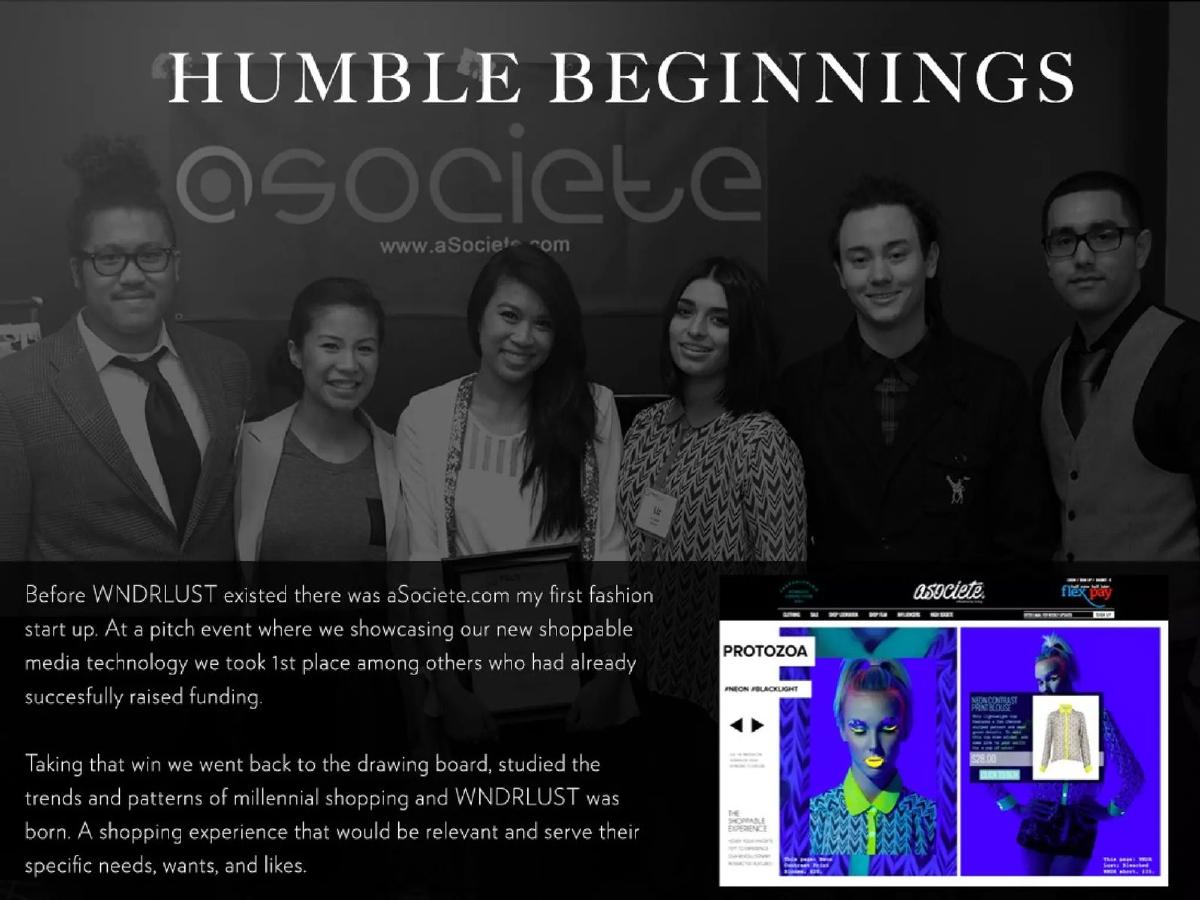
This slide provides context on the founder's background. It mentions a predecessor startup called 'aSociete.com' which focused on shoppable media technology. The slide claims this previous venture took 1st place at a pitch event against funded competitors. The text explains that wndrlust was born from studying 'trends and patterns of millennial shopping' to create a more relevant experience.
Slide 4: The Problem
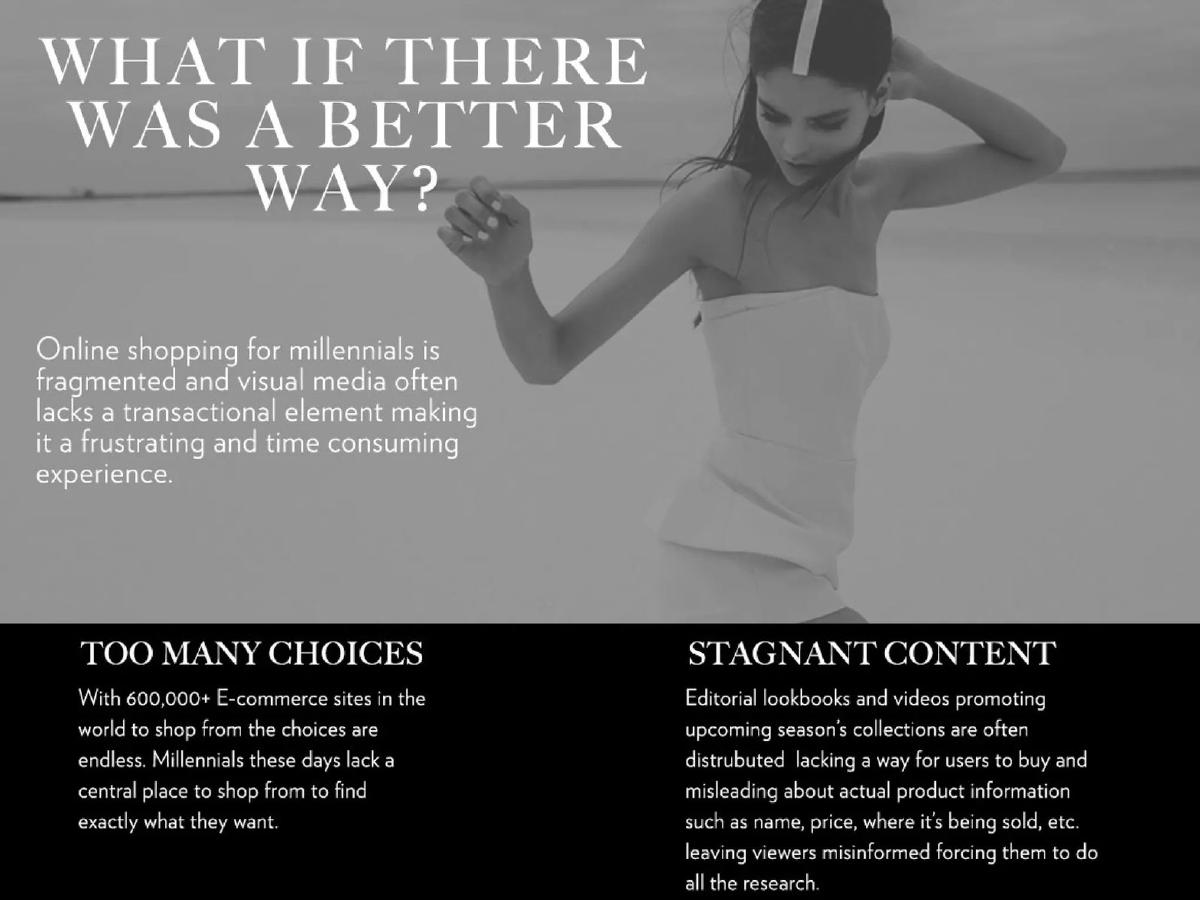
The problem is defined as fragmentation. The slide notes there are '600,000+ E-commerce sites in the world', leading to 'Too Many Choices' and a lack of a central shopping hub. Furthermore, it cites 'Stagnant Content', where editorial lookbooks and videos lack transactional elements, leaving users 'misinformed' and forced to do their own research on prices and availability.
The Solution and Product Features
Slide 5: The wndrlust Platform
The solution is presented as a simple equation: 'Fashion Aggregation + Shoppable Media'. This slide sets the stage for the technical features that follow, positioning the company as both a utility (aggregation) and an entertainment platform (media).
Slide 6: Aggregated Stores & Intuitive Filters
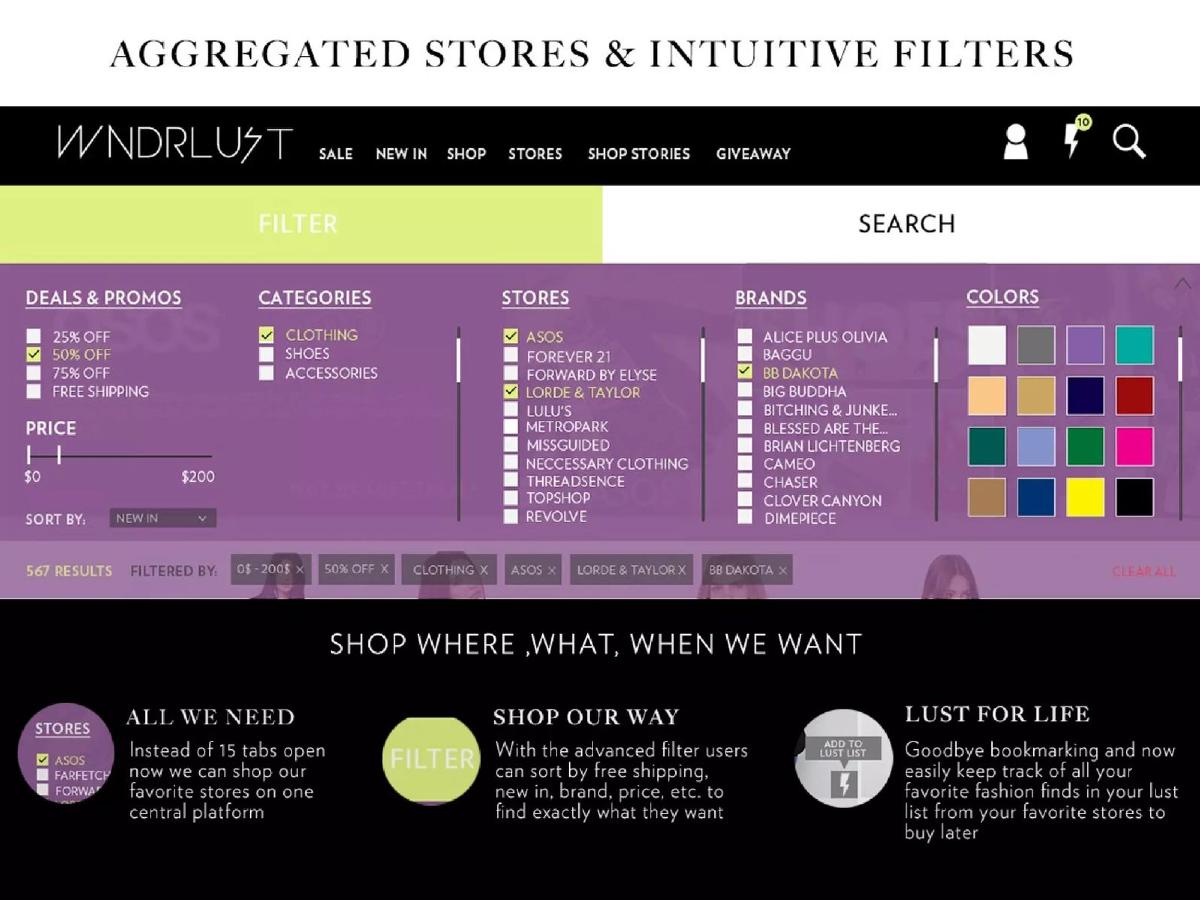
This slide showcases the UI/UX of the platform. It features a robust filtering system including 'Deals & Promos', 'Categories', 'Stores' (listing ASOS, Forever 21, Lorde & Taylor, etc.), 'Brands', and 'Colors'. The value proposition is summarized in three points: 'All We Need' (centralizing 15 tabs into one), 'Shop Our Way' (advanced filtering), and 'Lust for Life' (a bookmarking feature called a 'lust list').
Slide 7: Shoppable Images
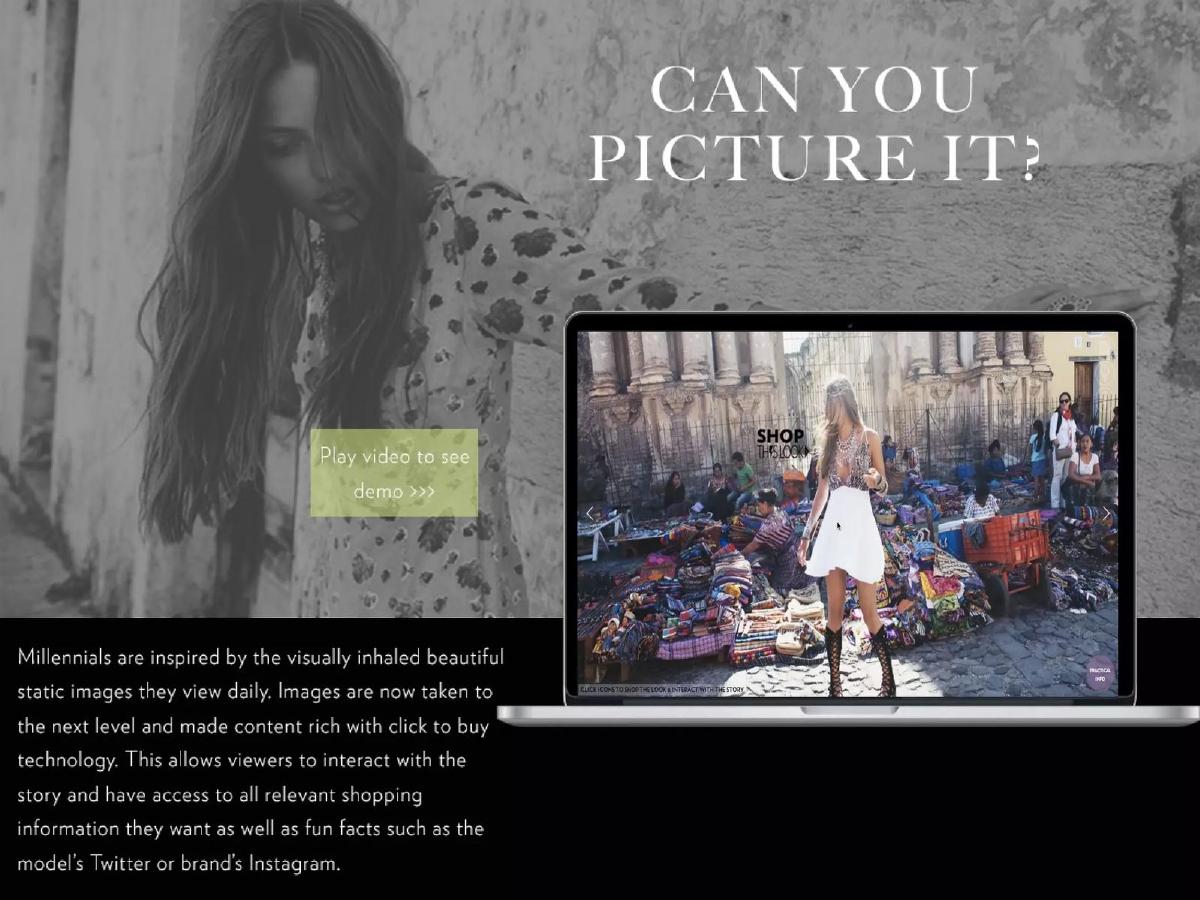
Titled 'CAN YOU PICTURE IT?', this slide explains the 'click to buy' technology for static images. It claims to take images to the 'next level' by making them content-rich, allowing viewers to access shopping info and model social media links directly from the photo.
Slide 8: Shoppable Video
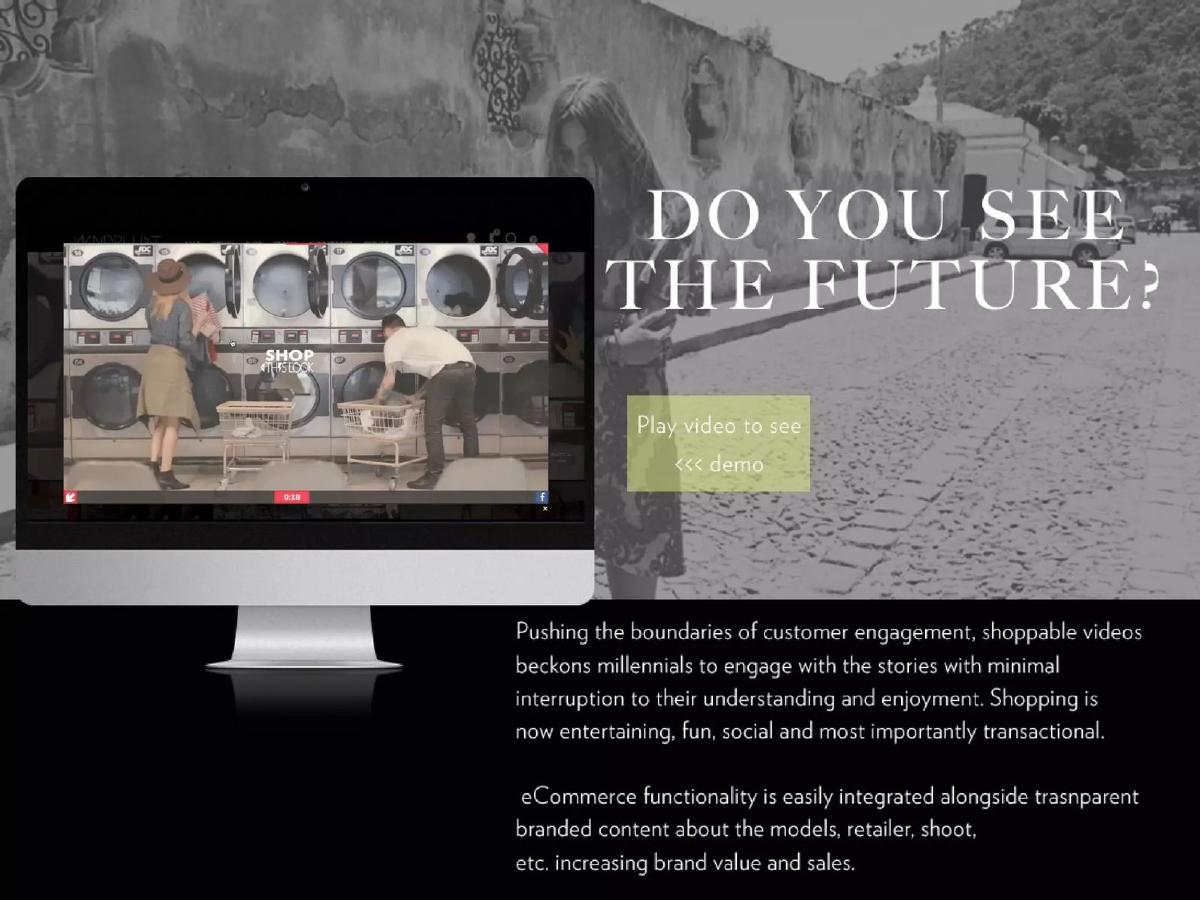
Titled 'DO YOU SEE THE FUTURE?', this slide focuses on interactive video. It describes the experience as 'transactional entertainment' that increases brand value and sales through 'transparent branded content' that doesn't interrupt the user's enjoyment of the story.
Market Opportunity and Competition
Slide 9: Target Audience
The deck identifies its target as the '80 Million Millennials' in the market. It cites a massive spending figure: '$200 Billion Per Year On Shopping'. The slide uses bold, high-contrast typography to emphasize the scale of the opportunity.
Slide 10: Competitive Landscape
Slide 10, titled 'THIS WORKS', compares wndrlust to Lyst, ShopStyle, and Farfetch. It lists their 2013 revenues and total funding amounts. wndrlust differentiates itself by being 'Pre-revenue' and focusing on a 'Niche millennial market (16-34)', whereas it claims ShopStyle targets the 35-50 demographic. This slide also contains the only mention of the fundraising intent: 'Looking to raise'.
Business Model and Roadmap
Slide 11: Revenue Model - Primary
The 'MAKING MONEY' slide details the affiliate revenue sharing model. It states a commission of '7-20% per sales transaction', noting that this varies by partner. It reiterates the $200 billion industry size.
Slide 12: Revenue Model - Secondary
Titled 'MAKE EVEN MORE MONEY', this slide outlines two additional revenue streams: 'Advertising' (sponsored content similar to Net-A-Porter or Vogue) and 'Content Creation' (offering creative services to brands to build shoppable campaigns).
Slide 13: Traction and Roadmap
March 2013: 1st place at PitchForce pitch event. · March 2014: 1st place at RECESS UOP pitch event. · May 2014: Join NYFTL (New York Fashion Tech Lab). · Summer 2014: Planned launch of wndrlust.
Slide 14: Contact Information
The final slide provides the website URL and a contact email for 'Vanessa@wndrlust.com'. It lacks a formal 'Ask' slide detailing how much capital is being raised or how it will be deployed.
What wndrlust Does Well
The deck excels at establishing a clear aesthetic that matches its target industry. The use of high-quality fashion photography and a minimalist color palette (black, white, and lime green) gives the brand a professional, 'editorial' feel. The problem statement is also well-articulated, specifically the pain point of '15 tabs open' to shop across different brands. By quantifying the millennial market at $200 billion, they successfully establish the 'Why Now' and the scale of the opportunity.
What is Missing from the Deck
The most glaring omission is a dedicated Team Slide . While the founder's previous startup is mentioned, there is no information on the current team's composition, technical expertise, or fashion industry background. Furthermore, the Fundraising Ask is extremely vague; simply stating 'Looking to raise' without a dollar amount or a use-of-funds breakdown is a missed opportunity to drive investor action. There are no Unit Economics or projections beyond the general affiliate commission percentages, and the deck lacks User Metrics or beta testing data, relying instead on pitch competition wins to demonstrate traction.
Founder Takeaways
Visual Consistency is Key: If you are building a product for a visual industry like fashion, your deck must look the part. wndrlust succeeds here by creating a deck that feels like a digital magazine. Founders should ensure their deck's design language aligns with their product's brand identity.
Differentiate by Demographic: The competitive slide (Slide 10) is a good example of how to position a new entrant against giants. By identifying a specific age gap (16-34 vs. 35-50) in a competitor's audience, wndrlust creates a 'niche' that feels defensible.
Don't Forget the Team: No matter how good the tech or the market, investors invest in people. Never skip the team slide. Even if you are a solo founder, highlight your advisors, your past wins, and why you are the specific person to solve this problem.
Be Specific with the Ask: A pitch deck is a tool for a transaction. If you don't tell investors how much you need and what you will do with it, you are leaving the conversation unfinished. Always include a slide detailing the round size, the milestones that capital will unlock, and your current runway.
Frequently asked questions
- What is the core problem wndrlust aims to solve?
- According to slide 4, the problem is twofold: online shopping for millennials is fragmented across 600,000+ sites, and visual media (like editorial lookbooks) lacks a transactional element. This forces users to do manual research to find where items are sold, creating a time-consuming and frustrating experience.
- How does the 'shoppable media' technology work?
- As shown on slides 7 and 8, the technology adds a 'click to buy' layer to static images and videos. This allows viewers to interact with the content, access product information, and see 'fun facts' like a model's social media handles without interrupting the visual experience.
- What are the primary revenue streams for the platform?
- The primary stream is affiliate revenue sharing, taking 7-20% per transaction (Slide 11). Secondary streams include advertising through sponsored content and content creation services where the startup produces shoppable marketing campaigns for brands (Slide 12).
- Who are the main competitors identified in the deck?
- Slide 10 identifies Lyst ($20M raised, $60M revenue), ShopStyle ($46M raised, $60M revenue), and Farfetch ($44M raised, $129M revenue) as competitors. wndrlust differentiates itself by targeting a younger 'niche millennial' demographic (16-34) compared to ShopStyle's 35-50 market.
- What is the current stage of the company according to the slides?
- At the time this deck was produced in early 2014, the company was 'Pre-revenue' (Slide 10). Their roadmap on slide 13 indicated a planned launch for Summer 2014, following their participation in the NYFTL (New York Fashion Tech Lab) in May 2014.