WOF (World of Freight) is a Web3 project that uses a Play-to-Earn (P2E) gaming ecosystem to bootstrap a broader industrial goal: the Supplain open supply chain standard. The deck reveals that the company successfully raised $1,000,000 via NFT sales, which they characterize as the 'new normal' for startup funding. The product suite includes vehicle NFTs with customizable stats, a functional 2D racing arena, and a secondary PFP collection called 'Freight Punks.' While the deck demonstrates significant community traction and technical delivery—citing over 10,000 races completed in a single month…
Key takeaways
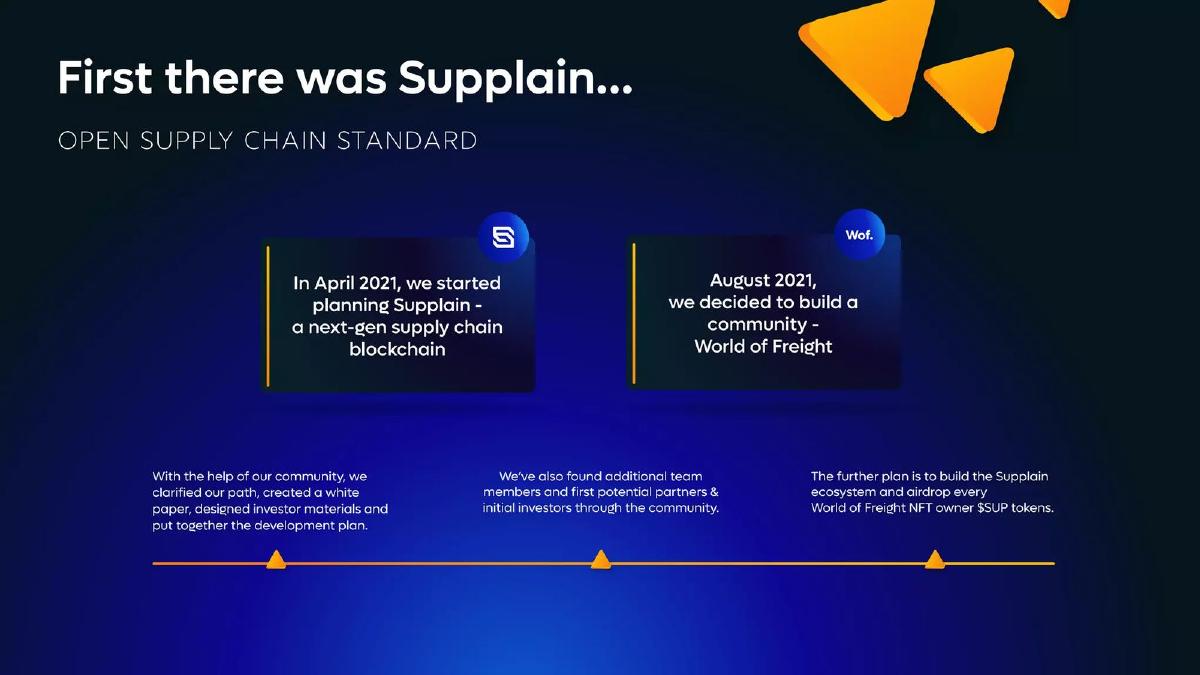
- The project originated in April 2021 as Supplain, a next-gen supply chain blockchain, before launching World of Freight in August 2021 to build a community (Slide 2).
- WOF has successfully raised $1,000,000 through NFT sales to fund the development of the Supplain protocol (Slide 3).
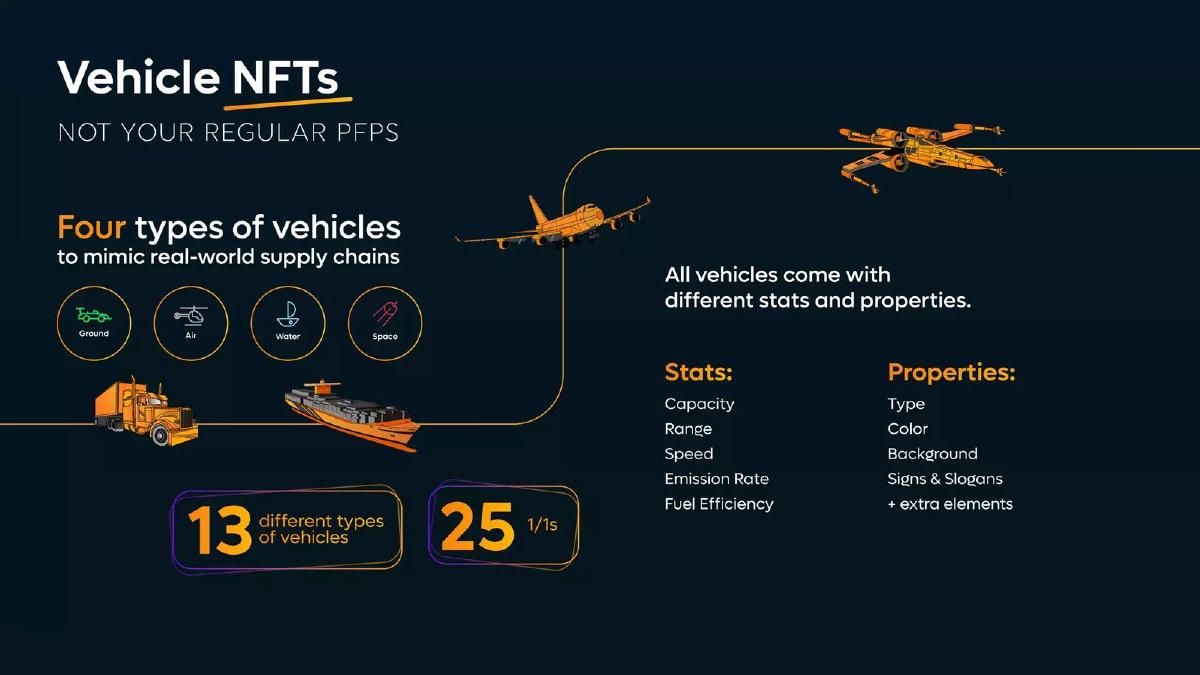
- The NFT ecosystem includes 13 different types of vehicles across ground, air, water, and space categories, featuring 25 unique '1/1' designs (Slide 4).
- Community engagement is high, with owners requesting over 7,075 stat upgrades and 425+ cosmetic customisations for their NFTs (Slide 5).
- The $WOF utility token is currently used for 'Garage' and 'Junkyard' functions, with plans to expand into paid racing, leasing, and governance (Slide 6).
- The Racing Arena is operational, featuring a strategy-based 2D game where terrain and weather affect vehicle performance (Slide 7).
- Operational milestones include reaching 10,000 races completed in a single month as of May (Slide 10).
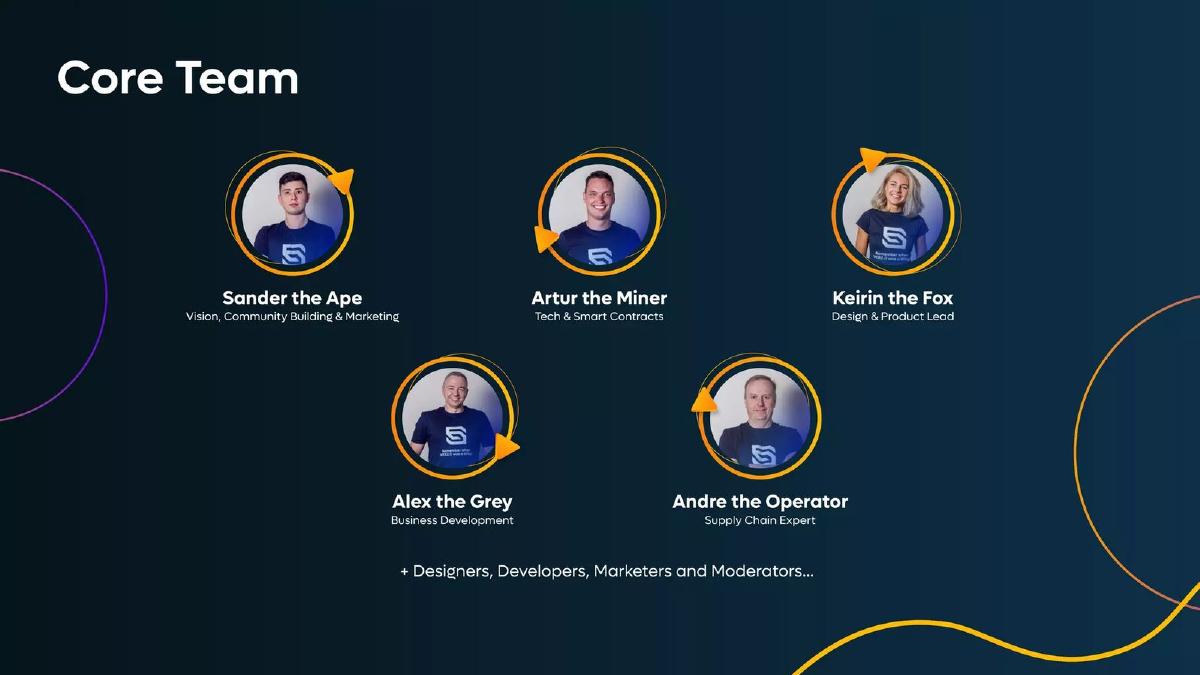
- The deck omits a team slide, competitive analysis, and a specific funding request or valuation (Slides 1-10).
WOF Pitch Deck Analysis
The WOF (World of Freight) deck represents a specific era of Web3 fundraising where the product (a game) serves as a Trojan horse for a larger infrastructure play (a supply chain protocol). This 19-slide deck—of which 10 slides are analyzed here—focuses heavily on community traction, NFT mechanics, and the successful execution of a $1,000,000 self-funding event. It is less a traditional pitch for equity and more a progress report for a decentralized ecosystem.
Slide 1: Title Slide
The cover slide establishes the visual identity of World of Freight. It features stylized illustrations of freight trucks and a cargo plane against a dark, industrial city backdrop. The subtitle 'Vehicles • P2E Game • Ecosystem' immediately categorizes the project within the Play-to-Earn gaming sector. The branding for 'WOF Labs' is visible in the bottom left corner, suggesting a corporate entity behind the decentralized project.
Slide 2: The Origin Story
Slide 2 provides the 'Why' behind the project. It reveals that the founders began planning 'Supplain'—a next-gen supply chain blockchain—in April 2021. By August 2021, they decided to build 'World of Freight' to foster a community. This slide is crucial because it frames the game not just as entertainment, but as a strategic move to find team members, partners, and initial investors. The slide notes that the ultimate plan is to airdrop $SUP tokens to WOF NFT owners, linking the gaming community to the future blockchain protocol.
Slide 3: Community and Funding
This slide contains the deck's most significant financial claim: '$ 1,000,000 raised via NFT sales.' The text explicitly states the strategy: sell vehicles, use funds to build the Supplain protocol, and reward the community via airdrops. The founders describe this as 'the new normal for startups.' The slide also lists five 'Community Building Secrets,' including radical transparency and weekly AMAs, emphasizing that their primary asset is their user base rather than just their code.
Slide 4: Vehicle NFTs
WOF moves into the product specifics here, detailing the 'Four types of vehicles to mimic real-world supply chains': Ground, Air, Water, and Space. The deck highlights variety, citing '13 different types of vehicles' and '25 1/1s' (unique, one-of-a-kind NFTs). Each vehicle is defined by five stats (Capacity, Range, Speed, Emission Rate, Fuel Efficiency) and five properties (Type, Color, Background, Signs & Slogans, plus extra elements), establishing a complex metadata structure for the game.
Slide 5: Customisable NFTs
This slide focuses on the 'upgradeable' nature of the assets. It argues that NFTs must be more than static images. The traction metrics provided are specific: '7,075+ Stat upgrades' and '425+ Background, Skin & Slogan customisations' have been requested by owners. This demonstrates an active, participating economy where users are willing to spend resources to improve their digital assets.
Slide 6: $WOF Utility
Slide 6 outlines the roadmap for the project's native token, $WOF. It uses a 'Now, Soon, Later' timeline. Current utility includes the 'Garage' and 'Junkyard.' Upcoming features ('Soon') include Paid Racing and Merch Purchase. Long-term goals ('Later') involve NFT minting, vehicle leasing, and governance. This slide attempts to show a clear path toward a circular economy where the token has constant demand.
Slide 7: Racing Arena - Operational Now
This slide proves the existence of a working product. It describes a 'Strategy-based 2D racing game' where players deliver cargo to earn $WOF. The four-step process involves picking routes, choosing vehicles based on stats, waiting for 11 other racers, and rewarding the top three. The inclusion of screenshots of the interface (showing routes like Quebec-Ottawa and Nassau-Busan) adds credibility to the claim that the game is functional.
Slide 8: Racing Arena - Next Upgrades
Looking forward, this slide lists five key technical milestones: a Bridge, Minting in $WOF, Vehicle leasing, Tournament events, and 3D Racing & Missions. A small note at the bottom asks, 'Maybe one day it will become a full Supply Chain Simulator?' This hints at the long-term convergence of the gaming mechanics with the Supplain protocol's industrial goals.
Slide 9: Freight Punks
The deck introduces a secondary NFT collection called 'Freight Punks,' described as a 'PFP project w/ special utility.' These characters (Aliens, Apes, Men, Women, Zombies) are designed to be the 'drivers' in the racing arena. The slide explains that these PFPs will collect XP, and as they gain experience, they become better racers. This is a classic 'sink' for engagement, encouraging users to hold and use multiple types of NFTs within the same ecosystem.
Slide 10: Timeline Until Now
The final analyzed slide is a dense 'What has been achieved?' timeline covering September 2021 through August 2022. Key milestones include:
March 2022: $WOF launched on Polygon. · May 2022: Reached 10,000 races done in one month and Racing Arena v3 went live. · June/July/August 2022: Introduced hotswappable upgrades and closed alpha for vehicle leasing.
This slide serves as a proof of execution, showing a consistent cadence of monthly updates and technical releases.
What Works in the WOF Deck
The WOF deck is highly effective at demonstrating traction and execution . By Slide 10, a reader is convinced that the team can build and ship software. The specific numbers—$1M raised, 10,000 races in a month, 7,000+ upgrades—provide a level of granularity that is often missing from early-stage Web3 decks. The visual style is consistent and aligns with the gaming theme, making it engaging to browse. Furthermore, the deck does a good job of explaining the 'dual-purpose' of the project: using a game to fund a protocol. This gives the project a 'North Star' beyond just speculative gaming.
What is Missing from the WOF Deck
Despite the strong product focus, the deck has several glaring omissions typical of decentralized project presentations that may struggle in traditional VC settings: 1. No Team Slide: In the 10 slides provided, there is no mention of the founders' backgrounds, previous exits, or technical expertise. Investors bet on people, and this deck leaves that variable entirely blank. 2. No Unit Economics: While they mention $1M raised, there is no breakdown of the cost to acquire a user (CAC), the lifetime value of a player (LTV), or the burn rate of the studio. 3. No Market Analysis: The deck assumes the reader understands the value of a 'next-gen supply chain blockchain' without providing data on the size of the supply chain market or the specific inefficiencies Supplain intends to solve. 4. No Competitive Landscape: There is no mention of other P2E games or other supply chain blockchain projects (like VeChain or IBM Food Trust), leaving the project's unique value proposition unanchored. 5. No Clear 'Ask': The deck functions as a status report but does not conclude with a specific funding request, valuation, or use-of-funds breakdown for a new investment round.
What Founders Should Copy
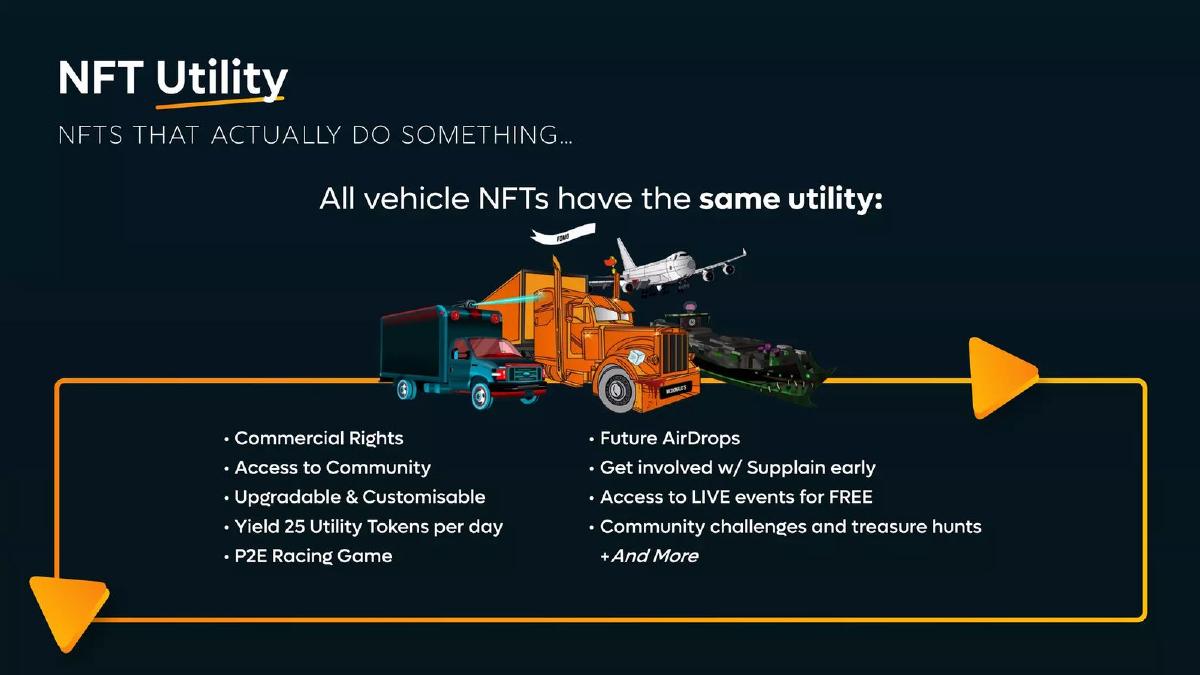
Founders should emulate the 'Proof of Work' approach seen in Slide 10. Instead of just listing future features, WOF lists what they have already built and the specific dates they were delivered. This builds immense trust. Additionally, the way WOF categorizes their NFT utility (Slide 4 and 5) is a masterclass in metadata design; they clearly explain how 'Stats' differ from 'Properties,' which is essential for any project involving digital assets. Finally, the 'Now, Soon, Later' framework on Slide 6 is a clean, effective way to communicate a roadmap without getting bogged down in specific dates that might be missed.
Frequently asked questions
- What is the relationship between WOF and Supplain?
- According to Slide 2, Supplain is the primary goal—an open supply chain standard and blockchain protocol. World of Freight (WOF) was created as a community-building layer and funding mechanism. The funds from WOF NFT sales are explicitly intended to build the Supplain protocol, and WOF NFT owners are promised $SUP token airdrops as a reward for their early support.
- How much revenue has the project generated?
- Slide 3 states that the project has raised $1,000,000 specifically through NFT sales. The deck refers to this as a 'super fair launch' and suggests that using NFT sales to fund development is a modern alternative to traditional startup fundraising. It does not list other revenue streams like transaction fees or secondary market royalties.
- What are the core gameplay mechanics of the Racing Arena?
- As detailed on Slide 7, the Racing Arena is a strategy-based 2D game. Players select real-world routes and cargo, then choose vehicles from their fleet based on stats like speed, range, and fuel efficiency. The races incorporate randomness through weather and terrain, and the fastest three racers in a 12-person heat earn $WOF rewards.
- How does the project handle NFT utility and customization?
- WOF emphasizes that their NFTs are 'not your regular PFPs.' Slide 5 shows that NFTs are upgradeable and customizable, with players paying for stat upgrades (7,075+ completed) and visual changes (425+ completed). Additionally, a separate PFP project called 'Freight Punks' provides special utility by earning XP in the racing arena to become better racers (Slide 9).
- What is the current development status of the project?
- The project is in an active growth phase. Slide 10 shows a dense timeline of achievements from September 2021 through August 2022, including the launch of the $WOF token on Polygon, the release of the Supplain white paper, and the completion of 10,000 races in a month. Future upgrades include vehicle leasing, 3D racing, and a full supply chain simulator (Slide 8).