BenRevo’s 15-slide deck is an exercise in restraint, eschewing dense text for high-impact visuals and clear narrative arcs. The presentation identifies a massive inefficiency in the health insurance procurement process—specifically the 6-14 week turnaround time—and positions BenRevo as the digital bridge between carriers, brokers, and employers. The deck’s strength lies in its 'show, don't tell' approach to product and traction. By showcasing a $600k ARR California pilot and high-profile customers like Anthem and UnitedHealthcare, the founders validated their model before asking for capital.…
Key takeaways
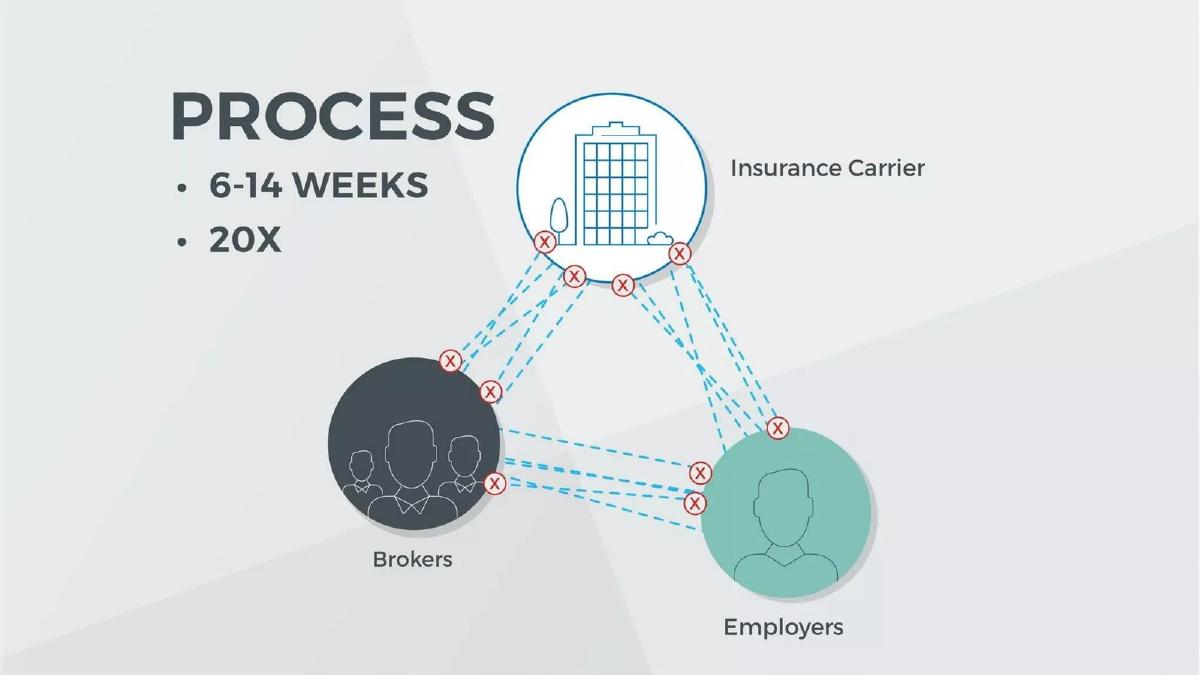
- The deck identifies a specific 'Process' pain point, citing a 6-14 week timeline and 20x inefficiency on slide 5.
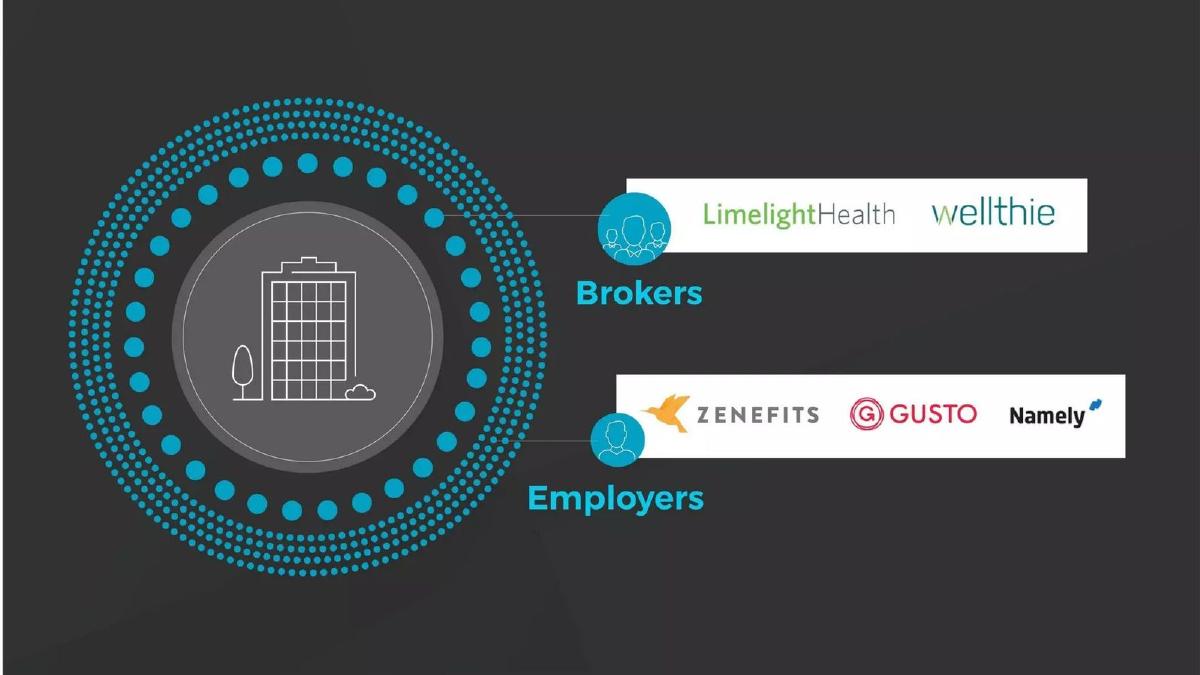
- It uses a competitive landscape visualization on slide 6 to show how existing players like Zenefits and Gusto focus on employers, leaving the carrier side underserved.
- The team slide (slide 8) leverages the TurboTax brand to imply expertise in digitizing complex, paper-heavy legacy forms.
- A product screenshot on slide 9 demonstrates a side-by-side comparison tool for medical options, including premium totals like $1,120,000.
- The core value proposition is quantified as an 80% reduction in time and work for all parties involved, as stated on slide 10.
- Traction is anchored by two major pilot customers: Anthem BlueCross and UnitedHealthcare, shown on slide 11.
- The deck reports a specific financial milestone of $600k ARR from a California-based pilot on slide 12.
- The presence of 8VC as a pre-seed investor (slide 13) serves as a powerful social proof signal for the seed round.
The Minimalist Approach to a $185B Market
BenRevo’s 2015 seed deck is a masterclass in narrative economy. In just 15 slides, the company managed to secure $2.4 million by focusing on a singular, massive pain point: the archaic way health insurance is bought and sold in the mid-market. The deck doesn't hide behind jargon; instead, it uses stark visuals and high-contrast text to highlight the absurdity of a multi-billion dollar industry still relying on technology from the 1980s. By the time an investor reaches the traction slides, the logic for a digital marketplace feels inevitable.
Slides 1-4: Setting the Scene and the Stagnation
Slide 1 is a standard title slide featuring the BenRevo logo and contact information. The background image of a modern office suggests the target environment: corporate benefits departments. Slide 2 simply states 'HEALTH INSURANCE' in large, blue block letters. This is a 'category' slide, immediately grounding the investor in the sector without distraction.
Slide 3 introduces the 'villain' of the story. With the headline 'LAST BIG INNOVATION...' and a photo of a legacy fax machine, the founders are making a pointed critique of the industry's technical debt. This sets up the 'Why Now?' argument—the industry is decades overdue for a digital transformation. Slide 4 features a headshot of a professional (presumably a founder or a persona) next to the Cigna logo, asking the central question: 'Why is the process so inefficient?' This slide bridges the gap between the general industry problem and the specific operational failures BenRevo intends to fix.
Slides 5-7: The Process Gap and Competitive Positioning
Slide 5 is one of the most important slides in the deck. It quantifies the 'PROCESS' using two metrics: '6-14 WEEKS' and '20X.' The diagram shows a broken triangle of communication between Insurance Carriers, Brokers, and Employers, with red 'X' marks indicating points of failure or friction. This visualizes the 'mess' that BenRevo intends to clean up.
Slide 6 and Slide 7 handle the competitive landscape with impressive clarity. Slide 6 shows that while companies like Zenefits and Gusto are innovating for employers, and others for brokers, the 'Insurance Carrier' remains isolated. Slide 7 then introduces BenRevo as the solution that finally integrates the carrier into the digital loop. This positioning is brilliant because it avoids claiming that Zenefits is a direct competitor; instead, it suggests BenRevo is the missing piece of infrastructure that makes the whole ecosystem work.
Slides 8-10: The Team and The Solution
Slide 8 functions as the team slide, though it focuses on pedigree rather than names. By highlighting the founders' roles as 'DEV MANAGER & LEAD DESIGNER' at TurboTax, the deck leverages a powerful analogy. TurboTax is the gold standard for turning complex government forms into a seamless digital flow. The slide uses a visual 'before and after'—showing a paper 1040EZ form transforming into a clean laptop interface—to signal that the team has done this exact work before in a different vertical.
Slide 9 provides a look at the actual product. The screenshot shows a 'Medical Options' comparison tool for a client named 'Baker Industries.' It displays side-by-side quotes from carriers like Cigna and UnitedHealthcare, with annual premiums clearly listed (e.g., '$1,120,000'). This proves the product is more than a wireframe; it is a functional tool handling real-world data. Slide 10 summarizes the value proposition: 'REDUCE TIME AND WORK BY 80%.' It reinforces the marketplace model where BenRevo sits at the center of the carrier-broker-employer relationship.
Slides 11-15: Traction, Social Proof, and the 'Revolution'
The final third of the deck is dedicated to validation. Slide 11 lists 'PILOT CUSTOMERS,' featuring the logos of Anthem BlueCross and UnitedHealthcare. For a seed-stage startup, having two of the 'Big Five' carriers as pilots is an extraordinary signal of credibility. Slide 12 follows up with the hard numbers: '$600K ARR' from a 'CA PILOT.' This metric is the 'closer' for the deck, moving the conversation from theoretical potential to proven revenue.
Slide 13 provides additional social proof by noting that 8VC was a 'PRE-SEED' investor. In the venture world, a follow-on round backed by a top-tier firm like 8VC is a significant de-risking factor for new investors. The deck then concludes with Slides 14 and 15 , which play on the company name to call for a 'benefits revolution.' These slides are purely for branding and emotional resonance, ending the presentation on a high-energy note.
What Works in the BenRevo Deck
The most successful element of this deck is its visual storytelling . The founders understood that insurance procurement is a boring, complex topic. Instead of using bullet points to explain the complexity, they used diagrams with red 'X's and photos of fax machines to make the pain visceral. The TurboTax analogy is also a stroke of genius; it perfectly explains the team's 'unfair advantage' without requiring a long list of previous job titles. Finally, the traction-to-slide ratio is very high. By slide 12, the investor knows the market is huge, the process is broken, the team is capable, and they already have $600k in the bank. That is a very compelling sequence.
What is Missing from the BenRevo Deck
While the deck was successful, it leaves several stones unturned. There is no financial model or projection beyond the current ARR. Investors usually want to see how a company scales from $600k to $10M and beyond. There is also no mention of the 'Ask.' We know from catalogue facts that they raised $2.4M, but the deck itself doesn't state how much they were seeking or what the specific milestones for the next 18 months would be. Additionally, the unit economics (CAC/LTV) are absent. While perhaps less critical at the seed stage for a marketplace, understanding the cost to acquire a broker or carrier would have added another layer of depth to the business case.
What a Founder Should Copy
Founders should emulate BenRevo’s competitive mapping . Instead of a standard 'check-box' grid where the startup magically has every feature and competitors have none, BenRevo used a relational diagram to show where they fit in the ecosystem. This feels more honest and strategic. Founders should also copy the pedigree-by-proxy approach used on the team slide. If you don't have a famous name, highlight a famous product you helped build that shares DNA with your current startup. Lastly, the minimalist aesthetic —one idea per slide, large fonts, and high-quality imagery—is a blueprint for keeping an investor’s attention focused on the narrative rather than squinting at small text.
Frequently asked questions
- What is the primary problem BenRevo is solving according to the deck?
- BenRevo targets the extreme inefficiency of the health insurance procurement process. Slide 5 quantifies this as a 6-14 week cycle with '20X' inefficiency. The deck argues that the last major innovation in the space was the fax machine (slide 3), leading to a fragmented, paper-heavy communication loop between carriers, brokers, and employers that results in errors and high administrative costs.
- How does BenRevo differentiate itself from competitors like Zenefits or Gusto?
- Slide 6 provides a clear visual differentiation. It shows that companies like Zenefits, Gusto, and Namely focus primarily on the 'Employer' side of the circle, while Limelight Health and Wellthie focus on 'Brokers.' BenRevo positions itself as the only player bridging the gap to 'Insurance Carriers,' effectively digitizing the supply side of the marketplace rather than just the demand side.
- What evidence of product-market fit does the deck provide?
- The deck provides two strong signals of fit. First, slide 11 lists Anthem BlueCross and UnitedHealthcare—two of the largest players in the industry—as pilot customers. Second, slide 12 explicitly states the company has achieved $600,000 in Annual Recurring Revenue (ARR) from its California pilot, proving that the solution has commercial viability beyond mere testing.
- Who are the founders and what is their relevant experience?
- While the founders' names aren't explicitly listed on the slide, slide 8 features their photos and highlights their roles as 'Dev Manager & Lead Designer' at Intuit TurboTax. This is a strategic choice; it suggests the team has the specific technical and design expertise required to take a complex, regulated, paper-based process (like taxes or insurance) and turn it into a user-friendly digital experience.
- What is missing from this pitch deck that a typical investor might expect?
- The deck is notably missing a few standard components: a detailed 'Ask' slide (how much they are raising), a 'Use of Funds' breakdown, a multi-year financial projection, and a formal 'Team' slide with full bios. It relies heavily on the momentum of its $600k ARR and the 8VC pre-seed backing to carry the conversation into a formal due diligence phase.