Brain Rap presents a unique, albeit complex, proposition that combines wearable EEG technology with music production and brand advertising. By capturing 'neurodata' from artists during the creative process, the company aims to provide advertisers and record labels with deeper consumer insights. The deck describes a physical accelerator in New York where artists use Brain Rap's proprietary headsets to create music on an accelerated timeline. Revenue streams are diverse, ranging from $50,000 corporate-sponsored joint ventures with A-list celebrities to $1,500 minimum spends for software access…
Key takeaways
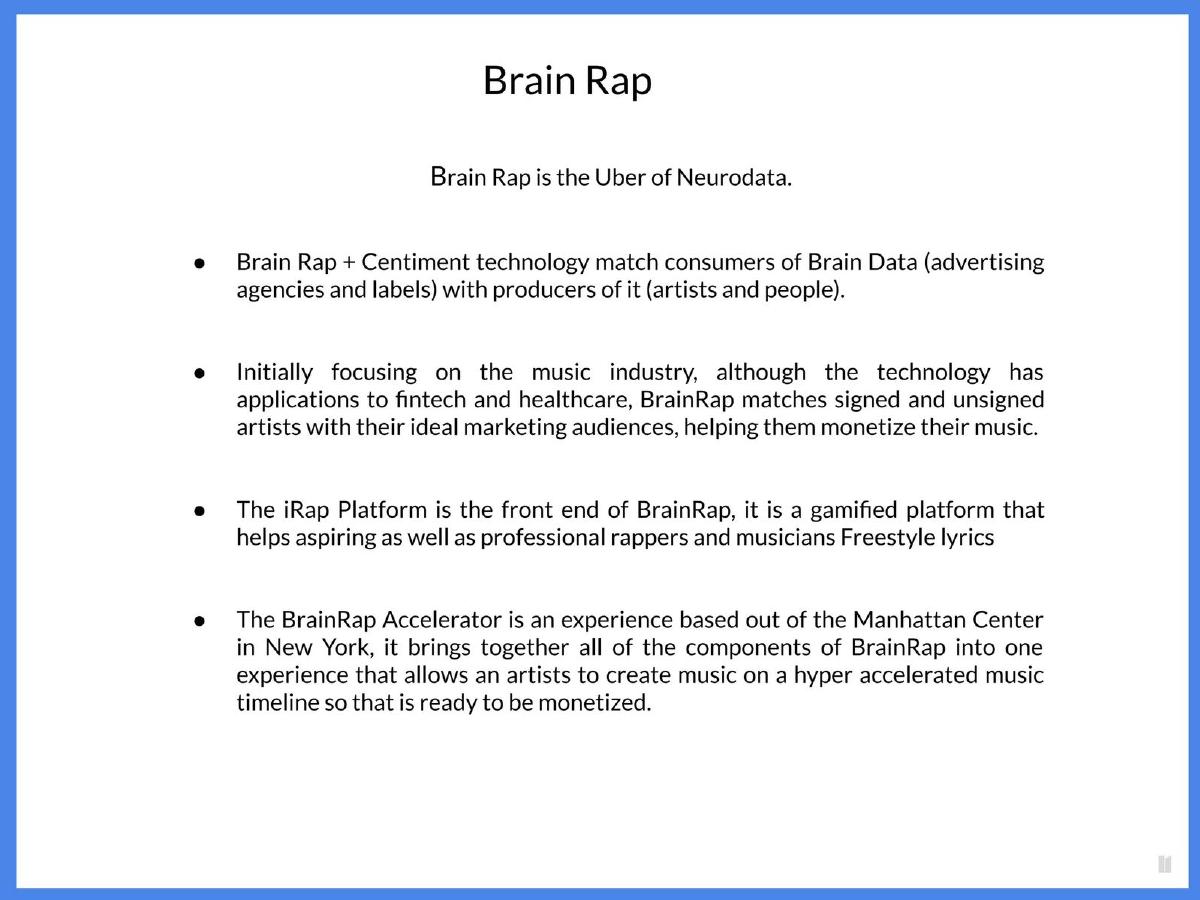
- The company positions itself as the 'Uber of Neurodata,' matching data consumers like ad agencies with producers like artists (Slide 3).
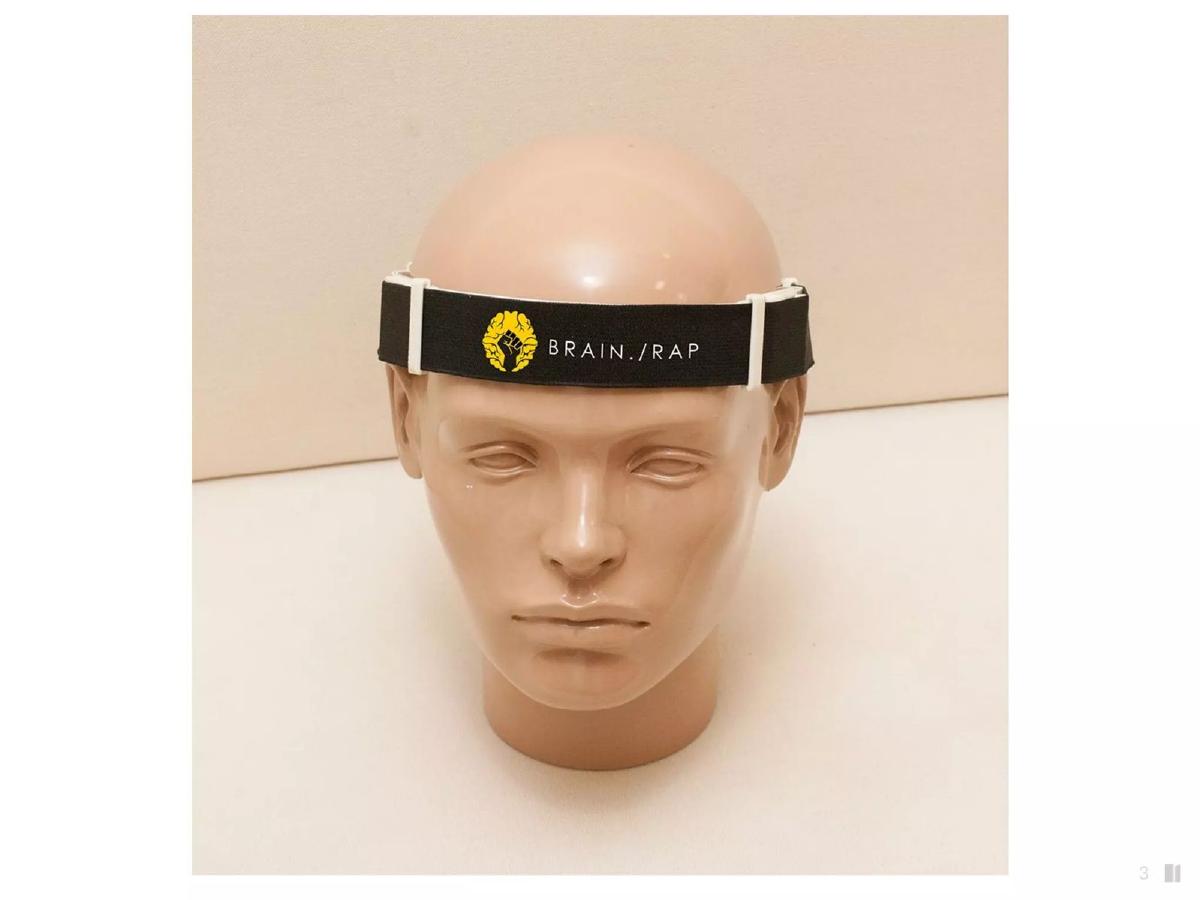
- Brain Rap utilizes a physical wearable headset, shown as a black elastic band with a yellow logo, to capture brain activity (Slide 2).
- The 'iRap Platform' serves as the front end, offering a gamified experience for rappers to practice freestyle lyrics (Slide 3).
- A physical 'BrainRap Accelerator' based in the Manhattan Center in New York is central to their production process (Slide 3).
- The data strategy claims to move from anonymous 'Bronze Record' data to high-identification 'Platinum Record' data that tracks specific consumer purchases like Bud Light (Slide 5).
- The business model includes a $50,000 tier for joint ventures with celebrities who have over 10 million followers (Slide 7).
- Hardware and software are bundled, with a headset priced at $700 and a minimum $1,500 spend required for software access (Slide 7).
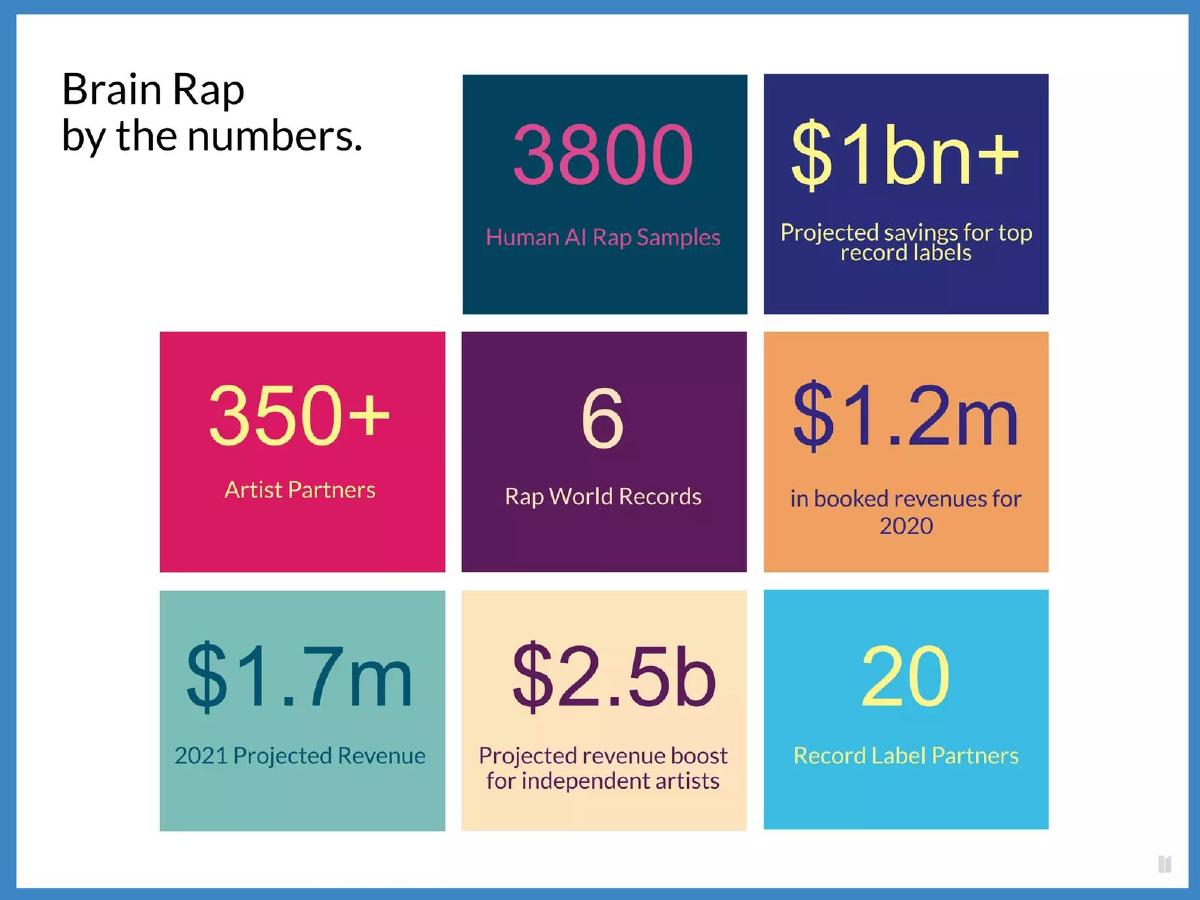
- The deck lacks a traditional team slide, financial projections, or a specific investment 'ask' amount (Slides 1-7).
Executive Summary: The Intersection of EEG and Hip-Hop
Brain Rap presents a highly stylized, brand-forward pitch that attempts to commoditize the neurological process of creativity. By labeling themselves the 'Uber of Neurodata,' the founders are signaling a marketplace model where the 'supply' is the brain activity of artists and the 'demand' is the marketing insight required by major labels and advertising agencies. The deck leans heavily on the cultural capital of rap and freestyle music to anchor a high-tech wearable play.
Slide 1: Title and Tagline
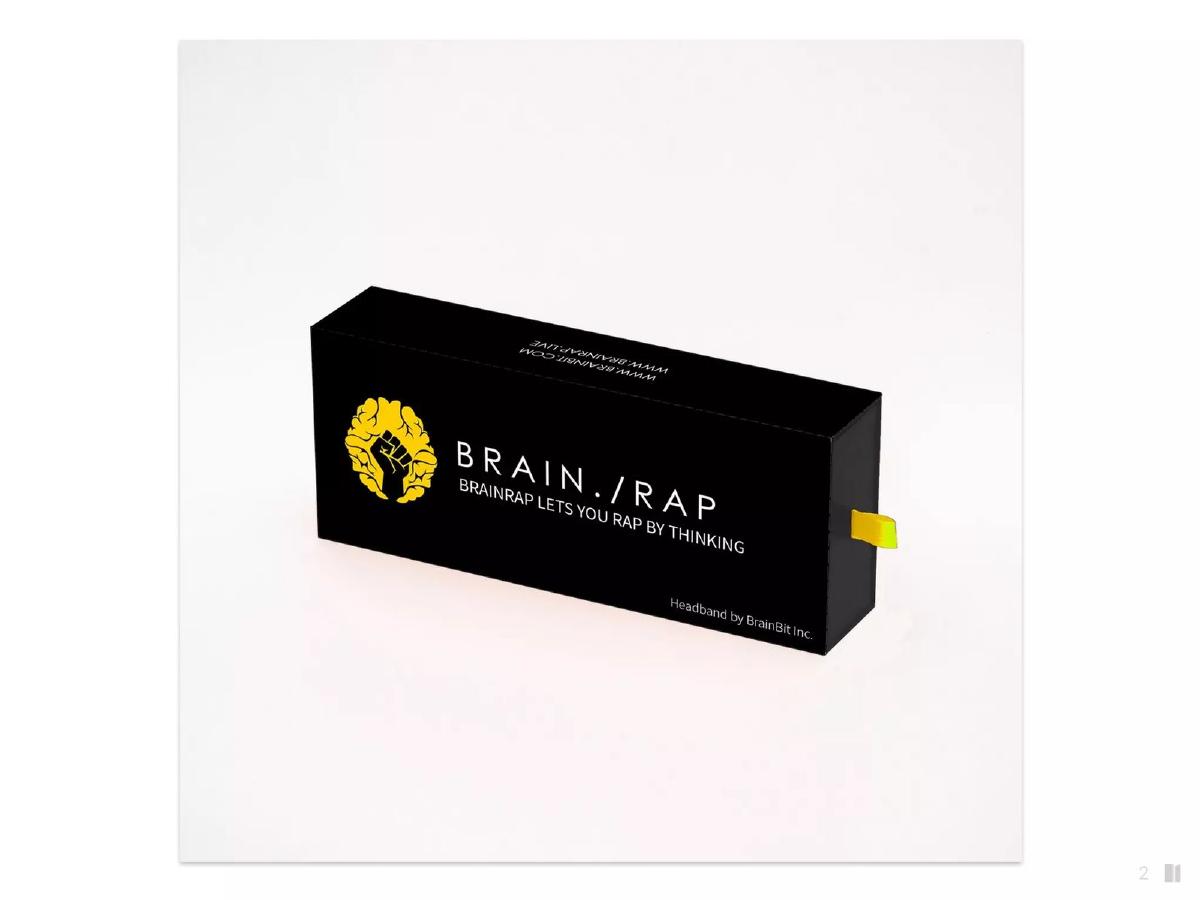
The opening slide features a black-and-white logo: a brain silhouette containing a raised fist. Below the logo is the tagline: 'Uber, for Music Neurodata.' This is a classic 'X for Y' positioning statement. While it immediately explains the marketplace nature of the business, it sets a high bar for operational scale that the subsequent slides must justify.
Slide 2: The Hardware Prototype
Slide 2 provides a visual of the physical product. It shows a mannequin head wearing a black headband with the 'Brain / Rap' logo. The device appears to be a dry-electrode EEG headband. There are no technical specifications provided on this slide regarding channel count, battery life, or data transmission protocols, suggesting this deck is intended for a brand-focused or early-stage audience rather than a deep-tech VC.
Slide 3: The Ecosystem Overview
This slide breaks down the company into four distinct pillars. First, it mentions a partnership with 'Centiment technology' to match data consumers with producers. Second, it identifies the music industry as the initial focus, with future applications in fintech and healthcare. Third, it introduces the 'iRap Platform,' described as a gamified front end for freestyling. Finally, it introduces the 'BrainRap Accelerator' located at the Manhattan Center in New York. This slide is dense with information but reveals a potential lack of focus, as the company is simultaneously managing a hardware product, a software platform, a physical studio, and a data brokerage.
Slide 4: Brand Identity
Slide 4 is a transition slide featuring the logo in a multi-colored, wireframe style against a black background. The text asks, 'Brain Rap: What is it?' This serves as a rhetorical reset before diving into the data strategy.
Slide 5: The Data Strategy Hierarchy
This is the most technical slide in the deck, attempting to explain the value of their 'Neuro + Sentiment Data.' It uses a four-tier 'Record' system to categorize data value:
Bronze Record: Anonymous data, e.g., 'someone watched a Nas video.' · Silver Record: Interest-based data, e.g., 'someone who likes HipHop or Grime.' · Gold Record: Identified data, e.g., 'Micah Brown from 10025 watched a video.' · Platinum Record: Transactional/Behavioral data, e.g., 'Micah Brown... buys 2 Bud Lights and 1 Stella every Friday.'
The slide claims that higher levels of neuro-data lead to higher levels of identification. However, it does not explain the mechanism by which a brain-sensing headband identifies a user's specific beer purchasing habits, which may raise skepticism regarding data privacy and technical feasibility.
Slide 6: The Brand Proposal
Slide 6 illustrates a use case titled 'BrainRap Records X (Your Brand).' It features a can of Celsius HEAT energy drink and photos of artists in the studio using the technology. The text notes a collaboration with 'Hustle Hard Entertainment' to create music using the accelerator. The goal stated is to 'incorporate [brands] into the creation process,' suggesting a model where songs are essentially built around product placements informed by neurological triggers.
Slide 7: The Revenue Model (Brain Rap Deals)
The final slide in this set details the pricing structure. It is divided into four tiers:
Corporate Sponsored Joint Venture ($50k): Includes a studio album and social media features from an 'A-list celebrity' with over 10 million followers. · Brain Rap Record Deal ($15k): A one-week accelerator experience that generates a studio album. · Social Sponsorship ($10k): One hour of studio time and a headset. · BrainRap Merch ($1500 minimum): A bundle including a $200 hoodie, a $700 headset, and a SaaS license.
This slide clarifies that Brain Rap is operating as a hybrid between a tech company and a boutique creative agency.
What Brain Rap Does Well
The deck excels at visual branding . The logo and the consistent use of the 'brain-fist' imagery create a strong, memorable identity that fits the hip-hop aesthetic. By using the 'Uber' analogy, they quickly communicate that they are a middleman in a high-value transaction. Furthermore, the tiered pricing model on Slide 7 is very specific. Unlike many early-stage decks that are vague about how they make money, Brain Rap lists exact dollar amounts and deliverables, which gives investors a clear picture of their unit economics and sales targets.
What is Missing from the Deck
The most glaring omission is a Team Slide . In a venture that combines neuroscience, hardware manufacturing, and music industry networking, the pedigree of the founders is paramount. Without seeing a CTO with a background in signal processing or a CEO with deep ties to major labels, the claims made on Slide 5 feel speculative. Additionally, there is no Market Size (TAM/SAM/SOM) analysis. While they mention fintech and healthcare, they don't quantify the opportunity within the music industry. Finally, there is no Investment Ask . A pitch deck is a tool to raise money; failing to state the amount needed and the intended use of funds is a significant tactical error.
Founder's Teardown: Lessons to Apply
Founders should look at Slide 7 as a model for revenue transparency . Even if your pricing changes later, showing that you have thought through specific packages for different customer segments (from $1,500 to $50,000) demonstrates business maturity. However, founders should avoid the mistake seen on Slide 5: making 'magic' claims . Claiming that a headset can tell you that a user buys '2 Bud Lights and 1 Stella every Friday' without explaining the data bridge (e.g., credit card integration or retail partnerships) can damage credibility. If your tech has a 'black box' element, you must provide at least a high-level explanation of the data flow to satisfy technical due diligence.
Frequently asked questions
- What exactly is 'Neurodata' in the context of this deck?
- According to the deck, neurodata is brain activity captured via a wearable headset while artists create music. Slide 5 suggests this data, when combined with sentiment analysis, provides 'additional context' for advertisers. It claims to track user preferences and purchasing habits, such as specific beer brands, to help labels and agencies match artists with ideal marketing audiences.
- How does Brain Rap generate revenue?
- Revenue is generated through four primary channels listed on Slide 7: Corporate Sponsored Joint Ventures ($50k), Record Deals ($15k), Social Sponsorships ($10k), and Merch/SaaS bundles ($1,500 minimum). These tiers involve varying levels of studio time, social media promotion, and hardware sales, targeting both major brands and individual artists.
- What is the role of the Manhattan Center in their business model?
- The Manhattan Center serves as the home for the 'BrainRap Accelerator.' As described on Slide 3, this is an 'experience-based' facility where all components of the technology are brought together. It allows artists to create music on a 'hyper accelerated music timeline' intended for immediate monetization and brand integration.
- Does the deck provide evidence of existing partnerships?
- Slide 6 shows a 'Brand Proposal' featuring Celsius HEAT energy drink alongside photos of artists in a recording studio wearing the Brain Rap headset. While it mentions a partnership between BrainRap Records and Hustle Hard Entertainment, it is framed as a proposal, making it unclear if Celsius is a signed client or a target lead.
- What are the most significant omissions in this pitch deck?
- The deck is missing several critical components for a professional fundraise. There is no slide introducing the founding team or their technical background in neuroscience. Furthermore, there is no 'Ask' slide detailing how much capital is being raised, no competitive analysis, and no multi-year financial forecast or user growth metrics.