BrandieGames offers a B2B platform designed to simplify the creation of branded mobile games, targeting marketing needs like awareness and retention. The 9-slide deck is notable for its extreme minimalism, using icons and single-word descriptors rather than dense text. It positions the company within a growing mobile market, citing a 47% growth rate and a $500m market size as of 2012. The deck concludes with a specific ask of €200k to fund growth, infrastructure, and hiring. While the visual flow is clean, the deck lacks critical details regarding business model specifics, existing traction,…
Key takeaways
- The company defines its value proposition as creating mobile games for brands in 'a few clicks' (Slide 1).
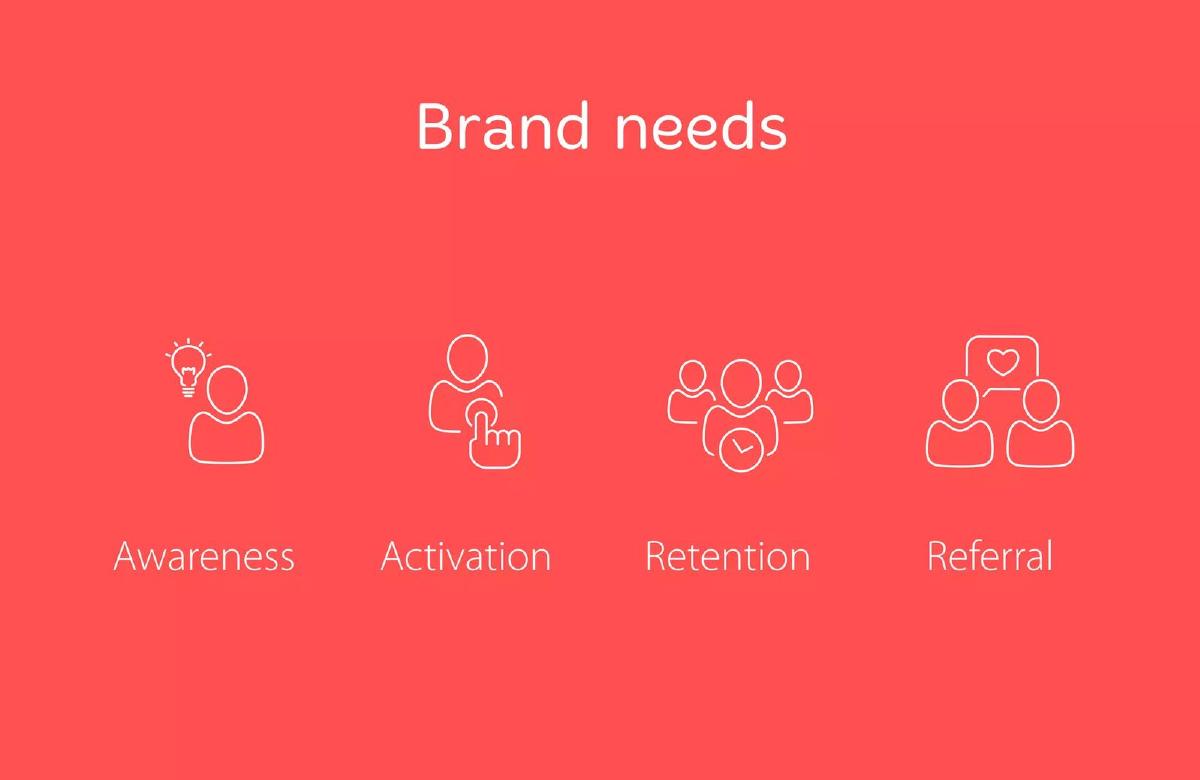
- BrandieGames identifies four core brand needs: Awareness, Activation, Retention, and Referral (Slide 2).
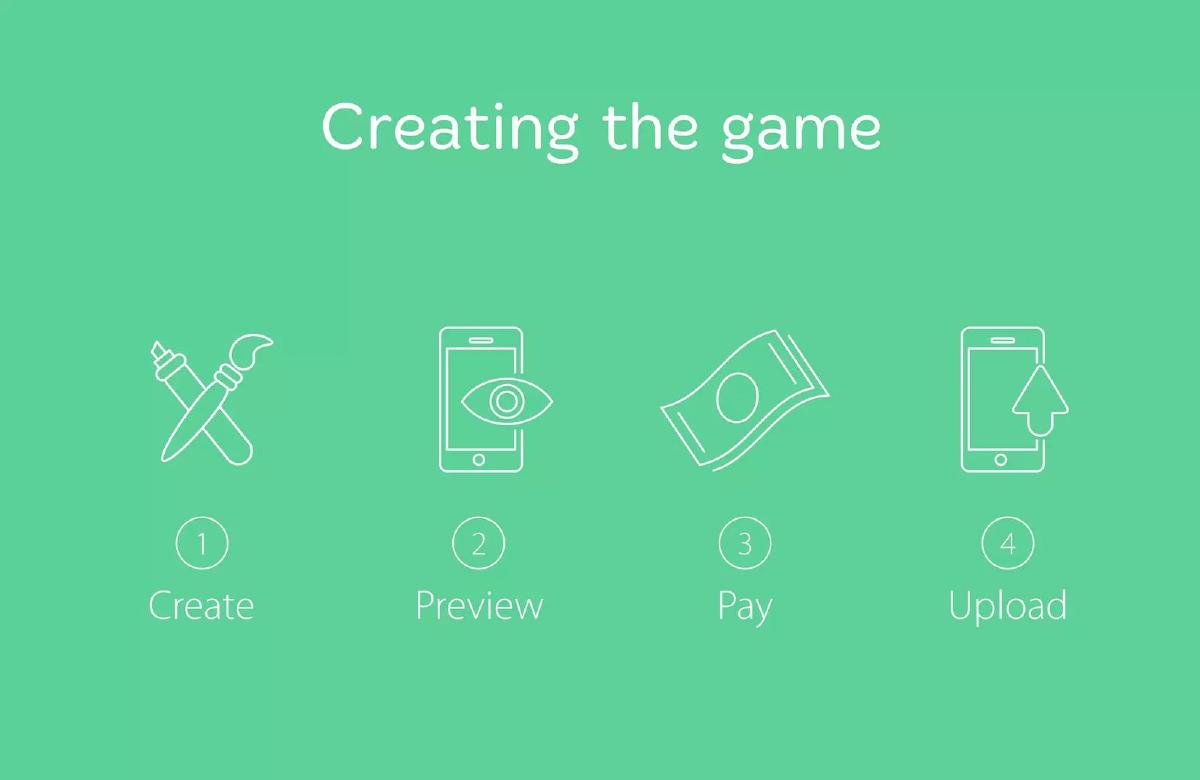
- The product workflow is simplified into a four-step process: Create, Preview, Pay, and Upload (Slide 3).
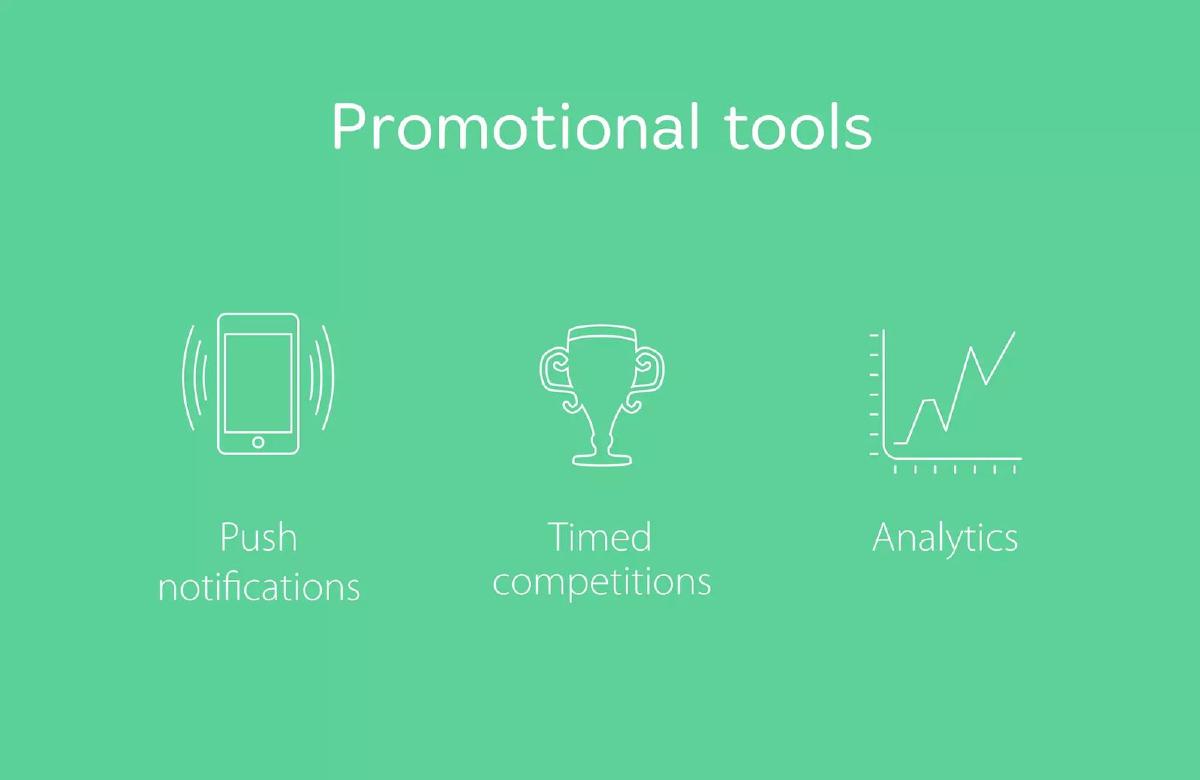
- Platform features include push notifications, timed competitions, and analytics tools (Slide 4).
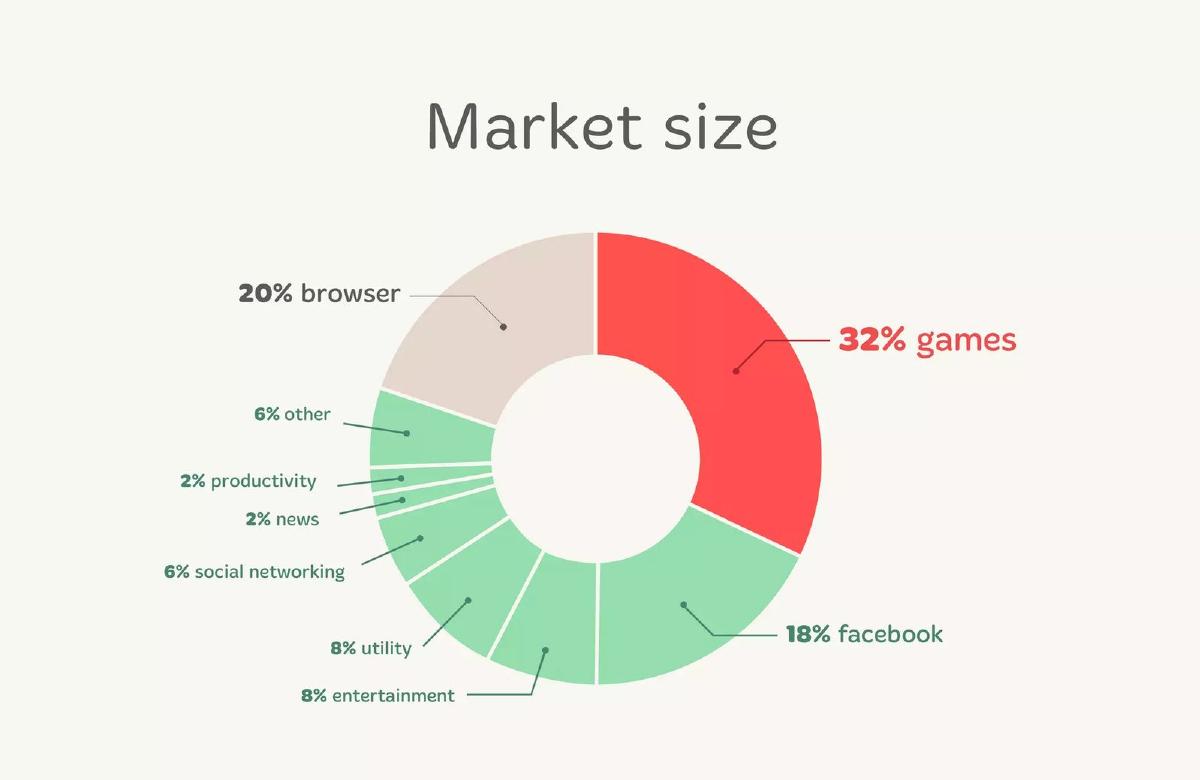
- Market data claims games account for 32% of the mobile market share (Slide 5).
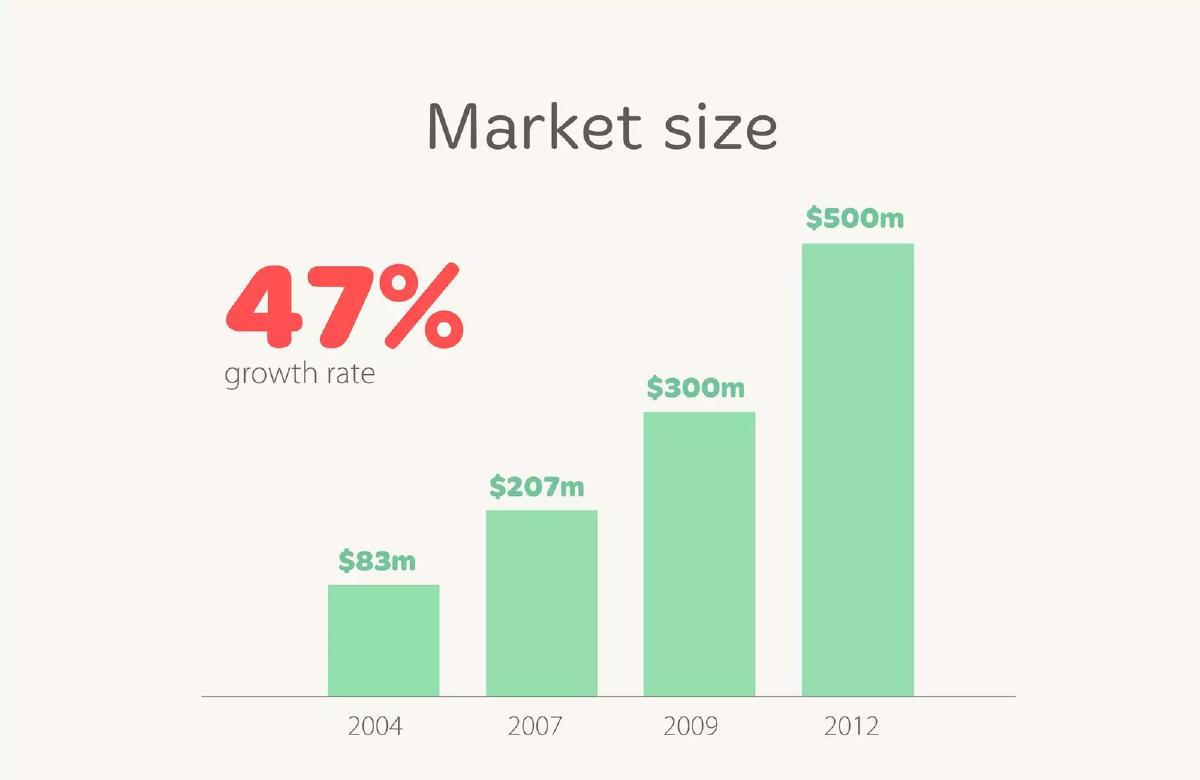
- The deck cites a historical market growth rate of 47%, reaching $500m in 2012 (Slide 6).
- The team consists of four members: a leader, a developer, and two designers (Slide 7).
- The startup is seeking €200k in funding for growth, equipment, and personnel (Slide 8).
Introduction
The BrandieGames pitch deck is a study in extreme minimalism. With only 9 slides and very little text, the company attempts to sell a platform that democratizes the creation of branded mobile games. The deck targets the 'advergaming' space, positioning mobile games as a superior tool for brand engagement compared to traditional social networking or browsing. However, the lack of detail on unit economics, revenue models, and technical defensibility suggests this deck was likely intended as a visual aid for a live pitch rather than a standalone document for investor due diligence.
Slide 1: Title and Value Proposition
The opening slide introduces the brand name, Brandiegames , with a 'BETA' tag. The subtitle, 'mobile games for brands. in a few clicks,' serves as the primary value proposition. It emphasizes speed and ease of use, suggesting a SaaS-like approach to a process that historically required expensive custom development agencies. The inclusion of a website and Twitter handle provides immediate avenues for further investigation.
Slide 2: Brand Needs
This slide functions as the 'Problem/Solution' bridge. Instead of listing pain points, it lists four 'Brand needs': Awareness, Activation, Retention, and Referral . These are standard marketing funnel stages. By aligning their product with these goals, BrandieGames positions itself as a strategic marketing partner rather than just a game studio. The use of simple line icons keeps the focus on these four pillars.
Slide 3: Creating the Game
Slide 3 outlines the user journey for a brand using the platform. It is a linear four-step process: 1. Create, 2. Preview, 3. Pay, 4. Upload . This is a critical slide because it implies the existence of a self-service dashboard. The 'Pay' step occurring before 'Upload' suggests a transactional revenue model, likely a per-game fee or a subscription to launch the content to app stores.
Slide 4: Promotional Tools
To differentiate from a simple game engine, Slide 4 highlights the 'Promotional tools' built into the platform. These include Push notifications , Timed competitions , and Analytics . These features are essential for the 'Retention' and 'Activation' needs mentioned on Slide 2. Analytics, in particular, is a requirement for any modern B2B marketing tool, allowing brands to justify their spend through data.
Slide 5: Market Size (Usage)
The first of two market slides uses a donut chart to show how mobile users spend their time. Games are the dominant category at 32% , significantly higher than Facebook (18%) or Social Networking (6%) . This data is used to convince investors that games are the most effective channel for reaching mobile consumers. The source of this data is not cited on the slide.
Slide 6: Market Size (Growth)
Slide 6 focuses on the financial growth of the market. It shows a bar chart starting at $83m in 2004 and rising to $500m in 2012 . The slide highlights a 47% growth rate . While the numbers show a clear upward trend, the 2012 end-date suggests this deck is from that era. For a contemporary investor, these figures would be considered outdated, but they establish the historical context of the 'mobile gold rush.'
Slide 7: Team
The team slide features four members: Błażej Wojtyła (Leader) , Seweryn Zeman (Developer) , Alicja Wydmańska (Designer) , and Maciej Świerczek (Designer) . The team is balanced toward design, which aligns with the product's focus on creating visually appealing branded content. However, the slide lacks any biographical information, past successes, or educational background, which is a significant omission for a seed-stage pitch.
Slide 8: The Ask
The 'What do we need?' slide is direct. The company is seeking €200k . Three icons indicate the allocation: an upward arrow for Growth/Marketing , a computer for Infrastructure/Hardware , and a person for Hiring . There is no mention of the equity offered, the valuation, or the specific milestones this capital will help the company achieve.
Slide 9: Contact
The final slide repeats the logo and provides the contact information for Błażej Wojtyła . The email address uses the domain jazzy.pro , which may indicate an associated agency or a parent company, though this is not explained within the deck.
What Works
Clarity of Purpose: The deck is never confusing. Within three slides, the viewer knows exactly what the product does and who it is for. · Visual Consistency: The use of a limited color palette (red, green, and dark backgrounds) and consistent iconography makes the deck look professional and modern for its time. · Simplified Workflow: By breaking the product down into four steps (Create, Preview, Pay, Upload), the founders demystify a complex technical process.
What is Missing
Business Model Details: While 'Pay' is a step in the workflow, the deck doesn't explain the pricing. Is it €500 per game? A €2,000 monthly subscription? The lack of unit economics is a major gap. · Traction: There are no mentions of current users, beta testers, or pilot programs. Even for a 'Beta' product, investors want to see some form of validation. · Competitive Landscape: The deck assumes BrandieGames is the only way to do this. It fails to mention competitors or how they differ from custom agencies or other DIY game builders. · Technical Depth: Building a tool that creates a mobile game 'in a few clicks' is a significant technical challenge. The deck provides no information on the underlying technology or how they handle cross-platform deployment (iOS vs. Android).
Founder Takeaways
Use Minimalism Wisely: This deck is excellent for a stage presentation where the speaker provides the context. However, if you are sending a deck via email, you must include more text to explain the 'how' and 'why' behind the icons. · Cite Your Data: Slides 5 and 6 present strong market arguments, but without sources, investors may question the validity of the percentages and dollar amounts. · Define the 'Ask' Milestones: Don't just ask for €200k. Tell the investor exactly what that money buys you in terms of runway and specific goals (e.g., '€200k gives us 12 months of runway to reach 50 paying customers'). · Highlight Team Expertise: A photo and a title are not enough. Founders should include one sentence or a few logos of past companies/universities to establish credibility.
Frequently asked questions
- What is the primary product offered by BrandieGames?
- BrandieGames offers a self-service platform that allows brands to build and deploy mobile games. According to Slide 3, the process involves creating the game, previewing it, paying for the service, and uploading the final product. The goal is to provide a low-friction way for companies to use 'advergaming' for marketing purposes.
- How does the company justify the market opportunity?
- The deck uses two slides to establish market size. Slide 5 shows a donut chart where 'games' represent the largest single category of mobile usage at 32%, followed by browsers (20%) and Facebook (18%). Slide 6 shows a bar chart illustrating market growth from $83m in 2004 to $500m in 2012, citing a 47% growth rate.
- What specific features does the platform provide to brands?
- Beyond the game creation itself, Slide 4 highlights three promotional tools: push notifications to engage users, timed competitions to drive urgency or participation, and analytics to measure the performance and ROI of the branded game.
- What is the composition of the founding team?
- As shown on Slide 7, the team is lean and design-heavy. It includes Błażej Wojtyła (Leader), Seweryn Zeman (Developer), Alicja Wydmańska (Designer), and Maciej Świerczek (Designer). The deck does not list prior experience or specific credentials for these members.
- How does BrandieGames plan to use the requested €200k?
- Slide 8 outlines the funding requirement of €200k. Through icons and arrows, it indicates the capital will be allocated toward three areas: driving growth (upward arrow), purchasing hardware or infrastructure (computer icon), and hiring additional staff (person in a tie icon).