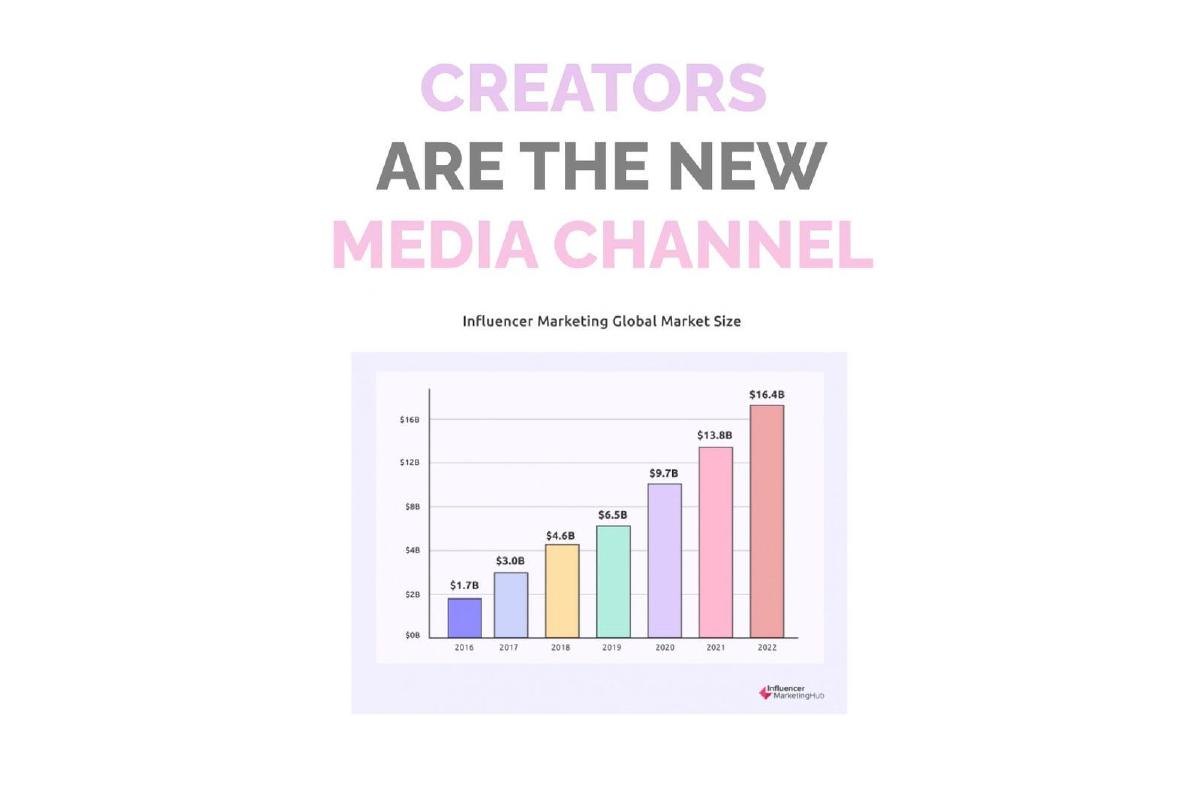
Creator Camp’s 25-slide deck is a masterclass in aesthetic-driven storytelling, focusing heavily on the 'why' and 'who' of the creator economy. By positioning creators as the 'new media channel' (Slide 2) and highlighting the massive growth of influencer marketing—from $1.7B in 2016 to $16.4B in 2022—the company establishes a clear market opportunity. The deck relies on high-quality visual assets and strong testimonials from major brands like Calm and high-reach influencers like Elliot Choy (1.2M subscribers) to validate its model. While it lacks traditional SaaS metrics or a granular financi…
Key takeaways
- The deck uses a macro-to-micro narrative, starting with the $16.4B global influencer marketing size on Slide 2.
- Engagement is the core value proposition, with Slide 3 explicitly stating that creators receive 'much higher levels of engagement' than traditional media.
- Social proof is heavily front-loaded, featuring a testimonial from a Senior Creative Producer at Calm Studios on Slide 5.
- The 'Integration' strategy on Slide 8 suggests a B2B revenue model where brands pay to be woven into the event programming.
- The deck emphasizes physical location as part of the brand, highlighting Park City, UT for a March 2023 event on Slide 6.
- There is a notable absence of a 'Team' slide in the provided sequence, which is unusual for a seed-stage raise.
- The deck omits a specific 'Ask' slide or use-of-funds breakdown, focusing instead on the conceptual value to partners.
- Creator Camp positions itself as a 'social impact' player by fostering 'real, authentic, human connections' (Slide 5).
The Aesthetic of Connection: Creator Camp's $200k Seed Deck
Creator Camp’s pitch deck is a departure from the data-heavy, chart-dense presentations typical of Silicon Valley. Instead, it leans into the visual language of the very people it serves: content creators. Raised in 2023, this $200,000 seed round (as reported by Business Insider) was secured using a 25-slide deck that prioritizes brand identity, market sentiment, and the power of physical experiences in a digital-first world. In an industry categorized as 'Social Impact,' the deck focuses on the mental health and community benefits of bringing creators together 'Above The Clouds.'
Slides 1-3: Setting the Macro Stage
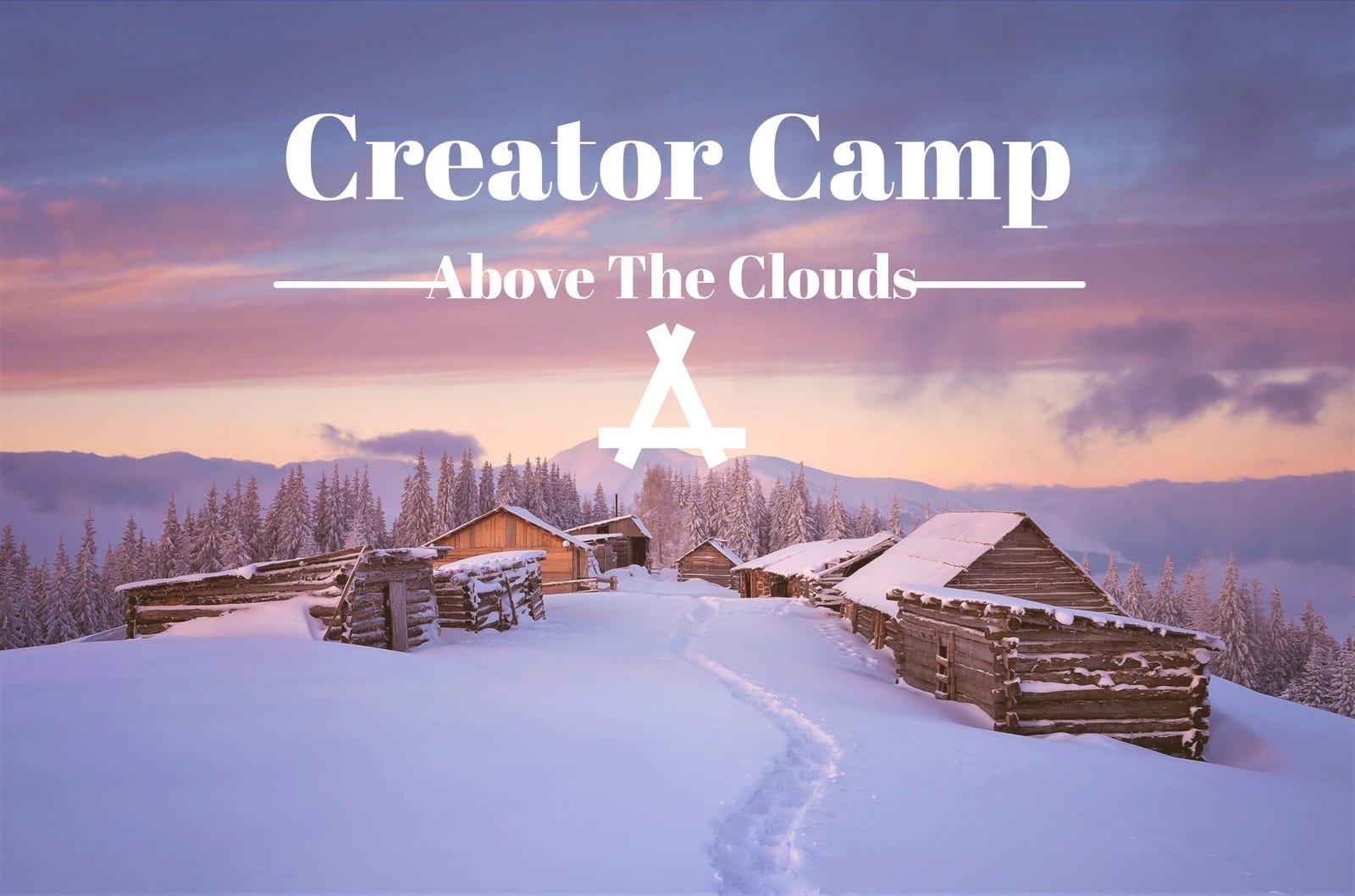
The deck opens with a high-resolution, atmospheric shot of snow-covered cabins under a twilight sky. Slide 1 establishes the theme: 'Creator Camp: Above The Clouds.' The branding is minimalist, using a stylized 'A' logo that resembles both a tent and a mountain peak. This immediately signals that the company is selling an experience, not just a service.
Slide 2 moves quickly to market validation. Titled 'CREATORS ARE THE NEW MEDIA CHANNEL,' it features a bar graph from Influencer Marketing Hub showing the global market size growing from $1.7B in 2016 to $16.4B in 2022. This is a standard but effective 'why now' slide. It tells investors that the pool of money available for creator-focused initiatives is expanding rapidly.
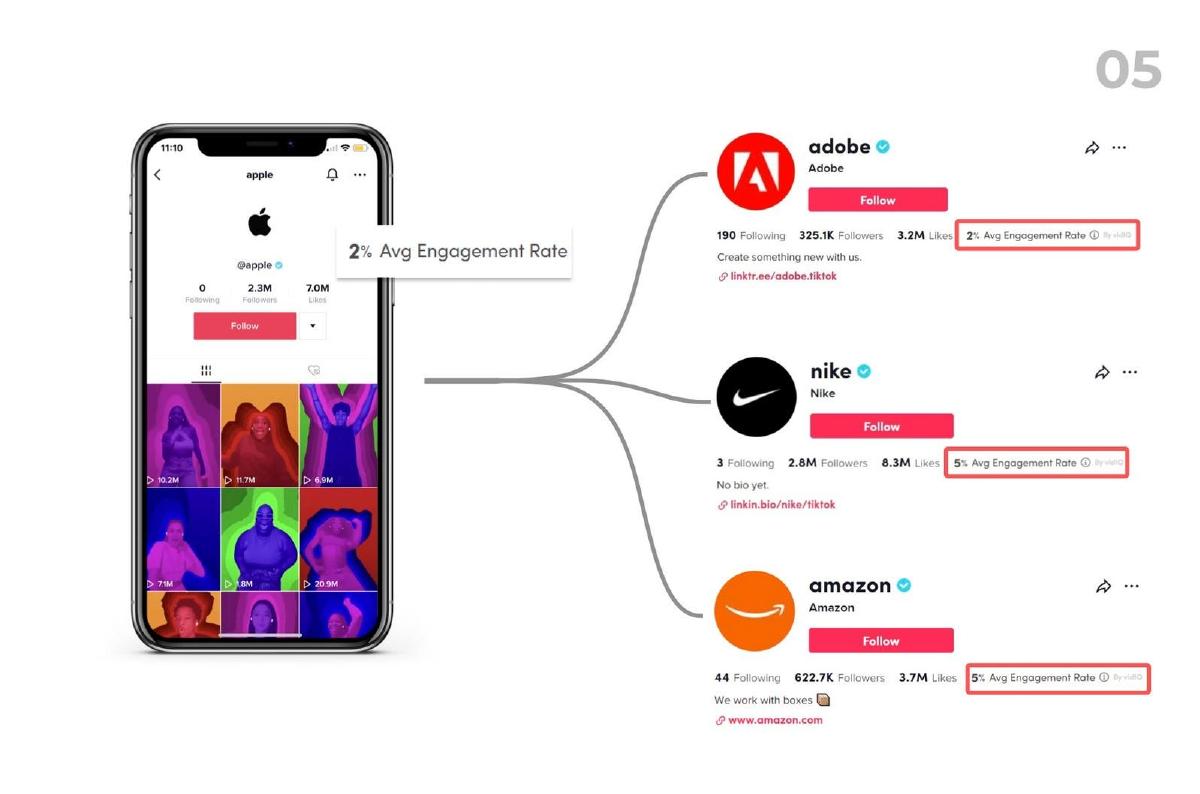
Slide 3 provides the qualitative 'why.' Over a backdrop of reflective mountain waters, the text reads: 'IN COMPARISON: Creators Receive Much Higher Levels Of Engagement.' This slide addresses the core pain point of traditional advertising—low engagement—and positions creators (and by extension, Creator Camp) as the solution for brands looking for authentic connection.
Slides 4-6: The Value Proposition and Social Proof
Slide 4 bridges the gap between the creator and the end consumer: 'Turning Creators Into Brand Ambassadors also turns their audience into ambassadors.' This is the 'Force Multiplier' argument. The company isn't just hosting a camp for 50 people; they are influencing the millions of followers those 50 people represent.
Slide 5 is perhaps the most important slide in the deck for a seed-stage company: Testimonials. It features two heavy hitters. Riley Eggers, Senior Creative Producer at Calm Studios, describes the camp as a 'beacon for creators who strive to build real, authentic, human connections.' This validates the 'Social Impact' industry tag. Next to her is Elliot Choy, a YouTuber with 1.2 million subscribers, who calls it a 'rare place' for judgment-free learning. Having a creator with a million-plus following vouch for the experience is a massive de-risking signal for investors.
Slide 6 grounds the concept in reality. It repeats the cover imagery but adds 'Park City, UT' and 'March 2023.' This indicates that the company is already operational and executing on its vision. It moves the conversation from 'we want to do this' to 'we are doing this.'
Slides 7-9: The Business of Integration
Slide 7 serves as a transition: 'Our Value To Our Partners.' This shifts the focus from the creator experience to the revenue-generating side of the business. It sets up the expectation that the following slides will explain how the company makes money.
Slide 8 introduces the concept of 'Integration.' The text explains: 'We creatively integrate your brand into the programming of our event. This gives you additional exposure and builds brand association.' The accompanying image shows people doing yoga outside a lodge, suggesting the types of 'organic' placements a brand like Calm or an athletic wear company might receive. This is a crucial slide because it defines the product: Creator Camp isn't just selling tickets; it's selling 'integrated programming' to corporate partners.
Slide 9 concludes the provided sequence with a simple 'Thank You' over a sea of clouds. While the full 25-slide deck likely contained more granular details, these nine slides represent the core narrative arc used to secure the $200,000 investment.
What Creator Camp's Deck Does Well
The primary strength of this deck is its visual storytelling . In the creator economy, 'vibe' is a legitimate business asset. By using professional photography and a consistent, airy design, the founders demonstrate they understand the aesthetic standards of their target demographic. If the deck looked like a corporate PowerPoint from 1998, it would immediately undermine their claim to understand 'new media.'
Secondly, the social proof is exceptional for a $200k raise. Securing a testimonial from a brand like Calm and a creator of Elliot Choy's stature suggests that the founders have significant 'founder-market fit' and the network necessary to scale an invite-only community. Investors at the seed stage are often betting on the team's ability to gain access to high-value individuals; this deck proves they already have it.
Finally, the market positioning is clear. By framing creators as 'media channels' rather than just 'influencers,' the deck taps into the broader trend of the decentralization of media. This makes the business feel like a play on a fundamental shift in how humans consume information, rather than just a travel company for YouTubers.
What Is Missing From the Deck
While the deck is visually stunning, it leaves several critical business questions unanswered in the provided slides. The most glaring omission is the Unit Economics . There is no mention of the cost per attendee, the sponsorship fee per brand, or the margins on a typical event. For a $200k raise, investors usually want to see that the model can scale profitably beyond a single event in Park City.
There is also no Team Slide in this sequence. While the testimonials hint at the founders' network, a seed deck must explicitly state who the founders are and why they are uniquely qualified to build this. Are they former event planners? Former creators themselves? Ex-talent managers? This information is vital for establishing credibility.
The Competitive Landscape is also ignored. Creator Camp is not the only company doing creator retreats or 'collab houses.' A slide addressing how they differ from competitors like Soho House, Karat, or various creator summits would help define their moat. Is their moat the 'social impact' angle? The specific 'Above The Clouds' branding? Without a comparison, it's hard to judge the defensibility of the business.
Lastly, the 'Ask' is missing. A pitch deck is a call to action. It should clearly state how much capital is being raised, the valuation (or cap), and specifically what that money will be used for (e.g., 'Hire a Head of Partnerships,' 'Secure 3 more locations for 2024').
Founder's Guide: What to Copy
Founders building in the 'experience' or 'community' space should take note of Creator Camp's testimonial format . Instead of just a quote, they included the person's title and their 'reach' (1.2M subscribers). This turns a subjective opinion into an objective metric of success. If you are building a community, your first 10 'power users' are your most valuable marketing asset—put them front and center.
Another takeaway is the use of macro-trends to justify a niche product . Creator Camp is essentially an event planning company, but they don't pitch it that way. They pitch it as a way to capture a piece of the $16.4B influencer marketing pie. If your startup is in a traditional industry (like events or travel), find the high-growth 'tech' or 'media' trend that your business enables and lead with that.
Finally, the 'Integration' slide is a great example of how to explain a non-obvious revenue stream. Instead of just saying 'Sponsorships,' which sounds like a logo on a banner, they use the word 'Integration' and 'Programming.' This sounds more premium and suggests a deeper, more valuable relationship with brand partners. It changes the perception of the business from a 'service' to a 'platform.'
Frequently asked questions
- What is the primary business model suggested by the deck?
- While not explicitly detailed in a 'Business Model' slide, the deck points toward a B2B sponsorship and partnership model. Slide 8, titled 'Integration,' explains that the company creatively integrates brands into event programming for exposure and brand association. This suggests that revenue is generated through brand partnerships rather than just ticket sales to creators.
- How does Creator Camp justify its market timing?
- The company uses a growth chart on Slide 2 showing the influencer marketing market size nearly decupling between 2016 ($1.7B) and 2022 ($16.4B). By labeling creators as the 'new media channel,' they position their physical experiences as the necessary offline infrastructure for a booming online industry.
- What kind of social proof does the deck provide?
- The deck provides dual-sided social proof on Slide 5. It includes a testimonial from a brand perspective (Calm Studios) and a creator perspective (Elliot Choy, a YouTuber with 1.2 million subscribers). This demonstrates that the 'camp' format provides value to both the sponsors and the talent they wish to reach.
- What are the most significant omissions in this pitch deck?
- The deck is missing several standard venture components: a dedicated Team slide, a detailed Financials/Projections slide, a Competitor analysis, and a specific 'Ask' slide detailing how much they are raising and why. It functions more as a brand lookbook or a partnership deck than a traditional financial pitch.
- Who is the target audience for Creator Camp events?
- The target audience is high-reach content creators and the brands that want to reach their audiences. Slide 4 notes that turning creators into brand ambassadors 'also turns their audience into ambassadors,' indicating that the events are designed to trigger a ripple effect of marketing reach.