Digital Outposts raised $225,000 in 2015 with a deck that prioritized market sentiment and macro trends over granular financial modeling. The 13-slide presentation focuses on the shift from traditional offices to distributed work, citing that 37% of workers had already worked remotely at the time. By bundling workspace, accommodation, and logistics in locations like Bali and Thailand, the company aimed for a high-ticket price point of over $2,000 per customer. While the deck successfully establishes the founders' pedigree with MIT and HBS credentials and shows early traction with employees fr…
Key takeaways
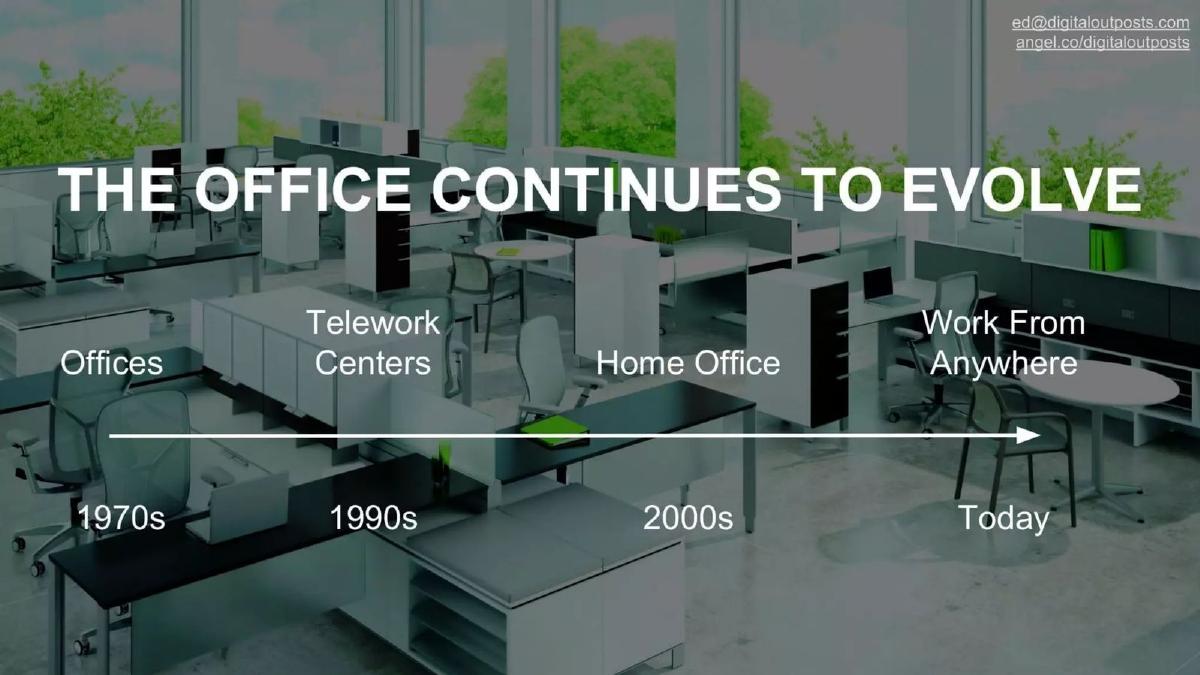
- The deck positions the company within a historical timeline of office evolution, moving from 1970s offices to 'Work From Anywhere' today (Slide 3).
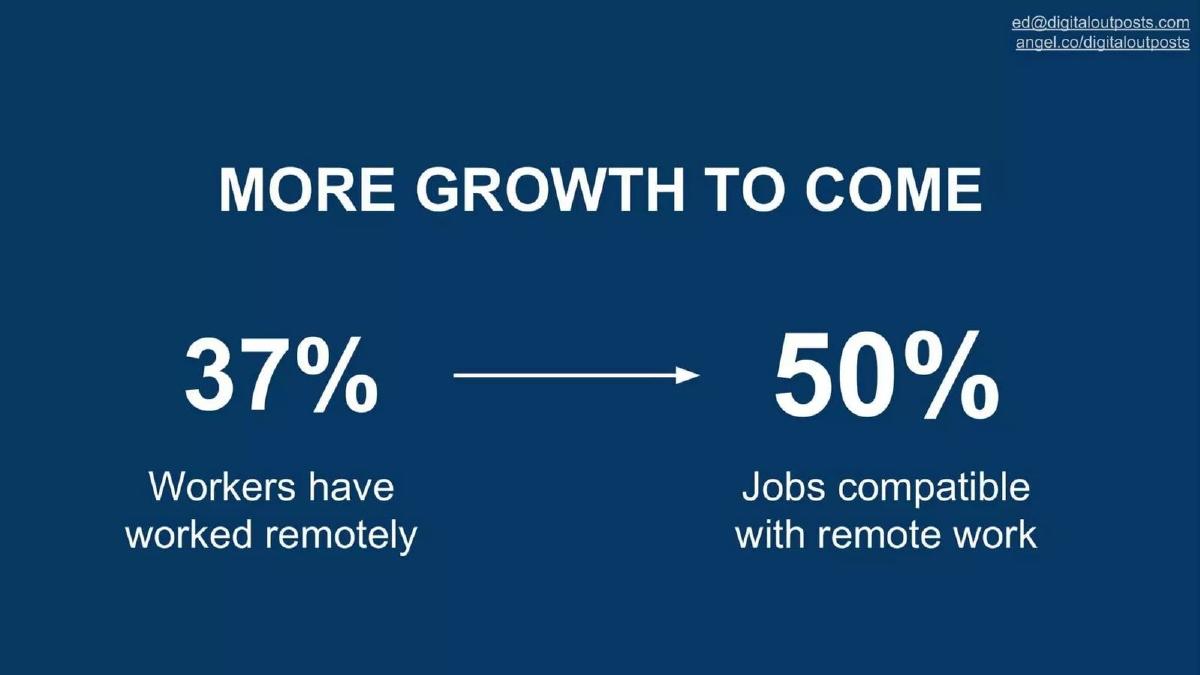
- Macro statistics are used to validate the market, noting that 50% of jobs are compatible with remote work (Slide 5).
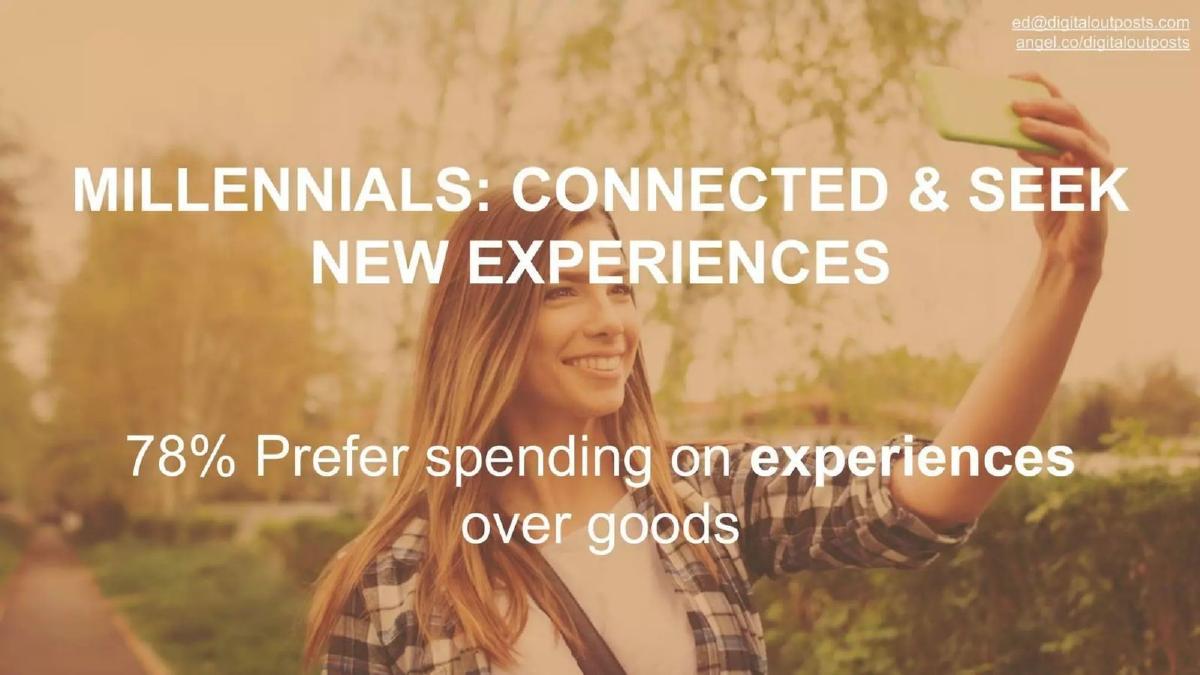
- The target demographic is explicitly identified as Millennials, with 78% preferring experiences over goods (Slide 6).
- The product is presented as a bundle of four pillars: Workspace, Accommodation, Peer Network, and Logistics Help (Slide 9).
- Early revenue potential is signaled by a stated value of '$2,000+ Per Customer' (Slide 10).
- The company demonstrates B2B appeal by featuring customers from major corporations like Boeing and SanDisk (Slide 11).
- The team slide emphasizes high-tier academic credentials from MIT, Harvard Business School, and NYU (Slide 12).
- The deck includes existing investors from notable companies like WeWork and Hotwire to build social proof (Slide 12).
The Vision of the Distributed Office
Digital Outposts entered the market in 2015, a time when the 'digital nomad' lifestyle was transitioning from a niche subculture to a mainstream professional aspiration. This 13-slide deck is a classic example of a 'trend-first' pitch. It spends nearly half of its runtime establishing that the world has changed and that traditional office structures are obsolete. By the time the viewer sees the actual product, they have been conditioned to view destination coworking not as a luxury, but as an inevitability of the modern labor market.
Slides 1-5: Establishing the Macro Trend
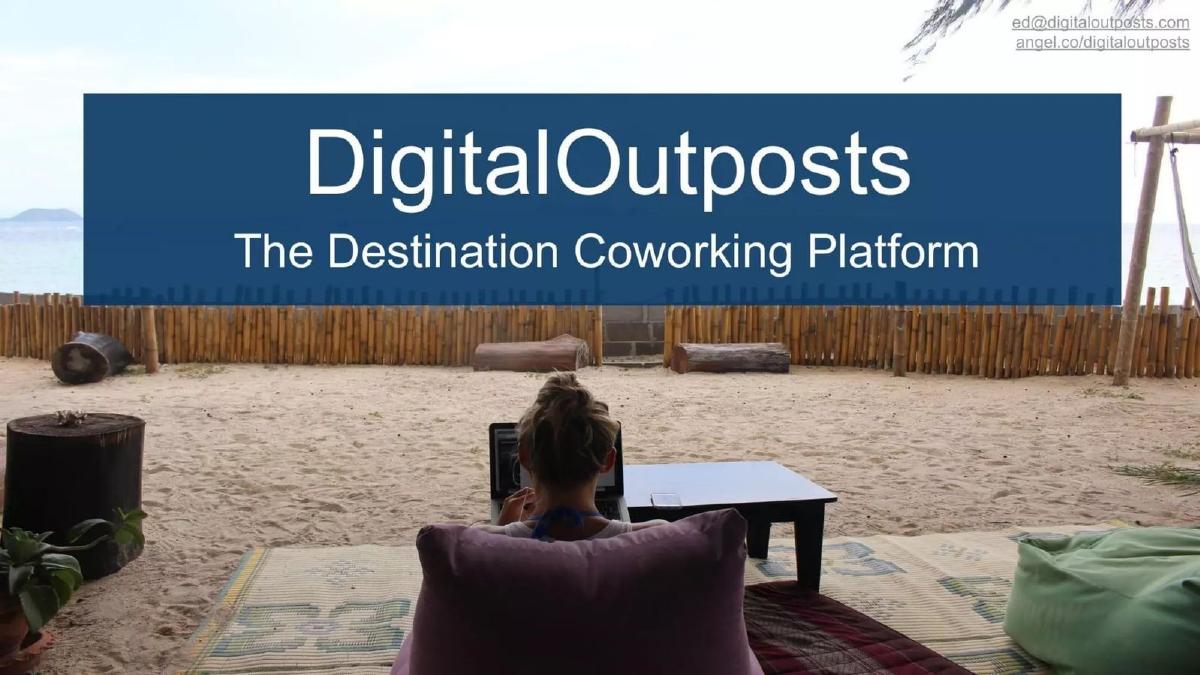
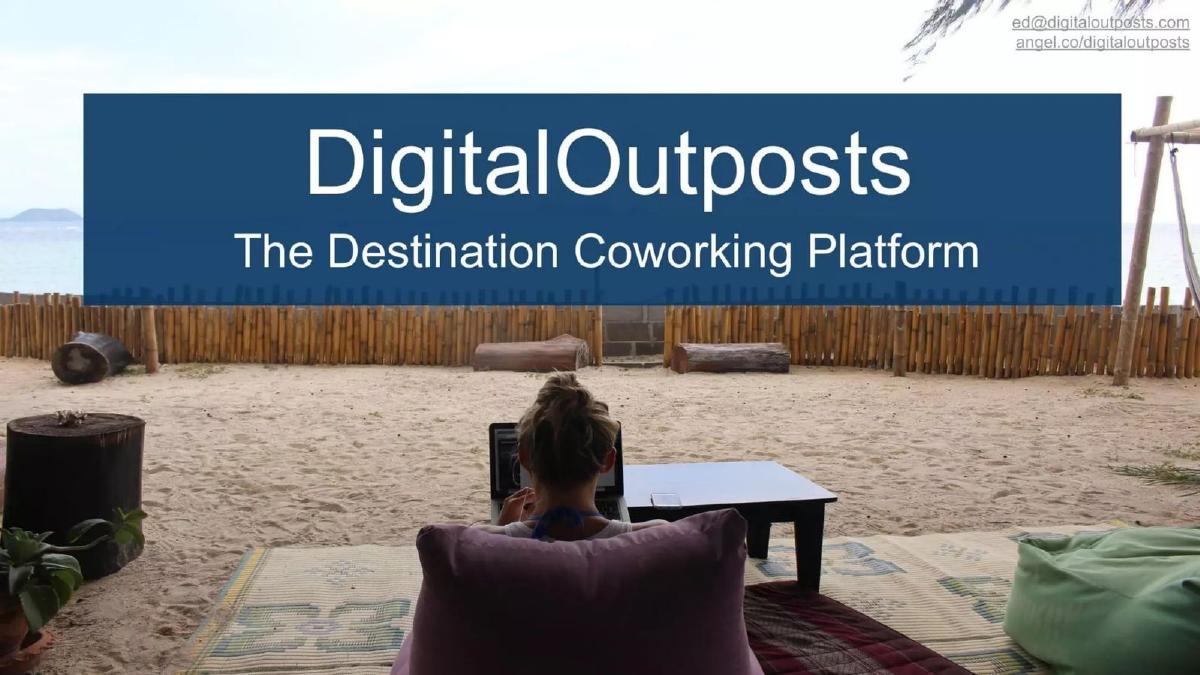
Slide 1 serves as the title card, introducing Digital Outposts as 'The Destination Coworking Platform.' The background image of a person working on a laptop at a beach sets the emotional tone for the entire pitch. There are no distractions here; the brand is the lifestyle.
Slide 2 and Slide 3 move quickly into the 'Why Now?' argument. Slide 2 uses a bold, centered headline: 'WORK IS BECOMING COMPLETELY DISTRIBUTED.' Slide 3 provides a historical timeline to justify this claim, tracing the evolution of the office from the 1970s through the 'Telework Centers' of the 90s and 'Home Offices' of the 2000s, landing on 'Work From Anywhere' as the current standard. This timeline is effective because it makes the company's solution feel like the next logical step in a 40-year progression.
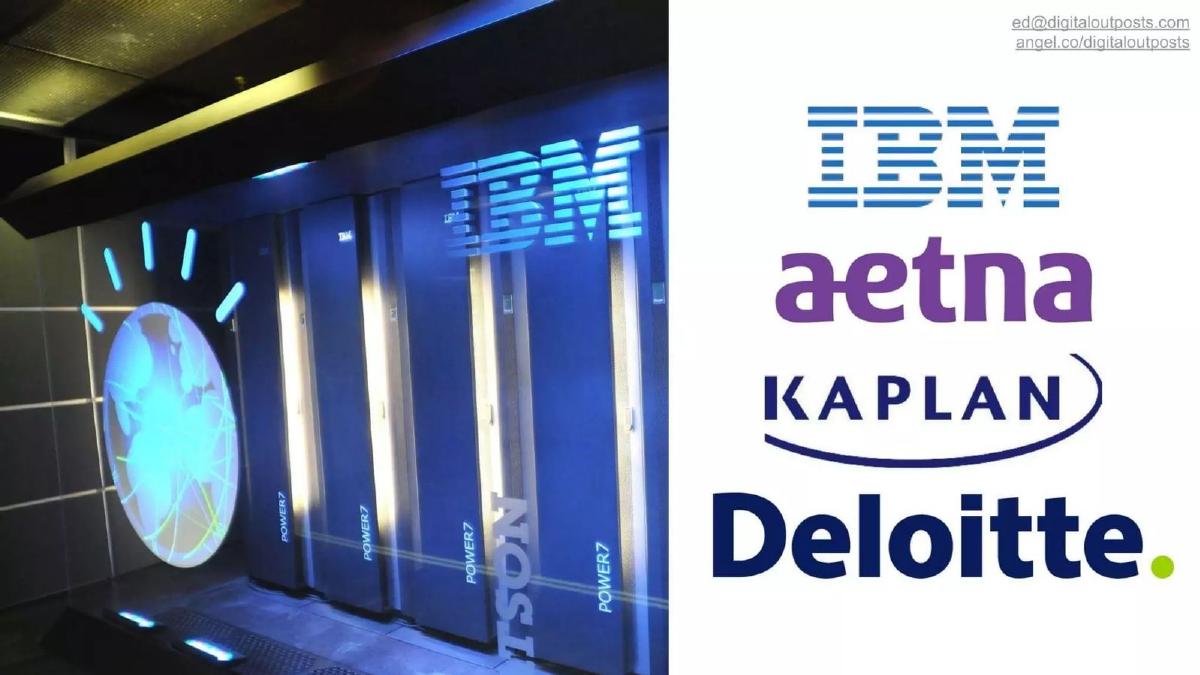
Slide 4 provides corporate validation. By displaying the logos of IBM, Aetna, Kaplan, and Deloitte, the founders are signaling that remote work isn't just for freelancers; the largest employers in the world are already adopting these practices. This is a crucial move to de-risk the investment for those who might fear the market is too small.
Slide 5 brings in the hard data. It cites that 37% of workers have already worked remotely and predicts that 50% of jobs are compatible with remote work. This slide defines the Total Addressable Market (TAM) by implication, suggesting that half of the global workforce is a potential customer.
Slides 6-8: The Psychological Profile of the Customer
Slide 6 and Slide 7 pivot from the 'what' to the 'who.' Slide 6 focuses on the Millennial demographic, stating that 78% prefer spending on experiences over goods. This aligns the company with the 'Experience Economy.' Slide 7 identifies a specific pain point: the struggle to balance personal needs (new experiences) with professional needs (work productivity). The slide uses a double-ended arrow to show the tension between these two poles, positioning Digital Outposts as the bridge between them.
Slide 8 is the 'Solution' slide. It repeats the imagery from the cover but adds the text: 'SEAMLESSLY SEE NEW PLACES WHILE STAYING PRODUCTIVE.' The word 'seamlessly' is the key value driver here. The company isn't just selling a desk; it's selling the removal of travel friction.
Slides 9-11: Product, Pricing, and Traction
Slide 9 breaks down the product into four tangible components: Workspace, Accommodation, Peer Network, and Logistics Help. This is the first time the deck explains what the customer actually gets for their money. By including 'Peer Network,' the company suggests a community aspect that differentiates it from a simple hotel or Airbnb booking.
Slide 10 introduces the business's financial potential. It shows two locations—Bali, Indonesia and Ko Phangan, Thailand—and features a large-font figure: '$2,000+ Per Customer.' This is a high-ARPU (Average Revenue Per User) model. While it doesn't show a full P&L, it tells investors that this is a premium service, not a low-margin commodity play.
Slide 11 provides the most compelling evidence of product-market fit. Titled 'CUSTOMERS LOVE US,' it features two individuals, Erica H. and Denis V., and prominently displays the logos of their employers: Boeing and SanDisk. This is a powerful 'show, don't tell' moment. It proves that employees at high-security, traditional aerospace and hardware companies are using the platform, which suggests the service's utility is robust enough for enterprise-grade professionals.
Slides 12-13: The Team and The Close
Slide 12 is the 'Our Team' slide. It is heavy on academic and professional pedigree. Ed Hsieh is linked to MIT and Harvard Business School (HBS), while Eric Dominguez is linked to MIT and NYU. Below the founders, the slide lists two investors: Jesse Middleton (associated with WeWork) and Caroline Shin (associated with Hotwire). Including these names provides immediate industry credibility; having a WeWork executive as an investor or advisor is a significant signal for a coworking startup in 2015.
Slide 13 is a simple contact slide with the email 'hi@DigitalOutposts.com.' It lacks a call to action or a summary of the investment opportunity, ending the deck on a somewhat passive note.
What Works in This Deck
Strong Narrative Arc: The deck does an excellent role of building a 'macro-to-micro' story. It starts with global shifts in work, moves to demographic preferences, and ends with specific customer success stories. · Visual Consistency: The use of high-quality, aspirational photography reinforces the brand's promise. The deck feels like the service it is selling. · Enterprise Validation: Featuring Boeing and SanDisk on the traction slide is the strongest part of the pitch. It answers the investor's question: 'Will real companies let their people do this?' · Pedigree: The team slide uses recognizable logos (MIT, HBS, WeWork) to substitute for a long list of previous exits, which is an effective strategy for Seed-stage founders.
What Is Missing
The Ask: There is no slide detailing how much money the company is raising, the valuation, or what the funds will be used for. An investor finishes the deck without knowing what the 'deal' is. · Competitive Analysis: By 2015, companies like Remote Year and Roam were already gaining traction. The deck fails to explain why Digital Outposts is a better bet than its direct competitors. · Unit Economics: While '$2,000+ Per Customer' is a good headline, the deck doesn't explain the cost of acquiring that customer (CAC) or the cost of providing the service. Investors need to know if the $2,000 results in a $200 profit or a $1,000 profit. · Go-To-Market (GTM) Strategy: There is no explanation of how the company finds its customers. Do they sell to individuals via Instagram, or do they sell bulk packages to HR departments?
What a Founder Should Copy
The 'Evolution of the Office' Slide: Using a timeline to show that your startup is the inevitable conclusion of a long-term trend is a highly persuasive tactic. It makes the 'Problem' feel like a historical force rather than just a personal observation. · Logo Association: If you have customers from famous companies, put those logos front and center. Even if they are individual users and not corporate contracts, the association with a brand like Boeing provides massive psychological de-risking. · Minimalist Solution Slide: Slide 9 is a masterclass in clarity. It uses four simple headers to explain a complex service bundle. Founders often over-explain their product; this deck proves that less is more.
Frequently asked questions
- How much did Digital Outposts raise with this deck?
- According to the catalogue listing from pitchdeckhunt.com, Digital Outposts raised $225,000 in a Seed round in 2015. The deck itself does not state the amount raised or the terms of the round, which is common for decks shared publicly after a round closes.
- What is the primary value proposition of Digital Outposts?
- The value proposition is the 'seamless' integration of travel and productivity. As shown on Slide 8 and Slide 9, the company bundles the essential needs of a remote worker—high-quality workspace, lodging, a professional peer network, and logistics support—into a single package, allowing users to work from 'distinctive' destinations like Bali or Thailand.
- Who is the target customer for this platform?
- The deck identifies two primary segments. Slide 6 focuses on Millennials who prioritize experiences. However, Slide 11 shows that the actual users are professionals from established enterprise companies like Boeing and SanDisk, suggesting a 'workation' model that appeals to high-earning corporate employees rather than just freelance backpackers.
- Does the deck explain the company's revenue model?
- Only at a very high level. Slide 10 indicates a price point of '$2,000+ Per Customer.' It does not detail the cost of goods sold (COGS), margins, or whether these are recurring subscriptions or one-off retreat fees. The lack of unit economics is a significant omission for a Seed stage deck.
- What is missing from this pitch deck that a modern founder should include?
- This deck is missing several critical components: a competitive landscape (who else is doing destination coworking?), a clear go-to-market strategy (how do they acquire these Boeing employees?), a financial forecast, and a specific 'Ask' slide detailing how much capital is needed and what milestones it will fund.