Gymtrack's 2013 seed deck is a study in extreme minimalism. With only 10 slides and almost no body text, the company successfully communicated a complex hardware-plus-software value proposition. By highlighting a massive market of 54 million members and a staggering 40-50% churn rate, the founders framed their automated tracking system not just as a fitness tool, but as a business retention solution for gym owners. The deck lacks traditional financial projections, unit economics, and a specific 'ask' slide, suggesting it was designed as a visual aid for a live pitch rather than a standalone d…
Key takeaways
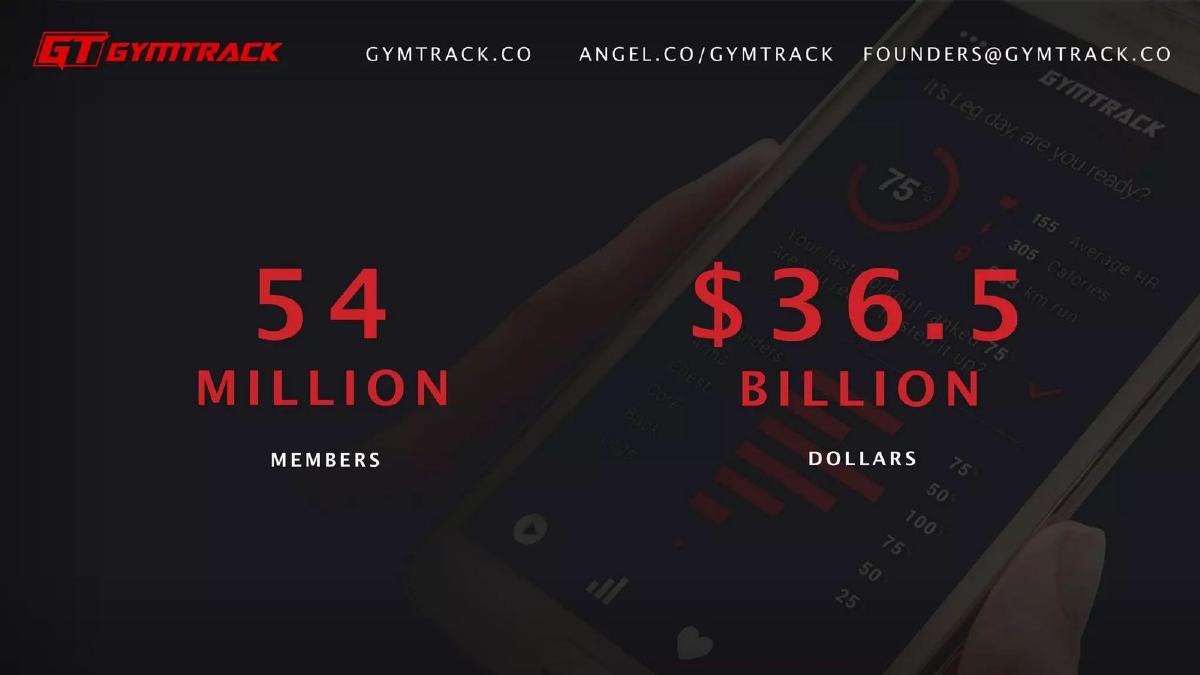
- The deck identifies a total addressable market of 54 million members and $36.5 billion in revenue on slide 2.
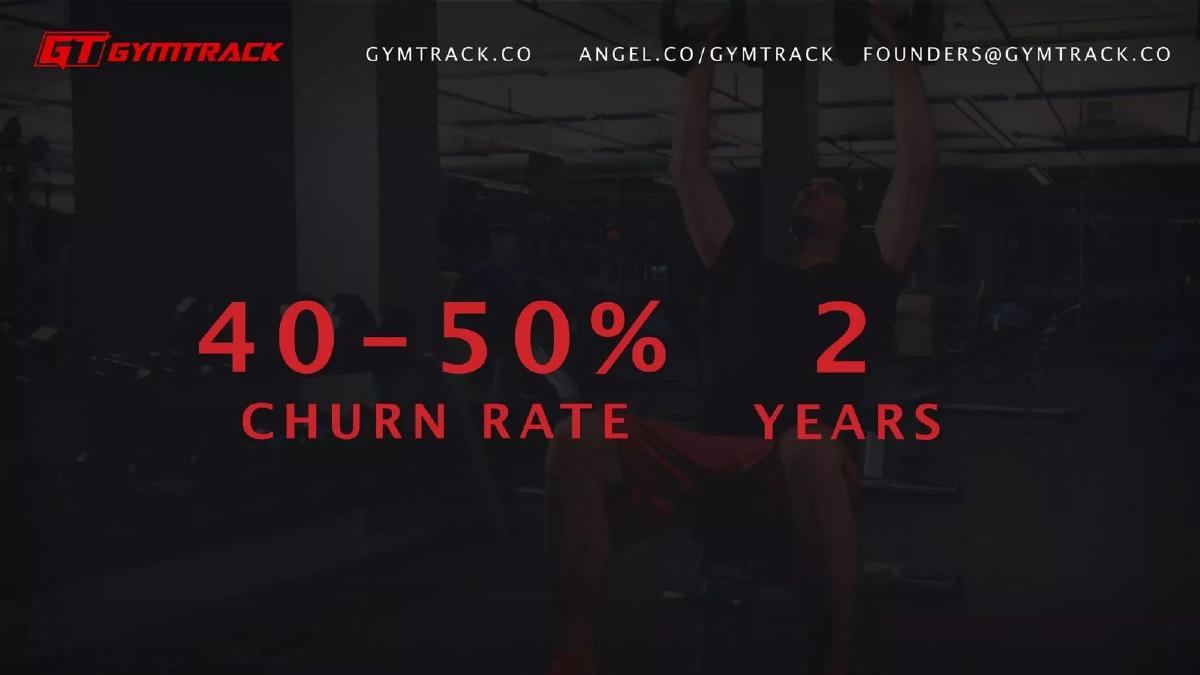
- It highlights a critical industry pain point: a 40-50% churn rate over 2 years on slide 4.
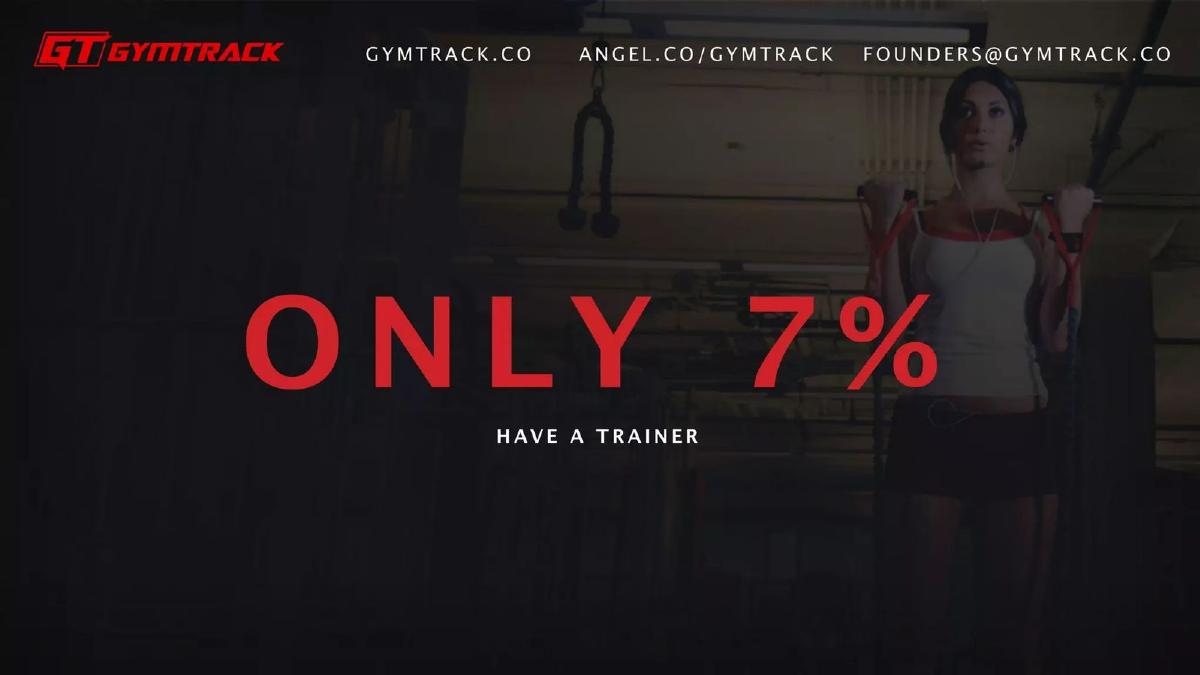
- The solution addresses a service gap where only 7% of gym members currently have a trainer, according to slide 3.
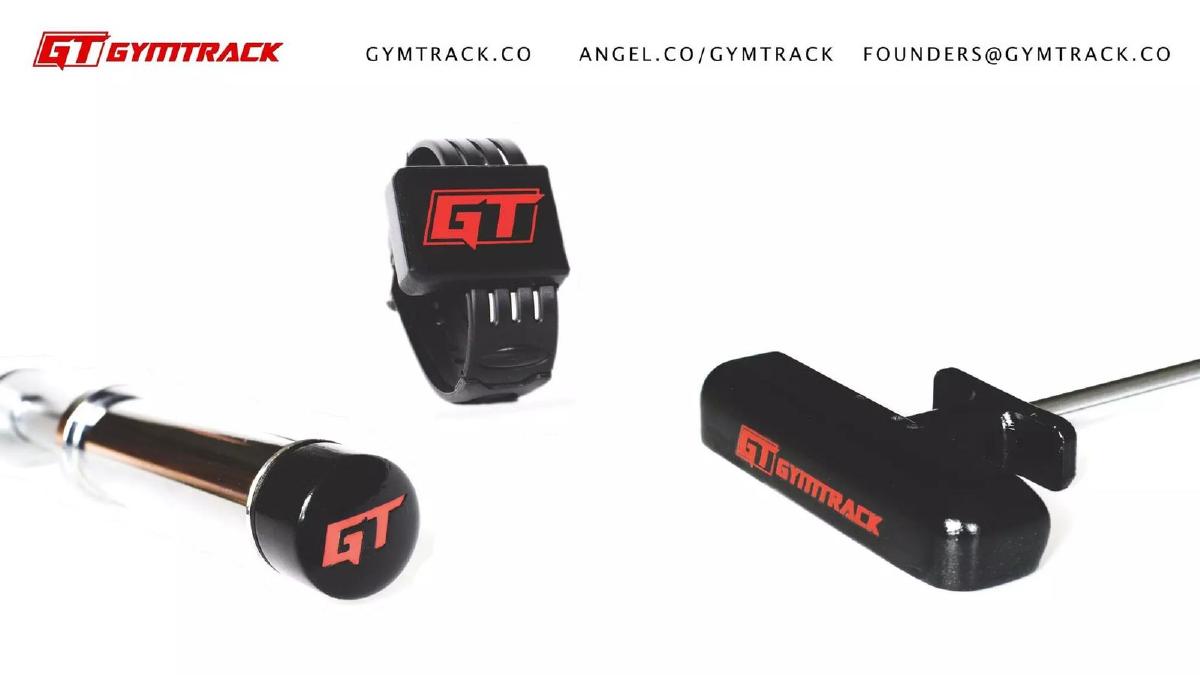
- Gymtrack presents a multi-component hardware solution including wearables and equipment attachments on slide 5.
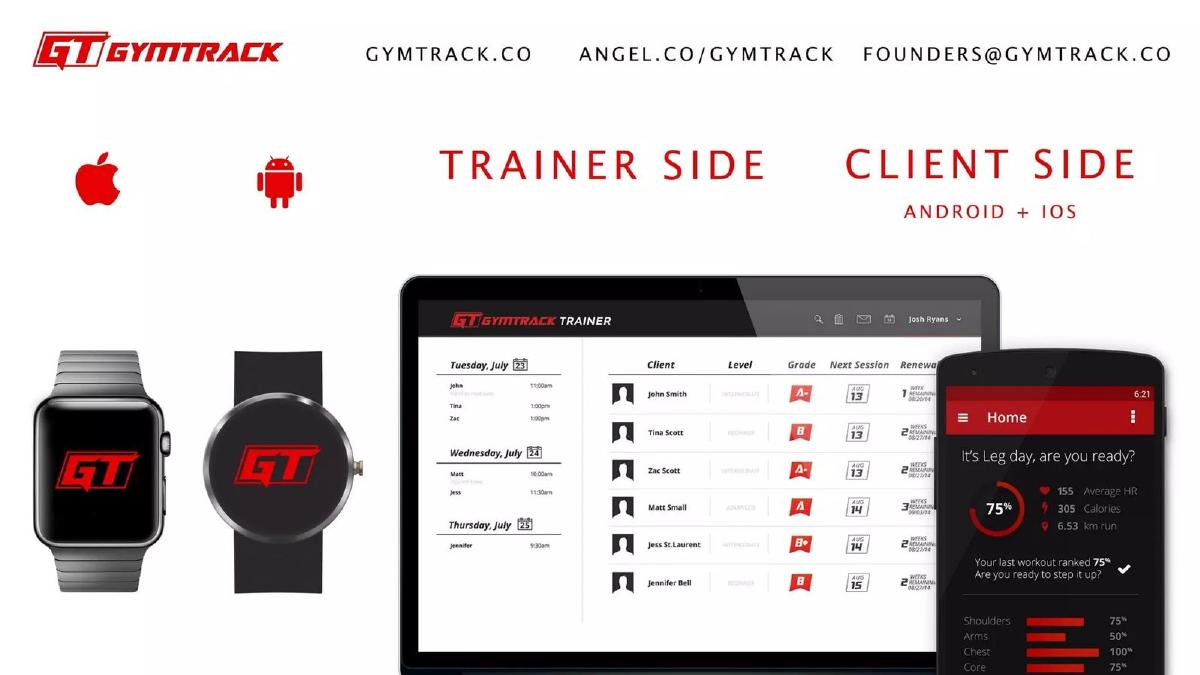
- The software ecosystem covers both a 'Trainer Side' and a 'Client Side' with cross-platform support for iOS and Android on slide 6.
- The team slide emphasizes technical depth, featuring two members with 20+ years of experience each on slide 7.
- The deck uses a repetitive branding strategy, ending with the same logo and tagline used on the cover slide.
- There is a total absence of financial data, competition analysis, or a specific funding request within the 10 slides.
The Minimalist Hardware Play
Gymtrack’s pitch deck is a notable example of the "less is more" philosophy in early-stage fundraising. In an era where decks often bloat to 20 or 30 slides filled with dense charts, Gymtrack raised $4.8 million using just 10 slides, most of which contain fewer than ten words. This teardown examines how they used high-level metrics and visual storytelling to sell a sophisticated hardware-software integration.
Slide 1: Title Slide
The deck opens with a high-contrast black background featuring the Gymtrack logo in red and white. The tagline, "THE FUTURE OF FITNESS," is positioned centrally. It is a standard, clean entry point that establishes the brand identity immediately without clutter. The use of red and black suggests energy and intensity, fitting for the fitness sector.
Slide 2: Market Opportunity
Gymtrack moves immediately to the macro opportunity. Slide 2 displays two massive figures: "54 MILLION MEMBERS" and "$36.5 BILLION DOLLARS." By placing these numbers over a dimmed image of the mobile app, the deck connects the scale of the industry to the product. The slide also includes contact information and an AngelList URL at the top, a recurring header throughout the deck that ensures investors always know how to reach the founders.
Slide 3: The Service Gap
Slide 3 identifies the specific segment of the market that is underserved. The text "ONLY 7% HAVE A TRAINER" highlights a massive inefficiency. If the gym industry is worth $36.5 billion, but only a tiny fraction of members use the highest-value service (personal training), the implication is that there is a vast, untapped market for a solution that provides trainer-like guidance at a lower price point or higher convenience level.
Slide 4: The Retention Problem
This is arguably the most important slide in the deck for a B2B sale. It states a "40-50% CHURN RATE" over "2 YEARS." By highlighting this, Gymtrack isn't just selling a workout tracker to consumers; they are selling a retention engine to gym owners. High churn is the single biggest pain point for fitness clubs, and any technology that can lower this number is an easy sell to a gym's bottom line.
Slide 5: The Hardware Solution
Slide 5 provides the first look at the physical product. It shows three devices: a wearable wristband, a sensor for a barbell, and a smart pin for weight stacks. There is no text on this slide other than the header. It relies entirely on the photography to communicate that Gymtrack has solved the automated tracking problem for both free weights and machines. This is a critical proof-of-concept visual for a hardware startup.
Slide 6: The Software Ecosystem
Following the hardware, slide 6 introduces the software. It divides the platform into "TRAINER SIDE" and "CLIENT SIDE." The visuals show a web-based dashboard for trainers to manage multiple clients (listing names like John Smith and Tina Scott with grades like A- and B) and a mobile app for the gym member. The inclusion of Apple and Android logos confirms cross-platform compatibility. This slide demonstrates that the product is a complete end-to-end system, not just a standalone gadget.
Slide 7: The Team
The team slide is split between "FOUNDERS" and "TECHNICAL TEAM." The founders, Pablo and Lee, are credited with a "successful previous exit" and "managed 150+," respectively. The technical team is the standout here, featuring four individuals, two of whom (Aaron and Mordechai) are listed with "20+ years experience." For a seed-stage company building hardware, showing this level of senior engineering talent is vital for building investor confidence.
Slide 8: The Value Proposition
Slide 8 summarizes the core mission: "REDUCING CHURN" and "AFFORDABLE ACCESS TO TRAINERS." This ties the earlier problem slides (3 and 4) to the solution slides (5 and 6). It serves as a concluding argument for why the business exists and how it generates value for the two primary stakeholders: the gym owner and the gym member.
Slide 9 & 10: Closing and Blank Space
Slide 9 repeats the cover slide, reinforcing the brand and tagline. Slide 10 is a solid black frame, likely used to signal the end of the presentation during a live pitch. There is no "Ask" slide, no timeline, and no financial summary included in this version of the deck.
What Works in the Gymtrack Deck
Extreme Clarity on Pain Points: The deck does an excellent job of isolating two specific, massive problems: high churn and low trainer penetration. By using large, bold text for these metrics, they ensure the investor remembers the 'why' behind the company.
Visual Proof of Product: For a hardware startup, showing the physical units is non-negotiable. Slide 5 shows finished-looking products, which helps move the conversation away from "can you build this?" to "how fast can you sell this?"
Technical Credibility: Highlighting 20+ years of experience for the technical team is a strong move. It suggests that the hardware and software integration—which is notoriously difficult—is being handled by veterans rather than first-time builders.
What is Missing from the Gymtrack Deck
Business Model: There is no explanation of how Gymtrack makes money. Do they sell the hardware to gyms? Is it a lease model? Do they take a cut of virtual training sessions? The lack of a revenue model is a significant omission for a seed deck.
Competition: The fitness tracking space was already crowded in 2013 (Fitbit, Jawbone, etc.). Gymtrack does not address how they differ from consumer wearables or other gym-integrated systems. They rely on the assumption that their specific hardware (weight stack pins) is a unique enough moat.
The Ask: A fundraising deck usually ends with a specific request—how much money is being raised and what will it be used for? This deck ends abruptly with a logo, leaving the financial requirements to the imagination or a separate document.
Unit Economics: There is no mention of the cost to produce the hardware versus the lifetime value of a gym contract. For a hardware-heavy business, these margins are the difference between a scalable venture and a cash-intensive struggle.
What a Founder Should Copy
The One-Idea-Per-Slide Rule: Gymtrack follows this perfectly. Each slide has a singular focus—market size, churn, hardware, team. This prevents the audience from getting distracted by secondary details and keeps the narrative moving quickly.
Metric-Driven Problem Statements: Instead of saying "gyms lose a lot of members," they say "40-50% Churn Rate." Specificity builds authority. Founders should find the one or two metrics that define their industry's failure and lead with them.
Clean Branding: The consistent use of the header with the website and contact info is a professional touch. It makes the deck feel like a cohesive brand package rather than a collection of disparate slides.
Conclusion Gymtrack’s deck is a high-conviction, low-detail presentation. It works because the problem it identifies is undeniably large and the solution it presents is visually tangible. While it leaves many business questions unanswered, it succeeds as a 'hook' deck—designed to generate enough interest to secure a second meeting where the deeper financial and operational details can be discussed. For a $4.8 million seed round, this minimalist approach proved highly effective.
Frequently asked questions
- What is the primary problem Gymtrack is trying to solve?
- Gymtrack targets the high attrition rates in the fitness industry. Slide 4 explicitly states that gyms face a 40-50% churn rate over two years. By providing automated tracking and virtual coaching, the company aims to increase member engagement and retention, solving a multi-billion dollar problem for gym operators who struggle to keep members active and paying.
- How does the hardware component work based on the deck?
- While the deck is light on technical specifications, slide 5 shows three distinct pieces of hardware: a wrist-worn wearable, a barbell/dumbbell end-cap sensor, and a weight stack pin replacement. This suggests a system that tracks both free weight movements and machine-based exercises automatically, feeding data into the software ecosystem shown on slide 6.
- Is there a clear business model presented in these slides?
- No, the deck completely omits a business model or revenue slide. It identifies the market size ($36.5 billion) and the problem (churn), but it does not explain if they sell hardware to gyms, charge a SaaS fee to trainers, or use a B2C subscription model. This information was likely delivered verbally during the pitch.
- What makes the team slide effective for a seed round?
- The team slide (slide 7) balances entrepreneurial success with deep technical expertise. It notes one founder has a 'successful previous exit' and another 'managed 150+.' Crucially, it highlights two technical team members with over 20 years of experience each, which mitigates the perceived risk of developing a complex hardware-software hybrid product.
- Why is the 'Only 7% have a trainer' slide significant?
- Slide 3 identifies a massive 'white space' in the market. If 93% of gym members are working out without professional guidance, there is a significant opportunity to provide an 'affordable access to trainers' (as stated on slide 8) through automation. It frames Gymtrack as a tool to monetize the vast majority of members who can't afford traditional 1-on-1 training.