Hack Fund’s pitch deck outlines a venture capital strategy predicated on 'Market Arbitrage,' specifically targeting the 2x to 10x valuation difference between Silicon Valley and global markets. The fund differentiates itself through a highly unconventional fee structure: 0% carry (with exits reinvested), no management fees, and operational costs repaid by a managing company at a 5% rate. With a track record of 55 companies and $100 million raised, the fund claims a $650 million valuation achieved in five years. The deck relies heavily on social proof, featuring an extensive list of 36 'Portfo…
Key takeaways
- The core investment thesis is based on a 2x to 10x valuation arbitrage between Silicon Valley and global markets (Slide 2).
- The fund employs a disruptive fee model featuring 0% carry and no recurring management fees (Slide 3).
- Historical performance includes 55 companies, $100 million raised, and 7 exits over a 5-year period (Slide 4).
- The fund claims two portfolio companies are on an IPO track within a 2 to 3-year window (Slide 4).
- Liquidity is intended to be achieved through public listing rather than traditional fund cycles (Slide 7).
- The organization provides business and financial consulting alongside community building to support its startups (Slide 9).
- The deck leverages a massive network of 36 experts to assist in portfolio review and due diligence (Slide 8).
- Portfolio companies serve high-profile enterprise customers including Amazon, Tesla, and Bank of America (Slide 10).
The Hack Fund Pitch Deck: A Global Arbitrage Play
Hack Fund presents a venture capital model that challenges the traditional '2 and 20' structure. By focusing on the valuation gap between Silicon Valley and the rest of the world, the fund seeks to provide a different risk-reward profile for its investors. The deck is structured to emphasize scale, network effects, and a disruptive financial model.
Slide 1: Title and Geographic Scope
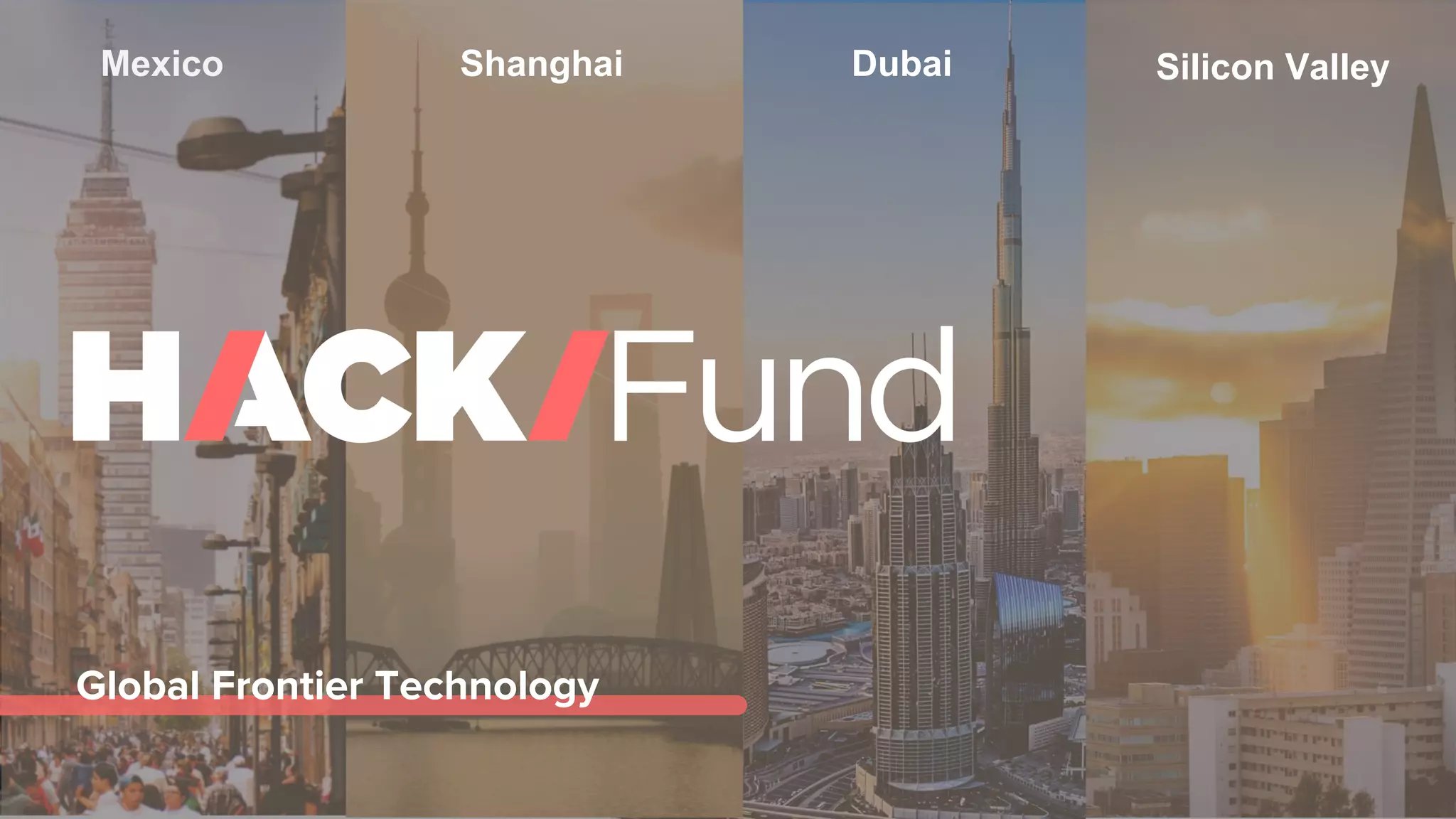
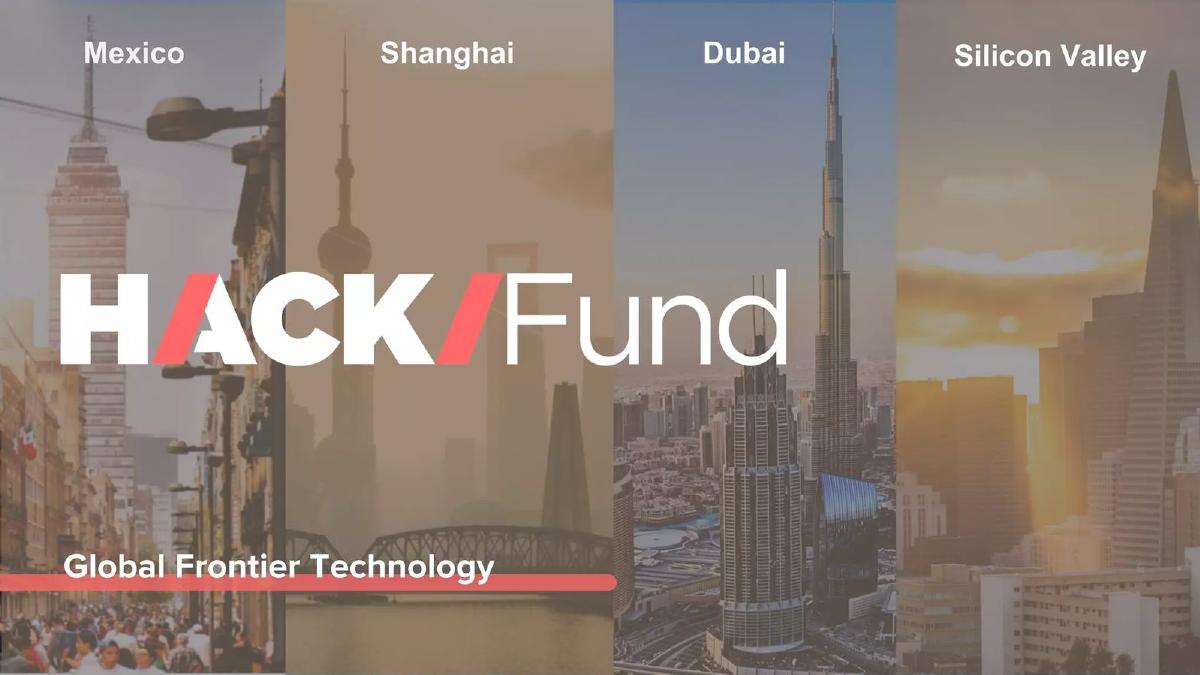
The cover slide introduces Hack Fund as a 'Global Frontier Technology' investor. The background imagery features four key hubs: Mexico, Shanghai, Dubai, and Silicon Valley. This immediately establishes the fund's thesis: bridging the gap between emerging tech hubs and the world's primary capital market. The branding is clean, using a bold 'HACK/Fund' logo that suggests a connection to the broader Hackers/Founders community.
Slide 2: The Core Thesis - Market Arbitrage
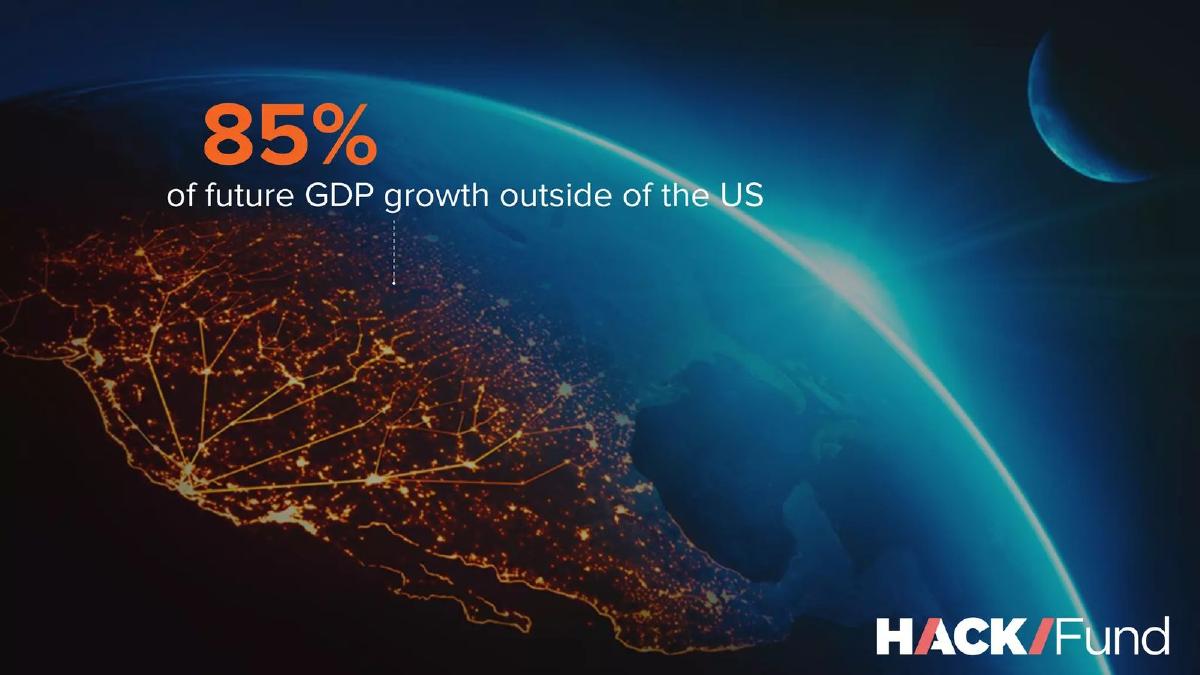
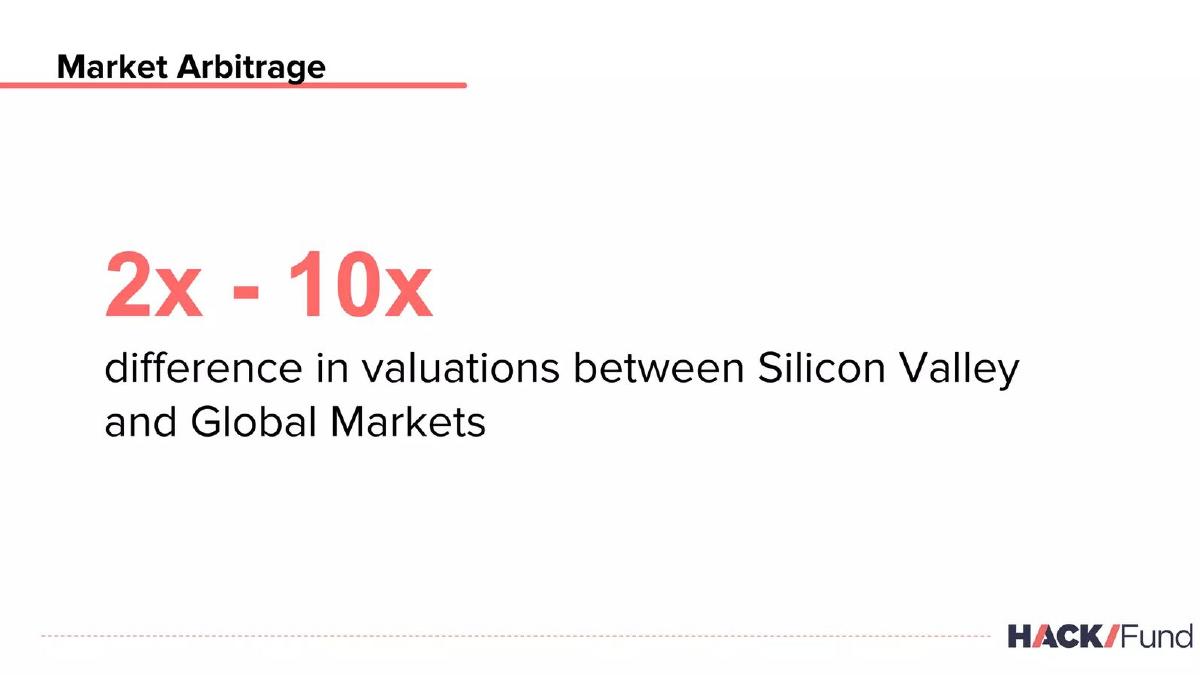
Slide 2 identifies the primary driver of the fund's potential returns: 'Market Arbitrage.' It claims a 2x - 10x difference in valuations between Silicon Valley and global markets. This is a classic 'buy low' strategy, suggesting that equivalent technology and talent can be secured at a fraction of the cost outside of the San Francisco Bay Area, with the potential for massive upside if those companies eventually compete on a global stage.
Slide 3: A Disruptive Fee Structure
This is perhaps the most unconventional slide in the deck. Hack Fund outlines three pillars of its financial model:
0% Carry: The slide states that 'Exits are reinvested in the fund.' This implies a permanent capital vehicle or a rolling fund structure where the managers do not take the standard 20% of profits. · Operations Repayment: Instead of a management fee, operational costs are 'repaid by managing company at 5%.' · No Management Fees: The deck explicitly notes the absence of recurring fees typical in other funds.
This model is designed to appeal to LPs who are wary of high fee loads, though it raises questions about how the management team is incentivized long-term if not through carry.
Slide 4: Track Record and Momentum
Slide 4 provides the hard data intended to validate the model. The fund claims to have:
Invested in 55 Companies . · Raised $100,000,000 . · Achieved a $650,000,000 Valuation in just 5 years . · Realized 7 Exits . · Identified 2 companies on an IPO track within 2 to 3 years.
These figures suggest a high-velocity investment pace and a significant markup on the initial capital raised.
Slide 6: The Advisory Board
The 'Advisors' slide is heavy on regulatory and institutional credibility. Key figures include:
Annemarie Tierney: Former VP at NASDAQ and Assistant General Counsel at NYSE Euronext, described as an expert in securities law and secondary liquidity. · Mark Lopes: Former U.S. Executive Director at the Inter-American Development Bank, appointed by President Obama. · Will Bunker: Co-founder of the site that became Match.com. · Nick Sullivan: Founder of ChangeCoin and mentor at 500 Startups.
The inclusion of a former SEC/NASDAQ executive is likely a strategic move to support the fund's goal of publicly listing for liquidity.
Slide 7: The Liquidity Strategy
Slide 7 features a minimalist design with a water splash graphic and the text: 'Publicly listing unlocks liquidity.' It argues that this approach 'Enables global investment without worrying about exit strategy.' This implies the fund may be structured as a publicly traded entity or uses tokenization/SPACs to allow investors to enter and exit their positions more freely than a standard 10-year closed-end fund.
Slide 8: The Expert Network
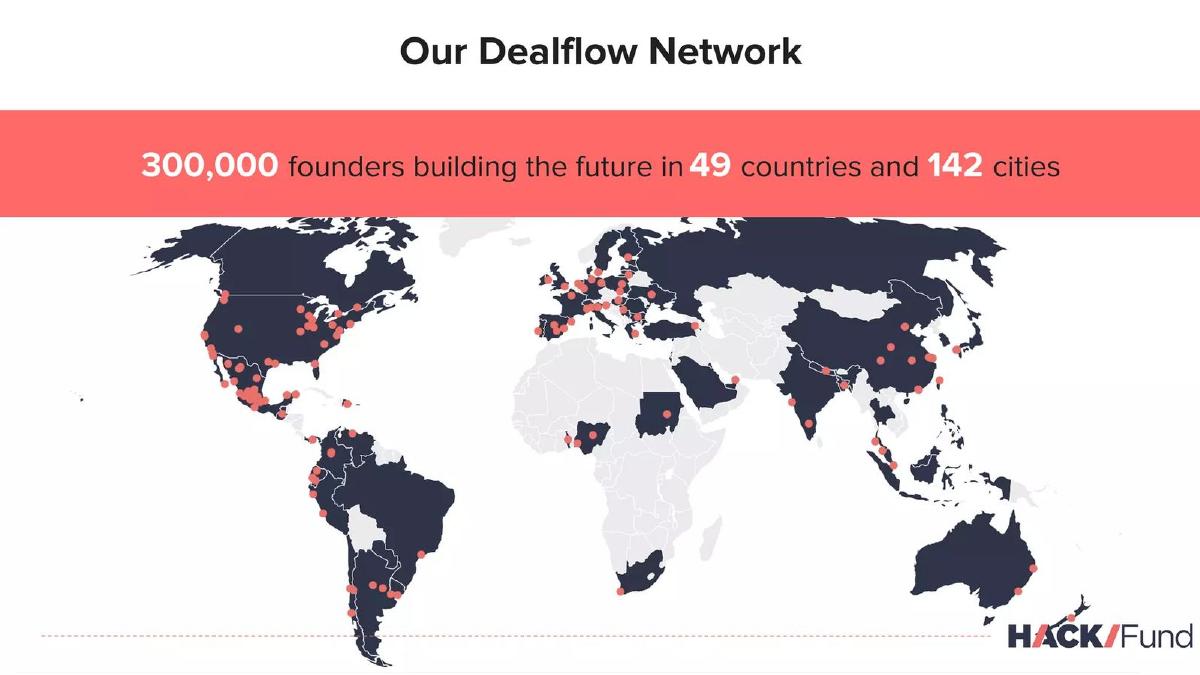
This slide displays 36 'Portfolio Review Experts.' The sheer volume of faces is intended to demonstrate a massive top-of-funnel for deal flow and a robust vetting process. Notable names include Derek Andersen (Startup Grind), Leo Polovets (Susa Ventures), and Monique Woodard (Black Founders). By listing these individuals, Hack Fund suggests it has an 'army' of specialists to assist its relatively small core team.
Slide 9: Operational Support
The deck asks, 'What Does Hackers/Founders Do?' and answers with three categories:
Business Consulting: Helping tech companies establish a Silicon Valley presence. · Financial Consulting: Ranging from launch capital to wealth management. · Community Building: Cultivating startups globally.
This slide clarifies that the fund is an extension of an existing ecosystem (Hackers/Founders) rather than a standalone financial entity.
Slide 10: Enterprise Validation
The final slide in this selection shows the 'Customers of our portfolio companies.' It features 18 major logos, including Facebook, Uber, Amazon, Tesla, Netflix, Intel, and Coca-Cola . While the deck does not specify which portfolio company serves which customer, the slide is intended to prove that the 'Frontier Technology' being funded is of enterprise grade and capable of selling to the world's largest corporations.
What Works in This Deck
The Arbitrage Argument: The 2x-10x valuation gap is a compelling and easy-to-understand hook. It provides a clear 'why' for investing in non-US markets.
Social Proof: The advisory board and the expert network slides are exceptionally strong. For a fund that is proposing a non-traditional model, having former SEC and NYSE leadership on the slide deck provides a necessary layer of perceived safety and regulatory competence.
Fee Transparency: The 0% carry and no management fee slide is a bold differentiator. In a crowded VC market, this is a 'purple cow' that will almost certainly guarantee a follow-up conversation with interested LPs.
What Is Missing
Specific Portfolio Data: While the deck mentions 55 companies and 7 exits, it does not name the companies or provide the multiples on those exits. Investors would need to see a detailed schedule of investments to verify the $650 million valuation claim.
The 'How' of Public Listing: Slide 7 makes a big promise about liquidity through public listing but provides zero detail on the mechanism. Is this a Reg A+ offering? A listing on a secondary exchange? A tokenized fund? Given the regulatory hurdles, this requires more than a single sentence.
Management Team: Interestingly, the 10 slides provided focus on advisors and 'experts' rather than the GPs (General Partners) who will be making the day-to-day decisions. A fund is only as good as its full-time decision-makers.
Founder Takeaways
Lead with the 'Gap': If your business model relies on an inefficiency in the market (like valuation gaps), make that the very first thing you explain. It sets the stage for everything else.
Leverage Your Ecosystem: If you have a large community or network, don't just say 'we have a network.' Show the faces and titles of the people in it. The 'Expert' slide in this deck is a masterclass in visual social proof.
Challenge the Status Quo: If you are entering a mature industry (like VC), find one 'sacred cow' to slaughter. For Hack Fund, it was the fee structure. For a startup, it might be the pricing model or the distribution channel. Being 'different' is often more important than being 'better' in a pitch deck.
Frequently asked questions
- How does Hack Fund make money if they charge 0% carry?
- According to slide 3, Hack Fund does not take a traditional carry; instead, exits are reinvested back into the fund to benefit investors and drive fund success. Operational costs are not covered by a management fee but are repaid by the managing company at a fixed 5% rate. This aligns the fund's growth directly with the portfolio's appreciation rather than skimming off the top of committed capital.
- What is the primary market focus for Hack Fund?
- Hack Fund focuses on 'Global Frontier Technology,' as stated on the title slide. Their strategy specifically targets 'Global Markets' where valuations are significantly lower (2x to 10x) than in Silicon Valley. By investing in these regions—specifically mentioning Mexico, Shanghai, and Dubai—they aim to capture the value gap when these companies scale or exit into more expensive markets.
- What kind of support does Hack Fund provide to its startups?
- Beyond capital, slide 9 indicates that the Hackers/Founders organization provides business consulting to help companies establish a presence in Silicon Valley. They also offer financial consulting ranging from launch capital to wealth management, and engage in global community building to cultivate new generations of startups.
- Who evaluates the potential investments for the fund?
- The fund utilizes a broad network of 'Portfolio Review Experts.' Slide 8 lists 36 individuals from various sectors, including founders of companies like Startup Grind and Storify, attorneys, and directors from firms like Greylock Partners, Susa Ventures, and Microsoft. This suggests a decentralized or highly collaborative due diligence process.
- What is the fund's strategy for investor liquidity?
- Slide 7 explicitly states that 'Publicly listing unlocks liquidity.' This suggests the fund itself, or the vehicles within it, may seek to be traded on public exchanges. The slide claims this enables global investment without the traditional constraints of a fixed-term exit strategy typical of private equity or venture capital funds.