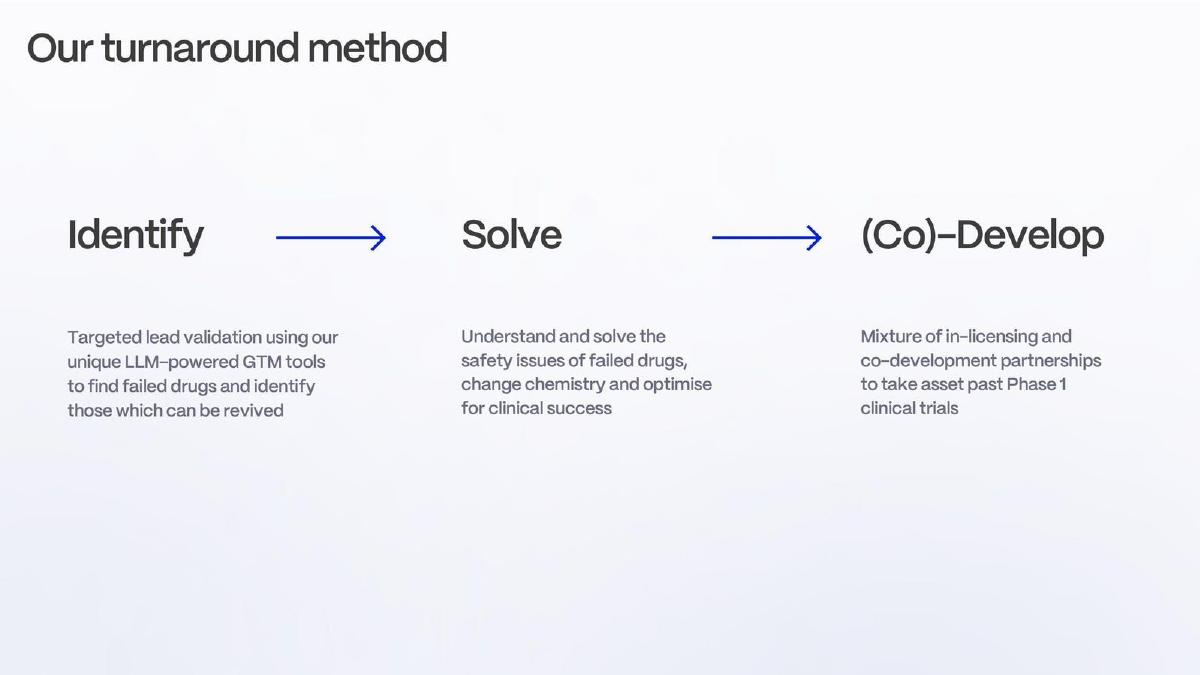
Ignota Labs secured $6.9M in Seed funding in 2024 to tackle the massive inefficiency in pharmaceutical R&D. Their 14-slide deck centers on a 'salvage' model: using AI to identify why drug candidates failed clinical trials and redesigning them to bypass those specific safety hurdles. By focusing on 'distressed' assets, Ignota claims they can reduce the time to clinic from 8 years to 2 years and cut discovery costs from tens of millions to under $1M. The deck effectively uses a Sankey diagram to visualize the $400B annual loss in pharma due to safety failures, positioning their SafePath platfor…
Key takeaways
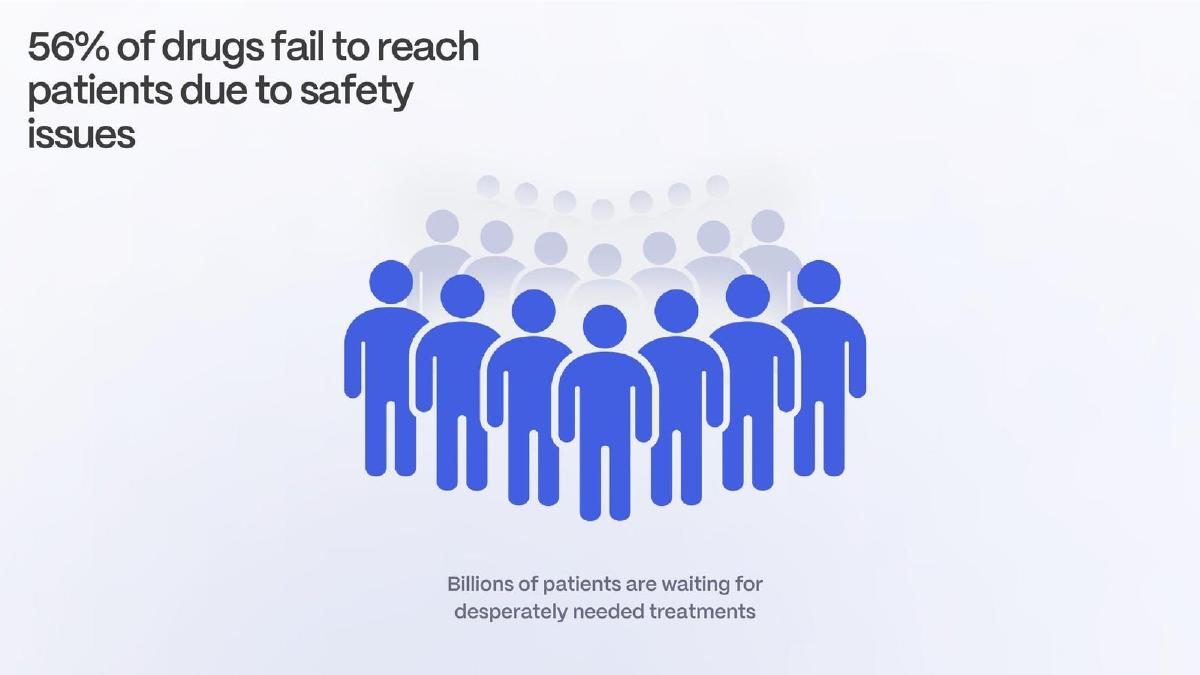
- Safety failures account for 56% of drug trial collapses, contributing to a $400B annual loss for the pharma industry (Slide 2).
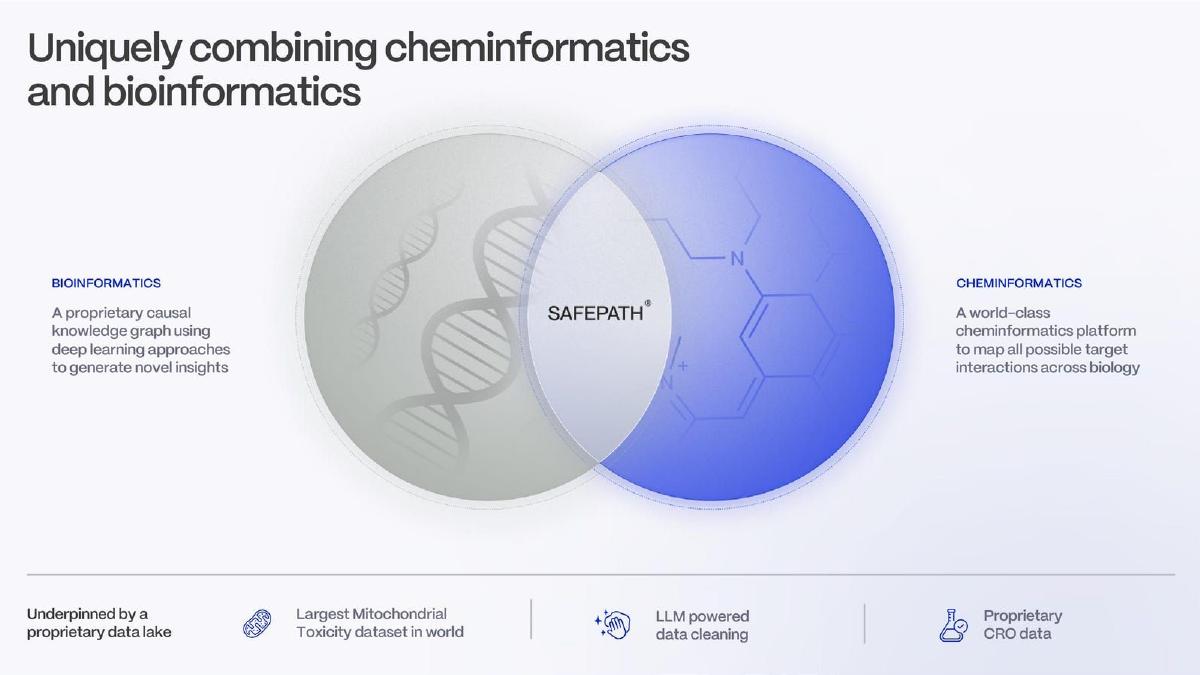
- The SafePath platform combines a proprietary causal knowledge graph (bioinformatics) with a target interaction mapping platform (cheminformatics) (Slide 3).
- Ignota claims to reduce the time to clinic by 75%, moving from a traditional 8-year cycle to just 2 years (Slide 4).
- The business model relies on acquiring 'distressed' assets at low prices, validating them with wet-lab data, and out-licensing or selling them (Slide 6).
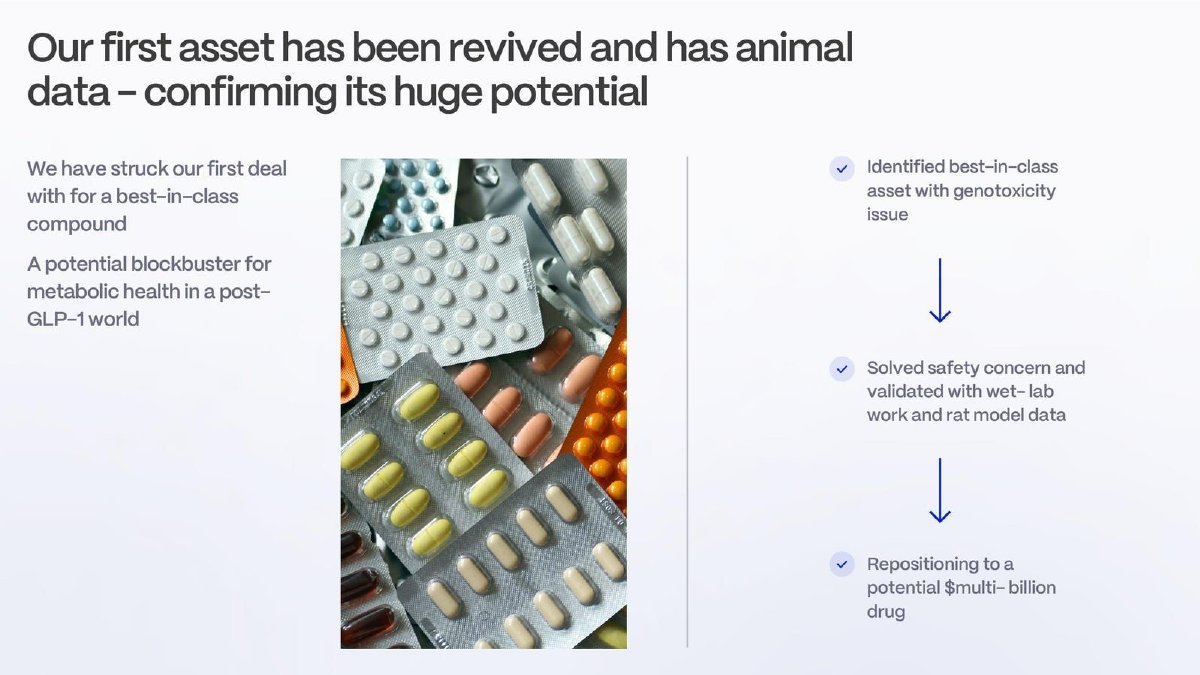
- The company has already revived one asset for metabolic health, validating it with rat model data (Slide 5).
- The leadership team includes veterans from DeepMind's AlphaFold, AstraZeneca, and BenevolentAI (Slide 7).
- The 5-year roadmap targets a first asset sale by Year 3 and an IPO by Year 5 (Slide 6).
- The deck omits a specific 'Ask' slide detailing the exact use of the $6.9M raised or the valuation sought.
The Salvage Value of Biotech: Ignota Labs Pitch Deck Analysis
Ignota Labs operates in the high-stakes world of drug discovery, but with a unique twist: they don't want to find new drugs; they want to fix the ones that broke. Their 2024 Seed deck, which successfully raised $6.9M as reported by Business Insider, presents a compelling case for 'Portfolio Rehabilitation.' By applying AI to the massive graveyard of failed clinical trials, Ignota positions itself as a high-efficiency engine for pharmaceutical value recovery.
Slide 1: The Mission Statement
The deck opens with a minimalist title slide: "Turning around failing drugs to bring new hope to patients." This immediately establishes the company's category. They are not a discovery company; they are a turnaround company. The branding is clean, professional, and avoids the cluttered scientific imagery often found in early-stage biotech decks.
Slide 2: The $400 Billion Leak
Slide 2 is the strongest visual in the deck. It uses a Sankey diagram to track the flow of drug candidates from regulatory pre-clinical trials through Phase 2. The data is stark: 56% of failures are due to safety issues . The slide concludes that this represents "over $400B lost every year." By quantifying the problem so aggressively, Ignota makes the case that even a small success rate in 'reviving' these assets represents a multi-billion dollar opportunity. This slide sets the stage for their solution to be viewed as a financial imperative for Big Pharma, not just a scientific curiosity.
Slide 3: The SafePath Platform
Slide 3 introduces SafePath , the proprietary technology underpinning the business. It is presented as a Venn diagram overlapping Bioinformatics and Cheminformatics. Key technical moats listed include:
A proprietary causal knowledge graph using deep learning. · A world-class cheminformatics platform to map target interactions. · The "Largest Mitochondrial Toxicity dataset in world." · LLM-powered data cleaning and proprietary CRO data.
This slide successfully balances the 'AI' hype with specific biological focus areas (mitochondrial toxicity), which gives investors confidence that the AI has a specific, high-value domain to operate within.
Slide 4: The Efficiency Comparison
Slide 4, titled "Designed for maximum value," provides a side-by-side comparison between 'Traditional Drug Discovery' and the 'Ignota Labs Approach.' The metrics are designed to be disruptive:
Go to market: 7-8 years vs. 2 years . · Cost: $10m's vs. <$1m . · Portfolio value: $0 (failed projects written off) vs. $Billions (restored value).
This is a classic 'faster, cheaper, better' slide. For a Seed stage investor, the promise of reaching the clinic in 2 years rather than a decade is a powerful incentive, as it drastically reduces the time to a liquidity event or a major licensing deal.
Slide 5: Proof of Concept
Evidence of execution appears on Slide 5. The company claims to have already struck a deal for a "best-in-class compound" targeting metabolic health. The slide outlines a three-step validation: identifying a genotoxicity issue, solving it via wet-lab and rat model data, and repositioning it as a "potential $multi-billion drug." The mention of a "post-GLP-1 world" is a timely nod to current market trends in obesity and metabolic disease, signaling that the founders understand where the largest commercial appetites currently lie.
Slide 6: The 5-Year Roadmap
Slide 6 outlines the "explosive profit model." It is a linear growth chart spanning Year 0 to Year 5. The milestones are clearly defined:
Year 2: First asset in clinic. · Year 3: First asset sale. · Year 4: Multiple asset sales. · Year 5: IPO with a huge pipeline of revived assets.
This slide clarifies the business model: Ignota is an asset factory. They aren't necessarily looking to become a fully integrated pharmaceutical company that brings drugs to market themselves; they are looking to de-risk assets and sell them to those who can.
Slide 7: The Team
The final slide in this selection showcases a "World-class team in science, ML and business." The pedigree is significant, featuring logos from DeepMind (AlphaFold), AstraZeneca, MSD, BenevolentAI, and the University of Cambridge . CEO Sam Windsor is noted for a decade in healthtech, and CSO Jordan Lane is credited with 5 previous assets currently in clinical development. This level of institutional experience is likely what gave investors the confidence to back a $6.9M Seed round for a relatively complex biological play.
What Works in This Deck
1. The Economic Argument: Most biotech decks focus on the tragedy of disease. Ignota focuses on the tragedy of wasted capital. By framing the problem as a $400B annual loss, they appeal to the rational, ROI-driven side of venture capital.
2. Speed to Value: The comparison slide (Slide 4) is incredibly effective. In a high-interest-rate environment where 'long-duration' bets are harder to fund, a biotech company promising a 2-year path to the clinic is highly attractive.
3. Specificity of Data: Claiming the "largest mitochondrial toxicity dataset" is a specific, verifiable moat. It moves the conversation from "we have AI" to "we have the specific data required to solve the safety problems that kill 56% of drugs."
What Is Missing
1. The Ask: The provided slides do not include a formal 'Ask' or 'Use of Funds' slide. While we know from publisher reports that they raised $6.9M, a standard pitch deck should specify how that capital will be allocated (e.g., how many assets will be revived, what wet-lab capacity will be built).
2. Unit Economics of Acquisition: While the deck mentions acquiring 'distressed' assets at low prices, it doesn't explain the mechanics. Are these IP purchases, royalty-sharing agreements, or joint ventures? The financial structure of these acquisitions is a key part of the risk profile.
3. Competitive Landscape: There is no mention of other AI-driven drug discovery firms (like Recursion or Exscientia) or other 'asset hunters.' Explaining why Ignota's safety-first approach is superior to others' discovery-first approach would strengthen the narrative.
Founder Takeaways
Quantify the 'Waste': If your startup makes a process more efficient, don't just show the new process. Show the 'Sankey diagram' of the current system's failures. Visualizing where money and effort disappear makes your solution feel like a rescue mission rather than just an improvement.
Focus on the 'Why' of Failure: Ignota didn't just say drugs fail; they identified that 56% fail for safety . If you are entering a crowded market, find the specific sub-reason for failure in that market and build your entire identity around fixing that one thing.
The 'Asset Factory' Model: For deep tech and biotech founders, the 'IPO in 5 years' slide is often dismissed as fantasy. However, Ignota makes it feel plausible by tying it to a repeatable process (Acquire -> Develop -> Monetize) rather than a single 'moonshot' drug. If your business is a platform, show the conveyor belt of value, not just the end product.
Frequently asked questions
- What is the core problem Ignota Labs is solving?
- Ignota Labs addresses the high failure rate in drug discovery. According to slide 2, safety failures represent 56% of all clinical trial collapses, leading to over $400 billion in lost investment for the pharmaceutical industry every year. They aim to recover this lost value by fixing the specific safety issues that caused these drugs to fail.
- How does Ignota Labs' timeline compare to traditional drug discovery?
- Slide 4 highlights a significant acceleration. Traditional drug discovery takes 7-8 years and tens of millions of dollars to reach the clinic. Ignota Labs claims their approach takes only 2 years and costs less than $1 million by leveraging existing knowledge and reviving failed projects rather than starting from scratch.
- What is the 'SafePath' platform mentioned in the deck?
- SafePath is the company's proprietary technology platform. As shown on slide 3, it sits at the intersection of bioinformatics (using a causal knowledge graph) and cheminformatics (mapping target interactions). It is supported by a proprietary data lake, including a world-leading mitochondrial toxicity dataset and LLM-powered data cleaning.
- What evidence of traction does the deck provide?
- Slide 5 details their first successful asset revival. They identified a best-in-class compound with a genotoxicity issue, solved the safety concern, and validated the fix with wet-lab work and rat model data. They describe this as a potential blockbuster for metabolic health in a 'post-GLP-1 world.'
- What is the long-term exit strategy for Ignota Labs?
- According to the 'explosive profit model' on slide 6, the company plans to monetize through fast-tracked out-licensing and strategic partnerships. Their timeline projects the first asset sale in Year 3, multiple asset sales in Year 4, and an IPO with a large pipeline of revived assets by Year 5.