The PeaZy Demo Day pitch deck introduces a password management solution aiming to simplify online logins. The initial slides present a problem of complex and insecure passwords through visual examples of login screens and common weak passwords. The proposed solution is described as a two-part software: an app for identification and a browser extension for logging in, promising 'FREEDOM'. The monetization strategy is a freemium model, offering 10 free sites, a 50-cent charge for each additional site, or a $5 unlock for all sites. The deck, however, is incomplete, with only 6 of 12 slides provi…
Key takeaways
- The deck presents PeaZy as a solution for simplifying online logins, with the tagline 'It's Just That Easy' (Slide 1).
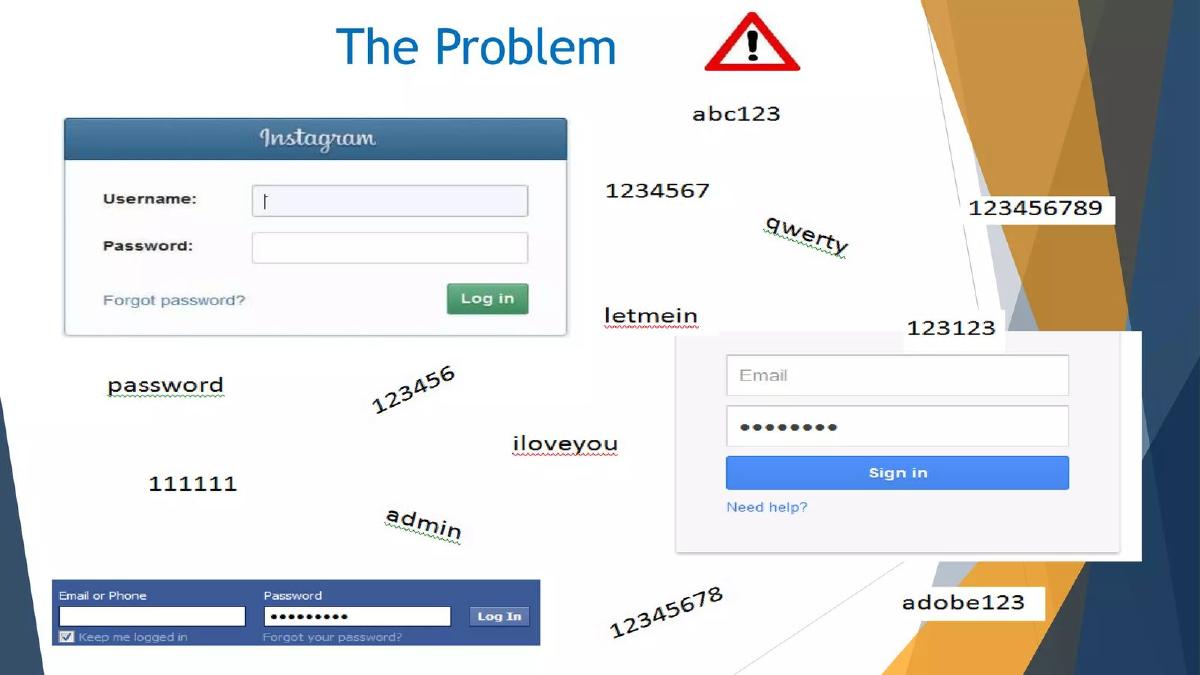
- The problem is illustrated through multiple login screens and examples of weak passwords like '1234567' and 'password' (Slides 2, 3).
- PeaZy's solution is conceptualized as providing 'FREEDOM' from password complexity (Slide 4).
- The mechanism involves 'Two connected softwares: App - the identifying 'key'. Browser extension - logs you in' (Slide 5).
- The monetization model is 'Freemium', offering '10 free sites', '50 cent for every extra site you add', and '$5 to unlock all sites' (Slide 6).
- Only 6 of the total 12 slides were provided, leaving significant gaps in the pitch (Source Listing).
- The deck omits common pitch deck elements such as market size, team information, competitive analysis, traction, or a specific funding ask.
PeaZy Pitch Deck Teardown: Early-Stage Password Management Solution
This teardown analyzes the PeaZy Demo Day pitch deck, focusing on the first six slides provided. PeaZy presents itself as a solution for simplifying online logins and password management. The deck attempts to establish a clear problem and solution, followed by an initial monetization strategy. However, with only half of the total slides available, many critical elements of a comprehensive pitch are absent.
Slide 1: Title Slide
The deck opens with a title slide featuring the company name, PeaZy, prominently displayed in a custom logo. The logo uses a two-tone color scheme of teal and orange, with the 'A' stylized to resemble a keyhole or a lock. Beneath the logo, the tagline 'It's Just That Easy' is presented in orange text. The background features a geometric design with shades of blue and orange, consistent across all provided slides. This slide serves as a basic introduction to the company and its core promise of simplicity.
Slide 2: Things are getting pretty serious ...
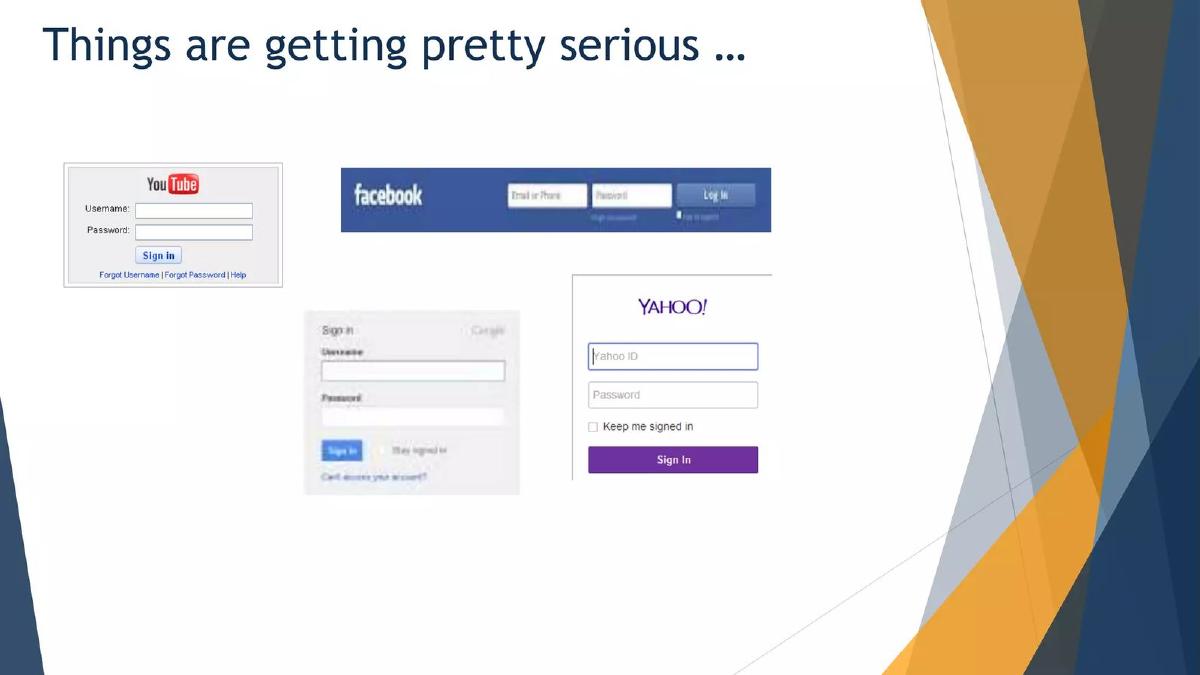
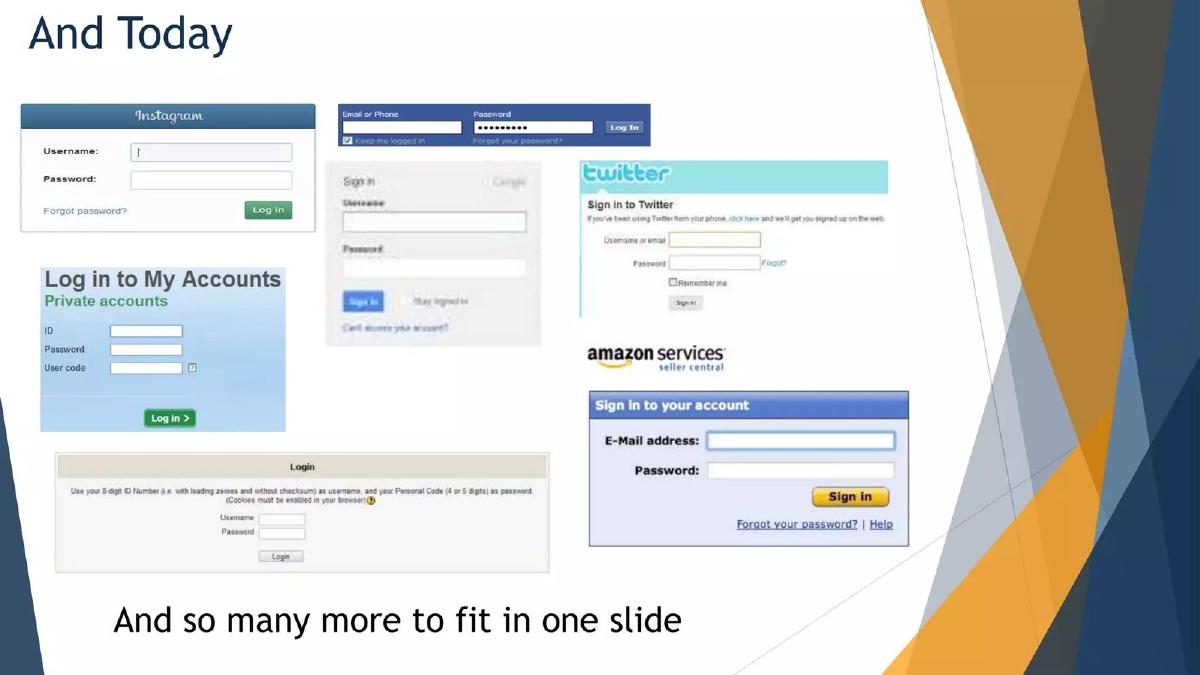
This slide introduces the problem statement, albeit indirectly, with the title 'Things are getting pretty serious ...'. The content consists of four images of various login screens from popular platforms: YouTube, Facebook, a generic sign-in form, and Yahoo! ID. These images are presented without additional text or explanation, implying that the proliferation of login screens and the need to remember multiple credentials constitutes a significant and growing challenge for users. The visual approach aims to quickly convey the ubiquity of password-protected services.
Slide 3: The Problem
Following the previous slide's introduction, Slide 3 explicitly labels its purpose as 'The Problem'. This slide continues the visual theme, featuring an Instagram login screen and another generic login form. Surrounding these forms are numerous examples of weak or commonly used passwords, such as 'abc123', '1234567', 'qwerty', 'letmein', '123123', 'password', '123456', 'iloveyou', '111111', 'admin', '12345678', and 'adobe123'. An exclamation mark icon within a triangle (a common warning symbol) is placed next to the title, further emphasizing the severity of the problem. This slide effectively illustrates the dual issues of password complexity and the resulting user tendency to choose insecure passwords.
Slide 4: The Solution
Titled 'The Solution', this slide is notably sparse. It features the text 'PaeZy's Logo' (note the misspelling of 'PeaZy' here) centered on the upper half of the slide. The dominant visual element is a large image of the word 'FREEDOM' spelled out in clouds against a blue sky. This slide aims to convey the emotional benefit of the solution – liberation from password woes – rather than detailing its mechanics. The lack of specific product details at this stage might be intended to build anticipation, but it leaves the audience without concrete information about what PeaZy actually does.
Slide 5: How it works?
This slide, titled 'How it works?', begins to explain the functional aspects of PeaZy. It states: 'Two connected softwares:'. These are then bulleted: '► App - the identifying "key".' and '► Browser extension - logs you in'. On the right side of the slide, two images are displayed: one depicting the Android robot logo within a shopping bag, and another showing a cluster of colorful gears, some of which resemble browser icons (like Chrome). These visuals suggest that PeaZy operates as an Android application and a browser extension, integrating to provide its service. The description is concise, outlining the core components of the system.
Slide 6: “Money makes the world go round...”
The final provided slide, titled '“Money makes the world go round...”', addresses PeaZy's monetization strategy. It specifies a '► "Freemium":' model. The details are listed as: '10 free sites', '50 cent for every extra site you add', and '$5 to unlock all sites'. A small, oval-shaped graphic with two dollar signs ('$$') is positioned in the upper right corner, reinforcing the financial theme. This slide clearly outlines the pricing structure, indicating a tiered approach to accessing the full functionality of the service.
What Works Well
Clear Problem Statement (Slides 2 & 3): The deck effectively uses visual examples of login screens and common weak passwords to quickly convey the problem of password complexity and insecurity. This approach is relatable and immediately understandable to a broad audience. · Simple Value Proposition (Slide 1 & 4): The tagline 'It's Just That Easy' on Slide 1 and the 'FREEDOM' imagery on Slide 4 clearly communicate the desired outcome and emotional benefit for the user, focusing on simplicity and liberation from a common frustration. · Concise Explanation of Mechanism (Slide 5): Slide 5 provides a straightforward, high-level overview of how the solution works, identifying the two core components (app and browser extension) and their respective roles. This avoids technical jargon while still informing the audience. · Transparent Monetization Model (Slide 6): The freemium pricing structure is clearly laid out on Slide 6, detailing the free tier, per-site cost, and an unlimited access option. This provides immediate clarity on how the company plans to generate revenue.
What is Missing
The most significant omission is the fact that only 6 of the 12 total slides were provided. This inherently means a substantial portion of the pitch deck is missing. Based on the provided content, several critical elements are absent:
Team Slide: There is no information about the founders, their experience, or their qualifications to build and scale PeaZy. This is a fundamental component for investors assessing the team's capabilities. · Market Opportunity/Size: The deck does not quantify the market for password management solutions or identify the target audience size. This leaves investors without an understanding of the potential scale of the business. · Competitive Landscape: No mention is made of existing password managers (e.g., LastPass, 1Password, Dashlane) or other security solutions. Without this, it's unclear how PeaZy differentiates itself or plans to compete. · Traction/Metrics: For a demo day presentation, some form of traction (e.g., user numbers, growth rates, early revenue, beta testers) would be expected. The provided slides offer no data on the company's progress. · Roadmap/Future Vision: There is no indication of future features, product development plans, or the long-term vision for PeaZy. · Financial Projections: No financial forecasts, revenue models beyond the basic pricing, or unit economics are presented. · The Ask: Crucially, the deck does not state what PeaZy is seeking from investors (e.g., amount of funding, use of funds, type of round). · Contact Information: There is no slide dedicated to contact details for interested parties. · User Experience/Product Screenshots: While the 'How it works?' slide explains the components, there are no actual screenshots or demonstrations of the PeaZy app or browser extension in action, which would enhance understanding and credibility.
What a Founder Should Copy
Visual Problem Storytelling: The use of multiple login screens and examples of weak passwords (Slides 2 & 3) is an effective way to quickly illustrate a common problem without relying on dense text. This visual narrative is engaging and relatable. · Clear, Concise Tagline: The tagline 'It's Just That Easy' on Slide 1 immediately communicates the core benefit and promise of the product. A strong, memorable tagline can anchor the entire pitch. · High-Level Solution Concept: While Slide 4 is abstract, its focus on 'FREEDOM' as an emotional benefit is a good way to connect with the audience on a deeper level before diving into technical details. Founders can learn to articulate the aspirational outcome of their product. · Simple Explanation of Core Mechanics: Slide 5 succinctly explains the two main components of the solution and their roles. Breaking down complex systems into easily digestible parts is crucial for early-stage pitches. · Direct Monetization Strategy: Clearly outlining the freemium model and pricing tiers (Slide 6) provides immediate transparency on how the business intends to generate revenue. This helps investors quickly understand the business model.
Frequently asked questions
- What problem does PeaZy aim to solve?
- PeaZy aims to solve the problem of complex and numerous online passwords, which leads to users employing weak or easily guessable passwords. Slides 2 and 3 visually demonstrate this by showing multiple login screens and examples of common, insecure passwords like '1234567' and 'password'.
- How does PeaZy's solution work?
- According to Slide 5, PeaZy's solution involves 'Two connected softwares'. These are described as an 'App - the identifying "key".' and a 'Browser extension - logs you in'. This suggests a system where the app authenticates the user, and the browser extension handles the actual login process on websites.
- What is PeaZy's monetization strategy?
- PeaZy employs a 'Freemium' monetization model, as outlined on Slide 6. Users are offered '10 free sites'. For additional sites, they can pay '50 cent for every extra site you add', or they can choose to pay '$5 to unlock all sites' for unlimited access.
- What key information is missing from the provided slides?
- The provided 6 slides omit several crucial components typically found in a pitch deck. There is no information on the team, market size, competitive landscape, current traction or metrics, future roadmap, or a specific funding ask. The deck also does not include contact information.
- What is the company's tagline?
- The company's tagline, displayed on the title slide (Slide 1) directly beneath the PeaZy logo, is 'It's Just That Easy'. This tagline reinforces the company's stated goal of simplifying the password management experience for users.