Atom Limbs presents a compelling case for a paradigm shift in the $800B physical disability market. Their 19-slide deck focuses heavily on the pedigree of their leadership team—boasting experience from Apple, Tesla, and Intel—and the technical foundation of 15 years of DARPA R&D. The core innovation isn't just the bionic arm itself, which features intuitive neural control and haptic feedback, but a 'Direct-to-Consumer' subscription model designed to lower upfront costs by 75%. While the deck is visually polished and emotionally resonant, it lacks specific unit economics, detailed pricing tier…
Key takeaways
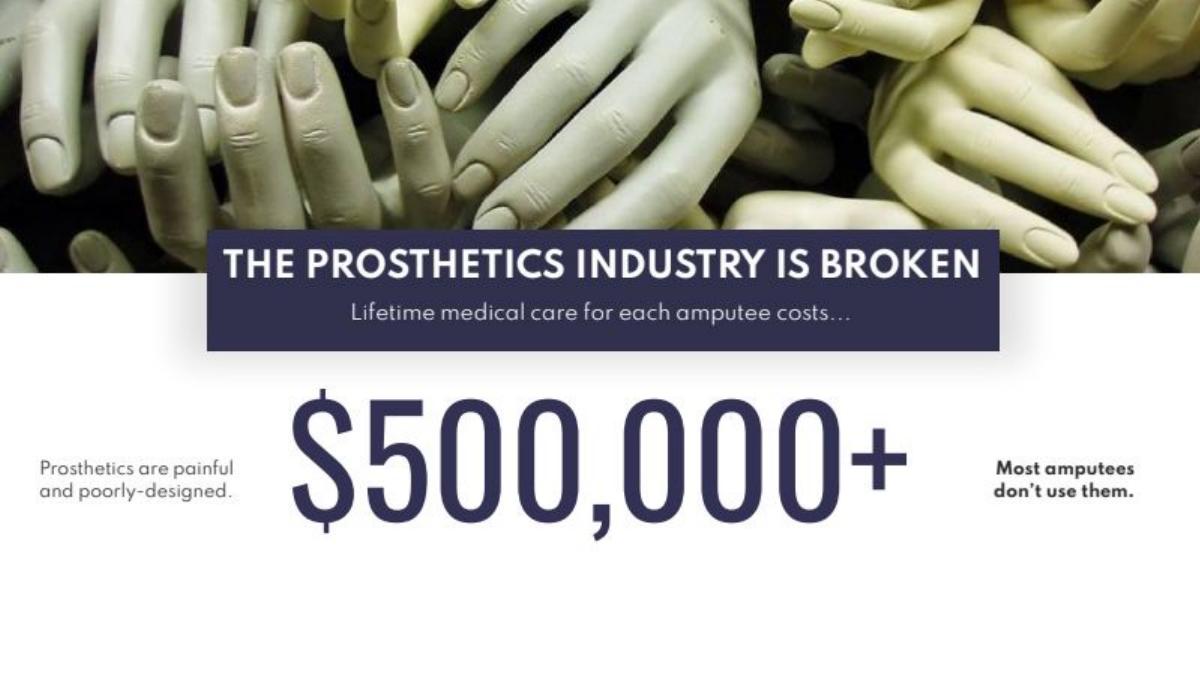
- The company claims the lifetime medical care for a single amputee exceeds $500,000, highlighting a massive cost inefficiency in the current market (Slide 2).
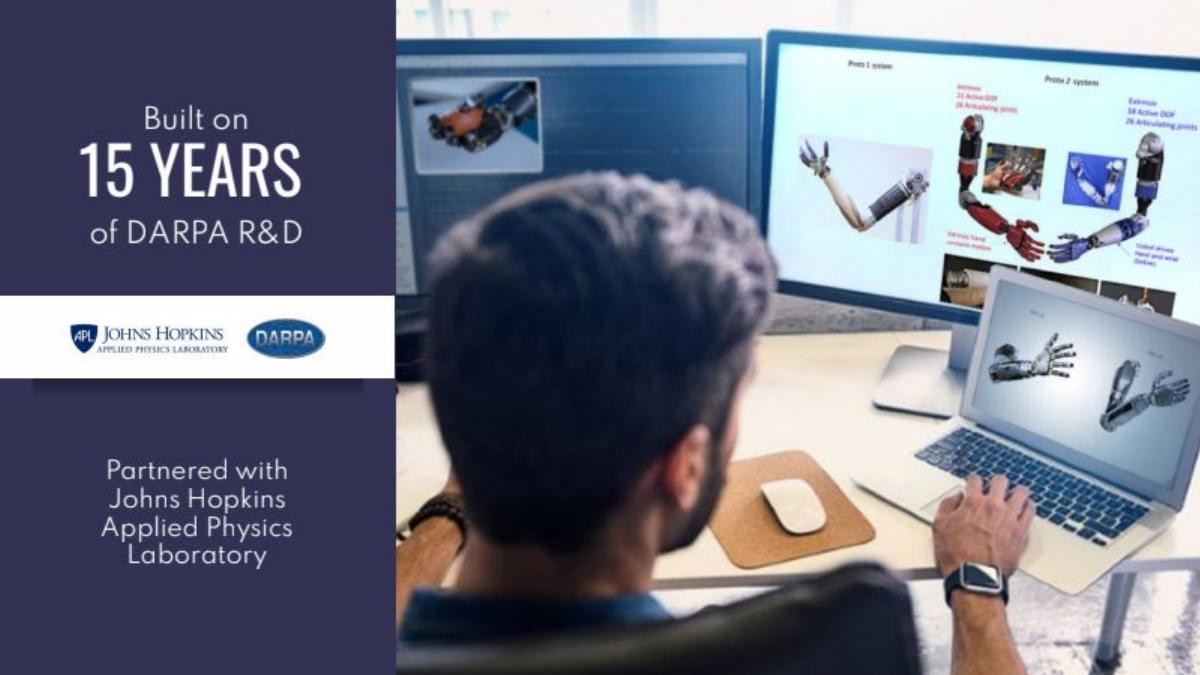
- The technology is built on 15 years of DARPA R&D in partnership with Johns Hopkins Applied Physics Laboratory (Slide 5).
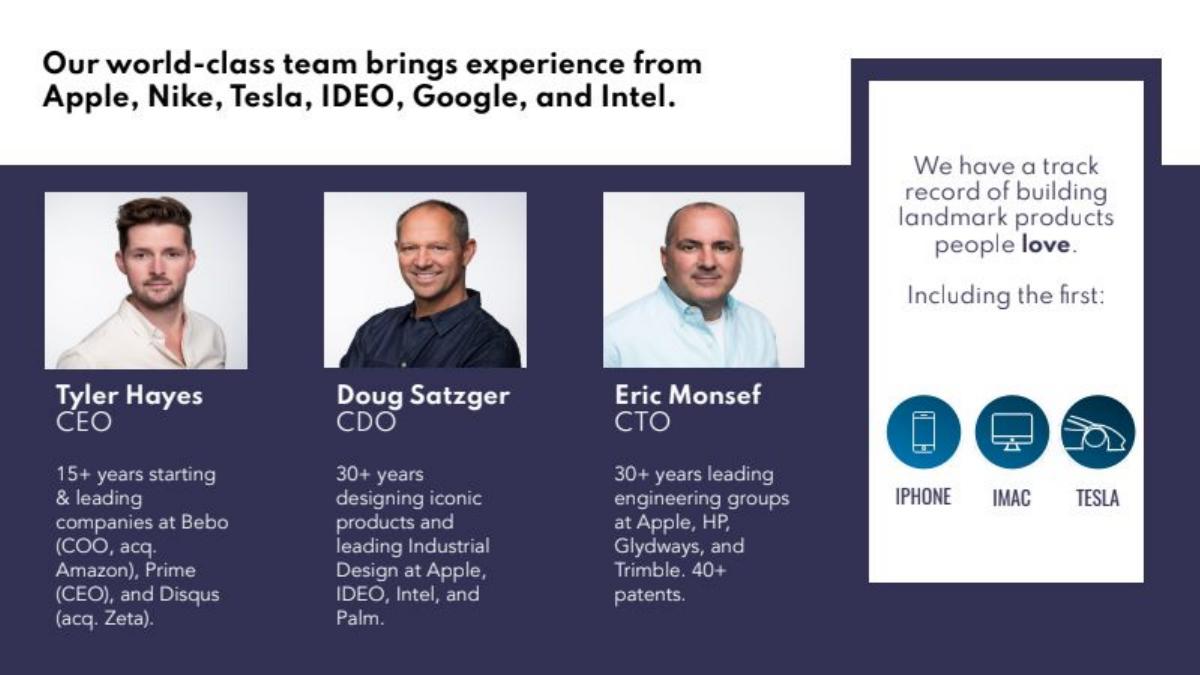
- The leadership team features executives with backgrounds at Apple, Tesla, Nike, and Intel, collectively holding over 1,000 patents (Slides 6-7).
- Atom Limbs' hardware is designed to be 50% lighter than the competition and features 'intuitive neural mind control' (Slide 10).
- The business model shifts from a one-time $100k device sale to a recurring subscription that covers upgrades and repairs (Slides 15-16).
- Demand is reportedly growing at 80% weekly, with 80% of waitlistees described as 'extremely interested' (Slide 12).
- The commercialization roadmap targets an FDA-cleared market launch by Q1 2023 and international sales by Q3 2023 (Slide 17).
- The deck identifies a total addressable market of $800B, based on 47 million Americans living with physical disabilities (Slide 14).
Executive Summary: The Bionic Moonshot
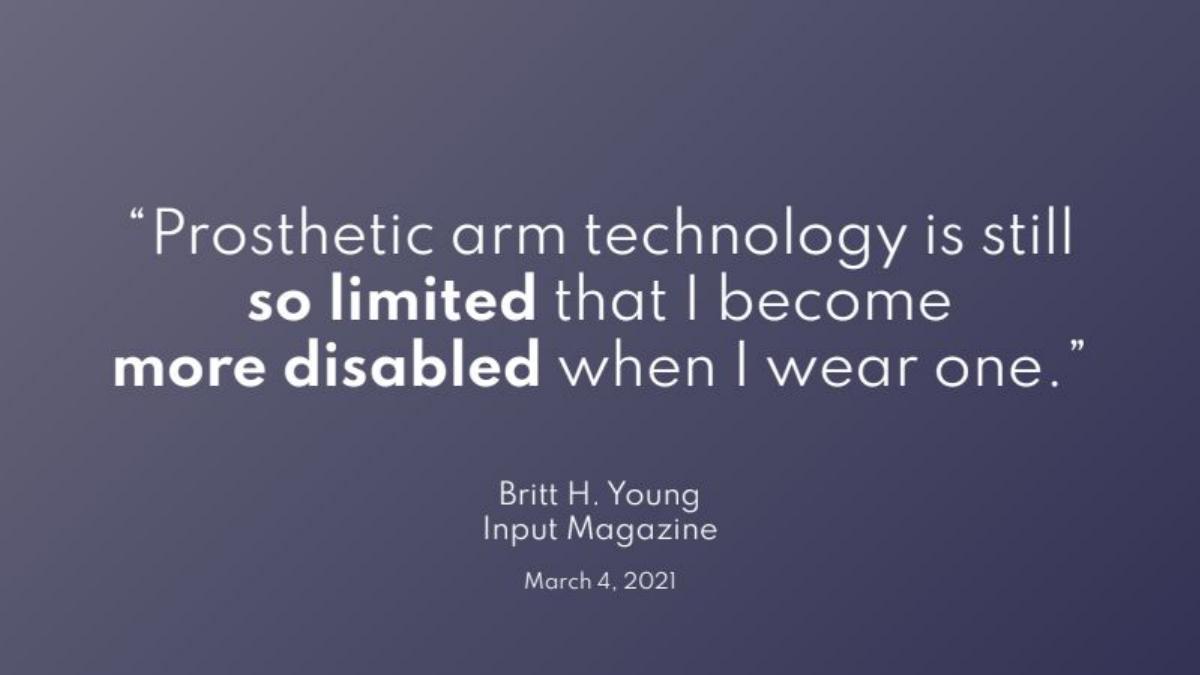
Atom Limbs is positioning itself at the intersection of robotics, AI, and healthcare. Their 19-slide deck is a masterclass in 'pedigree-based' fundraising, leaning heavily on the high-profile backgrounds of its leadership team and its deep-tech roots in DARPA research. The company aims to solve a visceral problem: the fact that current prosthetic technology is so limited that users often feel 'more disabled' when wearing them (Slide 3). By combining advanced neural control with a modern SaaS-style business model, Atom Limbs seeks to disrupt a stagnant $800B market.
Slides 1-4: The Emotional Hook and Problem Statement
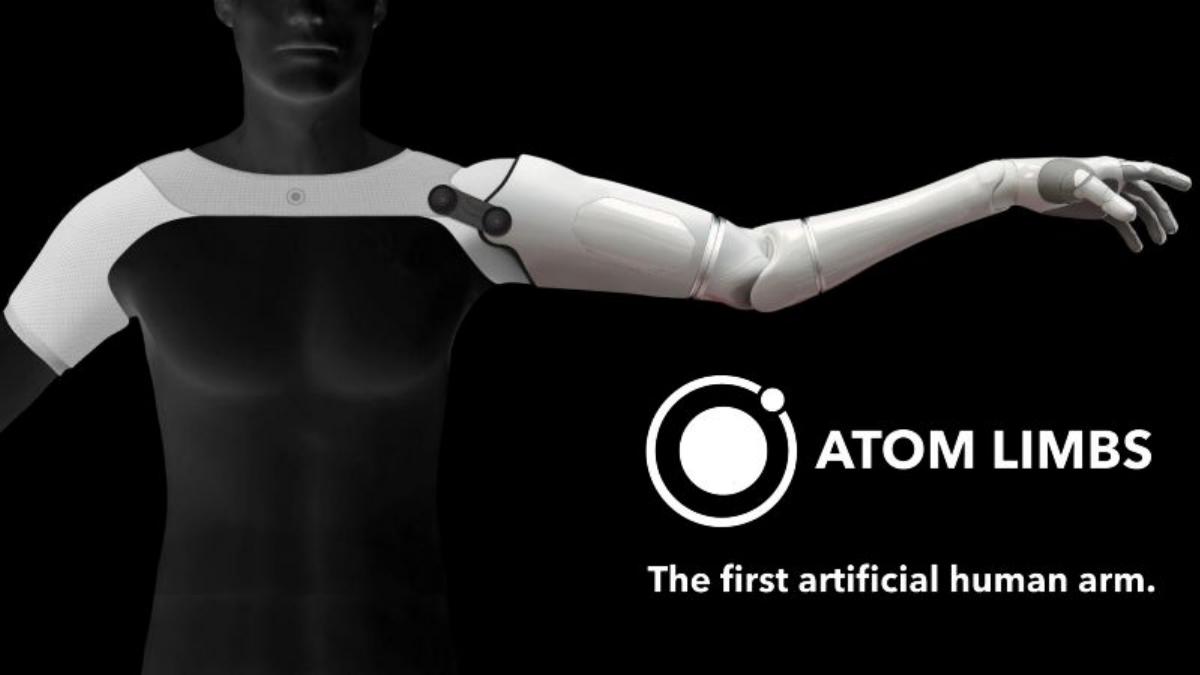
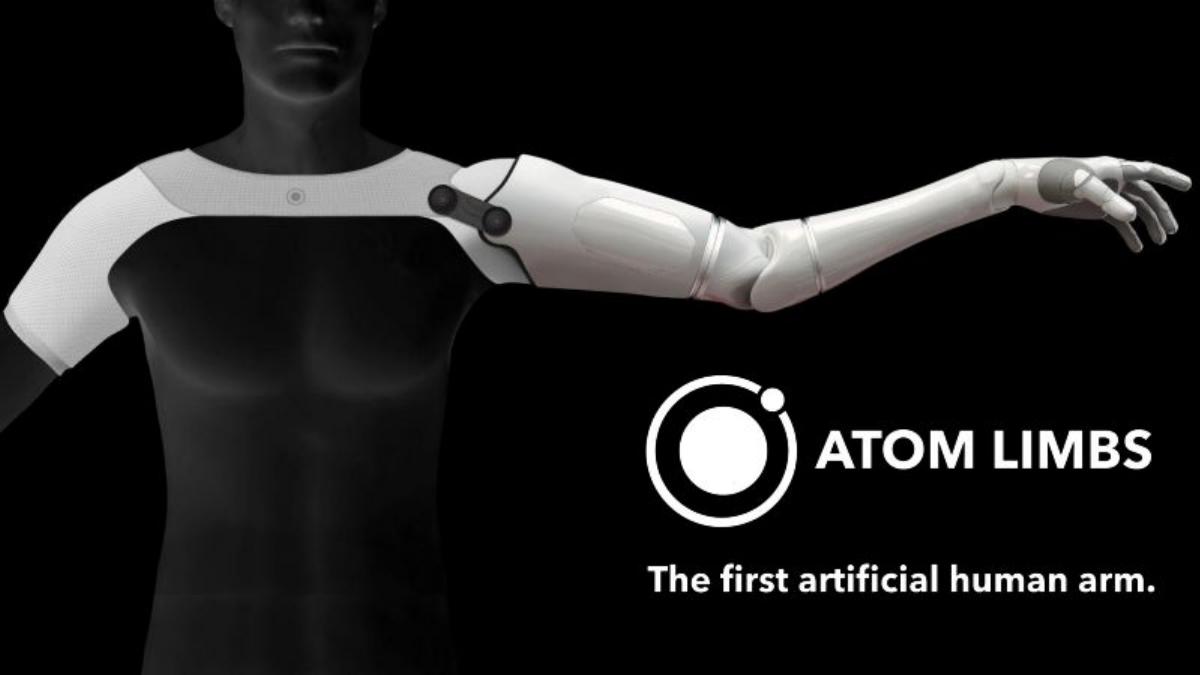
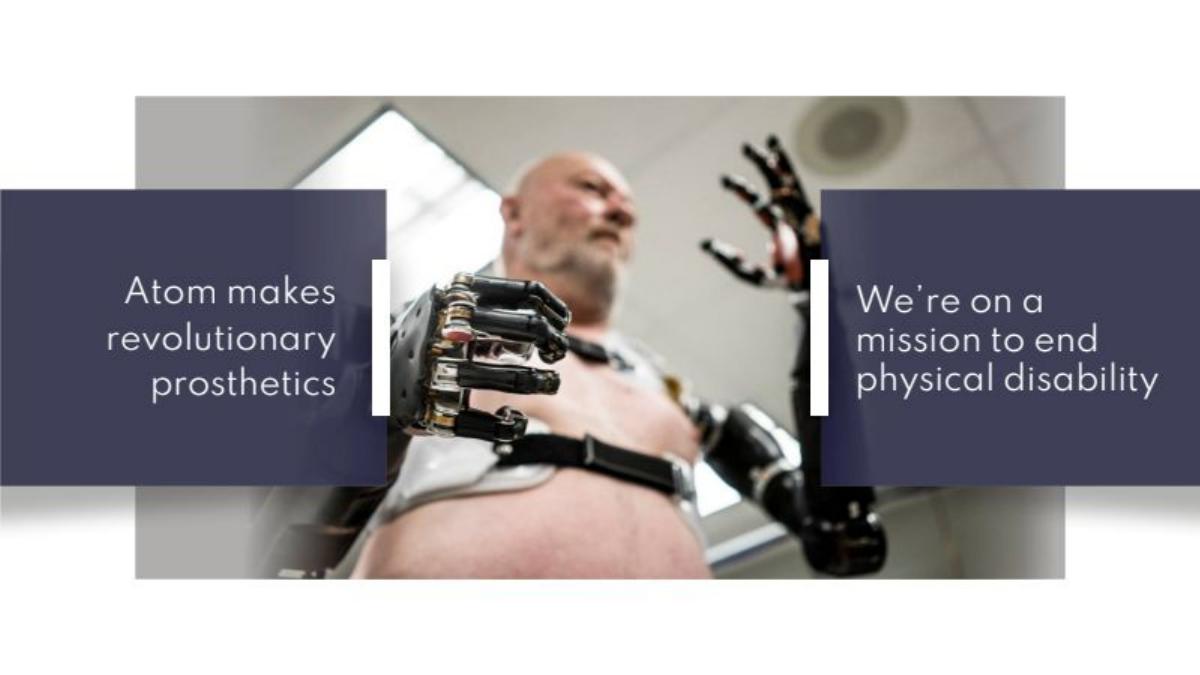
The deck opens with a high-fidelity render of the 'artificial human arm,' immediately establishing a futuristic tone. Slide 2 identifies the 'broken' nature of the industry, citing a $500,000+ lifetime medical cost for amputees and noting that most amputees simply don't use existing prosthetics because they are painful and poorly designed. Slide 3 uses a powerful quote from Britt H. Young in Input Magazine to validate this pain point: 'Prosthetic arm technology is still so limited that I become more disabled when I wear one.' Slide 4 defines the mission: 'to end physical disability.'
Slide 5: The Technical Foundation
To counter the skepticism often aimed at hardware startups, Slide 5 highlights that the technology is 'Built on 15 years of DARPA R&D.' This is a critical credibility marker. By partnering with the Johns Hopkins Applied Physics Laboratory, Atom Limbs suggests that the fundamental science has already been de-risked by millions of dollars in government spending, leaving the company to focus on commercialization and user experience.
Slides 6-7: The 'World-Class' Team
These are perhaps the strongest slides in the deck. The company highlights a leadership team with experience at Apple, Nike, Tesla, IDEO, Google, and Intel . CEO Tyler Hayes, CDO Doug Satzger (30+ years at Apple/IDEO), and CTO Eric Monsef (30+ years at Apple/HP) represent a blend of consumer electronics expertise and industrial design. Slide 7 further bolsters this by claiming the team is named on 1,000+ patents and has created $100B+ in value . For a Seed-stage hardware company, this level of executive talent is rare and serves as a primary selling point for investors.
Slides 8-11: Product and User Experience
Slide 8 categorizes the tech into three pillars: Breakthrough Robotics, Autonomy & Piloting, and Smart Wearables. Slide 10 provides the technical 'meat,' listing features such as 'intuitive neural mind control,' a 'haptics-driven basic sense of touch,' and a weight that is 50% lighter than competition . Slide 11 shows a beta user performing 'piano fingering,' a task described as 'never before possible,' providing a concrete example of the arm's superior dexterity.
Slides 12-14: Market Opportunity and Demand
Slide 12 claims that 'Demand for Atom is growing 80% weekly,' though it does not specify the baseline for this growth. It also notes that 80% of waitlistees are 'extremely interested.' Slide 13 and 14 frame the macro opportunity, citing rising disability rates in an aging US population and a total market size of $800B . They calculate this by multiplying 47 million Americans with physical disabilities by an average annual expenditure of $17,431 (Slide 14).
Slides 15-16: The Business Model Pivot
Atom Limbs is not just selling a device; they are selling a subscription. Slide 15 explicitly states they are 'bringing subscriptions to a dinosaur industry.' The plan is to reduce upfront costs by 75% in Year 1, covering upgrades and repairs through recurring fees. Slide 16 shows a bar chart comparing a one-time $100k sale (competitors) against the Atom Limbs cumulative revenue model, where the 'recurring subscription > one-time sale' by Year 7. This is a classic 'Hardware-as-a-Service' play intended to increase Lifetime Value (LTV) and provide predictable cash flow.
Slides 17-19: Roadmap and Social Proof
Slide 17 outlines a clear path to commercialization, with an FDA-Cleared Market Launch targeted for Q1 2023 and international sales in Q3 2023. Slide 18 provides significant social proof with quotes and logos from CNN, 60 Minutes, Quartz, and The New York Times. The deck ends on Slide 19 with a simple call to action: 'Join us.'
What Atom Limbs Does Well
Pedigree and Credibility: The deck excels at leveraging the team's past successes at Apple and Tesla to imply that they can handle the complexities of high-end hardware manufacturing. The DARPA connection provides a 'moat' of existing research that few competitors can match.
Business Model Innovation: By moving to a subscription model, they address the high barrier to entry (cost) that plagues the prosthetics industry. This makes the product more accessible to users and more attractive to investors looking for recurring revenue.
Visual Storytelling: The use of high-quality renders and emotional quotes creates a narrative of 'the future is here,' which is essential for a robotics company.
What is Missing from the Deck
Specific Unit Economics: While the deck mentions a 75% reduction in upfront costs, it never states the actual price of the subscription or the cost to manufacture (COGS) each arm. Investors cannot calculate margins from the data provided.
The Ask: There is no slide detailing how much money is being raised in this specific round or how those funds will be allocated (e.g., % to R&D, % to marketing, % to regulatory compliance).
Competitive Landscape: The deck mentions 'competitors' in the abstract (Slide 16) but does not name them or provide a feature-by-feature comparison. In a specialized field like bionics, understanding how they stack up against companies like Össur or Ottobock is vital.
Regulatory Detail: Achieving FDA clearance for a neural-controlled medical device is a massive undertaking. The roadmap (Slide 17) lists it as a single milestone without detailing the clinical trial requirements or current status of their application.
Founder's Playbook: What to Copy
The 'Pedigree Slide' (Slide 6-7): If you have a team with 'Big Tech' experience, don't just list the logos. Quantify their impact (e.g., '1,000+ patents,' '$100B+ in value'). This creates an immediate sense of competence.
The 'Problem Quote' (Slide 3): Using a third-party quote from a reputable publication to describe the problem is often more effective than the founder's own words. It proves that the market is already vocalizing the need for a solution.
The 'Roadmap' (Slide 17): This slide is clean, chronological, and sets clear expectations for the next 24 months. It tells investors exactly what 'success' looks like in the near term.
The 'Macro-to-Micro' Market Slide (Slide 14): Starting with a large CDC stat and narrowing it down to a specific 'Expenditure per Person' makes a massive TAM feel grounded in reality rather than just a made-up number.
Frequently asked questions
- What is the primary technical advantage of the Atom Limbs arm?
- According to Slide 10, the arm features 'breakthrough mini motor technology' and 'intuitive neural mind control.' It is designed to be 50% lighter than existing competitive products and provides a haptics-driven sense of touch. The technology is rooted in over a decade of DARPA-funded research, suggesting a level of sophistication beyond standard consumer prosthetics.
- How does the subscription model work compared to traditional sales?
- Slides 15 and 16 detail a shift from the 'dinosaur industry' standard of one-time sales. Traditional competitors sell devices for roughly $100,000 upfront. Atom Limbs proposes a subscription that reduces upfront costs by 75% in the first year, with recurring fees eventually overtaking hardware sales revenue by 2027. This model covers ongoing upgrades, repairs, and replacements.
- Who are the key people behind Atom Limbs?
- The team is a major focal point of the deck. CEO Tyler Hayes has a background in leading companies like Bebo and Disqus. CDO Doug Satzger spent 30 years at Apple and IDEO, while CTO Eric Monsef held leadership roles at Apple and HP. The team also includes a Chief Architect from Tesla and a Chief of AI with 60 patents (Slides 6-7).
- What is the current stage of the product and regulatory approval?
- Slide 17 shows that as of late 2021, the company had completed its proof of concept and was moving into the 'Beta Prototype & Research Sales' phase. The roadmap indicates an 'XVT Process' through 2022, leading to an FDA-cleared market launch in Q1 2023. This suggests the product is in the late stages of development but not yet fully cleared for general medical use.
- Is there a specific funding ask in the deck?
- No. While the catalogue facts state the company raised $7.2M via RegCF in 2022, the 19 slides provided do not include a specific 'The Ask' slide detailing the amount of capital sought, the valuation, or the specific allocation of funds. The deck concludes with a call to action to 'Join us' rather than a financial breakdown.