DataTron’s Seed deck is a lean, engineering-centric presentation that prioritizes technical authority over traditional business metrics. With only eight slides, the deck manages to establish a massive performance gap—claiming to be 100x faster than incumbents—while leveraging the founders' deep experience at companies like Microsoft Azure and Snapchat. The presentation eschews common slides like financial projections, market sizing (TAM/SAM/SOM), and a specific 'Ask' or use of funds. Instead, it focuses on the 'how' of their AI engine, using complex architectural diagrams to signal readiness…
Key takeaways
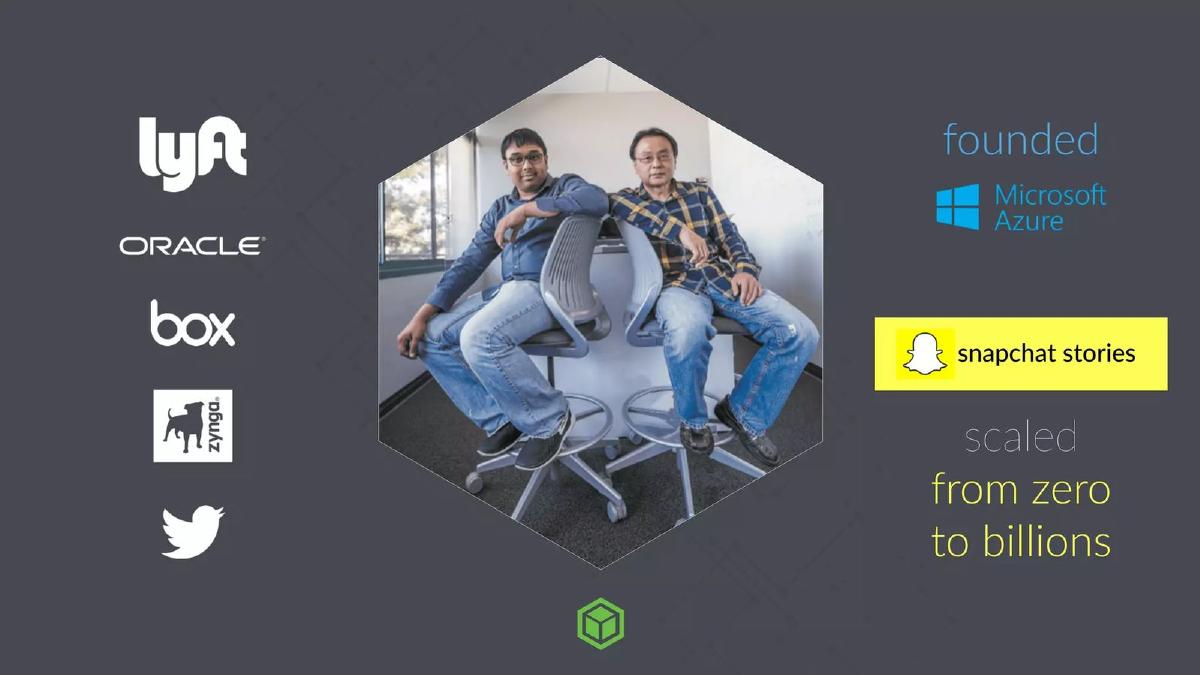
- The deck leads with founder pedigree, highlighting experience scaling Snapchat Stories from 'zero to billions' on slide 2.
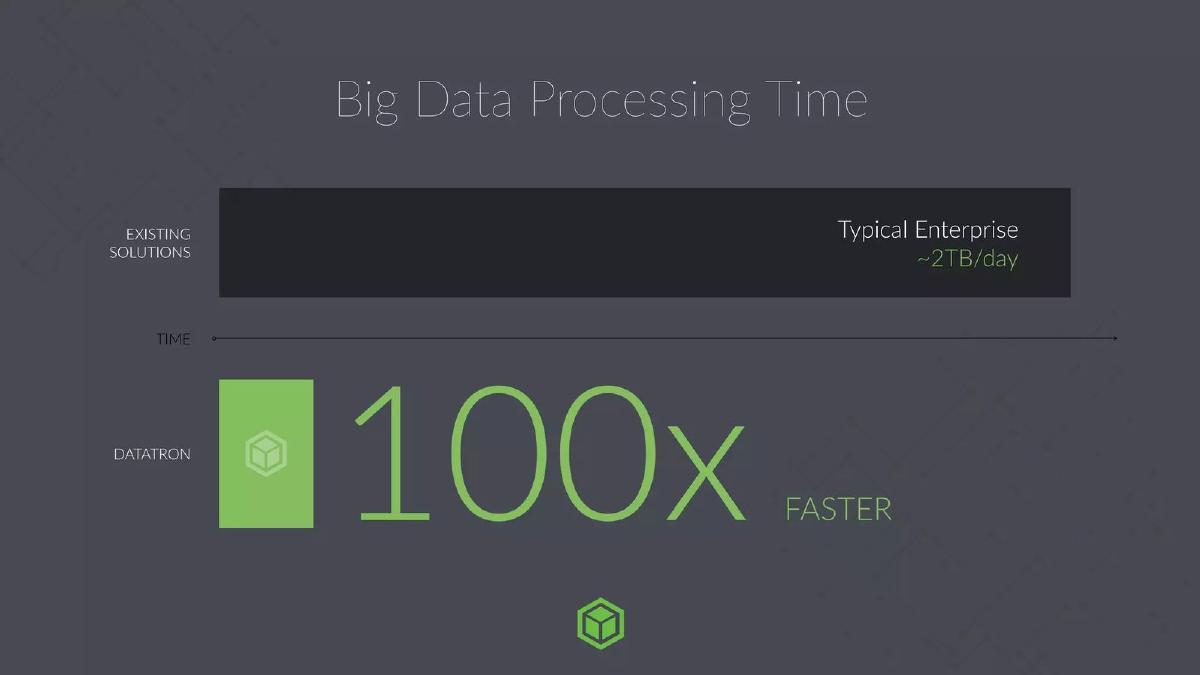
- DataTron makes a bold, quantifiable performance claim of being 100x faster than existing solutions on slide 3.
- The problem is framed as a time-to-insight issue, noting that typical enterprises process ~2TB/day at much slower speeds (slide 3).
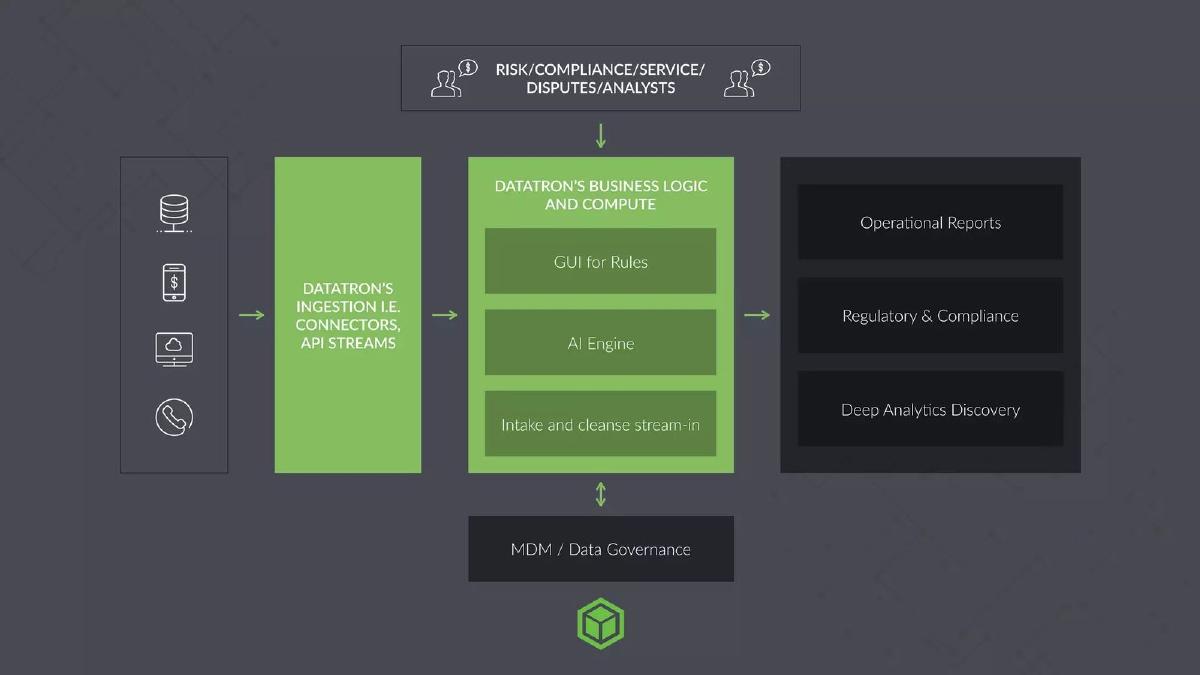
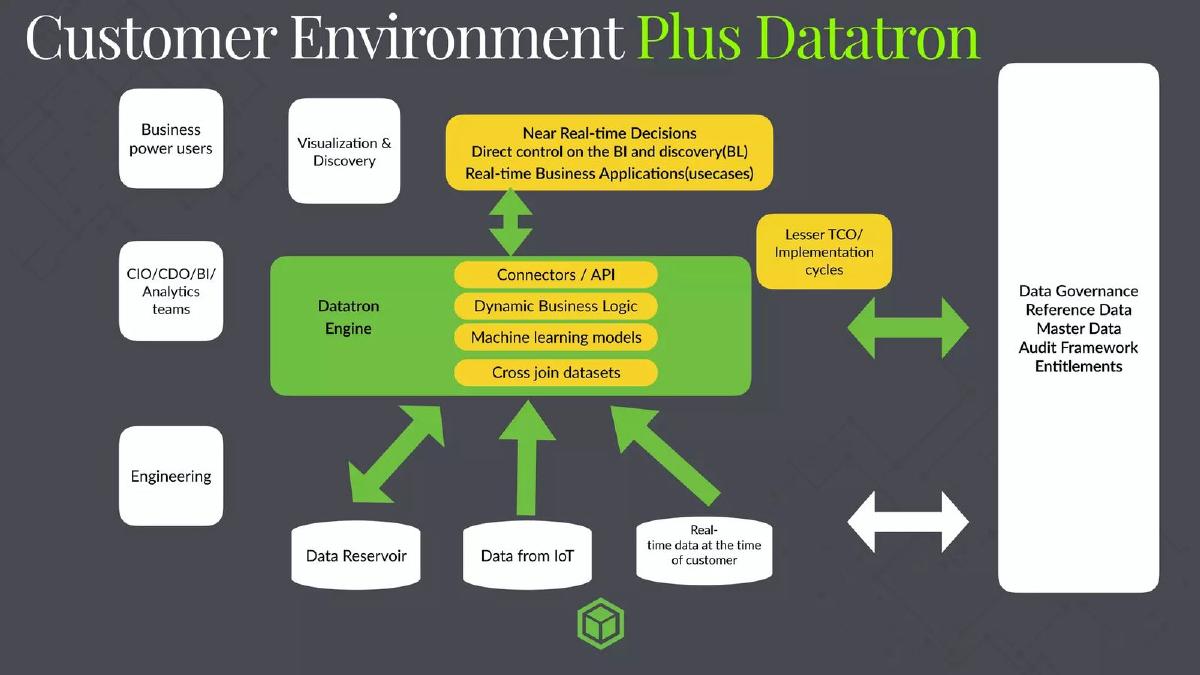
- Technical architecture is prioritized, with two detailed slides (4 and 5) explaining the ingestion, business logic, and governance layers.
- The solution positions itself as an integrated platform for risk, compliance, and deep analytics discovery (slide 4).
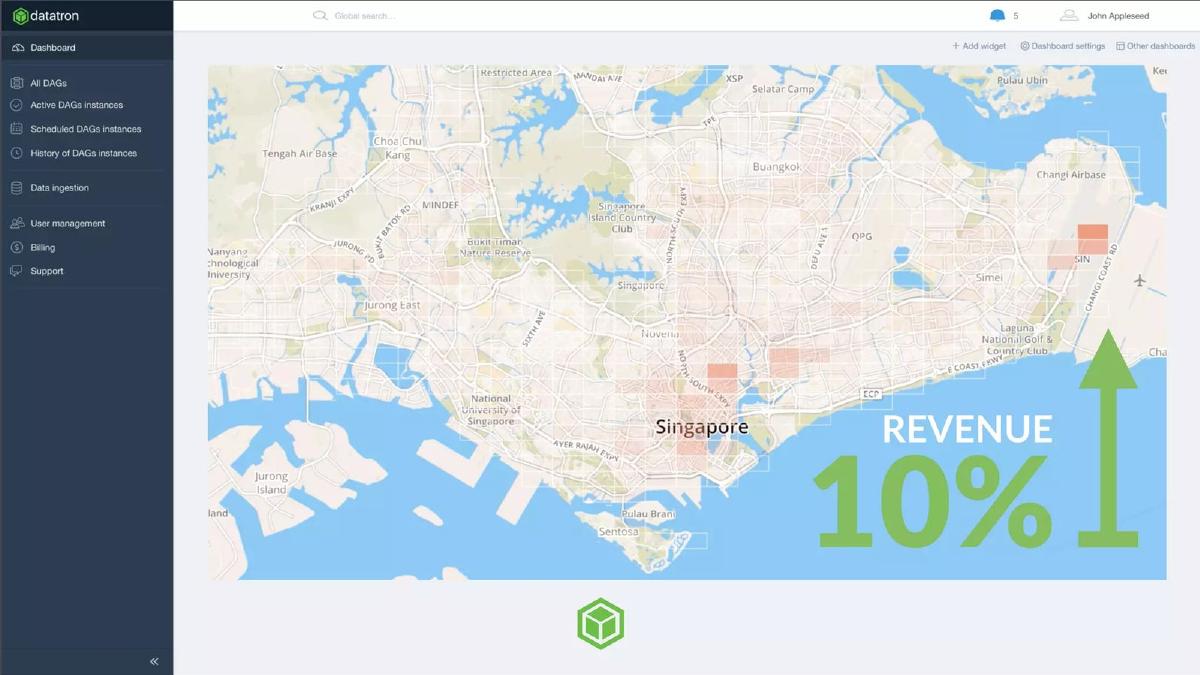
- A product screenshot on slide 6 claims a 10% revenue increase, though the specific context of this metric is not detailed.
- The deck lacks a formal 'Ask' slide, financial forecasts, or a competitive landscape matrix.
- The team slide (slide 8) uses photos but omits names, titles, or specific bios for the broader engineering team.
The Pedigree-First Approach to AI Fundraising
DataTron’s 8-slide deck is a study in technical signaling. In the crowded AI and analytics space, founders often get bogged down in buzzwords. DataTron takes the opposite route: they lead with their ability to scale systems to billions of users and follow up with a massive performance claim. This teardown examines how a lean deck can successfully raise $1.4M by focusing on engineering credibility and architectural clarity.
Slide 1: Title and Positioning
The cover slide is minimalist, featuring the DataTron logo and the tagline Fast Predictive AI Engine . It includes a contact email for 'harish' and a link to their AngelList profile. The use of the word 'Engine' is a deliberate choice; it suggests a foundational piece of infrastructure rather than a superficial SaaS tool. This sets the stage for a technical pitch aimed at investors who understand data infrastructure.
Slide 2: The Pedigree Slide
DataTron moves their team/credibility slide to the very beginning. Instead of a list of degrees, they use logos and scale metrics. The slide features two founders and highlights their history with Microsoft Azure and Snapchat Stories . The most compelling text on this slide is scaled from zero to billions . For a Seed round, this immediately answers the 'Why this team?' question. If they have scaled one of the world's largest social media features, they are presumed capable of building a high-performance AI engine.
Slide 3: The 100x Performance Claim
This is the 'hook' of the deck. DataTron visualizes Big Data Processing Time by comparing 'Existing Solutions' against their platform. They define a Typical Enterprise as processing ~2TB/day . The visual shows a long, dark bar for incumbents and a tiny green sliver for DataTron, accompanied by the text 100x FASTER . This is a bold, quantifiable claim that creates immediate interest. It frames the problem not as a lack of data, but as a lack of speed in processing that data.
Slide 4: The Functional Architecture
Slide 4 transitions from the 'What' to the 'How.' It provides a block diagram of DataTron's business logic and compute. The diagram shows data flowing from sources (database, mobile, cloud, voice) into DataTron's Ingestion (Connectors, API Streams). The core of the slide is the green box containing a GUI for Rules , an AI Engine , and Intake and cleanse stream-in . The output is categorized into three buckets: Operational Reports , Regulatory & Compliance , and Deep Analytics Discovery . This slide is crucial for enterprise investors because it shows the platform handles the 'dirty work' of data—cleansing and governance—before delivering insights.
Slide 5: Integration and Ecosystem
Titled Customer Environment Plus Datatron , this slide explains where the software sits in a client's existing stack. It shows the Datatron Engine interacting with Data Reservoirs , IoT data , and Real-time data . Crucially, it shows a bidirectional relationship with Data Governance and Master Data . By mentioning Lesser TCO / Implementation cycles , they address the two biggest fears of enterprise buyers: cost and the time it takes to see value. This slide positions DataTron as a 'good citizen' in the enterprise ecosystem, rather than a disruptive force that requires ripping and replacing existing tools.
Slide 6: The Outcome (Product Screenshot)
This slide shows a dashboard interface with a map of Singapore. A large, semi-transparent overlay reads REVENUE 10% with an upward arrow. While the deck doesn't explain the specific case study or customer that achieved this, the visual serves to ground the technical architecture in a business result. It suggests that the '100x faster' processing translates directly into bottom-line growth. The sidebar of the UI shows features like All DAGs , Data Ingestion , and Billing , indicating a mature, multi-tenant SaaS product.
Slide 7: Market Focus
Slide 7 is a simple transition slide with the text Enterprise Market and an icon of office buildings. While this slide lacks the data typically found in a market slide (like TAM/SAM/SOM), its presence reinforces that DataTron is not chasing SMBs or mid-market consumers. They are hunting whales. In the context of the previous slides, this serves as a reminder that their 100x speed is most valuable where data volumes are largest.
Slide 8: The Extended Team
The final slide returns to the team, showing six additional headshots under the label team picture . Interestingly, there are no names, titles, or logos on this slide. It is a 'signal' slide intended to show that the company is more than just the two founders shown on slide 2. It concludes with the same contact email as the first slide. The lack of a formal 'Ask' or 'Thank You' slide is notable; the deck ends abruptly on the team photos.
What DataTron Does Well
DataTron excels at technical signaling . By leading with the fact that they scaled Snapchat Stories to billions of users, they earn the right to make the '100x faster' claim on the next slide. Without that pedigree, the 100x claim might seem like hyperbole. With it, it feels like an engineering milestone.
The deck also does an excellent job of mapping to enterprise needs . Most AI startups focus on the 'magic' of their algorithms. DataTron focuses on the 'plumbing'—ingestion, cleansing, and governance. This is exactly what CIOs and CDOs care about, as these are the primary bottlenecks in any data project. By visualizing their place in the 'Customer Environment' (Slide 5), they demonstrate a sophisticated understanding of the enterprise sales cycle.
What is Missing from the DataTron Deck
The most glaring omission is The Ask . There is no mention of how much money is being raised, the terms of the round, or what the milestones will be for the next 18 months. While this is often left for the verbal pitch, including a high-level use-of-funds chart can help investors understand the company's priorities (e.g., hiring more engineers vs. building a sales team).
Furthermore, there is no competitive landscape . DataTron claims to be 100x faster than 'Existing Solutions,' but they never name those solutions. Are they faster than Snowflake? Spark? Databricks? In a Seed round, investors will want to know exactly which incumbent's lunch DataTron plans to eat. Finally, the business model is entirely absent. While the Failory listing identifies them as B2B SaaS, the deck doesn't mention pricing tiers, contract sizes, or sales strategy.
What Other Founders Should Copy
Founders building deep-tech or infrastructure startups should copy DataTron's quantified value proposition . 'We are faster' is a weak statement. 'We are 100x faster for a typical 2TB/day enterprise' is a strong statement. It gives the investor a metric to test during due diligence.
Additionally, the pedigree-first structure is highly effective for technical teams. If your team has worked at 'Big Tech' on high-scale problems, that is your most valuable asset at the Seed stage. Put it on Slide 2. Don't wait until the end of the deck to tell the investor that you are the right people to build the product. By the time they reach the end, they should already be convinced of your capability, and the team slide should simply be the final confirmation.
Frequently asked questions
- How much did DataTron raise with this deck?
- According to the catalogue facts from Failory, DataTron raised $1.4M in a Seed round in 2020. The deck itself does not state the amount being raised or the valuation, which is common in decks designed for first-meeting presentations where the 'Ask' is handled in person.
- What is DataTron's core value proposition?
- The core value proposition is speed and efficiency in predictive AI. Specifically, slide 3 claims the platform is 100x faster than existing big data solutions. This is supplemented by claims of 'Lesser TCO' (Total Cost of Ownership) and faster implementation cycles on slide 5.
- Who are the founders and what is their background?
- While the deck doesn't list the founders by name on the team slides, slide 2 features a photo of two founders and highlights their experience at Microsoft Azure and scaling Snapchat Stories. The contact email belongs to 'Harish,' identifying him as a key point of contact.
- What market segment is DataTron targeting?
- DataTron is explicitly targeting the enterprise market, as stated on slide 7. Their architecture slides (4 and 5) further specify that they serve CIO, CDO, and Analytics teams, focusing on use cases like risk, compliance, and master data management.
- Is there a product demo or screenshot in the deck?
- Yes, slide 6 provides a high-level dashboard view of the platform. It features a map of Singapore and a large overlay claiming a 10% revenue increase, suggesting the platform's ability to drive tangible business outcomes through its predictive engine.