Deep Genomics' Series C deck is a masterclass in presenting a 'platform-to-pipeline' transition. By 2021, the company had moved from two programs in 2019 to ten programs, nine of which were first-in-class, with estimated peak sales exceeding $5 billion. The deck anchors its value proposition in the 'AI Workbench,' which leverages 10^17 bytes of data to predict drug discovery outcomes upfront, effectively derisking biology before entering the lab. The $180 million ask was specifically earmarked to expand this digital platform and advance cohorts of programs, including four expected to be in th…
Key takeaways
- The company leverages a massive data moat of 10^17 bytes to power its AI-driven RNA biology platform (Slide 3).
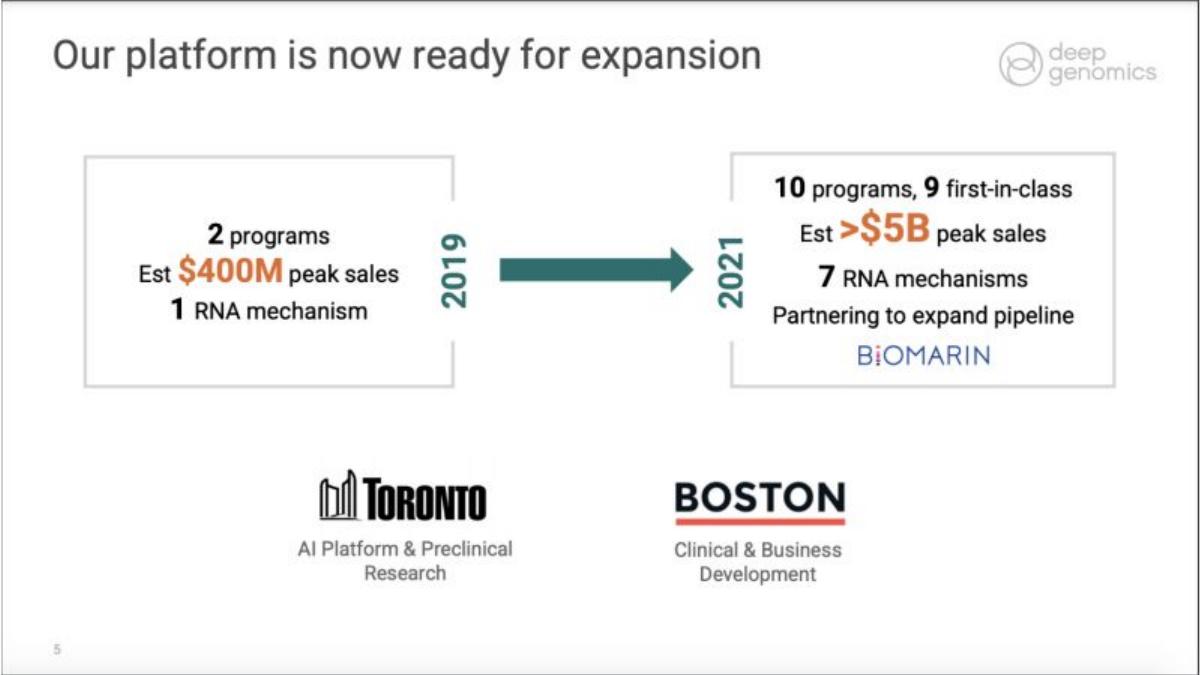
- Deep Genomics transitioned from 2 programs in 2019 to 10 programs in 2021, with 9 being first-in-class (Slide 5).
- The 'AI Workbench' uses 40 machine learning predictors to perform over 1 billion predictions across every gene (Slide 9).
- The platform claims to increase the probability of preclinical success from 10% to 50% (Slide 12).
- The pipeline includes high-value targets in CNS and Metabolic areas, with estimated peak sales for individual programs ranging from $600M to $1.2B (Slide 11).
- A strategic partnership with BioMarin is highlighted as a key validator of the platform's expansion (Slide 5).
- The $180M Series C investment is explicitly tied to screening 100 genes and securing 80 targets with patented leads (Slide 14).
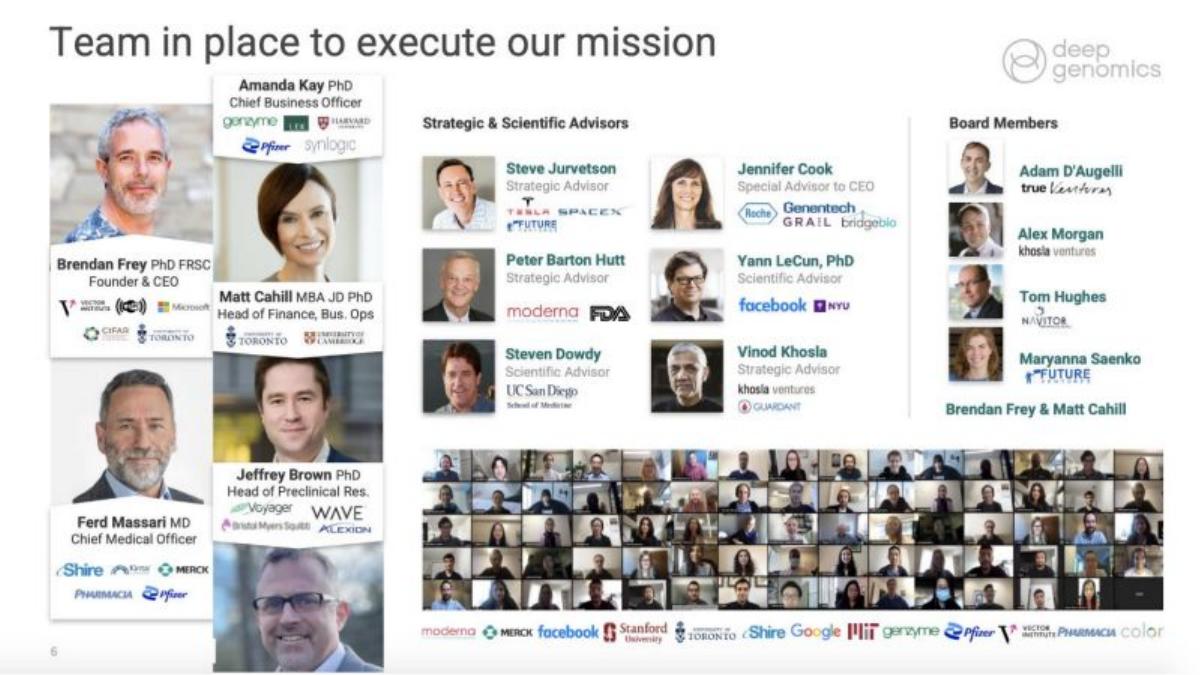
- The team slide features heavyweights from Genzyme, Moderna, and Facebook AI, alongside a deep bench of scientific advisors (Slide 6).
Deep Genomics: A Data-First Approach to Biotechnology
The Deep Genomics Series C pitch deck, presented in May 2021, represents a pivotal moment for the company. At this stage, the narrative shifted from 'we have a cool AI tool' to 'we are a clinical-stage powerhouse with a multi-billion dollar pipeline.' The deck is structured to prove that their digital framework for RNA biology is not just theoretical but is actively producing first-in-class therapies at a rate traditional biotech firms cannot match.
Slides 1-3: The Vision and the Equation
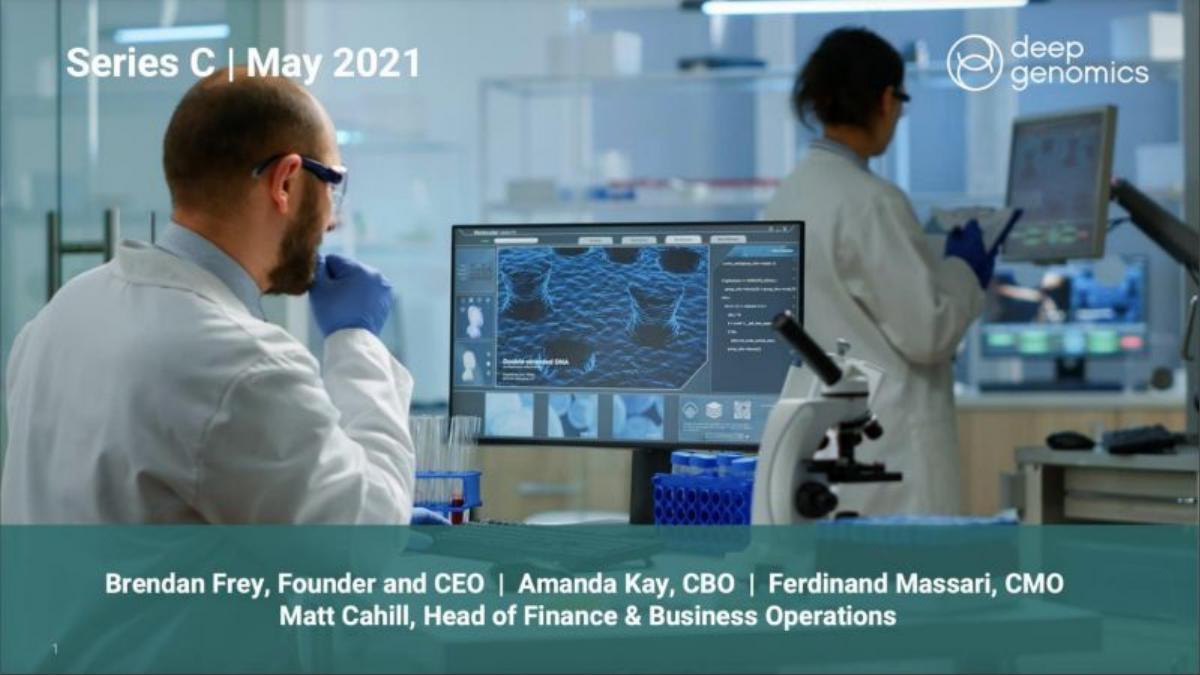
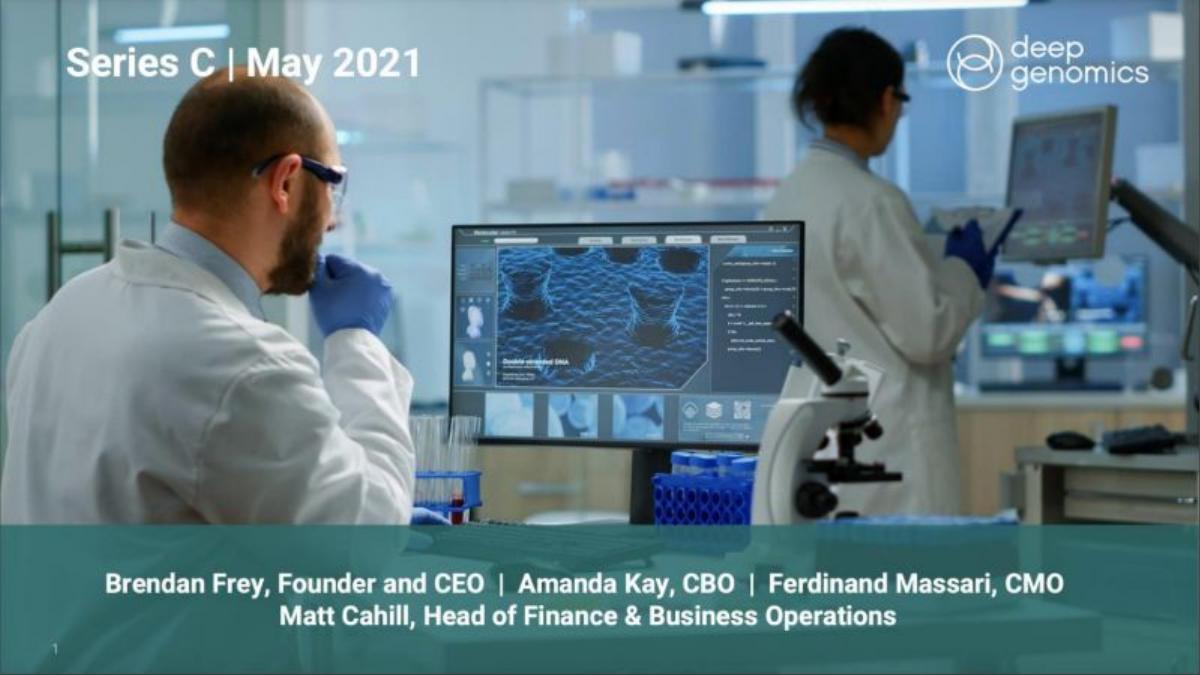
Slide 1 introduces the leadership team, including Brendan Frey (CEO), Amanda Kay (CBO), Ferdinand Massari (CMO), and Matt Cahill (Head of Finance). The imagery of a modern lab sets the professional tone expected for a Series C round.
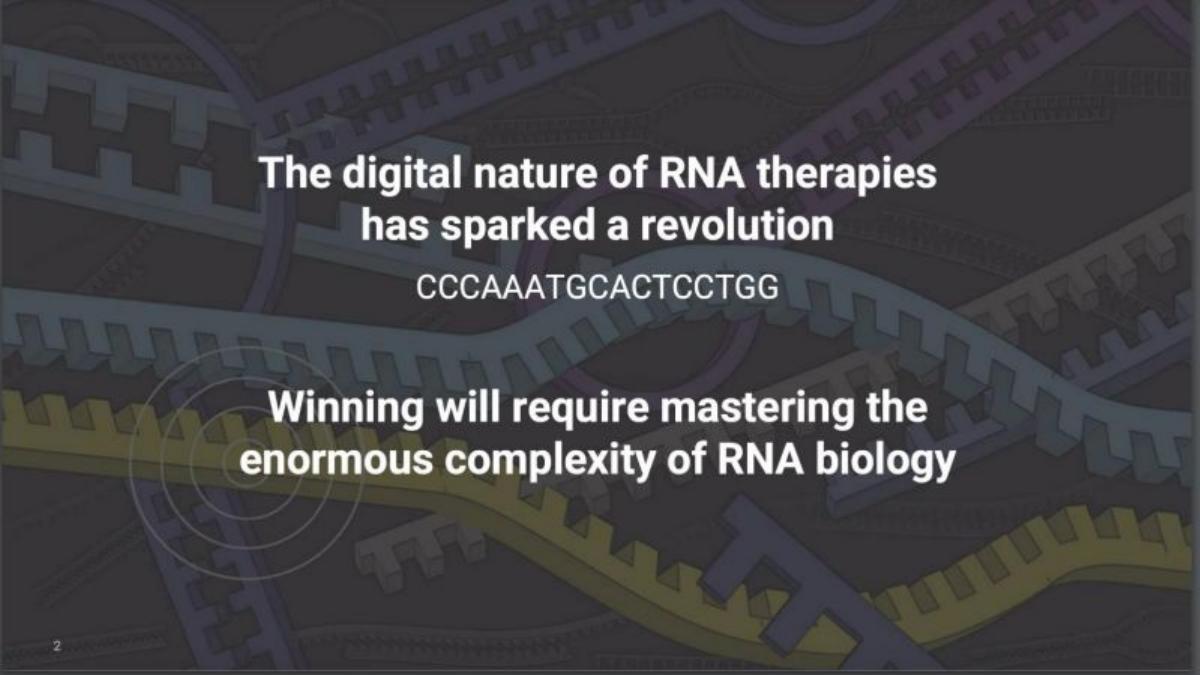
Slide 2 establishes the 'Why.' It posits that the digital nature of RNA therapies has sparked a revolution, but winning requires mastering the 'enormous complexity of RNA biology.' This sets up the problem that only a high-compute solution can solve.
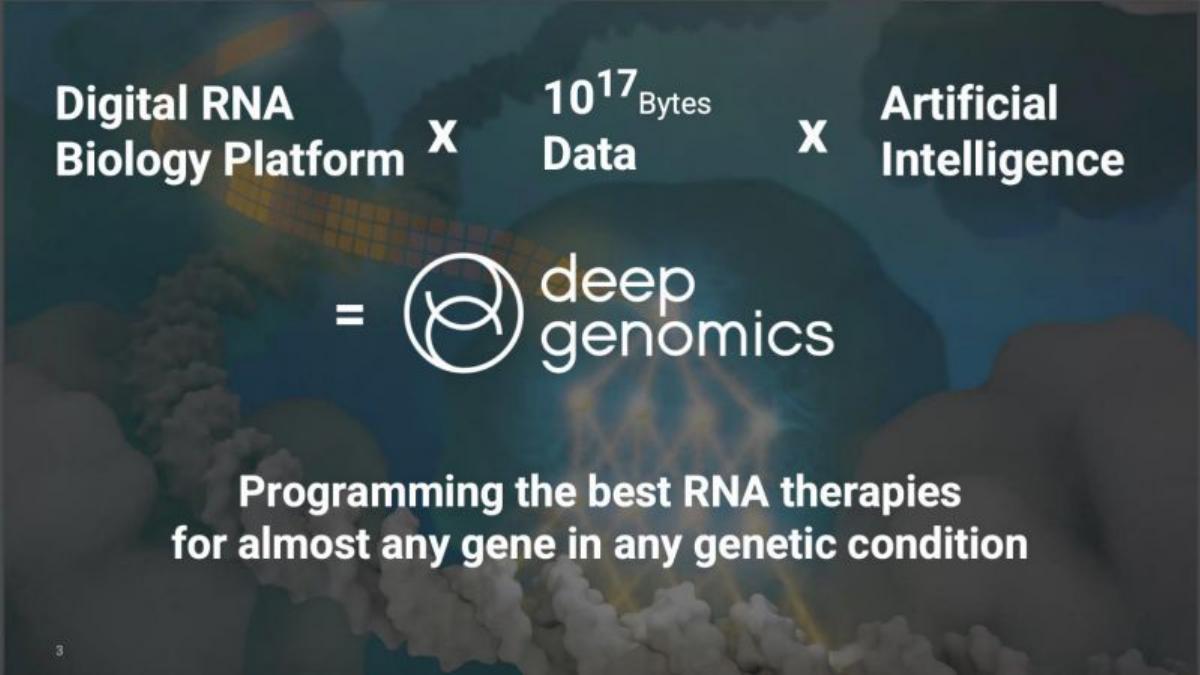
Slide 3 provides the 'Deep Genomics Equation': Digital RNA Biology Platform x 10^17 Bytes of Data x Artificial Intelligence = Deep Genomics. The claim here is bold: 'Programming the best RNA therapies for almost any gene in any genetic condition.' By using the word 'programming' instead of 'discovering,' the company aligns itself with the high-margin, scalable world of software rather than the high-failure world of traditional biology.
Slides 4-6: The Framework and Momentum
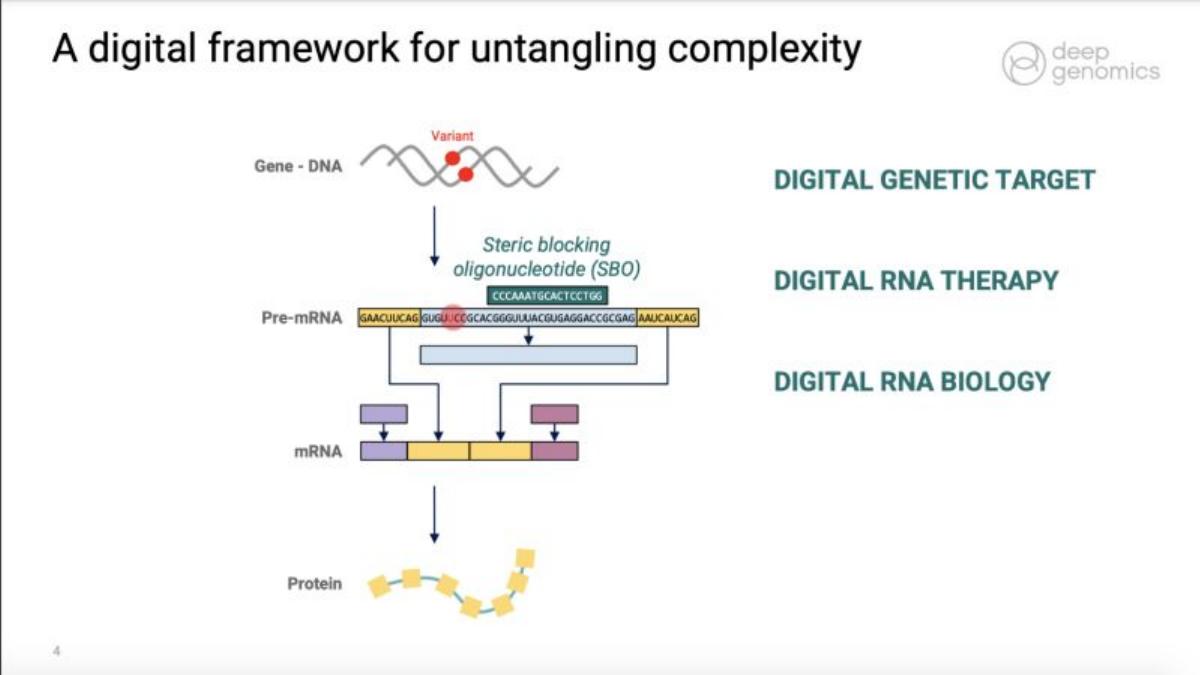
Slide 4 illustrates the 'digital framework for untangling complexity.' It shows the biological flow from DNA to Protein, highlighting where their Steric Blocking Oligonucleotide (SBO) intervenes at the pre-mRNA level. This slide is crucial for technical due diligence, showing exactly where their 'Digital RNA Therapy' fits into the central dogma of molecular biology.
Slide 5 is the 'Traction' slide. It compares 2019 to 2021. In two years, the company grew from 2 programs to 10 programs, and from 1 RNA mechanism to 7. Most importantly, it notes a partnership with BioMarin and an increase in estimated peak sales from $400M to over $5B. It also highlights their geographic footprint: AI and Preclinical research in Toronto, and Clinical/Business development in Boston.
Slide 6 is a 'Power Team' slide. Beyond the executive team, it lists heavy-hitting advisors like Steve Jurvetson (Tesla/SpaceX board), Peter Barton Hutt (FDA/Moderna), and Yann LeCun (Facebook AI). The inclusion of a grid of photos of the entire staff at the bottom emphasizes the human capital behind the 10^17 bytes of data.
Slides 7-9: The AI Workbench Advantage
Slide 7 directly attacks the traditional drug discovery model. Traditional methods are described as 'bespoke' and 'trial & error,' where risk is managed sequentially. Deep Genomics claims to 'derisk all up front' through prediction at scale. This is the core value proposition for a Series C investor: efficiency and higher probability of success.
Slide 8 defines their 'Predictors.' The company has 40 of them, used to identify novel targets, design therapies, and predict safety/toxicity. It specifically mentions SBO predictors for protein restoration, expression increase, and knockdown.
Slide 9 visualizes the 'AI Workbench' as a flywheel. It claims 1 billion predictions covering every gene and 300,000 variants. The output is 600,000 efficacy and safety datapoints across 20,000 RNA therapies. This slide quantifies the 'Data' part of the equation from Slide 3, proving the scale of their digital operations.
Slides 10-12: Market Application and Economics
Slide 10 shows the company's trajectory from 'Mendelian Recessive' diseases (lower complexity/prevalence) to 'Complex Many Effects' diseases (high complexity/prevalence). This suggests that while they are starting with rare genetic disorders, their AI is built to eventually tackle massive, complex disease markets.
Slide 11 is the pipeline chart. It lists specific indications in CNS (Frontotemporal Dementia, Parkinson's) and Metabolic (Wilson Disease, Gout) areas. The 'Est. WW Peak Sales' column is the 'hook' for investors, showing multiple billion-dollar opportunities. It also shows four programs partnered with BioMarin, providing external validation of their tech.
Slide 12 summarizes why the AI Workbench drives 'outsized returns.' It claims to increase the probability of preclinical success from 10% to 50%. In the world of drug development, a 5x increase in success probability is a transformative economic claim.
Slides 13-16: The Ask and Future Outlook
Slide 13 provides a bar chart of the portfolio growth, projecting a steady increase in discovery, preclinical, and clinical programs through 2024. It shows the company reaching a 'tipping point' for clinical expansion.
Slide 14 is the 'Ask' and 'Use of Funds' slide. The $180M investment is intended to: expand AI predictors, screen 100 genes, secure 80 targets with patented leads, expand partnerships, and move 4 programs into the clinic (representing $4.5B in peak sales). This is a very specific and measurable set of milestones for a Series C round.
Slide 15 is a simple 'Thank You' with lab imagery, and Slide 16 is a standard promotional slide for the platform where the deck was hosted.
What Works in This Deck
The Platform-to-Pipeline Narrative: The deck successfully argues that Deep Genomics is not just a software company, but a drug development company that uses software to win. By showing a pipeline with $5B+ in peak sales (Slide 5), they move the conversation from 'R&D costs' to 'Asset value.'
Quantified Advantage: Claiming a jump from 10% to 50% success probability (Slide 12) is a bold, memorable metric. Even if investors discount it, it sets a high bar for the company's perceived efficiency.
Validation: The BioMarin partnership (Slide 11) and the high-profile advisors (Slide 6) provide the necessary 'social proof' to back up the complex technical claims.
What is Missing
Unit Economics: While the deck mentions peak sales, it does not detail the cost to bring a single program to the clinical stage compared to industry averages. A Series C investor would likely want to see how much cheaper/faster their 'AI Workbench' actually makes the discovery phase in dollar terms.
Competitive Landscape: There is no mention of other AI-driven drug discovery firms (e.g., Recusion, Exscientia, Insitro). In a crowded 'AI for Bio' space, explaining why their focus on RNA and SBOs is superior to other modalities is a missed opportunity.
Detailed Clinical Data: For a company claiming to be at a 'tipping point' for clinical expansion, the deck is light on actual data from their preclinical trials. It relies heavily on 'predictions' rather than 'results' in this specific presentation format.
What a Founder Should Copy
The 'Flywheel' Visualization: Slide 9 is an excellent way to show how data, AI, and physical lab work interact to create a competitive moat. Founders should use similar loops to show how their business gets stronger with every iteration.
Specific Use of Funds: Slide 14 is a perfect example of how to present a large round. Instead of just saying 'hiring and R&D,' they give specific numbers: 100 genes, 80 targets, 4 clinical programs. This creates accountability and a clear roadmap for the next 18-24 months.
The 'Equation' Slide: Slide 3 simplifies a very complex business into a single line. If you can't summarize your company as a simple 'A + B = C' equation, you might not have a clear enough grasp of your core value driver.
Frequently asked questions
- What is the core technology behind Deep Genomics?
- Deep Genomics utilizes a 'Digital RNA Biology Platform' that combines artificial intelligence with 10^17 bytes of data. As shown on Slide 4, this framework targets the transition from DNA to protein by using Steric Blocking Oligonucleotides (SBOs) to modify pre-mRNA. The goal is to 'program' therapies for almost any genetic condition by mastering the complexity of RNA biology through digital prediction rather than traditional trial-and-error.
- How does the company justify its $180M Series C valuation?
- The justification lies in the platform's scalability and its transition to clinical stages. Slide 5 shows a jump from $400M in estimated peak sales in 2019 to over $5B in 2021. Furthermore, Slide 14 outlines that the funding will advance four programs into the clinic, screen 100 genes, and secure 80 patented leads, representing a massive expansion of intellectual property and commercial potential.
- What therapeutic areas does Deep Genomics focus on?
- According to Slide 11, the company focuses primarily on Central Nervous System (CNS) and Metabolic diseases. Specific indications listed include Frontotemporal Dementia, Niemann-Pick Disease Type C, Pediatric Epilepsy, Parkinson's Disease, Wilson Disease, and Refractory Gout. They also have four undisclosed programs in partnership with BioMarin.
- How does their AI approach differ from traditional drug discovery?
- Slide 7 contrasts the 'Traditional Approach,' which sequentially derisks through experimental trial and error, with 'Deep Genomics' Advantage.' Their AI Workbench predicts outcomes—such as variant biology, therapy biology, and off-target effects—up front. This 'prediction at scale' allows them to derisk the entire process before significant laboratory investment, theoretically increasing the preclinical success rate from 10% to 50% (Slide 12).
- Who are the key people involved in the company?
- The leadership includes Founder/CEO Brendan Frey (formerly of Microsoft and University of Toronto) and CBO Amanda Kay (formerly of Genzyme). The advisory board is particularly notable, featuring Steve Jurvetson (Future Ventures), Peter Barton Hutt (former FDA Chief Counsel and Moderna board member), and Yann LeCun (Chief AI Scientist at Facebook), as detailed on Slide 6.