Fnatic’s 13-slide deck represents a pivot from a traditional esports organization to a diversified lifestyle and technology brand. By anchoring their narrative in 15 years of competitive dominance—citing 370+ medal wins and $15.7M in prize money—they establish the credibility necessary to sell high-margin hardware and digital services. The deck effectively utilizes market data to frame gaming as a superior entertainment category, noting that it generates $146B annually, surpassing music and film combined. While the deck lacks a specific team slide or detailed financial projections, it excels…
Key takeaways
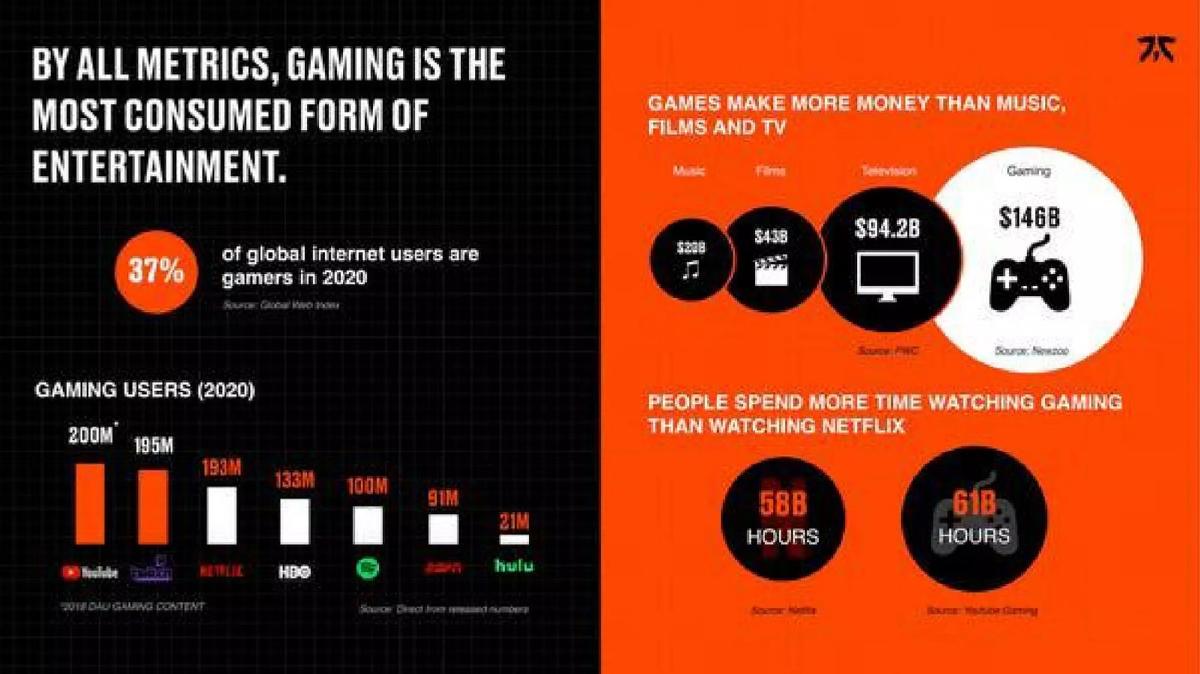
- Gaming is framed as the dominant entertainment medium, with Slide 2 noting it generates $146B, more than music ($20B) and film ($43B) combined.
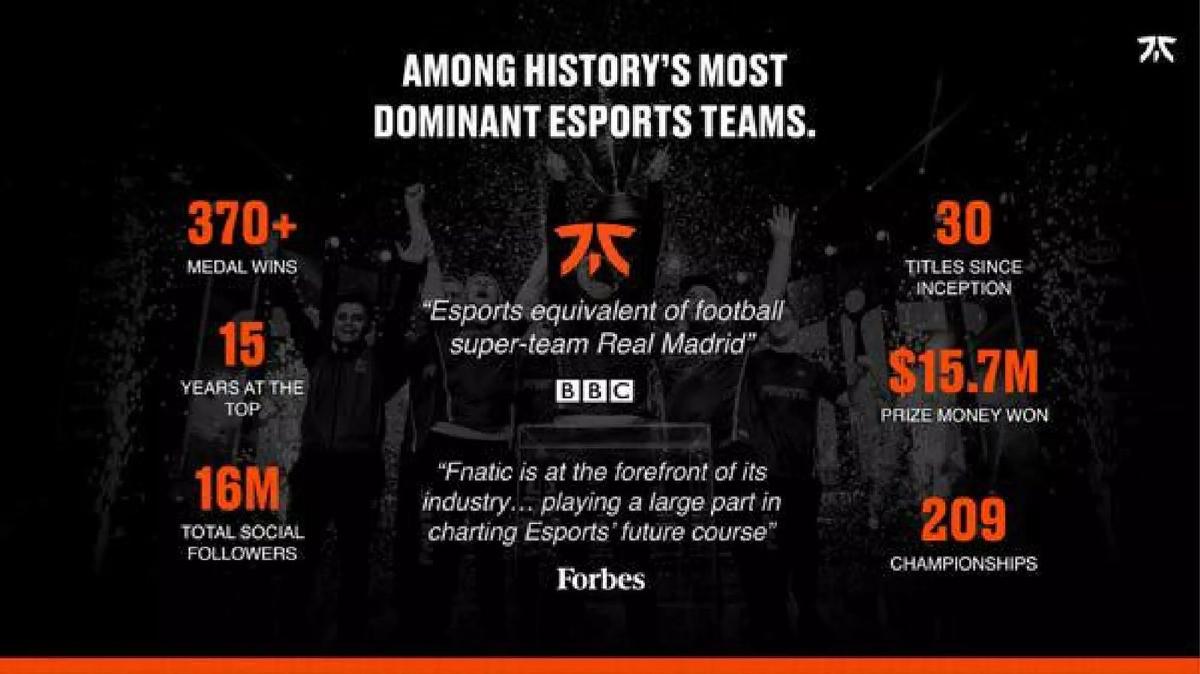
- Fnatic establishes historical dominance on Slide 4, citing 15 years at the top, 370+ medal wins, and 209 championships.
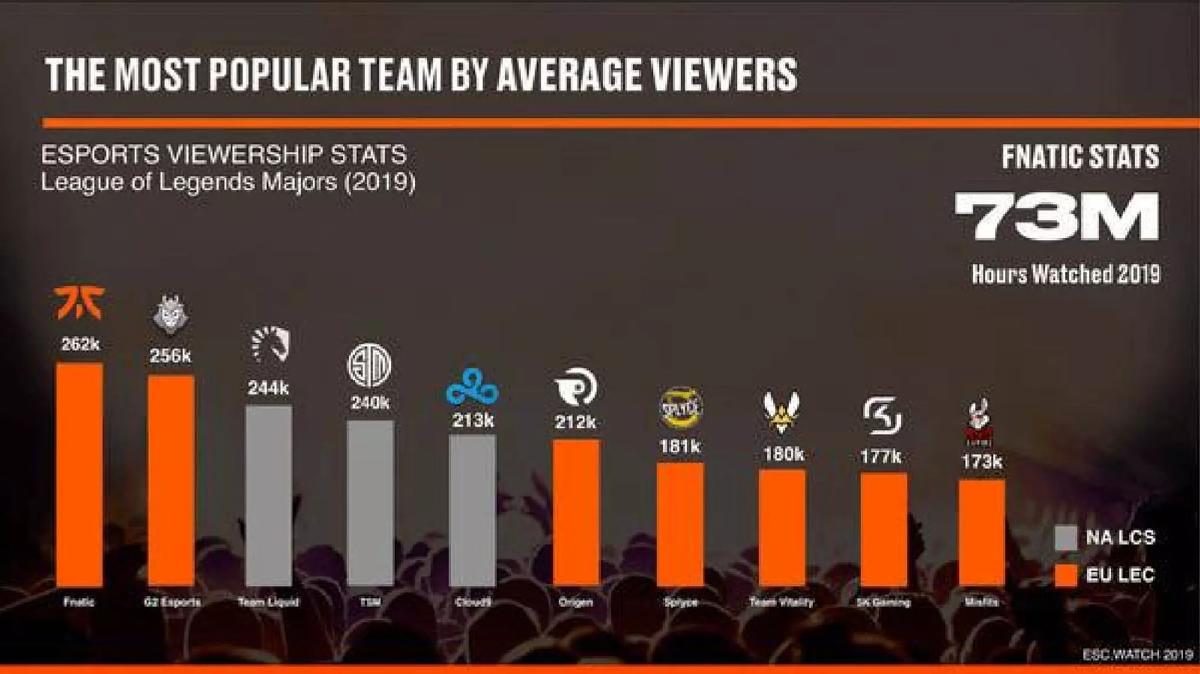
- The brand's reach is quantified on Slide 5, showing 73M hours watched in 2019, leading all other teams in the League of Legends Majors.
- Revenue is diversified across four pillars: Esports, Brands, Products, and Digital, as detailed on Slide 8.
- The 'Fnatic Gear' hardware line is positioned as a core growth driver, developed in conjunction with pro players (Slide 10).
- Brand authority is validated by a roster of non-endemic partners including Gucci, BMW, and Nike (Slide 11).
- The deck omits a dedicated management team slide, relying instead on the brand's collective history and institutional achievements.
- Use of funds is explicitly tied to performance infrastructure, digital tools, and an in-house content studio (Slide 12).
Fnatic: From Esports Team to Global Lifestyle Powerhouse
Fnatic is one of the oldest and most successful organizations in the history of professional gaming. Founded in 2004, the company has spent nearly two decades building a brand that is synonymous with competitive excellence. However, as this 13-slide pitch deck demonstrates, Fnatic is no longer just a group of players winning trophies. The deck outlines a transition into a diversified entertainment, hardware, and digital services company. By leveraging their massive audience and historical 'street cred,' they are positioning themselves as the primary gateway for global brands to reach the Gen Z and Millennial gaming demographic.
The Macro Argument: Gaming as the New King of Media
Slide 1: Title Slide The deck opens with a high-contrast orange and black aesthetic, featuring the slogan 'Championing the Performers.' This immediately sets a tone of professional athleticism rather than casual play. The branding is minimalist, relying on the strength of the Fnatic logo.
Slide 2: Market Opportunity This slide is a heavy-hitter for investors who might still view gaming as a niche. It claims that 37% of global internet users are gamers in 2020. More importantly, it compares gaming revenue ($146B) to Television ($94.2B), Films ($43B), and Music ($20B). By showing that gaming content viewership (61B hours) has surpassed Netflix (58B hours), Fnatic frames the entire industry as the most important sector in modern entertainment.
Establishing Brand Dominance
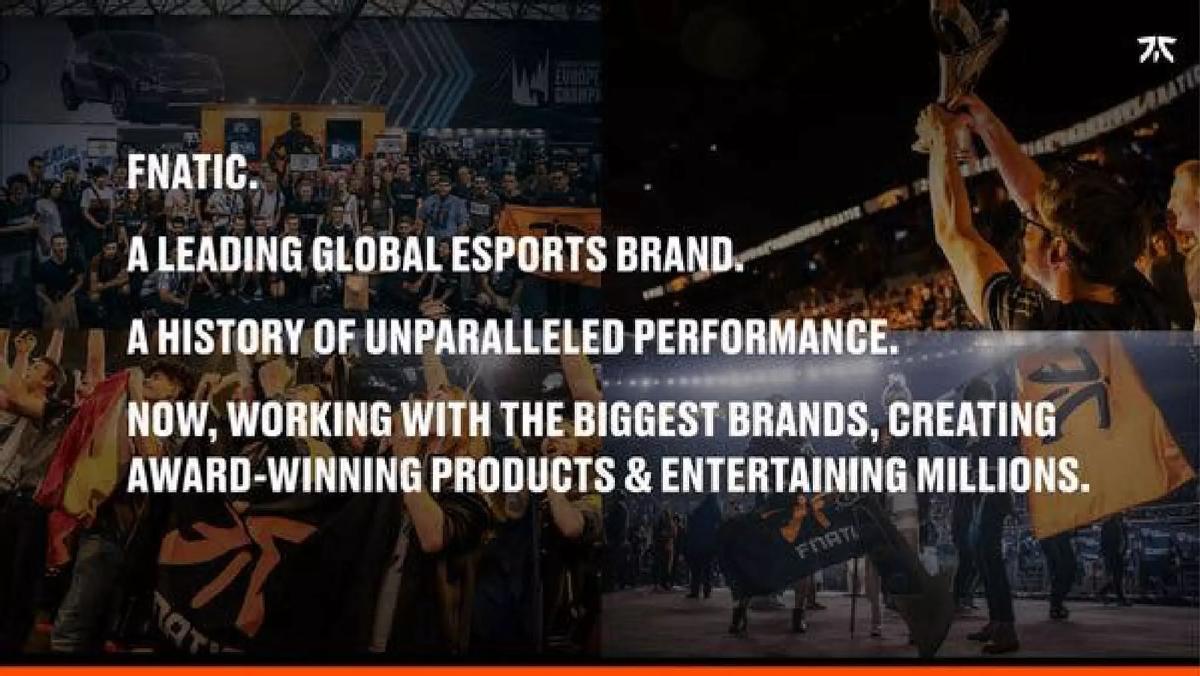
Slide 3: Brand Identity Fnatic defines itself as a 'Leading Global Esports Brand' with a 'History of Unparalleled Performance.' The slide uses collage-style imagery of fans and trophies to emphasize the emotional connection and community aspect of the brand.
Slide 4: Historical Stats This is the 'Traction' slide for an esports organization. Fnatic lists 15 years at the top, 370+ medal wins, 30 titles since inception, 209 championships, and $15.7M in prize money won. They also include social proof via quotes from the BBC ('Esports equivalent of football super-team Real Madrid') and Forbes. This slide effectively communicates that Fnatic is not a 'flash in the pan' but a legacy institution.
Slide 5: Viewership and Popularity To prove their reach, Fnatic compares their average viewership in the 2019 League of Legends Majors against competitors. They claim the top spot with 262k average viewers, beating out G2 Esports (256k) and Team Liquid (244k). The slide also notes a total of 73M hours watched in 2019. This data is crucial for justifying their value to potential brand partners.
Mission and Strategic Focus
Slide 6: Mission and Purpose The mission is stated as 'To forge a nation of 1B Fnatics,' while the purpose is 'To seek out, level up & amplify every gamer on the planet.' This is a significant shift from 'winning games' to 'building a platform for all gamers,' indicating a broader total addressable market (TAM).
Slide 7: Strategic Pillars Fnatic identifies four areas of focus: Winning Teams, Performance Products, Big Brand Partnerships, and Leading Creators. This slide acts as a bridge between their competitive roots and their commercial future.
The Business Model: Diversified Revenue Streams
Slide 8: Revenue Generation This is one of the most important slides for an analyst. Fnatic breaks revenue into four main ways:
Esports: Media rights, in-game items, and prize money. · Brands: Traditional sponsorships, branded content, and activations. · Products: Pro wear, lifestyle apparel, and performance esports equipment. · Digital: Game training, Fnatic OP equipment enhancement software, and a streamer affiliate network.
This diversification reduces the risk associated with the performance of any single esports team.
Slide 9: Competitive Breadth Fnatic lists their presence in the biggest titles, including League of Legends, CS:GO, Dota 2, FIFA 21, Fortnite, Rainbow 6, and PUBG Mobile. This shows they are not reliant on a single game publisher, providing a hedge against the fluctuating popularity of specific titles.
Vertical Integration and Partnerships
Slide 10: Fnatic Gear The deck highlights their hardware division, 'Fnatic Gear.' They emphasize that these products (keyboards, headsets, etc.) are 'developed in conjunction with our pros.' This is a classic 'pro-sumer' play, where the excellence of the athletes validates the quality of the retail product.
Slide 11: Brand Partnerships The 'Trust' slide features a mix of endemic and non-endemic partners. Current partners include AMD, OnePlus, Monster Energy, BMW, Hisense, and Twitch. Recent campaigns include high-fashion and mainstream giants like Gucci, Nike, UNICEF, and Bud Light. The inclusion of Gucci and BMW is particularly strong, as it demonstrates Fnatic's ability to move the brand into the luxury and lifestyle space.
The Ask and Future Roadmap
Slide 12: Use of Funds Fnatic outlines four areas for investment:
Excellence in Performance: Investing in academies and a new facility in Berlin. · Digital Ramp Up: Developing 'Fnatic OP' digital tools and deepening community relationships. · In-House Studio: Building an internal agency to improve content execution and reduce marketing costs. · Expansion: Seeking new game franchises and relocating the Rainbow 6 team to Japan.
Slide 13: Conclusion The deck ends with the hashtag #ALWAYSFNATIC and a simple 'Thank You.' It maintains the high-energy, brand-first aesthetic of the opening.
What Works in the Fnatic Pitch Deck
The deck is exceptionally strong at establishing authority . By the time an investor reaches Slide 5, there is no doubt that Fnatic is a dominant force in its industry. The use of third-party validation from the BBC and Forbes, combined with hard viewership data, creates a compelling narrative of a market leader.
The revenue diversification slide (Slide 8) is another highlight. It addresses the primary concern investors have with esports: the volatility of winning. By showing a clear path toward hardware sales (Products) and software/training (Digital), Fnatic presents itself as a scalable technology and retail business rather than just a sports team.
Finally, the visual design is consistent and professional. The use of the brand's signature orange, combined with high-quality photography of both athletes and fans, reinforces the idea that this is a 'lifestyle' brand, not just a gaming company.
What is Missing from the Fnatic Pitch Deck
The most glaring omission is a Team Slide . While the brand is famous, investors invest in people. The deck does not introduce the founders, the CEO, or the executive leadership team. For a company seeking $55M+, understanding who is managing the capital is essential.
There is also a lack of Financial Granularity . While they mention $15.7M in prize money, there are no details on total annual revenue, EBITDA, or growth rates for their hardware and digital divisions. An investor cannot judge the 'Digital Ramp Up' without knowing the current baseline for those services.
Lastly, the Competitive Landscape slide is limited to viewership. It does not address how Fnatic competes with other diversified gaming organizations (like FaZe Clan or 100 Thieves) in the apparel or hardware space. A deeper analysis of their unique moat in the 'Products' category would have been beneficial.
What a Founder Should Copy from this Deck
Founders should emulate Fnatic’s Macro-to-Micro framing . They start with the massive global opportunity of gaming (Slide 2) before narrowing down to why Fnatic is the best way to capture that opportunity. This 'rising tide' argument helps investors feel the urgency of the sector before they even look at the company's specific metrics.
The Strategic Use of Non-Endemic Partnerships is another lesson. By highlighting Gucci and BMW, Fnatic proves their brand has 'crossover appeal.' If you are building in a niche category, showing that you can attract mainstream, high-value partners is the best way to prove your brand's long-term viability.
Finally, the Vertical Integration Strategy on Slide 10 is a great example of how to turn a service (competitive gaming) into a product (hardware). Founders should always look for ways to show how their core expertise can be packaged into higher-margin, scalable products.
Frequently asked questions
- How does Fnatic justify its market position compared to traditional entertainment?
- Fnatic uses Slide 2 to present a macro-economic argument for gaming. By citing figures like $146B in annual gaming revenue versus $20B for music and $43B for film, they position esports not as a niche hobby, but as the primary successor to legacy media. They further support this by showing that people spend 61B hours watching gaming content, surpassing Netflix's 58B hours.
- What are the primary revenue streams identified in the deck?
- Slide 8 breaks revenue into four categories: Esports (media rights, prize money), Brands (sponsorships, branded content), Products (pro wear, performance equipment), and Digital (game training, affiliate networks). This multi-pronged approach suggests the company is moving away from a volatile prize-money-dependent model toward more stable, scalable retail and digital service income.
- Does the deck provide specific financial projections or a valuation?
- No. The deck is focused on brand equity, market reach, and strategic direction. It lists historical prize money ($15.7M on Slide 4) and viewership hours (73M on Slide 5), but it does not include a P&L, balance sheet, or a specific valuation for the fundraising round. This is typical for high-growth brand-led decks where the 'story' precedes the hard accounting.
- What is the significance of the 'Fnatic Gear' section?
- Slide 10 highlights 'Fnatic Gear' as a way to monetize the brand's competitive expertise. By stating these products are 'developed in conjunction with our pros,' Fnatic creates a unique selling proposition that generic hardware brands cannot match. This vertical integration allows them to capture a larger share of the gamer's wallet beyond just entertainment.
- What is missing from this pitch deck that an investor might expect?
- The most notable omissions are a team slide and a detailed financial breakdown. While the brand is world-famous, investors usually want to see the specific executives leading the business side. Additionally, there is no mention of unit economics for their hardware division or churn rates for their digital services, which are critical for evaluating the 'Digital Ramp Up' mentioned on Slide 12.