The Rapt.fm deck, which preceded the company's rebranding to Raur, is a fascinating relic of the early 2010s 'social video' boom. Raising $300,000 in a seed round, the founders utilized a high-concept narrative style that focused on the emotional and cultural appeal of hip-hop. The deck is remarkably light on traditional business metrics—omitting a business model, detailed financial projections, and a specific 'ask' slide. Instead, it relies on early beta engagement stats, such as a 16-minute average visit (Slide 7), and the social proof of high-profile advisors like Nas and Dan Gilbert (Slid…
Key takeaways
- The deck uses a narrative arc starting with a personal 'problem'—the lack of access to rap culture for outsiders (Slides 2-3).
- Engagement is the primary success metric, highlighting a 16-minute average visit and 56% growth during the beta phase (Slide 7).
- The platform's versatility is demonstrated by showing it can be used for more than just rap, including musical performances and even 'cat battles' (Slides 8-9).
- Market sizing is presented through broad cultural reach, claiming 500 million worldwide fans and 1 billion daily hip-hop related page views (Slide 13).
- Social proof is heavily leveraged through an advisor slide featuring Nas, Dan Gilbert, and the founders of Rap Genius (Slide 15).
- The deck completely omits a business model, revenue strategy, or specific fundraising terms.
- Visuals dominate the presentation, with several slides containing no text at all, relying on the presenter to fill in the context (Slides 5, 10, 11, 16).
The Narrative-Driven Seed Deck: Analyzing Rapt.fm
Before it became Raur, a social publishing platform for podcasts, the company was Rapt.fm. This 17-slide deck from 2012 represents the company's seed-stage pitch, focusing on live video rap battles. It is a quintessential example of a 'vision' deck, where the founders sell a future behavior rather than a current balance sheet. At a time when live streaming was in its infancy, Rapt.fm was betting on the high-intensity, interactive nature of hip-hop culture to drive user retention.
Slides 1-3: The Hook and the Personal Problem
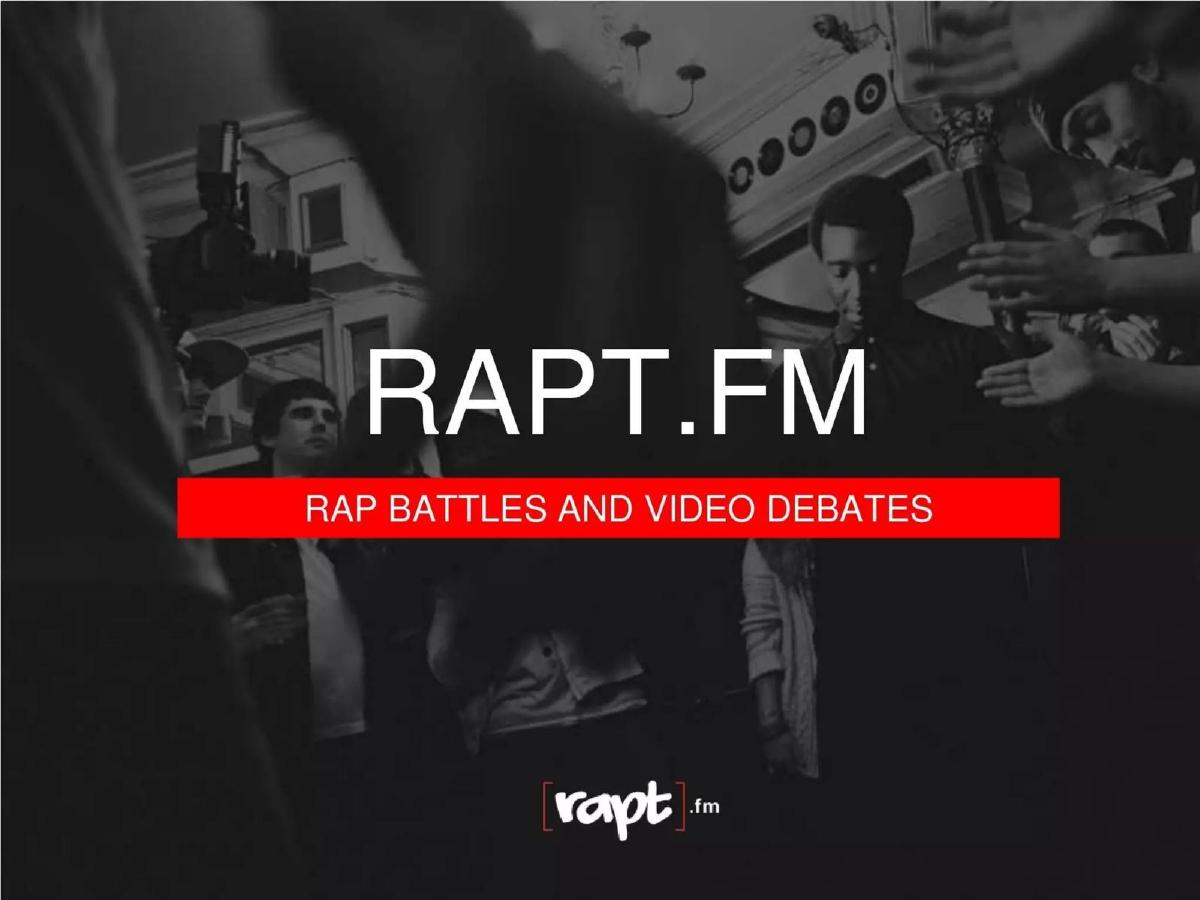
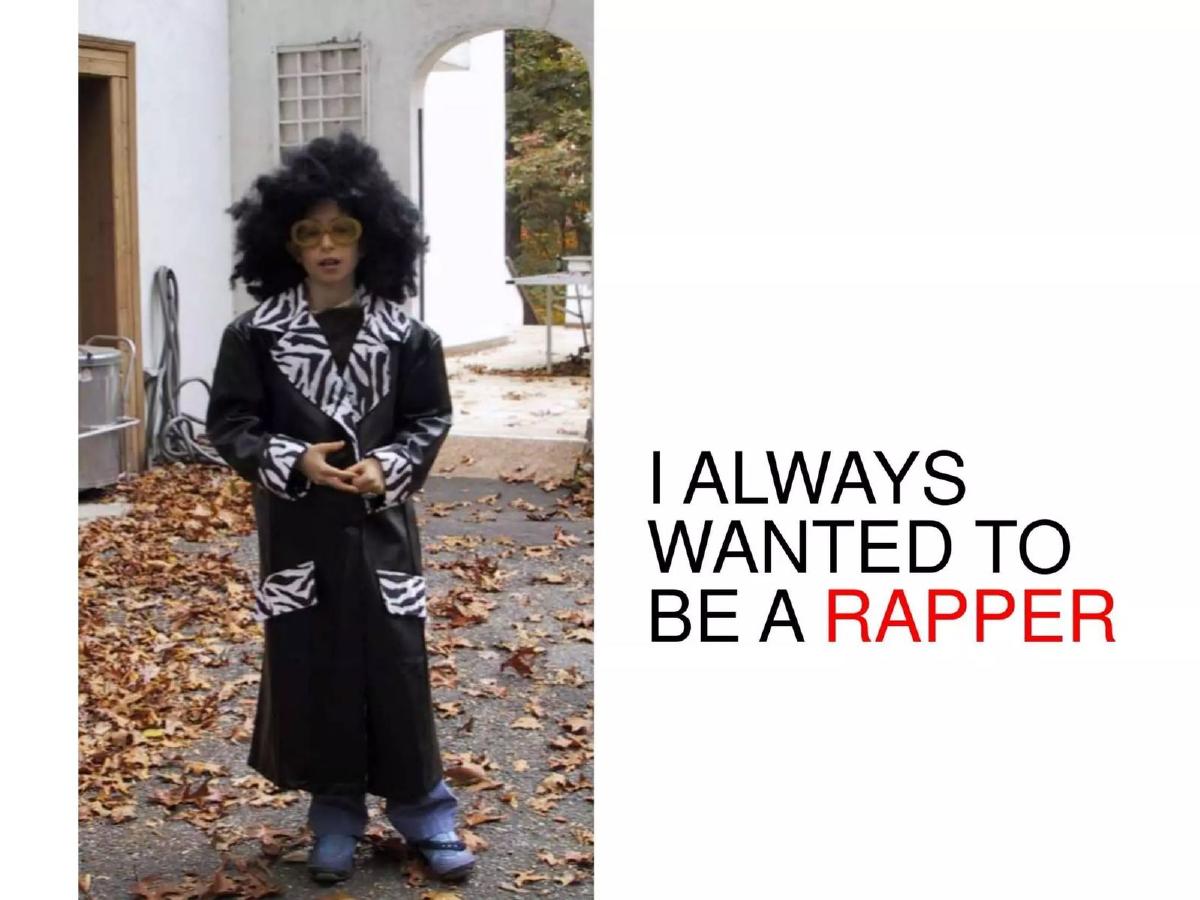
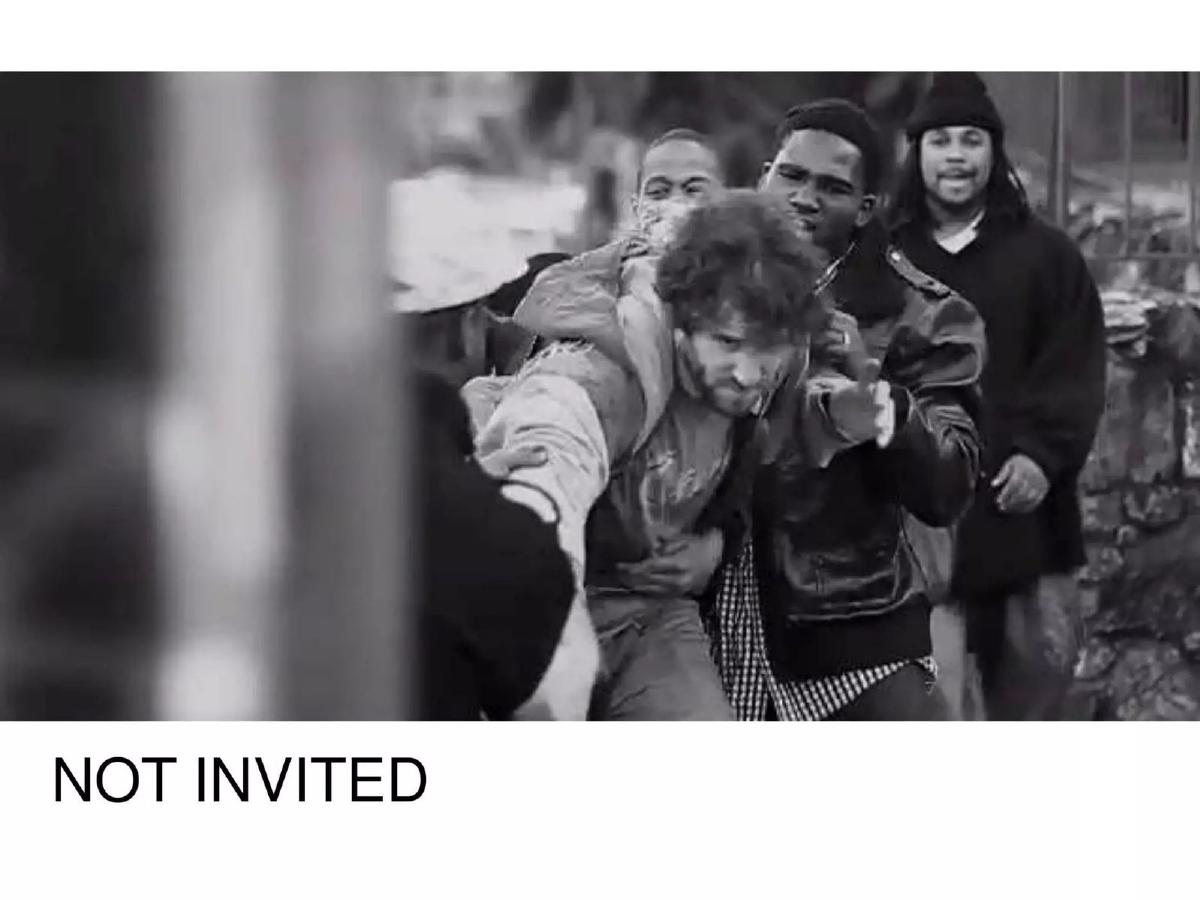
Slide 1 introduces the brand with the title 'RAPT.FM: RAP BATTLES AND VIDEO DEBATES.' The visual is a dark, atmospheric shot of a crowd, immediately establishing the 'street' and 'live' aesthetic of the product. Slide 2 takes a surprising turn into personal storytelling with a photo of a young child in a wig and the text 'I ALWAYS WANTED TO BE A RAPPER.' This humanizes the pitch, suggesting that the platform is for the 'dreamer' or the fan who lacks access. Slide 3 punctuates this with a black-and-white image of a man being held back or excluded, captioned 'NOT INVITED.' This three-slide sequence establishes the problem: rap culture is exclusive, and there is no accessible 'entry point' for the average fan to participate.
Slides 4-6: Product as the Solution
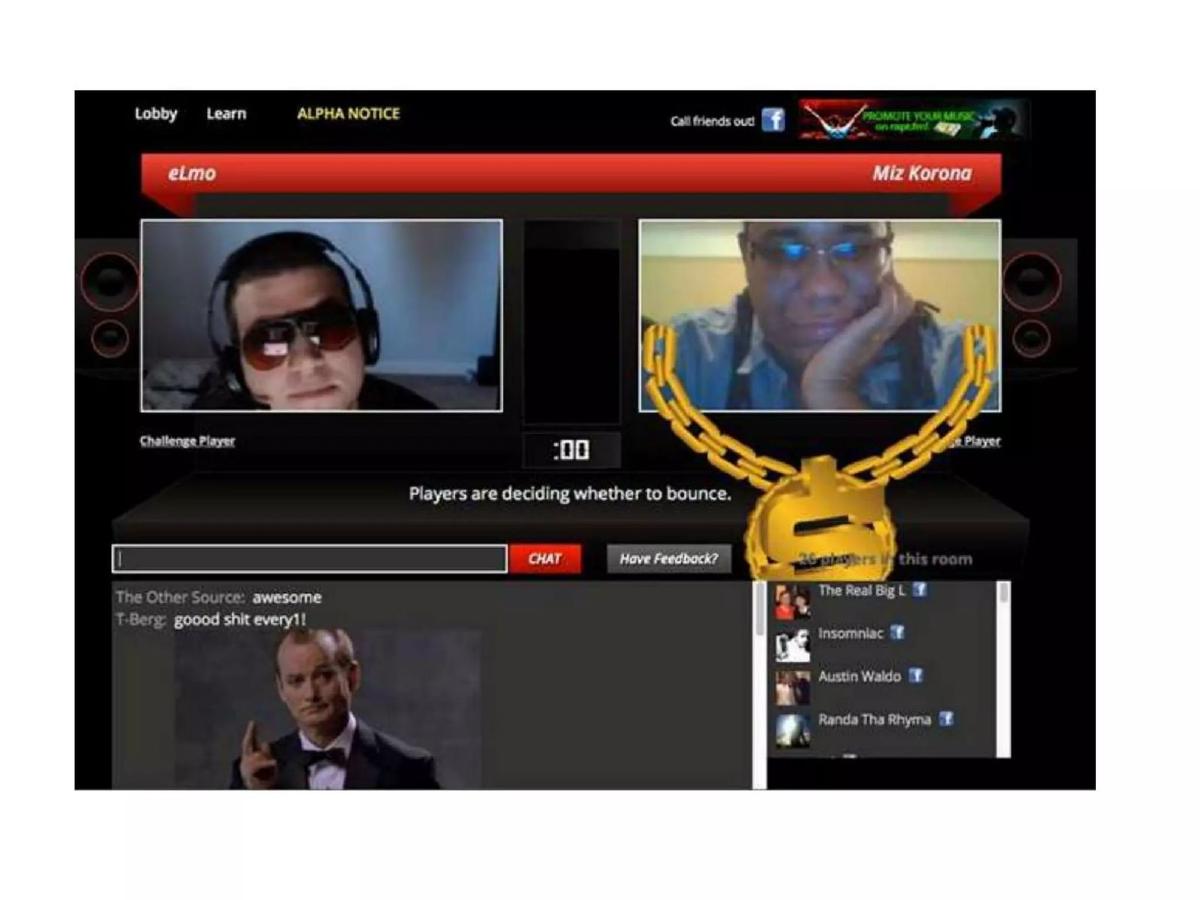
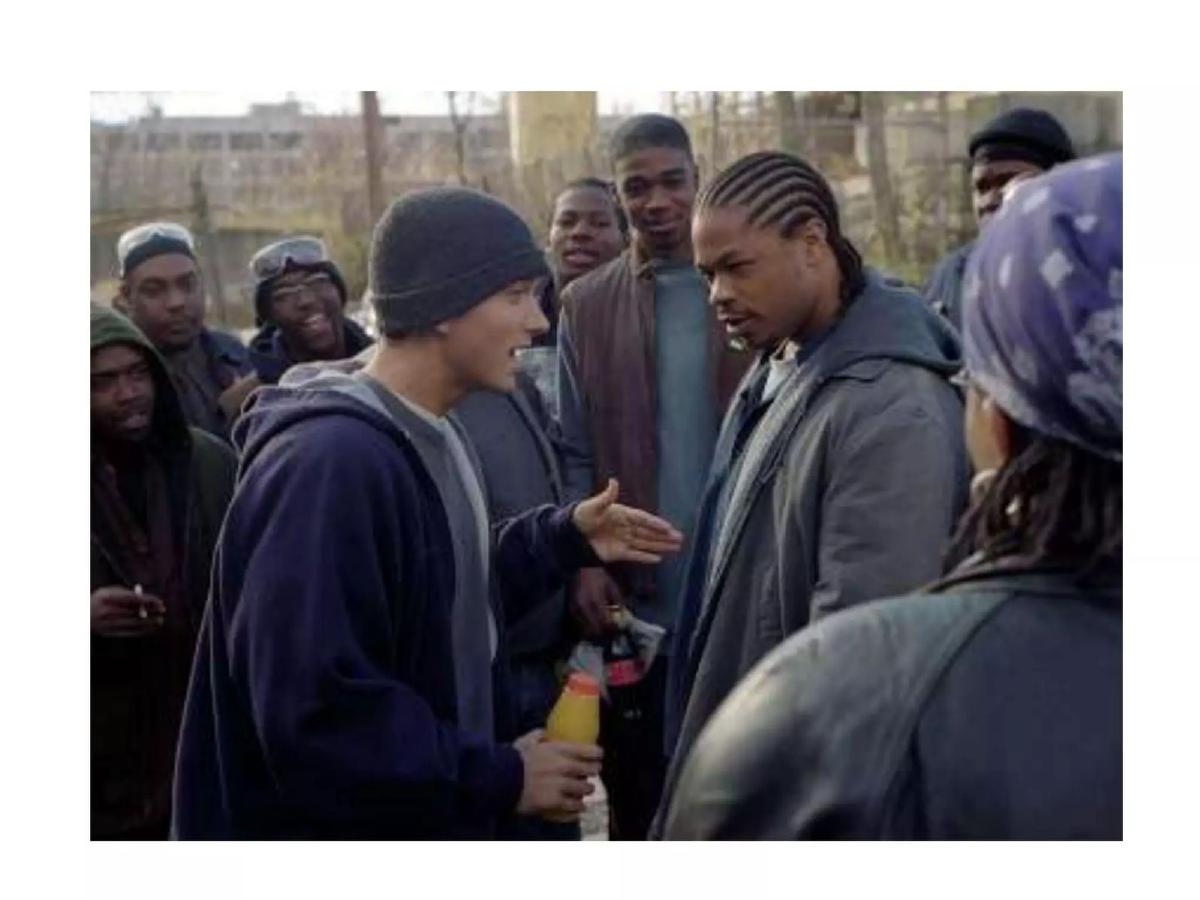
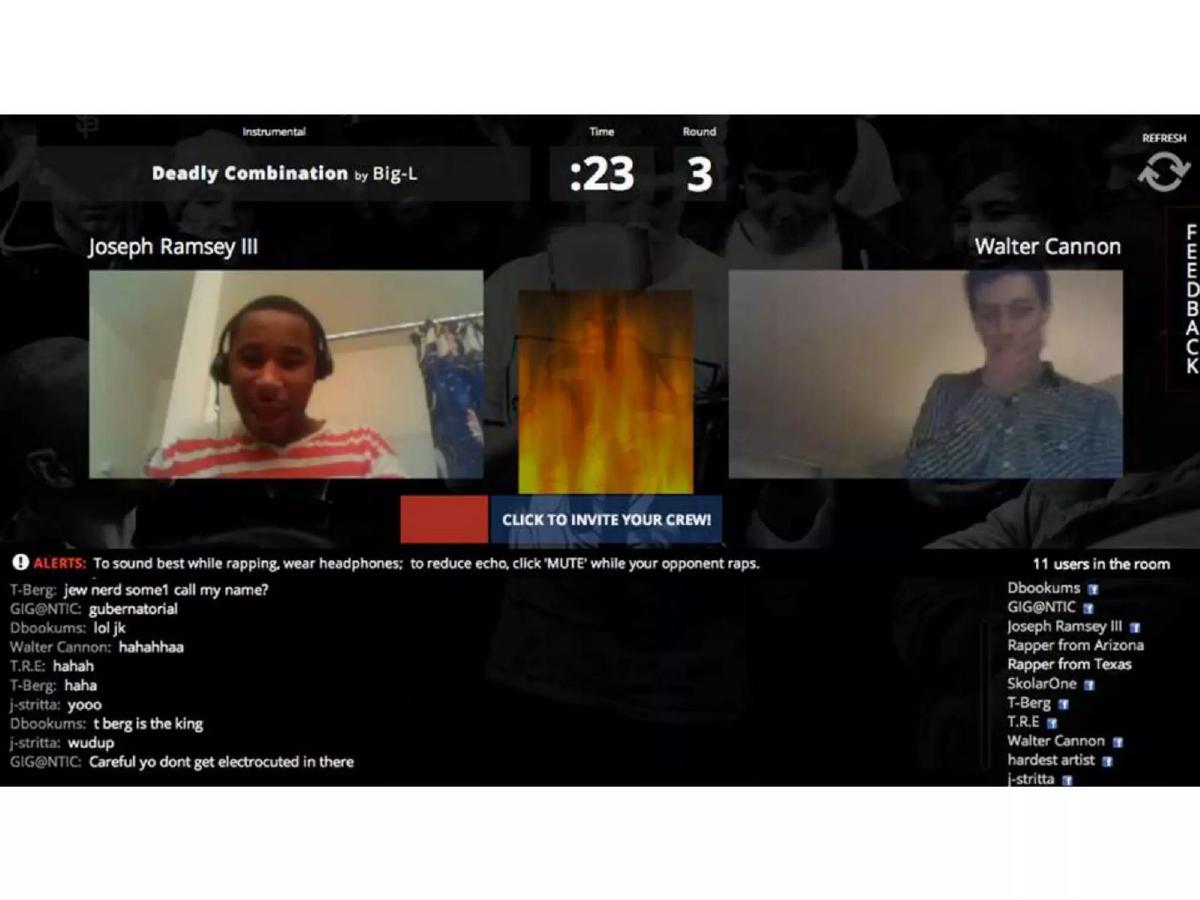
Slide 4 provides the first look at the product interface. It shows a two-way video split with a chat box and a 'gold chain' graphic overlay. The interface looks like a gamified version of Skype or Chatroulette, specifically tailored for performance. Slide 5 is a purely visual reference to the movie 8 Mile , showing Eminem in a rap battle. This serves as the 'mental model' for the investor—Rapt.fm is 8 Mile for the internet. Slide 6 returns to a product screenshot, showing a live battle between 'Joseph Ramsey III' and 'Walter Cannon' with 11 users in the room. This slide proves the product is functional and currently being used by real people in a beta environment.
Slide 7: The Traction Slide
This is the most 'data-heavy' slide in the deck. Under the heading 'RAPT BETA STATS,' the company lists two key figures: 56% Growth and a 16 MIN Average Visit . For a seed-stage investor, the 16-minute average visit is the 'aha' moment. It suggests that the content is compelling enough to keep users engaged far longer than a typical social media post. The slide also features the Tommy Boy Records logo with the caption 'PROMOTED ARTISTS TO LABELS,' indicating that the platform already has industry utility as a talent discovery tool.
Slides 8-12: Expanding the Use Case
Slides 8 and 9 show that the technology isn't just for rap. Slide 8 shows a woman playing a guitar, and Slide 9 shows a 'cat battle' where users are holding up their pets. This is a strategic move to show investors that while 'Rap' is the wedge, the 'Live Versus' format is a broad platform. Slides 10, 11, and 12 lean into the 'Video Debates' part of the title slide. They show screenshots of CNN (Newt vs. Piers), The Daily Show (Jon Stewart), and ESPN's First Take (Stephen A. Smith vs. Skip Bayless). The caption on Slide 12, 'PEOPLE LOVE A GREAT DEBATE,' positions Rapt.fm as the digital home for this universal human interest in confrontation and competition.
Slides 13-15: Market Size and Social Proof
Slide 13 attempts to quantify the opportunity. It claims 500M Worldwide Fans and 1B Hip-Hop Related Daily Page Views . These are massive, top-of-funnel numbers intended to show that the 'ceiling' for this business is incredibly high. Slide 14 introduces 'THE RAPT TEAM,' featuring Erik Torenberg, Jamie Pitts, Jarrett Abello, and Phil Fresh Simpson. The logos for Seelio, HSX.com, Barstool, and the Detroit Institute of Arts are used to provide professional context for the founders. Slide 15 is the 'Advisor' slide, and it is exceptionally strong. It features Dan Gilbert (Quicken Loans/Cavaliers), the founders of Rap Genius, and the artist Nas. For a 2012 startup, having the backing of both the 'King of Detroit' (Gilbert) and a hip-hop legend (Nas) provided immense credibility.
Slides 16-17: The Vision and the Close
Slide 16 is a powerful photograph of a real-world rap battle circle with a red circle around the performer in the middle. This reinforces the idea that Rapt.fm is simply digitizing an existing, vibrant physical behavior. Slide 17 is a final product mockup showing a 'Hype Meter' and a 'virtual crowd' of South Park-style avatars. This suggests a future where the platform is even more gamified and interactive, moving from a simple video tool to a full-fledged virtual venue.
What Works in This Deck
The 'Vibe' Check: The deck successfully captures the energy of the culture it is trying to serve. It doesn't look like a corporate PowerPoint; it looks like a product for hip-hop fans. · Engagement over Revenue: By highlighting the 16-minute session time, the founders answered the most important question for a social app: 'Do people actually care?' · Social Proof: The advisor slide (Slide 15) is the heavy lifter. It tells investors that the 'gatekeepers' of both capital and culture have already given this their blessing. · Clear Mental Model: Using images from 8 Mile and ESPN's First Take makes it instantly clear what the product does without needing a 500-word explanation.
What is Missing
Business Model: There is absolutely no mention of how the company will make money. No mention of ads, virtual gifts, or premium features. · The Ask: The deck does not specify how much money they are raising or what they plan to do with the funds. · Unit Economics: There is no data on the cost of acquiring a user (CAC) or the long-term value (LTV), though this is common for very early seed rounds. · Competition: The deck ignores other video platforms like YouTube, Ustream, or the then-emerging Vine, which could have been seen as threats.
What a Founder Should Copy
The 'Wedge' Strategy: Start with a very specific, high-passion niche (rap battles) and then show how it can expand into broader categories (debates, music, pets). · Visual Storytelling: Use high-quality, evocative images to establish the 'problem' and 'solution' before you ever show a bullet point. · Highlighting 'Sticky' Metrics: If you have a metric that is significantly better than industry averages (like a 16-minute session), make it the centerpiece of your traction slide. · Advisor Alignment: Don't just list any advisors; list people who are specifically relevant to your niche. Having Nas on a rap-tech deck is worth more than ten generic 'serial entrepreneurs.'
Frequently asked questions
- How did Rapt.fm justify its market size?
- Rapt.fm used top-down cultural metrics rather than bottom-up financial ones. On slide 13, they cite 500 million worldwide fans and 1 billion daily hip-hop related page views. This approach frames the opportunity as a play for attention and 'daily page views' rather than immediate transactional revenue, which was common for social platforms in 2012.
- What were the key engagement metrics used in the seed round?
- The deck highlights two primary beta stats on slide 7: a 56% growth rate and a 16-minute average visit duration. The 16-minute figure is particularly strong for a seed-stage social app, suggesting that the 'live' nature of the content created significant 'stickiness' among early users.
- Who were the notable advisors or investors mentioned?
- Slide 15 is a powerhouse of social proof for the era. It features Dan Gilbert (Quicken Loans/Cleveland Cavaliers), the founders of Rap Genius, the legendary rapper Nas, and Anthony Saleh. This lineup suggested to investors that the startup had deep ties to both the tech world and the hip-hop industry.
- Is there a business model included in this pitch deck?
- No. The deck is entirely focused on product, community, and engagement. There is no mention of advertising, subscriptions, or virtual goods. This reflects a 'growth first, monetize later' philosophy that was prevalent in the early 2010s for consumer-facing social startups.
- How does the deck handle competition?
- The deck does not include a traditional competition matrix or 'X/Y' axis slide. Instead, it positions the product as a unique digital version of a real-world cultural phenomenon (the rap battle circle shown on slide 16), implying that existing video platforms were not catering to this specific interactive need.