AltLegal’s pitch deck is a lean, visual-heavy presentation that prioritizes narrative flow over dense data. Spanning 10 slides, it identifies a massive, growing market of 50 million active IP filings (Slide 2) and highlights the inefficiency of manual, error-prone legacy systems (Slide 4). The deck excels at establishing founder-market fit, showcasing a leadership team with direct experience at top-tier law firms like Kirkland & Ellis (Slide 9). While the deck successfully demonstrates quarter-over-quarter MRR growth throughout 2016 (Slide 8), it lacks a specific financial ask, use of funds,…
Key takeaways
- The deck identifies a total addressable market of 50 million active IP filings on Slide 2.
- Global IP filings are shown to be in a steady upward trend, growing from approximately 38 million in 2012 to nearly 50 million in 2014 (Slide 3).
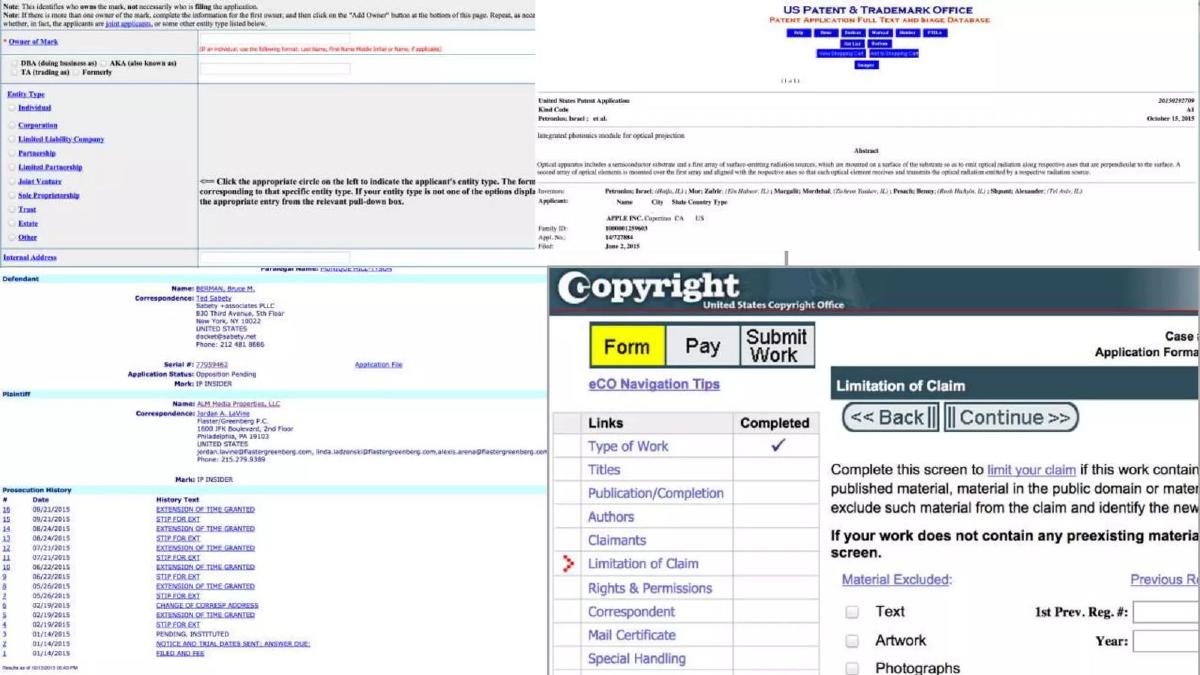
- The core problem is defined as a manual, labor-intensive, and error-prone process, illustrated by screenshots of archaic government portals (Slides 4 and 5).
- AltLegal positions itself as the digital solution, showing a clean, modern SaaS interface for docketing and intake (Slide 7).
- The company demonstrates consistent traction with a bar chart showing Monthly Recurring Revenue (MRR) growth every quarter in 2016 (Slide 8).
- The leadership team possesses significant domain expertise, including a CEO and Tech lead who both worked at Kirkland & Ellis (Slide 9).
- The deck completely omits a formal 'Ask' slide, leaving the desired investment amount and valuation unstated.
- There is no mention of unit economics, customer acquisition costs (CAC), or lifetime value (LTV) metrics.
Executive Summary: The Minimalist Pitch
AltLegal’s pitch deck is a classic example of a 'less is more' approach. Designed for a live pitch event (as indicated by the source listing 'Alley Pitch'), it avoids the common pitfall of overcrowding slides with text. Instead, it uses large-scale imagery and high-level metrics to guide the audience through a narrative of modernization in the legal industry. The deck is highly effective at establishing the 'Why Now'—citing a massive increase in global IP filings—and the 'Why Us'—showcasing a team with pedigree from the world’s most prestigious law firms.
Slide 1: Title Slide
The deck opens with a clean, minimalist title slide featuring the AltLegal logo against a teal background. It includes the contact information for CEO Nehal Madhani, including his email and Twitter handle. This sets a professional, tech-forward tone immediately.
Slide 2 & 3: Market Size and Growth
AltLegal moves straight into the market opportunity. Slide 2 presents a single, powerful figure: "50 million active IP filings." This establishes the scale of the data the company intends to manage. Slide 3 follows up with a bar chart titled "Global IP Filings," showing growth from 2012 to 2014. The chart visualizes a jump from approximately 38 million filings to just under 50 million in only two years. By leading with these slides, the company validates that the problem they are solving is not a niche concern but a massive, expanding global market.
Slide 4, 5 & 6: The Problem Statement
The problem is articulated through three distinct slides. Slide 4 uses three keywords: "Manual, Labor-Intensive, Error-Prone." This is the 'pain' slide. Slide 5 provides visual evidence of this pain, showing screenshots of the U.S. Patent & Trademark Office and U.S. Copyright Office websites. These interfaces look like relics from the 1990s, reinforcing the idea that the industry is technologically underserved. Slide 6 is a full-bleed photo of a cluttered shelf filled with physical legal folders. This serves as a visceral reminder of the 'old way' of doing things—paper-based, disorganized, and difficult to search.
Slide 7: The Solution (Product)
The transition to the solution is sharp. Slide 7 shows a clean, modern SaaS interface on an iMac. The dashboard features sections for "Intake," "Docketing," and "Account." Specifically, it shows an "Add Trademarks" field where a user can simply enter a USPTO Serial number to add a filing. This directly addresses the "manual" and "error-prone" problems mentioned earlier by suggesting automation and data syncing.
Slide 8: Traction and Revenue
To prove that the market wants this solution, Slide 8 shows "Growth in Monthly Recurring Revenue." The bar chart covers four quarters: Q1 '16, Q2 '16, Q3 '16, and Q4 '16. While the Y-axis lacks specific currency values, the relative height of the bars shows that MRR more than doubled between Q1 and Q4. This demonstrates product-market fit and a repeatable sales process.
Slide 9: The Leadership Team
The team slide is perhaps the strongest in the deck regarding credibility. Nehal Madhani (CEO) and Charles Amoako (Tech) are both listed as former employees of Kirkland & Ellis , which the slide notes is a "top-10 law firm." Madhani is also noted as a Python developer and a Stanford Law Fellow, while Amoako is a Yale graduate and full-stack developer. Hannah Samendinger (Operations) is a law graduate with prior legal tech experience, and Gabe Kneisley (Product) brings over 10 years of UX/UI experience from Meetup.com and Sprint . This slide proves the team has both the legal domain expertise and the technical chops to build the product.
Slide 10: Closing
The deck ends as it began, with the logo and contact information. There is no 'Ask' slide, no 'Thank You' slide, and no summary of the investment opportunity. This confirms the deck's role as a presentation aid rather than a standalone document for investors to review in isolation.
What AltLegal Does Well
The narrative arc of this deck is excellent. It follows the classic problem-solution-traction-team format without any unnecessary fluff. The use of visual evidence—specifically the contrast between the archaic government websites on Slide 5 and the modern AltLegal interface on Slide 7—is a powerful way to communicate value without using a single bullet point. Furthermore, the team slide is exceptionally well-constructed, highlighting specific 'prestige' markers (Kirkland & Ellis, Yale, Stanford, Meetup.com) that build immediate trust with investors.
What is Missing from the Deck
As a pitch deck for a live event, it serves its purpose, but as a fundraising tool, it is incomplete. The most glaring omission is the Ask . There is no information regarding how much capital is being raised, the terms of the round, or what the milestones for the next 18 months look like. Additionally, there is no Competitive Landscape slide. In the legal tech space, competition from legacy players like Thomson Reuters or newer entrants is a standard investor concern that isn't addressed here. Finally, the deck lacks Unit Economics . While MRR growth is shown, we don't know the cost to acquire those customers or the churn rate, which are critical for evaluating a SaaS business.
Founder's Guide: What to Copy
Visual Contrast: Use screenshots of the 'ugly' legacy systems your customers currently use to make your modern UI look even better by comparison. · Pedigree Highlighting: If your team has worked at top-tier firms or attended elite universities, make those logos or names prominent. It acts as a shorthand for quality. · Clean Traction Charts: If you are in the early stages and don't want to disclose exact dollar amounts yet, a relative bar chart showing Q-o-Q growth can still effectively communicate momentum. · One Idea Per Slide: AltLegal never crowds a slide. Each slide has one job: show the market size, show the problem, show the growth. This keeps the audience focused on the speaker.
Frequently asked questions
- What is the primary problem AltLegal is solving?
- AltLegal targets the inefficiency of intellectual property management. According to Slide 4 and Slide 5, the current process is 'manual, labor-intensive, and error-prone,' relying on outdated government websites (USPTO, Copyright Office) and physical paper filing systems (Slide 6). The startup aims to automate these workflows to reduce human error and save time for legal professionals.
- How does AltLegal demonstrate market demand?
- The deck uses two slides to establish market size and growth. Slide 2 states there are 50 million active IP filings globally. Slide 3 provides a historical context, showing that global filings increased from roughly 38 million in 2012 to nearly 50 million in 2014, suggesting a growing market that requires better management tools.
- What evidence of business traction is provided?
- Traction is presented through revenue growth rather than user count. Slide 8 displays a bar chart titled 'Growth in Monthly Recurring Revenue,' showing four consecutive quarters of growth from Q1 2016 to Q4 2016. While the chart lacks specific dollar amounts on the Y-axis, the visual trend indicates a steady upward trajectory in recurring sales.
- Does the team have relevant experience in the legal sector?
- Yes, founder-market fit is a core strength of this deck. Slide 9 shows that CEO Nehal Madhani and Tech lead Charles Amoako are both former employees of Kirkland & Ellis, a top-10 law firm. The team also includes a law graduate with legal tech experience and a product lead with over 10 years of UX/UI experience from companies like Meetup.com.
- What information is missing from the AltLegal pitch deck?
- The deck is missing several standard venture capital requirements. It does not include a slide for the 'Ask' (how much money they are raising), a 'Use of Funds' breakdown, a competitive analysis, or detailed unit economics. It also lacks a roadmap for future product development or geographic expansion beyond the current offering.