Brunch Box is a conceptual networking tool designed to facilitate face-to-face connections between professionals in close proximity. The deck, originating from a Startup Weekend event in Skopje, identifies a specific niche: the 25-45 age demographic of 'extroverted tech enthusiasts' who are willing to meet over breakfast or brunch. A core component of their value proposition is the dual-sided marketplace benefit, where they drive foot traffic to restaurants during their 'most quiet hours' in the morning. While the deck establishes a clear mission to 'grow a community as we grow our product,'…
Key takeaways
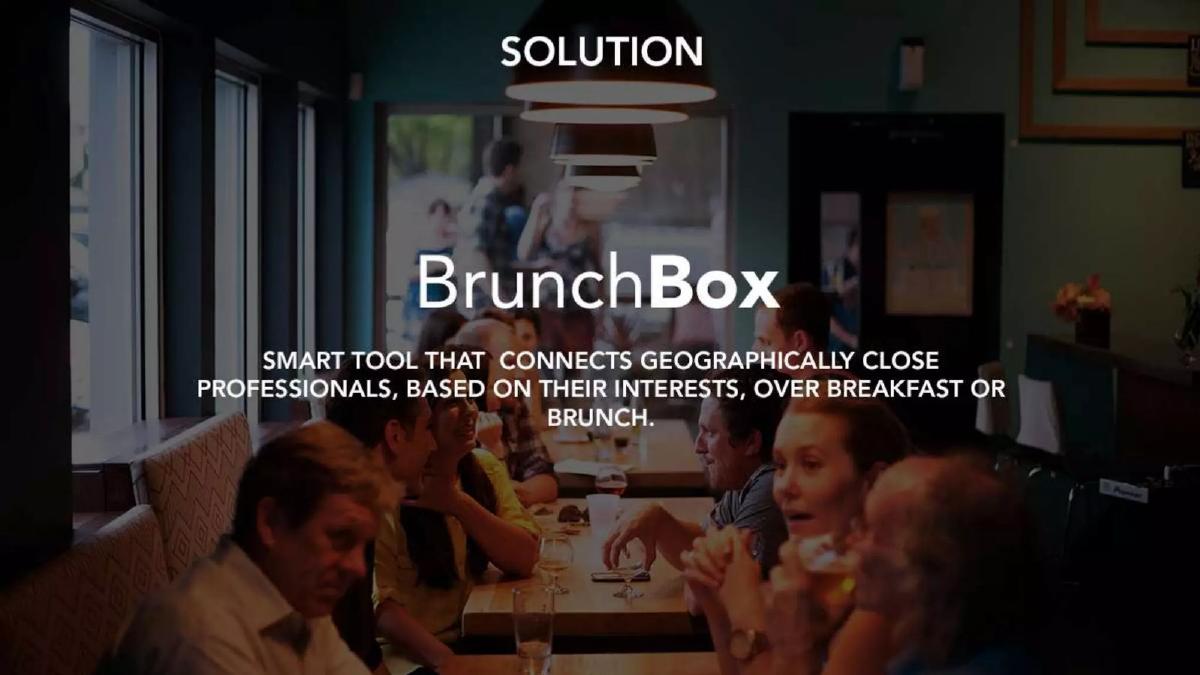
- The product is defined as a 'smart tool' that connects professionals based on geography and shared interests (Slide 2).
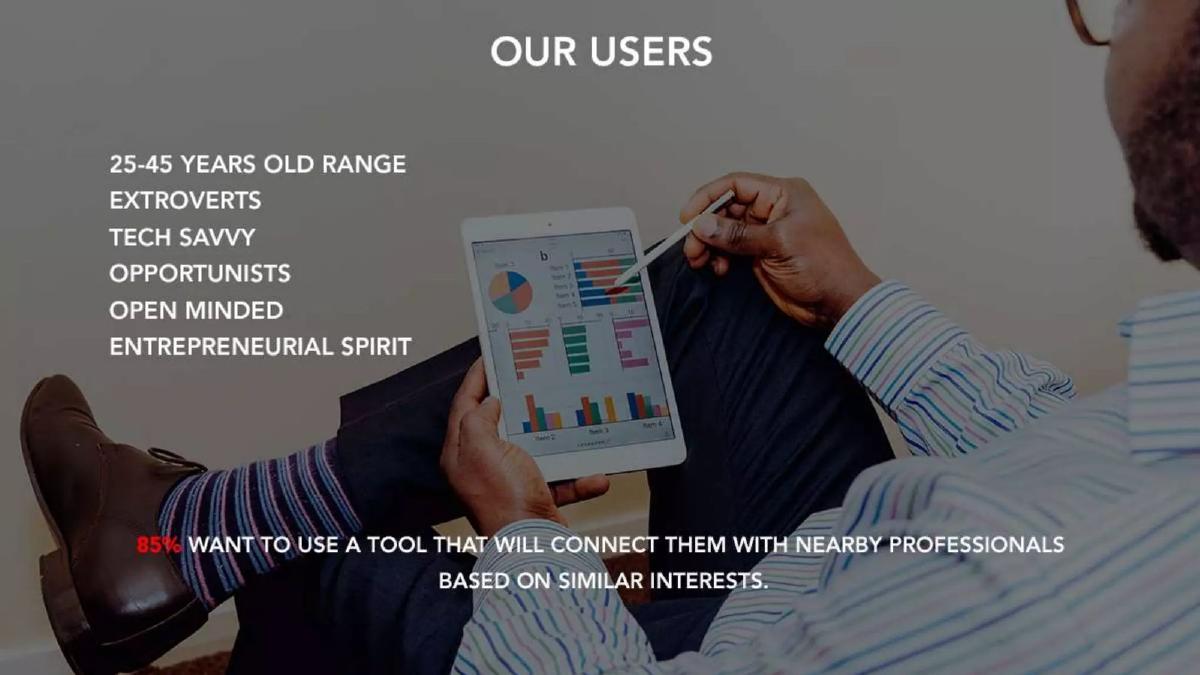
- The primary target demographic is professionals aged 25-45 who identify as extroverts and tech-savvy (Slide 3).
- The deck claims 85% of surveyed users want a tool to connect with nearby professionals based on interests (Slide 3).
- The business model leverages restaurant partnerships by targeting 'quiet hours' in the mornings (Slide 4).
- Growth strategy relies on early-adoption groups like tech and business enthusiasts found at conferences (Slide 5).
- Social media is cited as a primary channel for community growth and user acquisition (Slide 5).
- The deck concludes with a mission-driven statement focused on 'human' networking rather than digital-only interaction (Slide 6).
- There is a total absence of a team slide, financial projections, or a specific funding ask in the provided materials.
Executive Summary: The Social Discovery Concept
Brunch Box is a networking concept that emerged from Startup Weekend Skopje. The deck presents a vision for a mobile-first 'smart tool' designed to bridge the gap between digital networking and physical interaction. By focusing on the morning meal—breakfast and brunch—the company attempts to carve out a niche in the crowded social discovery space. The pitch relies heavily on the psychological profile of its users and the operational needs of local restaurants, though it remains a high-level conceptual overview rather than a detailed business plan.
Slide 1: Title and Tagline
The opening slide introduces the brand Brunch Box with the tagline "CREATE A NEW CONNECTION THE REAL WAY." The branding is minimalist, using a clean sans-serif font. The tagline immediately establishes the company's position against purely digital networking, emphasizing 'real' connections, which suggests a focus on face-to-face meetings.
Slide 2: The Solution
Slide 2 defines the product as a "SMART TOOL THAT CONNECTS GEOGRAPHICALLY CLOSE PROFESSIONALS, BASED ON THEIR INTERESTS, OVER BREAKFAST OR BRUNCH." This slide is critical because it establishes the three pillars of the service: proximity (geography), relevance (interests), and the specific setting (morning meals). By choosing breakfast and brunch, the company avoids the high-pressure environment of evening networking events or the time constraints of a standard lunch hour.
Slide 3: User Persona and Validation
Under the heading "OUR USERS," the deck lists specific traits: 25-45 years old range, extroverts, tech savvy, opportunists, open minded, and entrepreneurial spirit. This is a very specific psychographic profile. The slide also includes a validation metric: "85% WANT TO USE A TOOL THAT WILL CONNECT THEM WITH NEARBY PROFESSIONALS BASED ON SIMILAR INTERESTS." While the source of this 85% figure is not cited, it serves to demonstrate that there is a perceived demand for the service among the target demographic.
Slide 4: The B2B Value Proposition
Slide 4, titled "OUR CUSTOMERS," shifts the focus to the restaurant partners. It states: "WHERE OUR PRODUCT SHINES IS THAT WE ARE ENCOURAGING PEOPLE TO VISIT THESE RESTAURANTS IN THEIR MOST QUIET HOURS - THE MORNINGS!" This identifies the second half of the marketplace. For a networking app to succeed, it needs venues. By promising to fill seats during off-peak times, Brunch Box provides a clear value proposition to restaurant owners who are looking to increase their morning utilization rates.
Slide 5: Growth and Community Strategy
The "GROWTH" slide outlines a two-pronged approach. First, they will target "EARLY-ADOPTION GROUPS - TECH ENTHUSIASTS, BUSINESS ENTHUSIASTS AND ENTREPRENEURS." Second, they plan to reach these groups by "PARTNERING WITH CONFERENCES THAT THESE PEOPLE ATTEND AND VIA SOCIAL MEDIA." The slide concludes with a mission statement: "OUR MISSION IS TO GROW A COMMUNITY AS WE GROW OUR PRODUCT." This suggests a community-led growth model where the network effect is the primary driver of value.
Slide 6: Conclusion
The final slide reiterates the core message: "LET BRUNCHBOX HELP YOU BUILD YOUR NETWORK THE REAL WAY THE HUMAN WAY!" It serves as a call to action for the audience to embrace physical networking. Like the first slide, it emphasizes the 'human' element, reinforcing the brand's emotional appeal.
What Works in the Brunch Box Deck
Clear Niche Selection: The decision to focus specifically on breakfast and brunch is a clever way to differentiate from general networking apps like LinkedIn or casual social apps like Bumble BFF. It sets a specific time and context for the interaction, which reduces the friction of 'deciding where and when to meet.'
Dual-Sided Value: The deck successfully identifies why both users and venues would want to participate. Users get curated networking; restaurants get customers during slow hours. This is the foundation of a viable marketplace business model.
Specific Demographics: Rather than saying 'everyone,' the founders identified a specific age range (25-45) and specific personality traits (extroverts, tech-savvy). This allows for much more targeted marketing and product development.
What is Missing from the Brunch Box Deck
The Team Slide: One of the most significant omissions in this set of slides is the team. In early-stage startups, investors are primarily betting on the founders' ability to execute. Without knowing who is building the 'smart tool,' it is impossible to assess the technical or operational feasibility of the project.
Financials and Business Model: The deck explains why restaurants would want the service, but not how Brunch Box makes money. There is no mention of transaction fees, subscription models, or advertising revenue. Furthermore, there are no projections for customer acquisition costs (CAC) or lifetime value (LTV).
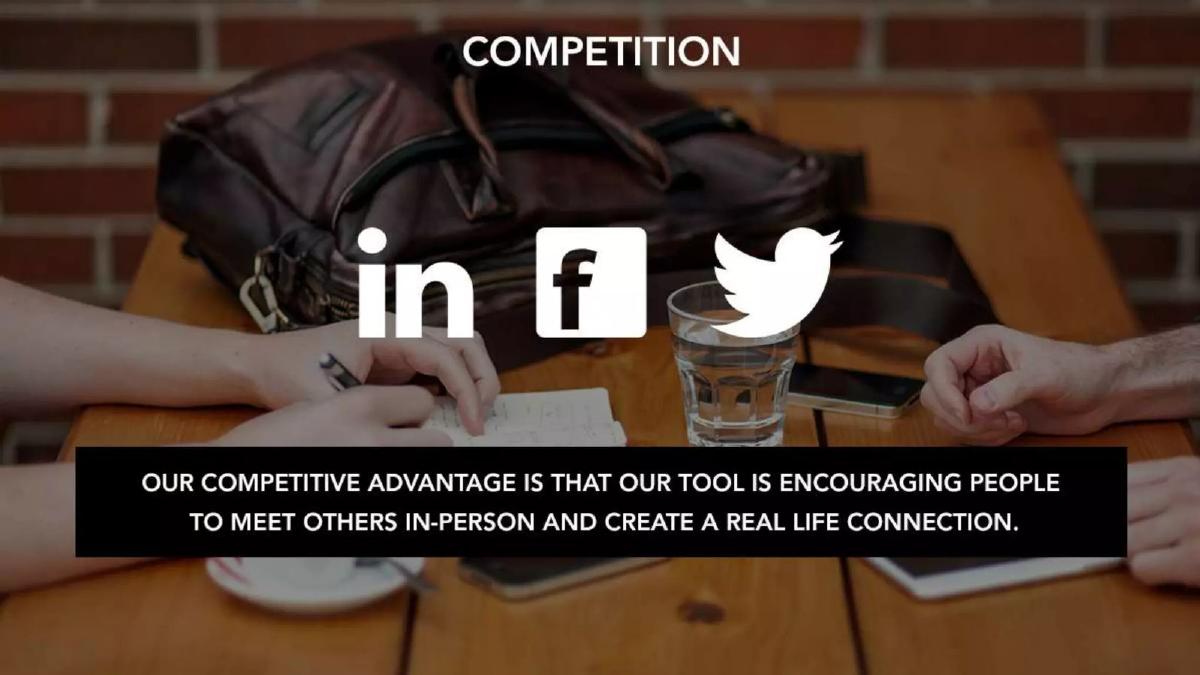
Competitive Analysis: The deck operates as if no other networking tools exist. A slide comparing Brunch Box to existing solutions (like Meetup, Shapr, or Lunchclub) would help define their competitive advantage and market positioning.
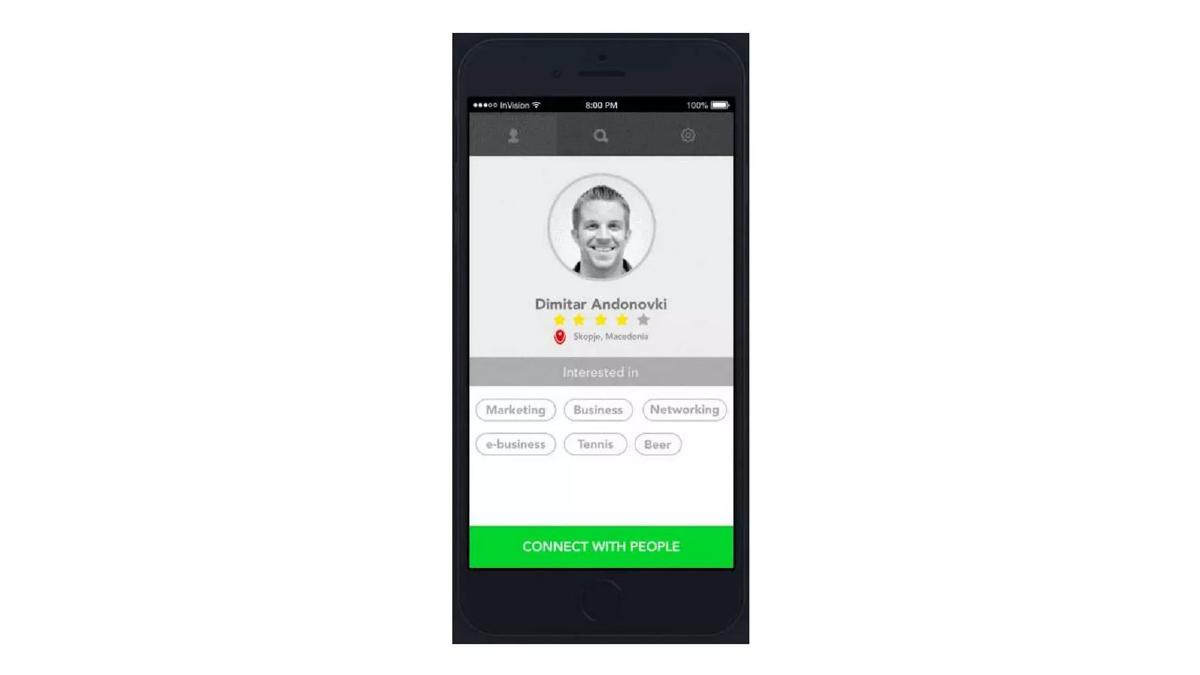
Product Mechanics: The deck calls the product a 'smart tool' but shows no screenshots, wireframes, or descriptions of how the matching algorithm works. Investors need to see how the 'interest-based' matching actually functions in practice.
Founder Takeaways: Lessons for Your Own Pitch
Leverage Underutilized Assets: If your startup can help another business make money from an asset they already own but aren't using (like empty restaurant tables in the morning), you have a strong B2B pitch. Always look for the 'quiet hours' in your target industry.
Focus on Context: Networking is a broad category. By narrowing the context to a specific meal, Brunch Box makes the abstract concept of 'networking' feel concrete. When pitching a social app, define the 'where' and 'when' as clearly as the 'why.'
Validate with Data: Even if it is just a small survey from a Startup Weekend, having a percentage (like the 85% cited on slide 3) gives the audience a data point to anchor on. However, always be prepared to explain the methodology behind your stats.
Balance Vision with Execution: While the Brunch Box deck is strong on vision and 'the human way,' it lacks the 'how.' When you build your deck, ensure that for every slide about the 'dream,' you have a corresponding slide about the 'mechanics'—the team, the tech, and the money.
Frequently asked questions
- What is the core problem Brunch Box is trying to solve?
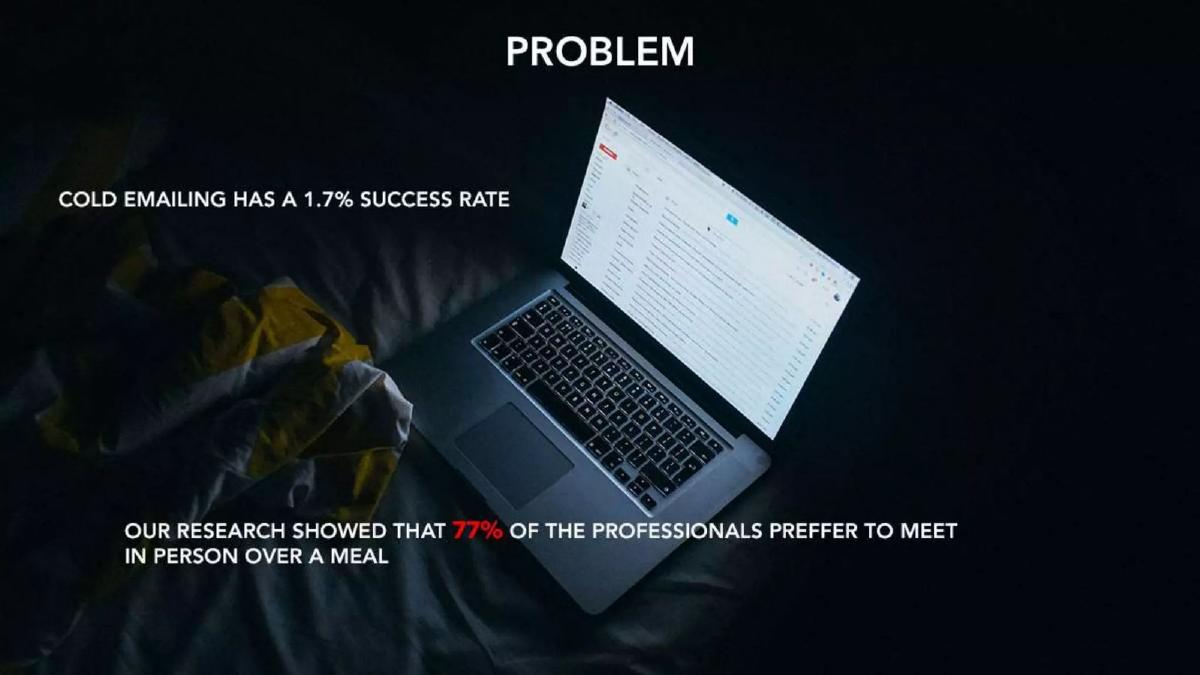
- While the deck does not have a dedicated 'Problem' slide, it implies that professionals lack 'real' or 'human' ways to build their networks. By focusing on breakfast and brunch, the company attempts to move professional networking away from digital platforms and into physical spaces, specifically targeting the inefficiency of empty restaurants during morning hours.
- How does Brunch Box intend to acquire its first users?
- According to slide 5, the company plans to target 'early-adoption groups' consisting of tech enthusiasts, business enthusiasts, and entrepreneurs. Their tactical approach involves partnering with professional conferences where these demographics congregate and utilizing social media to build a community alongside the product development.
- What is the incentive for restaurants to join the platform?
- The primary incentive for restaurants, as stated on slide 4, is the optimization of 'quiet hours.' Brunch Box positions itself as a marketing partner that encourages users to visit dining establishments during the morning, a time when many restaurants typically see lower foot traffic compared to lunch or dinner.
- What demographic data does the deck provide about its users?
- Slide 3 specifies a target age range of 25-45 years old. The deck further characterizes these users as extroverts, tech-savvy, opportunists, and open-minded individuals with an entrepreneurial spirit. It also cites a statistic that 85% of this group is looking for a tool to facilitate interest-based local connections.
- Is there a clear monetization strategy in the deck?
- No, the provided slides do not outline a revenue model. While it mentions helping restaurants fill seats during quiet hours, it does not specify if Brunch Box takes a commission on meals, charges a subscription fee to users, or sells lead generation data to the venues.