Chipper Cash’s 8-slide deck is a study in minimalism, relying almost entirely on traction and team credibility rather than exhaustive market analysis. The deck highlights 30,000 users and 90,000 transactions, signaling strong early product-market fit in the fragmented African financial landscape. While it lacks traditional slides for competition, business models, and a specific financial ask, its strength lies in the 'Big Tech' pedigree of its founders—hailing from Facebook, Google, and Yahoo. This teardown examines how a high-growth startup can bypass standard deck conventions by letting a s…
Key takeaways
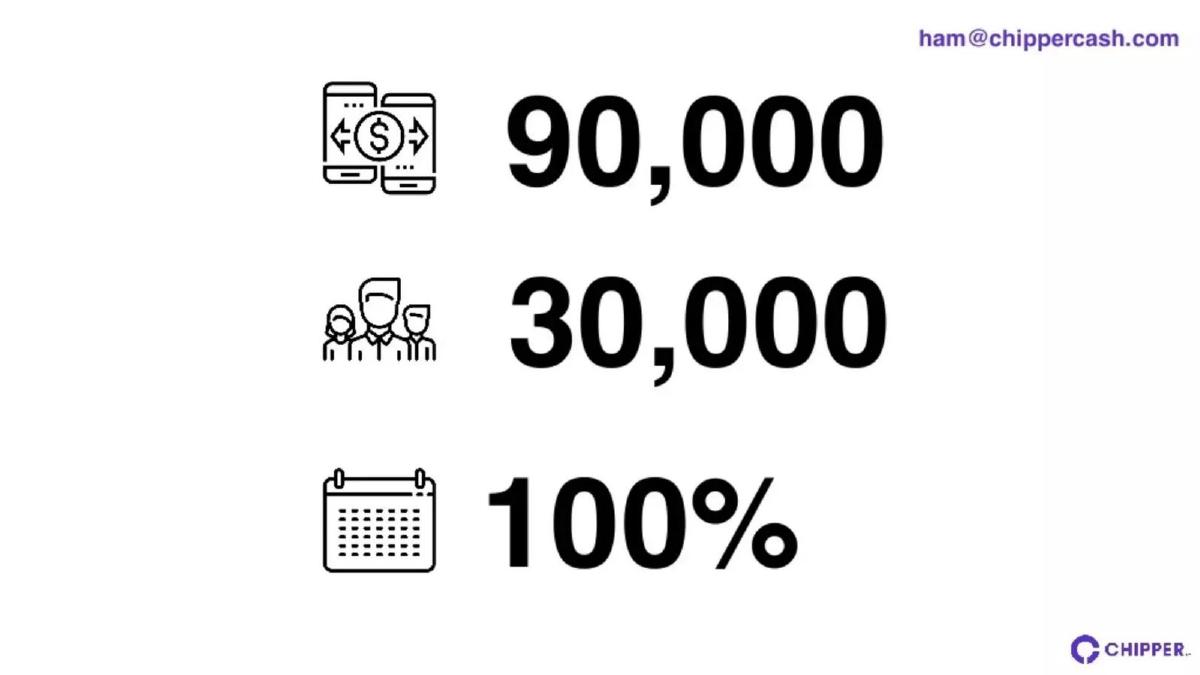
- The deck reports a user base of 30,000 and a transaction count of 90,000 on slide 2.
- A 100% growth metric is highlighted on slide 2, though the specific time period for this growth is not defined.
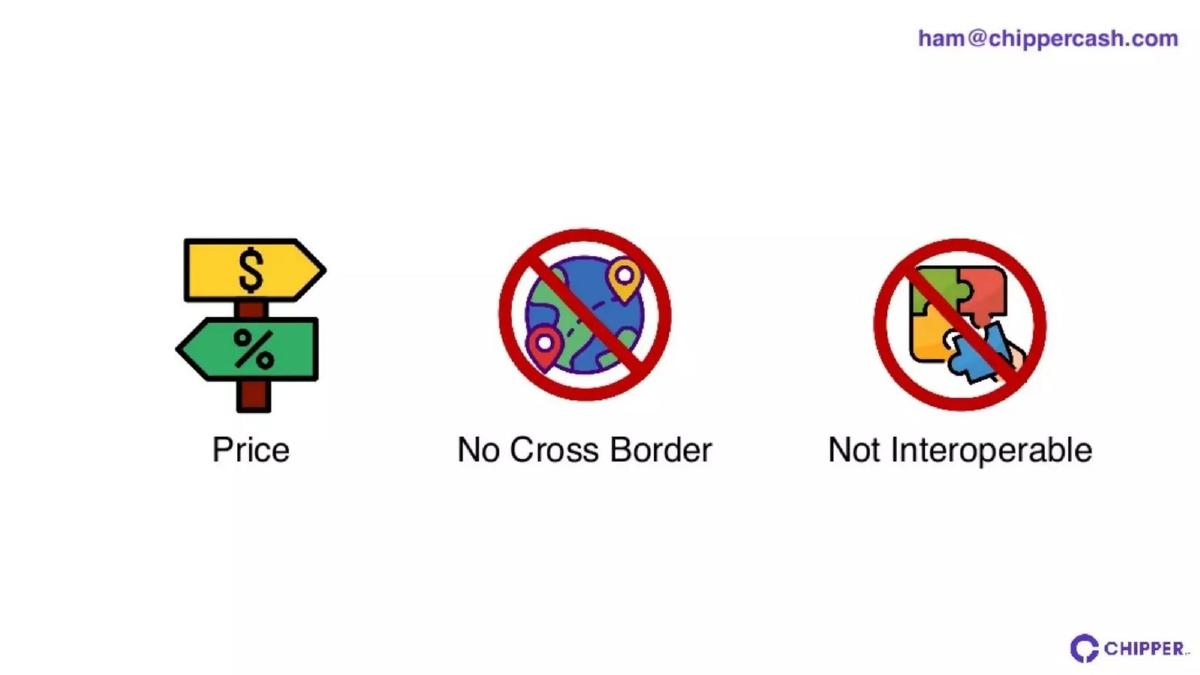
- The problem slide (slide 4) identifies three core pain points: Price, No Cross Border, and Not Interoperable.
- The team slide (slide 6) emphasizes previous experience at major tech firms including Facebook, Google, Bloomberg, Yahoo, Flickr, and Imgur.
- A 'Recap' chart on slide 7 visualizes a sharp upward trend in both transactions (90,000) and users (30,000).
- The deck contains no mention of a business model, revenue figures, or a specific funding ask.
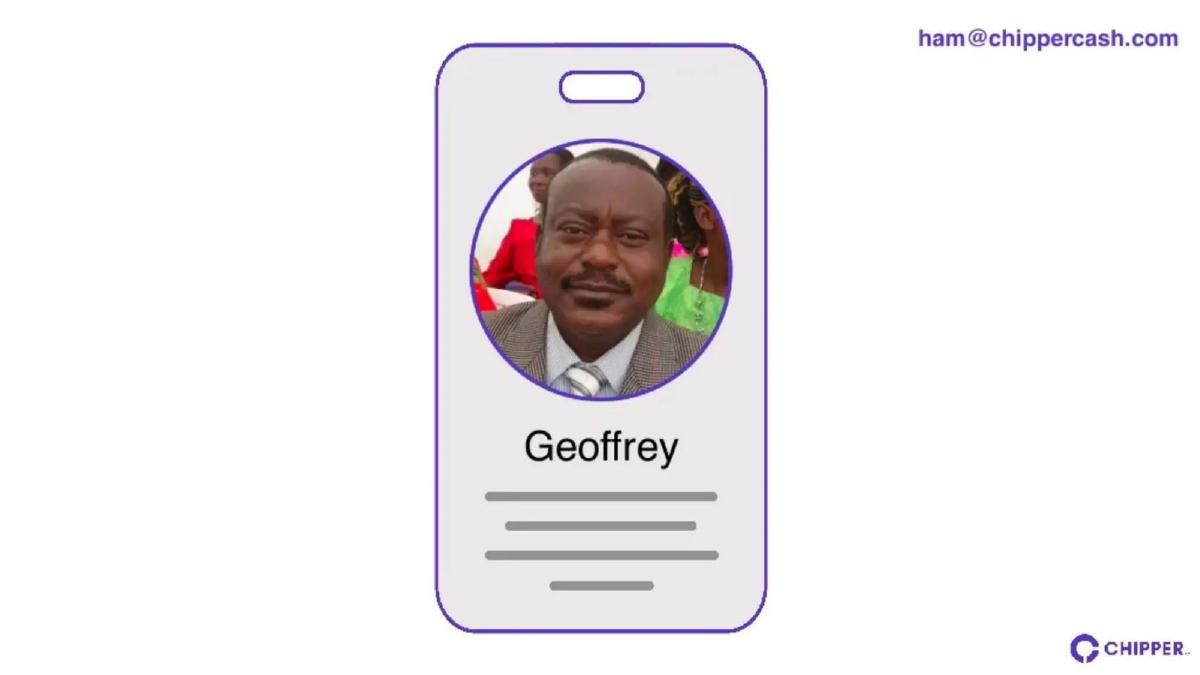
- Geoffrey is presented as a user persona on slide 3, though his specific story or use case is not detailed in text.
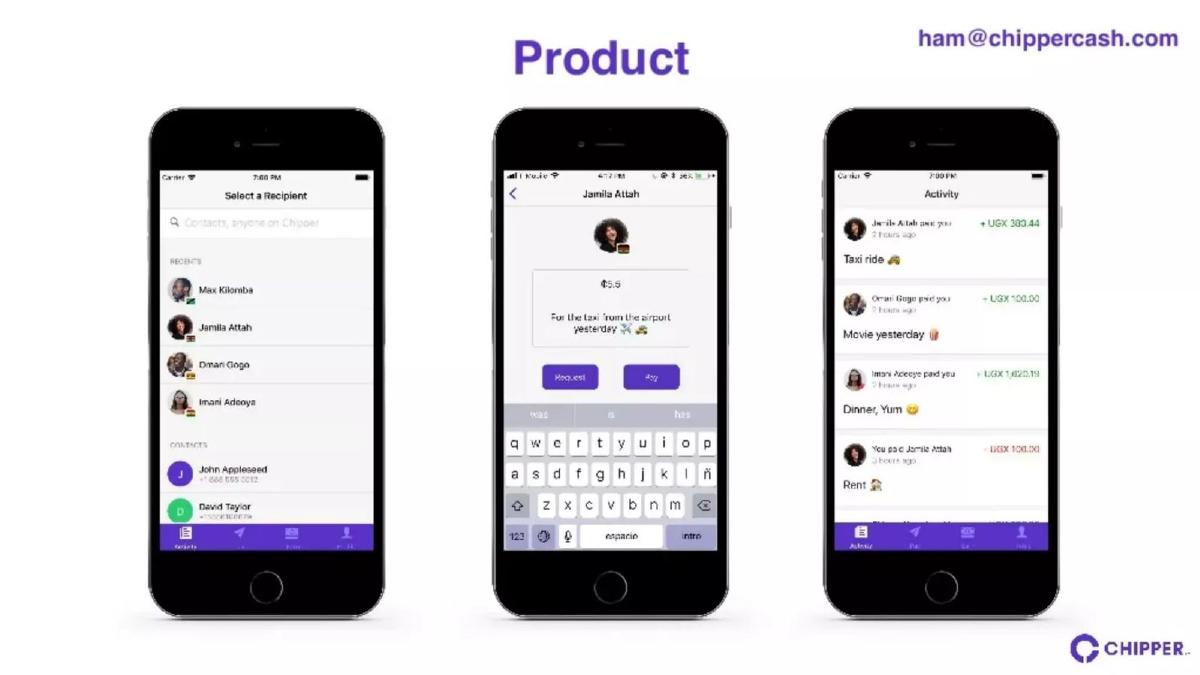
- The product interface (slide 5) shows support for multiple African currencies, including UGX (Ugandan Shilling).
The 8-Slide Traction Play: Chipper Cash
The Chipper Cash pitch deck is an anomaly in the world of high-stakes fundraising. While many Series-stage decks span 20 to 30 slides with deep dives into unit economics and total addressable market (TAM), Chipper Cash opted for a minimalist 8-slide presentation. This deck is designed for speed and impact, focusing on a single narrative: we have built a product that people are using, and our team has the pedigree to scale it.
Founded in 2017, Chipper Cash entered a highly fragmented African fintech market where mobile money was prevalent but siloed within national borders and specific carriers. This deck, dated 2018, captures the moment the company moved from a pilot phase into a high-growth trajectory. With a total raise of $302,200,000 according to catalogue data, it is clear that their early focus on cross-border interoperability resonated with investors.
Slide 1: The Vision
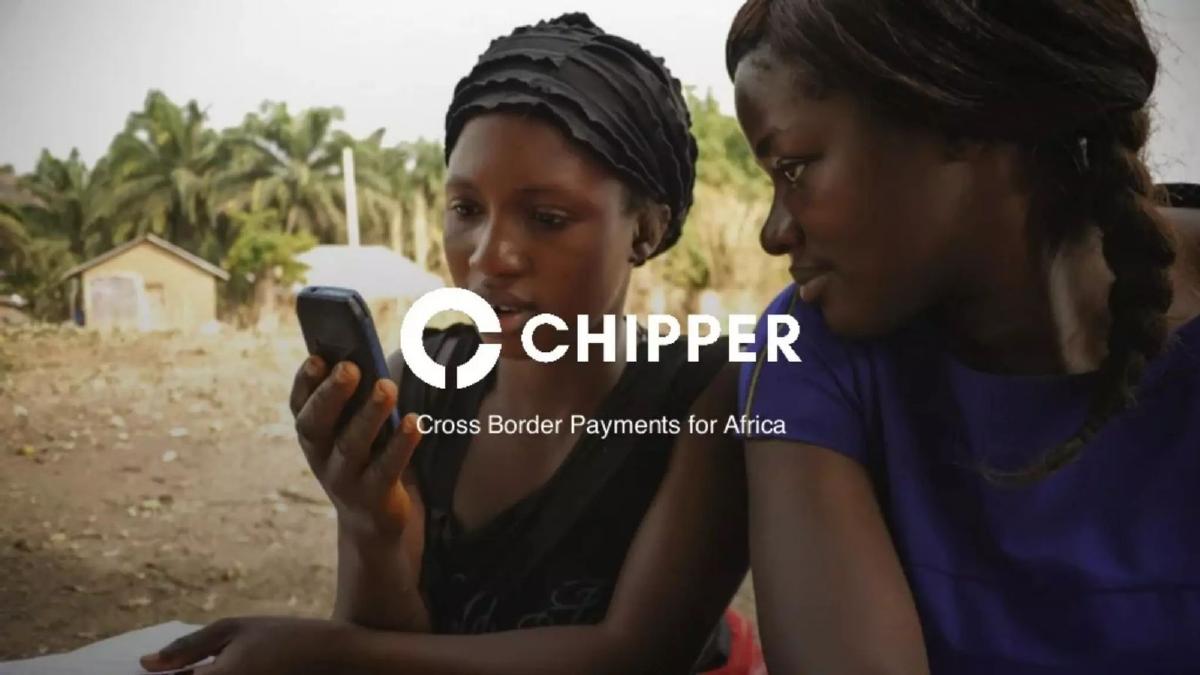
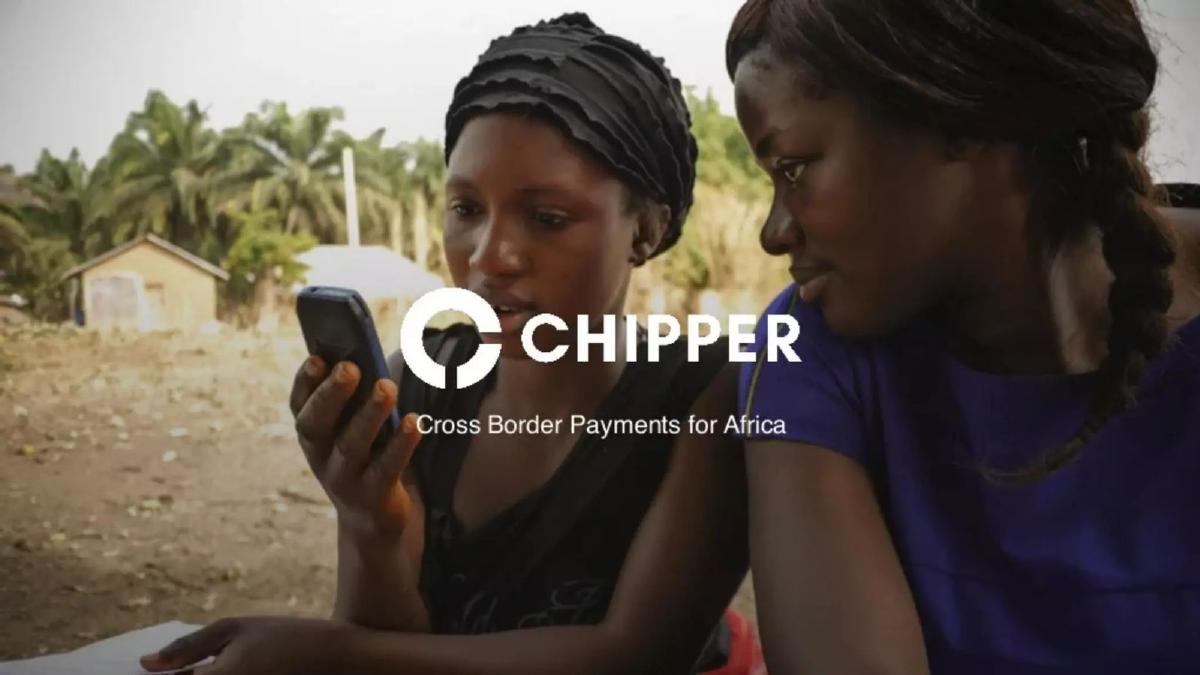
The title slide features a high-quality photograph of two women looking at a mobile phone in a rural or semi-rural setting. The text is simple: "CHIPPER: Cross Border Payments for Africa." This immediately establishes the geographic focus and the core utility of the product. By using a photo of the target demographic rather than a generic tech graphic, the company grounds its mission in real-world application.
Slide 2: The Headline Metrics
Slide 2 is a masterclass in brevity. It features three icons and three numbers: 90,000 (next to a mobile transfer icon), 30,000 (next to a group of people icon), and 100% (next to a calendar icon). While the slide does not explicitly label these, the context of the deck clarifies that these represent 90,000 transactions and 30,000 users. The 100% figure likely refers to month-over-month growth, though the lack of a label is a risky design choice that forces the presenter to provide the necessary context.
Slide 3: The User Persona
Slide 3 features a graphic of an ID badge with a photo of a man named "Geoffrey." There is no supporting text on this slide. In a live pitch, this slide serves as a placeholder for a founder to tell a story about a specific user's pain points. Without the voiceover, the slide is purely symbolic, representing the individual human impact of the service. It humanizes the data presented on the previous slide.
Slide 4: The Problem Statement
The problem slide uses three icons to identify the barriers in the current market: Price , No Cross Border , and Not Interoperable . The icons for the latter two are crossed out with red circles, emphasizing the lack of these features in existing solutions. This slide identifies the 'why' behind the company: sending money across African borders is too expensive and technically difficult because different systems do not talk to each other.
Slide 5: The Product in Action
The product slide shows three screenshots of the Chipper Cash app on a mobile device. The first screen shows a contact list with users from different countries (indicated by small flag icons). The second shows a payment request for "5.5" with a note "For the taxi from the airport yesterday." The third screen shows an activity feed with transactions in UGX (Ugandan Shillings). This slide proves the product is functional, supports multiple currencies, and handles the social aspect of peer-to-peer payments.
Slide 6: Team Pedigree
This is arguably the most important slide in a minimalist deck. It lists three key members: Ham Serunjogi (Co-Founder & CEO) , Maijid Moujaled (Co-Founder) , and Patrick Triest (CTO) . Below their names are the logos of Facebook , Yahoo , Flickr , Imgur , Google , and Bloomberg . For an investor, these logos act as a de-risking mechanism. They signal that the founders have been trained at the highest levels of global tech and are capable of building scalable infrastructure.
Slide 7: The Growth Curve
The 'Recap' slide provides a visual representation of the numbers shared on slide 2. It shows a line graph with a sharp upward curve. Two points are highlighted: 90,000 for transactions and 30,000 for users. The graph shows that for a long period, growth was flat, followed by a sudden, vertical spike. This 'hockey stick' graph is exactly what venture capitalists look for, as it suggests the company has found a growth lever or reached a tipping point in adoption.
Slide 8: The Closing
The final slide returns to the purple branding with a globe focused on Africa and the Middle East. It repeats the tagline "Cross Border Payments for Africa" and provides the CEO's contact information: ham@chippercash.com . The dotted lines on the globe illustrate the connections between different regions, reinforcing the interoperability theme.
What Works in This Deck
The Chipper Cash deck works because it does not over-explain. In a crowded fintech market, the founders chose to focus on the two things that matter most to early-stage investors: traction and team . By showing a 3:1 transaction-to-user ratio (90,000 transactions for 30,000 users), they demonstrate that their users are active, not just registered. The inclusion of Big Tech logos on the team slide provides instant credibility, suggesting that the technical hurdles of cross-border payments are well within the team's capabilities. The visual simplicity ensures that the audience stays focused on the speaker rather than reading walls of text.
What is Missing
This deck is missing several components that are usually considered mandatory for a Series-stage raise. There is no Market Size (TAM/SAM/SOM) slide, which would typically be used to show the multi-billion dollar potential of African remittances. There is no Business Model slide; the deck never explains how Chipper Cash makes money (e.g., transaction fees, FX spreads, or subscriptions). There is no Competitive Landscape slide to show how they differ from players like M-Pesa or Western Union. Finally, there is no Ask slide. The deck does not state how much money they are looking for or how they plan to spend it. While these omissions might be acceptable in a first-meeting 'teaser' deck, they would eventually need to be addressed in the due diligence process.
What a Founder Should Copy
Founders should emulate the way Chipper Cash uses visual proof of traction . Instead of promising future growth, they showed a graph where the growth had already begun. The use of clear, simple icons to define the problem (Slide 4) is also highly effective; it allows anyone, regardless of their familiarity with the African market, to understand the pain points in seconds. Finally, the Product Slide (Slide 5) is a great example of showing rather than telling. By showing a transaction for a taxi ride in a specific currency, they make the abstract concept of 'cross-border payments' feel concrete and useful. If you have a strong team and a growth spike, you can afford to be brief.
Frequently asked questions
- How much did Chipper Cash raise with this deck?
- According to the catalogue listing, Chipper Cash raised a total of $302,200,000. However, this specific 8-slide deck from 2018 likely represents an earlier stage of that total funding journey, as the metrics shown (30,000 users) are modest compared to their eventual scale.
- What is the primary problem Chipper Cash aims to solve?
- As stated on slide 4, the company targets three main issues in the African financial sector: high prices for transfers, a lack of cross-border payment capabilities, and a lack of interoperability between existing payment systems. Their solution is a unified platform for cross-border mobile money.
- Who are the founders and what is their background?
- Slide 6 lists Ham Serunjogi (CEO), Maijid Moujaled (Co-Founder), and Patrick Triest (CTO). The deck highlights their professional history at top-tier technology companies such as Facebook, Google, Bloomberg, and Yahoo, which serves as a proxy for technical and operational competence.
- Does the deck explain how Chipper Cash makes money?
- No. The 8-slide deck completely omits a business model or monetization slide. It focuses entirely on user growth and the technical problem of cross-border payments, suggesting the primary goal of this specific presentation was to demonstrate traction and product utility.
- What metrics are used to demonstrate traction?
- The deck uses two primary KPIs: total users and total transactions. Slide 2 and slide 7 both cite 30,000 users and 90,000 transactions. Slide 7 includes a line graph showing that the majority of this growth occurred in a very short, recent burst, indicating a 'hockey stick' growth trajectory.