Elo’s Series A deck is a clinical and aesthetic success that effectively bridges the gap between consumer wellness and medical technology. By defining a new category—'Smart Nutrition'—Elo avoids the commoditized traps of the supplement industry. The deck leans heavily on the 'Why Now' factor, citing the ubiquity of wearables (50 million Apple Watch users) and the normalization of at-home biomarker testing. Most impressively, the deck includes a slide dedicated to clinical outcomes, showing that 9 out of 10 members start with out-of-range biomarkers and see measurable improvement within six mo…
Key takeaways
- Elo defines a $1,000B 'Smart Nutrition' market at the intersection of the $6,000B food and $4,200B healthcare industries (Slide 5).
- The product utilizes a closed-loop system: Assess, Plan, Deliver, Measure, and Learn (Slide 4).
- The 'Why Now' slide points to 50 million Apple Watch users and food delivery adoption exceeding 50% as key infrastructure tailwinds (Slide 6).
- The company demonstrates clinical efficacy by showing biomarker improvements for a real member between December 2021 and February 2022 (Slide 9).
- Elo reports that 9 out of 10 members start the program with at least one biomarker out-of-range (Slide 9).
- The deck highlights a world-class advisor board including former heads of product from Google Maps, Twitter, and Uber (Slide 7).
- Traction is summarized by the successful deployment of a $5M seed round which funded the launch of both Smart Supplements and Smart Protein (Slide 8).
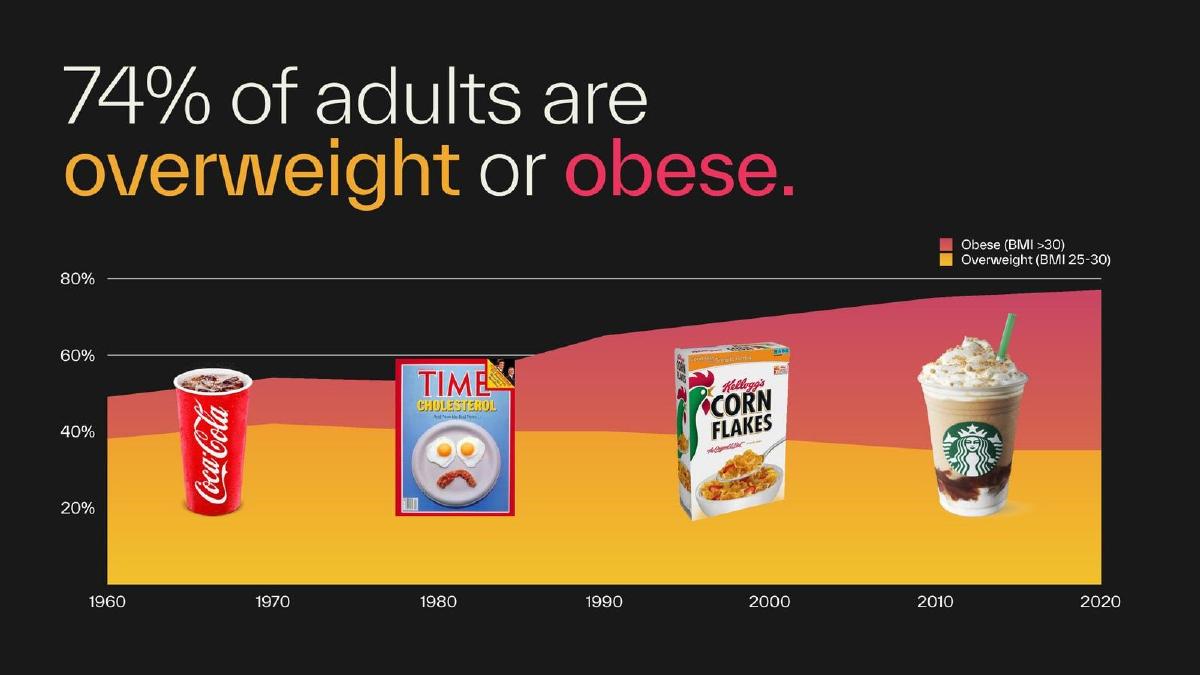
- The deck includes a comprehensive source list for its market claims, citing data points like 74% of adults being overweight (Slide 10).
The Series A Narrative: From Supplements to Systems
Elo’s pitch deck for their $10M Series A (reported by Business Insider in 2024) is a masterclass in category creation. The company doesn't just sell protein powder; it sells a 'Smart Nutrition' system. The distinction is vital for a venture-scale raise. By framing the product as a data-driven feedback loop rather than a CPG (Consumer Packaged Goods) play, Elo justifies a tech valuation in a traditionally low-margin industry.
Slide 1-3: The Emotional Hook and Problem Statement
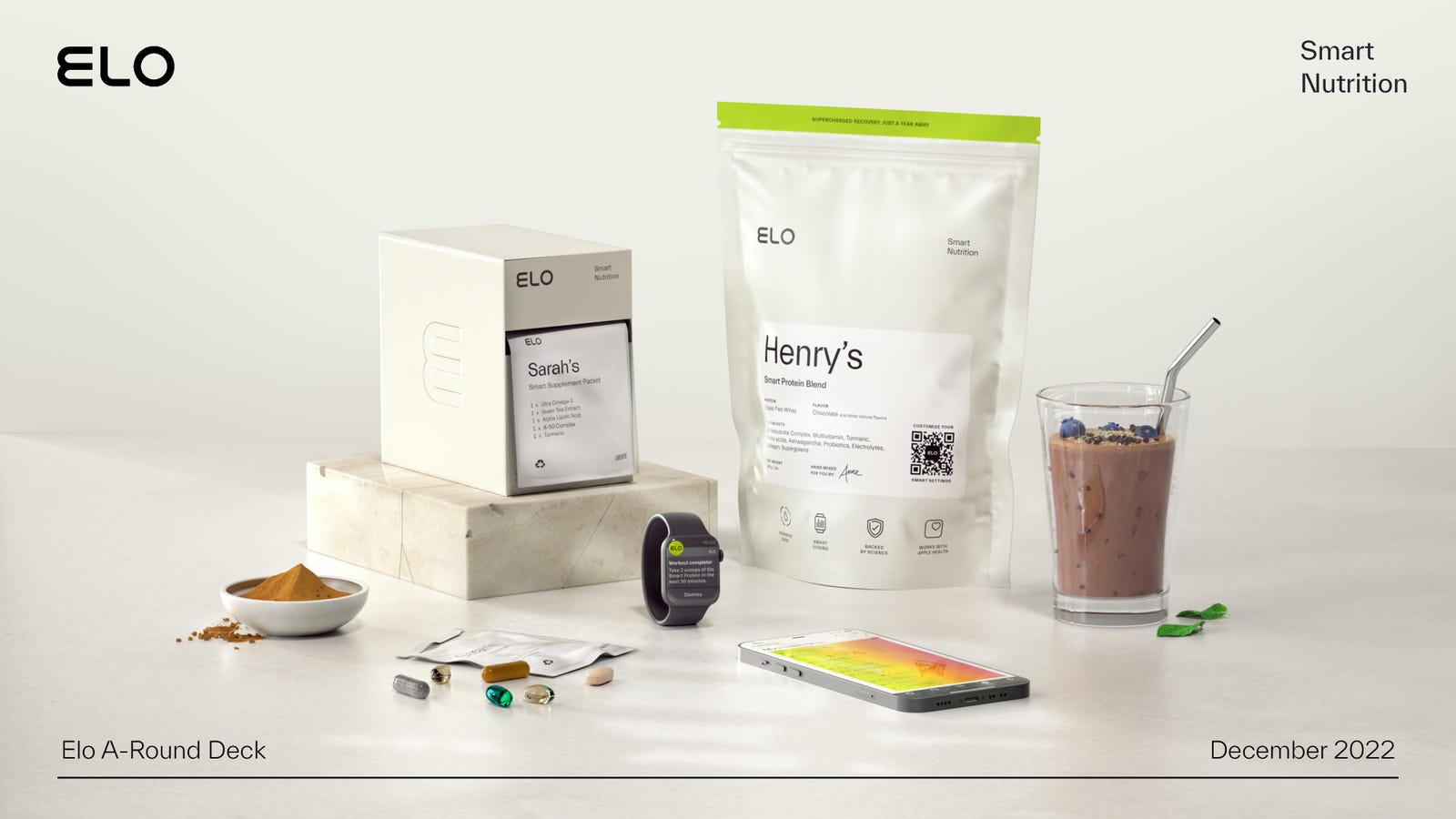
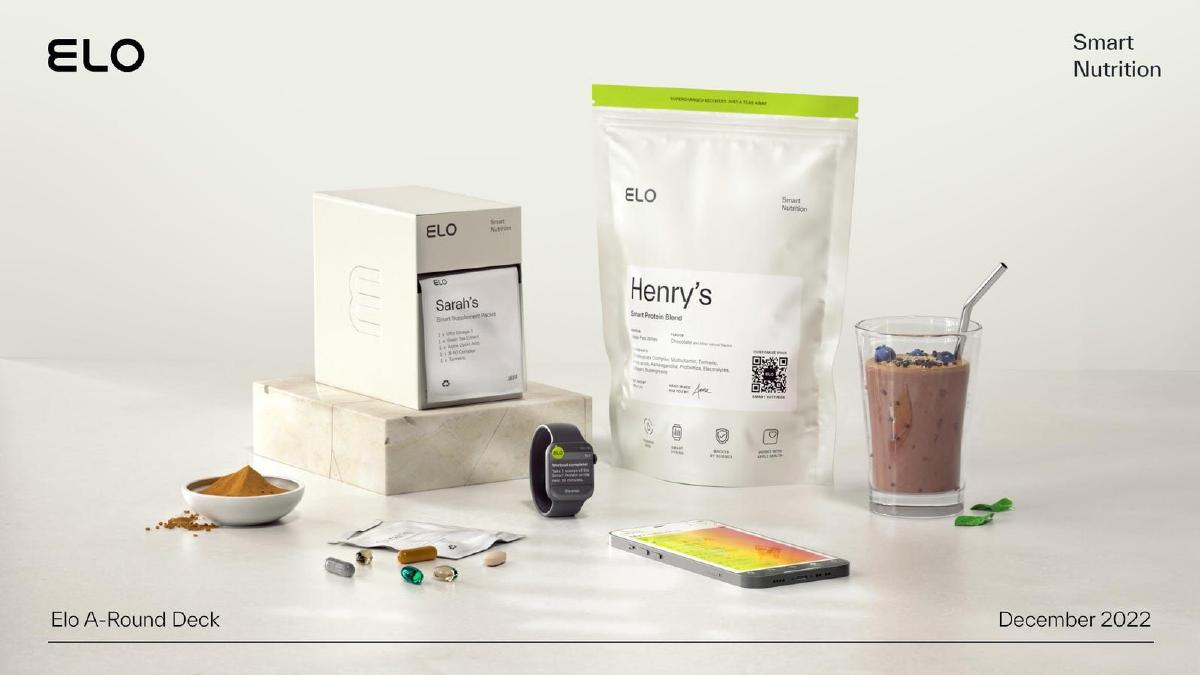
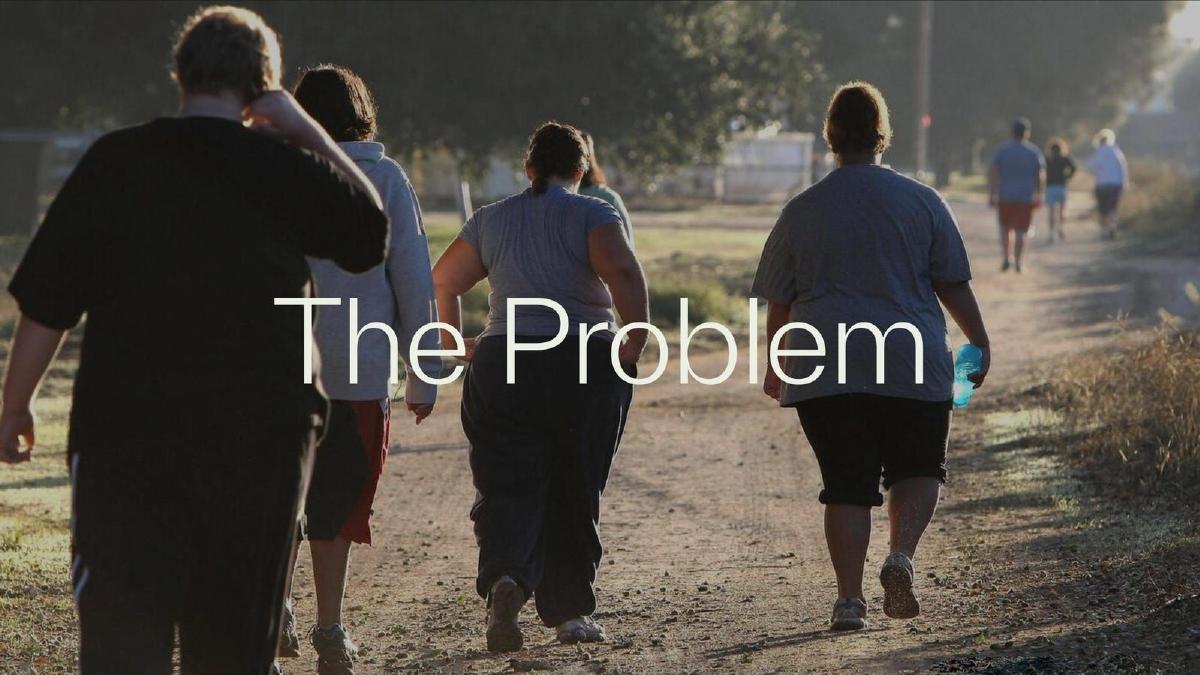
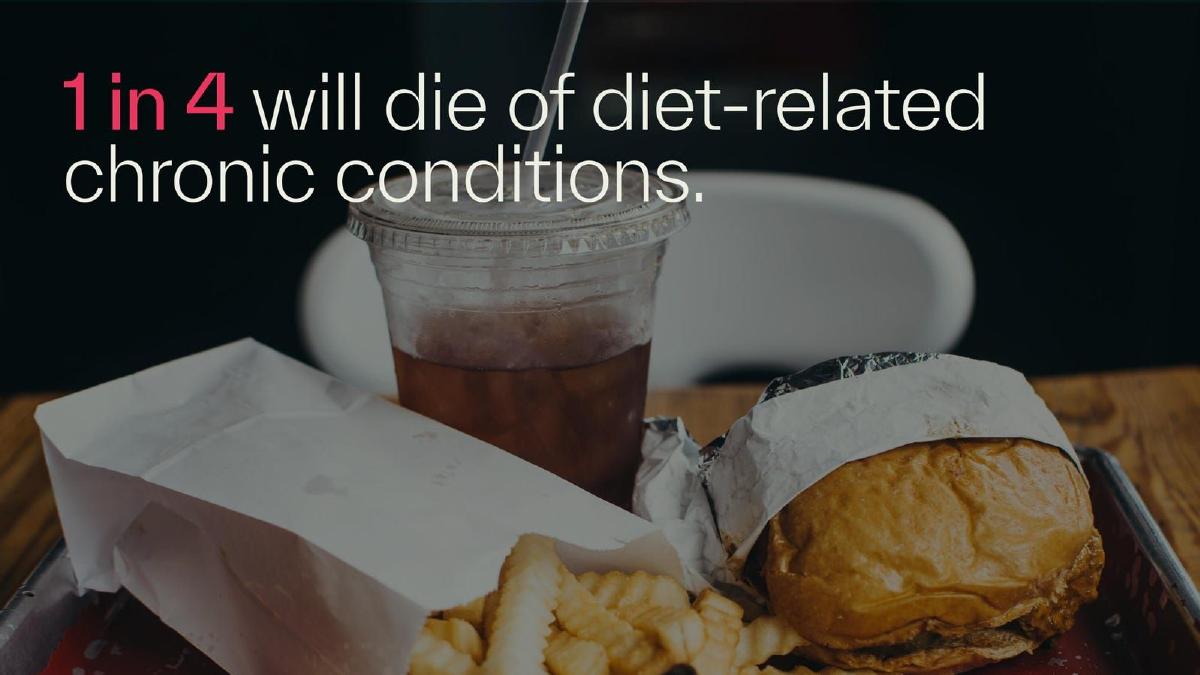
The deck opens with high-fidelity product photography (Slide 1) that immediately establishes a premium, medical-grade brand identity. The imagery includes an Apple Watch, a smartphone showing biomarker data, and personalized packaging, signaling the integration of hardware, software, and physical goods. Slide 2 hits the investor with a stark reality: '1 in 4 will die of diet-related chronic conditions.' This sets the stakes. It moves the conversation from 'wellness' (which is optional) to 'chronic disease prevention' (which is a massive healthcare cost center). Slide 3 provides a brief visual transition to the solution, maintaining the clean, minimalist aesthetic that defines the entire presentation.
Slide 4: The Five-Step Closed Loop
This is arguably the most important slide in the deck. It breaks down the Elo experience into a repeatable, data-generating cycle: 1. Assess (Blood and wearable data), 2. Plan (Personal coaching and AI), 3. Deliver (Custom nutrition), 4. Measure (Health goals), and 5. Learn & Improve (AI optimization). By including 'Learn & Improve' as a final step that feeds back into the assessment, Elo demonstrates a 'data moat.' The more a customer uses the product, the better the AI becomes at dosing, making the service stickier and harder for competitors to replicate.
Slide 5: The $1 Trillion Intersection
Market sizing slides are often dismissed as 'up and to the right' fluff, but Elo’s Slide 5 is strategically sound. It places 'Smart Nutrition' at the overlap of the $6,000B food industry and the $4,200B healthcare industry. By claiming a $1,000B segment, they aren't just picking a big number; they are defining a new territory. This positioning is designed to appeal to both consumer-focused VCs and healthcare-focused VCs, effectively doubling their potential investor pool.
Slide 6: The 'Why Now' Infrastructure
Investors look for tailwinds. Slide 6 identifies three: wearable ubiquity, at-home testing, and food delivery adoption. The mention of '50 million Americans wear an Apple Watch' is a crucial data point because it proves that the hardware infrastructure required for Elo to work already exists at scale. They aren't waiting for a new technology to be adopted; they are piggybacking on the success of Apple and Uber Eats. This significantly de-risks the 'adoption' hurdle in the eyes of an analyst.
Slide 7: The Power of the Advisor Slide
Often, founders bury advisors on the last slide. Elo puts them front and center. The lineup is impressive: two MDs from Stanford, a registered nurse with IT expertise, a pro athlete/founder, and a former Head of Product from Uber and Google Maps. This mix of clinical authority and 'blitzscaling' product experience suggests that the company has the right guidance to navigate both FDA-adjacent health claims and rapid consumer growth.
Slide 8: Seed Round Execution
Slide 8 serves as a 'receipt' for their previous $5M seed round. It lists four accomplishments: building the platform, launching supplements, validating high retention, and building the protein product. This is a clear signal to Series A investors that the team does what they say they will do. The mention of 'validated high-retention rate' is the only nod to unit economics in this selection of slides, but it’s a powerful one. In the supplement world, churn is the silent killer; claiming high retention is a direct counter to that industry-wide weakness.
Slide 9: Clinical Proof and Outcomes
For a healthcare company, outcomes are everything. Slide 9 shows that 9 out of 10 members start the program with out-of-range biomarkers. It then provides a side-by-side comparison of a real member's data over three months, showing a move from 'Very low/high' (red) to 'Optimal' (green) across multiple markers like Vitamin D and LDL. This transforms the product from a 'nice-to-have' vitamin into a 'need-to-have' medical intervention. It provides the 'so what?' that many wellness decks lack.
Slide 10: Transparency and Sources
The final slide (Slide 10) is a contact and source page. Including specific page-by-page citations for their market data (e.g., 'Page 3 -> 74% of adults are overweight') builds immense trust. It shows the founders are rigorous and that their claims are grounded in verifiable research. It also provides a clear call to action for investors to 'Test Elo' by signing up for the products themselves.
What Works in the Elo Deck
Visual Consistency: The deck uses a consistent color palette (lime green, charcoal, and white) that mirrors the product packaging. This creates a sense of brand maturity that is rare in early-stage startups.
Category Definition: By naming their space 'Smart Nutrition,' they avoid being compared to GNC or generic supplement brands. They are competing with data, not just pills.
The Feedback Loop: The emphasis on the 'Measure' and 'Learn' steps (Slide 4) addresses the biggest problem in nutrition: the lack of feedback. Most people take vitamins and never know if they are working. Elo makes the results visible through data.
What is Missing from the Public Deck
Unit Economics: While Slide 8 mentions 'high retention,' there is no mention of Customer Acquisition Cost (CAC), Lifetime Value (LTV), or contribution margins. For a Series A, these are usually mandatory. It is likely these were included in a separate, more confidential data room or in the 18 slides not shown here.
Competitive Landscape: The deck does not explicitly name competitors. While they define a new category, they still compete for 'wallet share' against companies like Hims, Thorne, or even generic grocery store supplements. A slide showing their 'moat' against these players would be a standard addition.
The 'Ask': The specific dollar amount and the planned allocation of funds (e.g., 'We are raising $X to hire Y and reach Z milestone') is absent from these slides. Again, this is often removed from public-facing versions of decks for regulatory or strategic reasons.
Founder Takeaway: The 'Data-Backed Wellness' Blueprint
If you are building a company in the wellness or CPG space, the Elo deck offers a blueprint for how to attract venture capital. Don't just sell a product; sell a system that gets smarter with use. Use 'Why Now' slides to show how you are leveraging existing infrastructure (like wearables) rather than trying to build it yourself. Most importantly, if your product claims to improve health, show the data. Elo’s Slide 9, showing the shift from red to green biomarkers, is more persuasive than a thousand customer testimonials. It turns a subjective feeling of 'wellness' into an objective measurement of 'health.'
Frequently asked questions
- What is Elo's core product offering?
- Elo provides personalized nutrition through a combination of at-home blood testing, wearable data integration, and AI-driven dosing. As shown on Slide 4, the service includes biomarker analysis, virtual coaching, and the delivery of custom-blended supplements and protein powders tailored to the individual's specific biological needs.
- How does Elo justify its market size?
- On Slide 5, Elo positions itself at the intersection of the food and healthcare industries. Rather than claiming the entirety of those multi-trillion dollar markets, it identifies a $1,000B 'Smart Nutrition' segment that bridges the gap between general food consumption and medical intervention.
- What evidence of product-market fit does the deck provide?
- Slide 8 notes that the company 'validated high-retention rate' following its $5M seed round. Furthermore, Slide 9 provides clinical validation, showing that their coaching and nutrition plans help the majority of members improve biomarkers within six months of starting the program.
- Who are the key advisors mentioned in the deck?
- The advisor slide (Slide 7) is particularly strong, featuring medical professionals like Dr. Robyn Heister and Dr. TP Alastalo, alongside product heavyweights like Daniel Graf (former Head of Product at Uber and Google Maps) and Jeremy Bloom (NFL player and unicorn founder).
- What are the 'Why Now' factors for Smart Nutrition?
- According to Slide 6, three factors paved the way: the ubiquity of health tracking (wearables), the move of biomarker testing into the home (accelerated by COVID-19), and the mass adoption of food delivery services (exceeding 50% of Americans).