Croissant’s 2016 seed deck is remarkably brief at just eight slides, yet it effectively communicates a compelling narrative for the early remote-work era. The deck relies on high-contrast visual storytelling—specifically the 'Expectation' vs. 'Reality' of working from coffee shops—to justify the need for a unified coworking membership. With a lean team of four and a clear traction story showing 20% month-over-month growth, the founders successfully raised $125K. While the deck lacks a formal 'Ask' slide, market size breakdown, or detailed unit economics, its strength lies in its simplicity an…
Key takeaways
- The deck uses a minimalist 8-slide structure that prioritizes visual impact over text-heavy explanations.
- A 'Expectation' vs. 'Reality' sequence (Slides 3 and 4) creates an immediate emotional connection to the problem of crowded coffee shops.
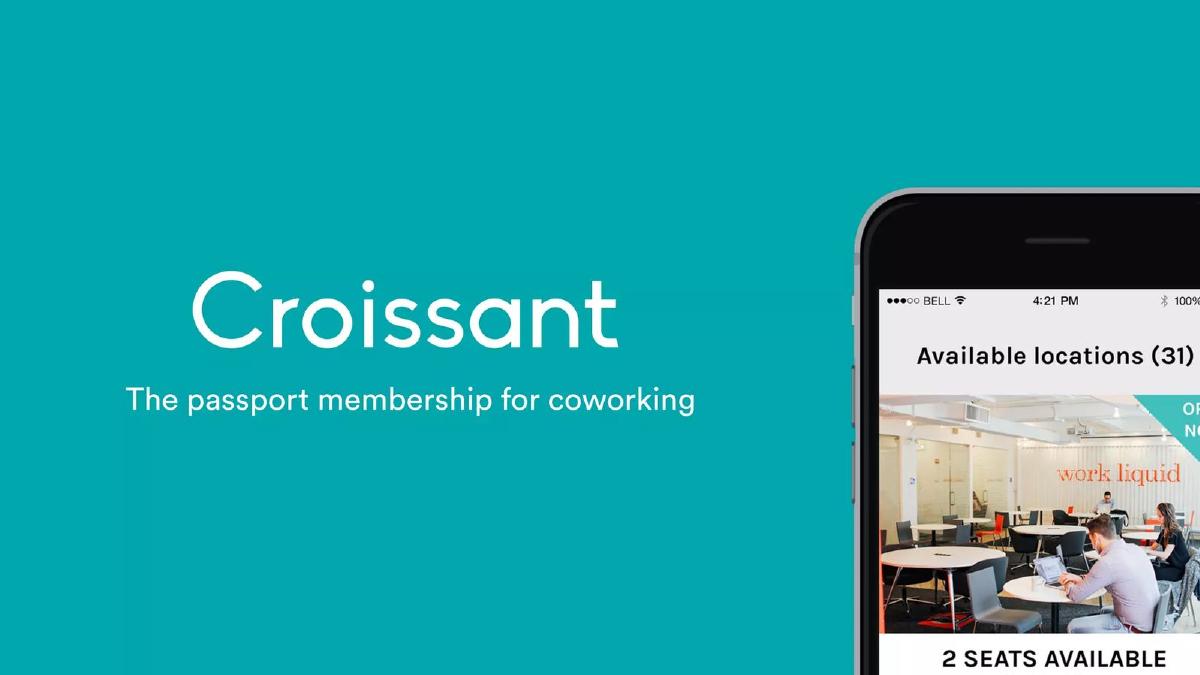
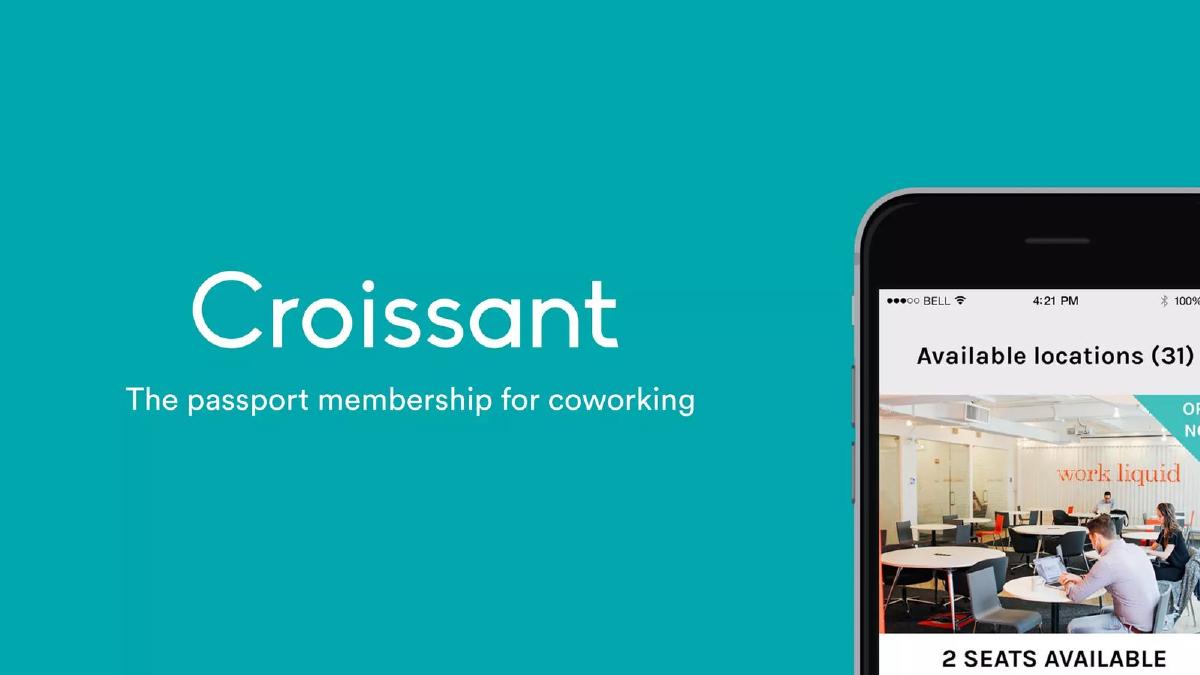
- The value proposition is defined as a 'passport membership for coworking' on the title slide (Slide 1).
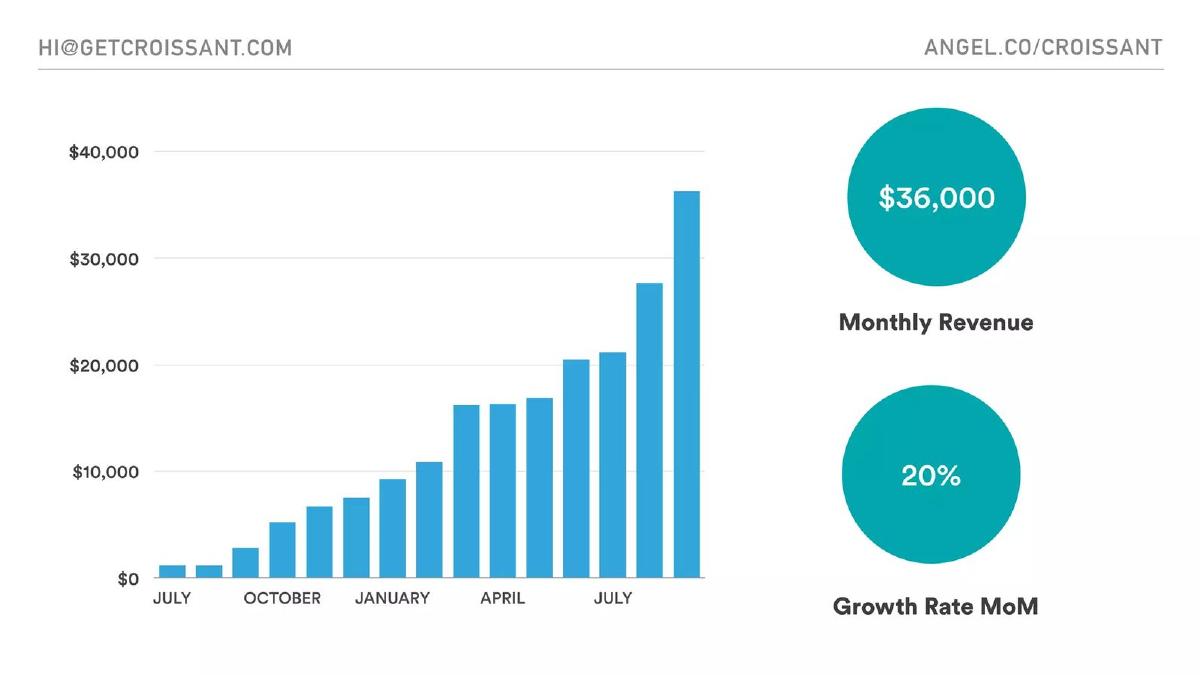
- Traction is the centerpiece, showing a climb to $36,000 in monthly revenue by the final data point (Slide 6).
- The startup demonstrates consistent 20% Month-over-Month (MoM) growth (Slide 6).
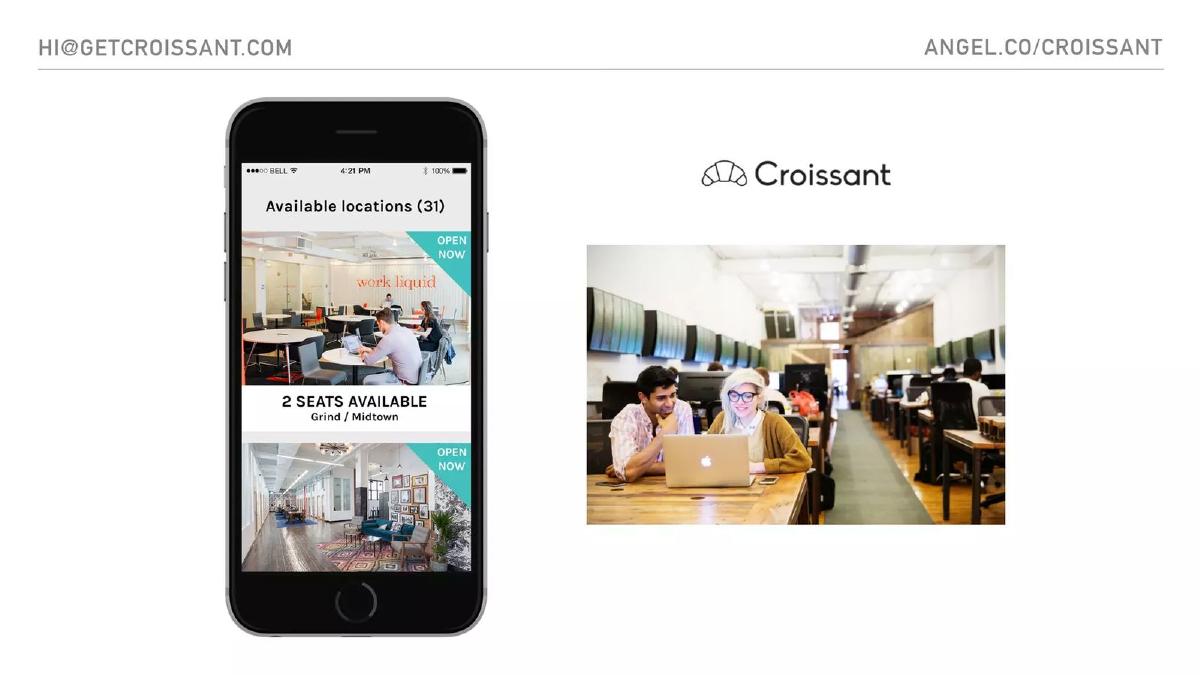
- The product was already live and functional at the time of the pitch, showing 31 available locations on the mobile app mockup (Slide 5).
- The team slide highlights functional diversity, with dedicated leads for Product, Marketing, Partnerships, and Engineering (Slide 7).
- The deck identifies a massive total addressable market of 1B+ remote workers globally (Slide 8).
The Power of Visual Brevity
The Croissant pitch deck from 2016 is a fascinating artifact from the early days of the 'digital nomad' and remote work explosion. At only eight slides, it is shorter than almost any modern seed deck. However, it succeeds by following a classic narrative arc: identifying a visceral pain point, showing a working solution, and proving that people are willing to pay for it. The deck doesn't get bogged down in technical jargon or complex financial modeling; it sells a lifestyle and a utility.
Slide 1: The Hook
The title slide is clean and functional. It features the company name, Croissant , and a clear one-sentence value proposition: "The passport membership for coworking." To the right, a mobile mockup shows the app in action, specifically highlighting "Available locations (31)" and "2 SEATS AVAILABLE." This immediately tells the investor three things: it is a mobile-first platform, it has a network of partners, and it handles real-time inventory.
Slide 2: The Evolution of Work
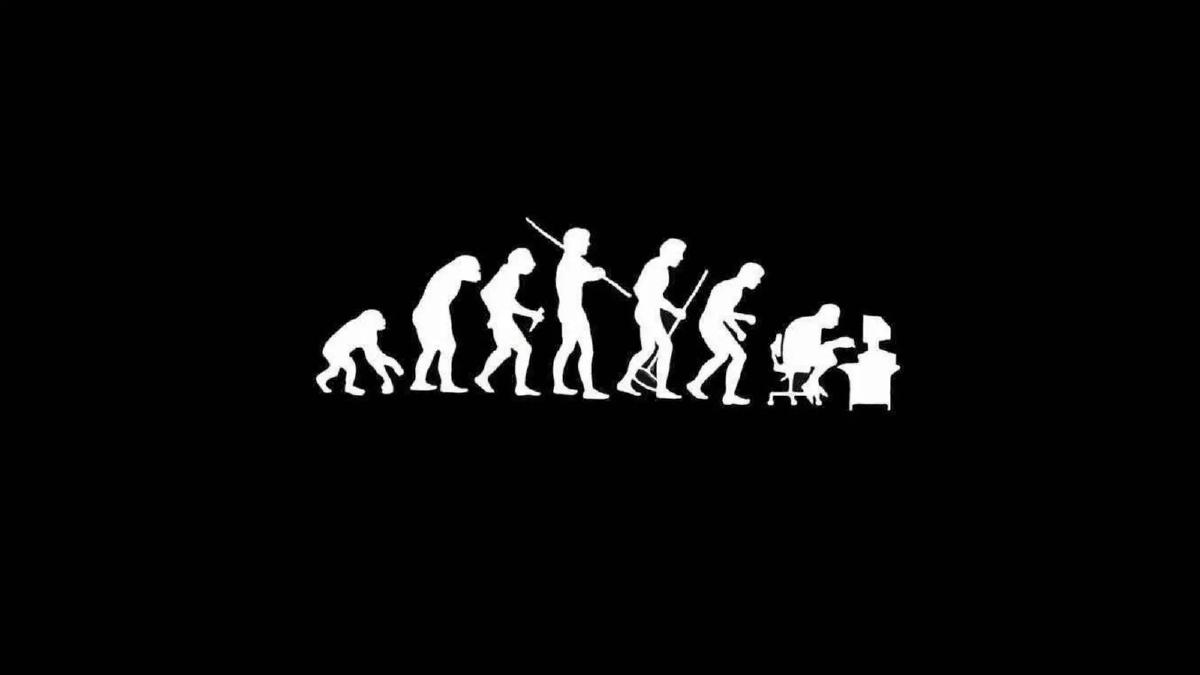
Slide 2 is a purely conceptual graphic showing the 'Evolution of Man' ending with a hunched figure at a desk. This is a common trope in tech decks to signal a paradigm shift. It suggests that the way we work has changed, setting the stage for the problem that follows.
Slides 3 & 4: Expectation vs. Reality
This is the strongest part of the narrative. Slide 3, titled Expectation , shows a serene, well-lit, and spacious coffee shop with a single worker. Slide 4, titled Reality , shows a cramped, chaotic, and overcrowded coffee shop. This 'show, don't tell' approach is highly effective. It bypasses the need for bullet points about 'noise levels' or 'lack of outlets' by tapping into a frustration that almost every investor and remote worker has experienced personally.
Slide 5: The Solution
The solution slide returns to the product. It shows the mobile app again alongside a photo of a clean, professional coworking environment. The branding is minimal, featuring the Croissant logo (a stylized croissant). This slide bridges the gap between the 'Reality' of the coffee shop and the 'Expectation' of a professional workspace, positioning Croissant as the bridge between the two.
Slide 6: Traction and Growth
This is the 'money slide.' It features a bar chart showing revenue growth over a 13-month period. The key figures quoted are $36,000 Monthly Revenue and a 20% Growth Rate MoM (Month-over-Month). The chart shows a consistent upward trajectory, which is exactly what seed investors look for. It proves that the business isn't just an idea; it is a functioning machine that is gaining speed.
Slide 7: The Team
The team slide lists four founders with clear functional roles: Dave Idell (CEO, Product) , Nisha Garigarn (Marketing) , Zoltan Szalas (Partnerships) , and Adam Chew (Engineering) . Beside each founder is a logo of a previous employer, including Tradition , Amobee , Equinox , and Cisco . This demonstrates that the team has a balance of technical, operational, and marketing expertise from reputable companies.
Slide 8: Market Size
The final slide addresses the scale of the opportunity. It features a graphic of the globe and the figure 1B+ remote workers . While this is a very broad 'Top-Down' market figure, it serves to show that the problem Croissant is solving is a global phenomenon, not just a local New York or San Francisco trend.
What Works in This Deck
Visual Storytelling: The use of the 'Expectation vs. Reality' photos is a masterclass in establishing a problem. It requires zero reading and creates immediate agreement from the audience.
Focus on Traction: By the time an investor gets to Slide 6, they are already primed to see if the business works. The 20% MoM growth figure is the strongest possible evidence of product-market fit for a seed-stage company.
Clarity of Purpose: Within five seconds of looking at Slide 1, you know exactly what the company does. Many founders struggle to explain their business model this succinctly.
What is Missing
The Ask: Surprisingly, the deck does not include a slide stating how much money they are raising or what the milestones will be for the next 18 months. While this information is often handled in the verbal pitch, its absence in the deck makes the 'ending' feel abrupt.
Unit Economics: There is no mention of the take-rate (how much Croissant keeps vs. how much goes to the coworking space) or the Customer Acquisition Cost (CAC). For a marketplace/SaaS hybrid, these numbers are critical for long-term viability.
Competitive Landscape: The deck assumes Croissant is the only solution. It doesn't address why a user wouldn't just buy a WeWork membership or use a competitor like LiquidSpace. Investors usually want to see how a startup plans to defend its position.
What Founders Should Copy
The 8-Slide Limit: If you can't explain your business and show traction in under 10 slides, you probably don't understand your core value proposition well enough. Croissant’s brevity is its strength.
Functional Team Roles: Don't just list 'Co-founder.' List what they actually do (Product, Engineering, Partnerships). It shows that you have thought about the 'org chart' required to scale.
Real Product Mockups: Instead of abstract diagrams, use screenshots of the actual app. It makes the business feel 'real' and ready for investment.
Frequently asked questions
- How much did Croissant raise with this deck?
- According to the catalogue facts, Croissant raised $125,000 in a Seed round in 2016 from undisclosed investors. The deck itself does not state the amount being raised, which is a common omission in decks shared publicly after a round closes.
- What is the core business model of Croissant?
- Croissant operates on a B2B and B2C SaaS membership model. As described on Slide 1, it is a 'passport membership' that allows users to access a network of different coworking spaces through a single app and subscription, rather than paying for individual desks at specific locations.
- Does the deck include a competitor analysis?
- No. The deck completely omits a competitive landscape slide. It focuses entirely on the internal growth of the company and the general problem of remote work environments (coffee shops) rather than comparing itself to other coworking aggregators or established brands like WeWork.
- How did the team demonstrate 'Product-Market Fit'?
- The team used Slide 6 to show a clear, upward-trending bar chart of revenue from July to the following July. By highlighting a $36,000 monthly revenue figure and a steady 20% MoM growth rate, they signaled to investors that the market was responding positively to their solution.
- What is missing from this pitch deck?
- The deck is missing several 'standard' venture capital slides: a detailed breakdown of the 'Ask' (how they will use the money), a Go-To-Market strategy, a competitive matrix, and a slide on unit economics (CAC/LTV). It relies almost entirely on the momentum of its current traction.