Roami’s Series A deck is a clinical exercise in demonstrating operational superiority over a larger, venture-backed incumbent. By positioning themselves against Sonder, Roami highlights a 7x lead in capital efficiency and a significantly lower payroll-to-revenue ratio. The deck moves quickly from the emotional pain points of group travel to the hard mathematics of real estate management agreements. While it lacks a specific 'Ask' slide detailing the use of funds, the narrative is driven by a clear thesis: Roami has figured out how to scale short-term rentals profitably where others have faile…
Key takeaways
- Roami claims to be 7x more capital efficient than its primary competitor, Sonder, as shown on slide 13.
- The company operates with a payroll that is only 21.7% of revenue, compared to 90.7% for its main rival (slide 13).
- The deck highlights a shift toward management agreements (53%) over traditional leases (47%) to limit downside risk (slide 15).
- Roami achieved 650% growth during 2020 while reaching profitability, a feat emphasized on slide 2.
- The company utilizes an international workforce for 72% of its corporate staff to maintain low overhead (slide 3).
- A 'infinite' runway is claimed on slide 13, supported by a break-even RevPAR of $214.
- The advisory board includes founders from Stay Alfred and Lyric, signaling deep industry experience in the 'aparthotel' space (slide 19).
- The growth strategy focuses on geographic density in specific hubs like Miami and New Orleans rather than broad, thin expansion (slide 17).
The Narrative of the Lean Operator
Roami’s pitch deck is a direct response to the 'growth at all costs' era of hospitality startups. Coming off a period where companies like Sonder and Oyo raised billions only to struggle with unit economics, Roami (operating as Sextant at the time of this deck) uses its 20 slides to prove that it is the adult in the room. The deck is less about the 'magic' of travel and more about the 'math' of property management.
Slides 1-3: The Hook of Profitability
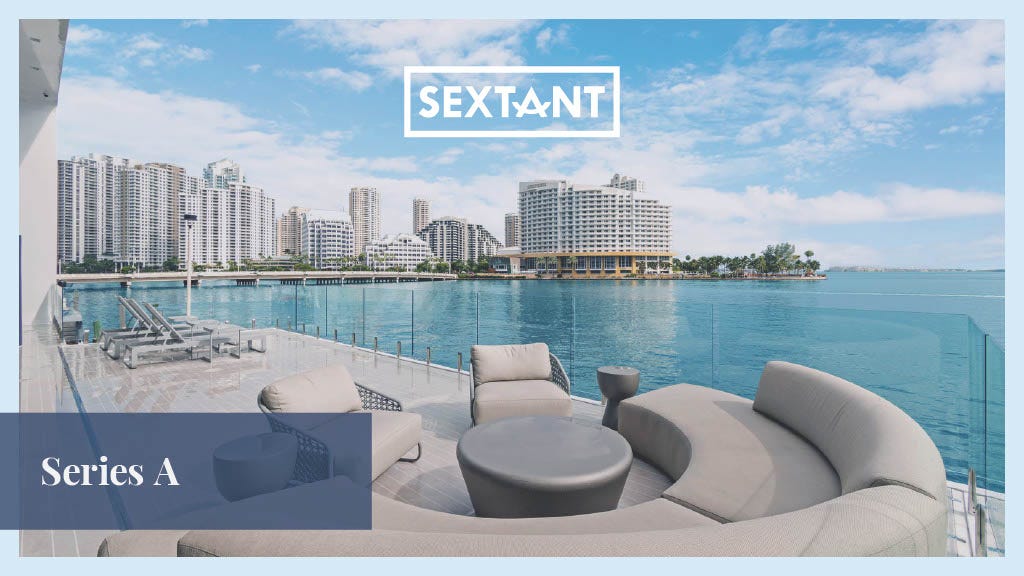
Slide 1 opens with high-quality lifestyle imagery, but the deck immediately pivots to hard metrics. Slide 2 is the 'credibility slide,' stating that the company grew 650% during 2020—the worst year in modern hospitality history—and became profitable. This is a powerful signal to investors that the business model is resilient to macro shocks.
Slide 3 introduces the three pillars of their success: Structure (72% international workforce), Control (operating full buildings), and Density (expanding deep in each market). By citing an international workforce so early, Roami is signaling to investors that they have solved the labor cost issue that plagues traditional hotels.
Slides 4-7: Defining the 'Group Travel' Problem
Slides 4 and 5 use visceral imagery to define the problem. Slide 4 shows a cramped hotel room, while Slide 5 depicts the 'messy' reality of group travel—young men vaping and napping in a lobby while a mother walks by. This highlights the friction between different traveler demographics in traditional hotels.
Slide 6 provides the data to back this up, showing a massive demand for group travel but a lack of dedicated accommodation. Slide 7 is a video placeholder, which in a live pitch would demonstrate the 'Roami way' of handling these groups. The core thesis here is that groups are underserved and that by designing full buildings for them, Roami can capture higher margins.
Slides 8-9: The Direct Attack on Sonder
In a bold move for a Series A deck, Roami spends significant real estate comparing itself to its largest competitor, Sonder. Slide 8 points out that while there are many billion-dollar traditional hotels, Sonder is the only 'tech' competitor at that scale. Slide 9 uses side-by-side imagery to argue that Sonder has 'limited control' of the guest experience compared to Roami’s 'full control.'
Slides 10-12: The Technology Stack
Slide 10 discusses the increase in domestic travel, providing a tailwind for the business. Slides 11 and 12 are particularly interesting for analysts. Slide 11 shows how Roami leverages existing third-party tech (CVS vending, 2ndKitchen) to provide amenities without overhead. Slide 12 highlights their in-house tech. This distinction is crucial; it shows the founders know when to build versus when to buy, further supporting the capital efficiency narrative.
Slides 13-15: The 'Killer' Financials
Slide 13 is the most important slide in the deck. It features a table comparing Roami to Sonder across five metrics. The standout figures are Payroll as % of Revenue (Roami: 21.7% vs. Sonder: 90.7%) and Capital Raised (Roami: $15M vs. Sonder: $840M). The slide claims Roami is '7x more capital efficient' and has an 'infinite' runway because they are already profitable.
Slide 14 reinforces the payroll efficiency with pie charts, and Slide 15 explains the 'how': a majority of management agreements (53%) and flexible leases with early termination clauses (95%). This slide is designed to de-risk the investment by showing that Roami isn't stuck in 'toxic' long-term leases if a market turns sour.
Slides 16-18: Growth and Vision
Slide 16 shows a consistent upward trend in managed units, proving the model scales. Slide 17 maps out their geographic strategy, focusing on the Sun Belt and leisure-heavy markets like Miami, New Orleans, and Tulum. Slide 18 broadens the vision, claiming they will disrupt hospitality, property management, and real estate—a standard 'TAM expansion' play for a Series A.
Slide 19: The Team and The 'Lessons Learned'
The team slide is a masterstroke of positioning. Beyond the founders, the advisory board includes Jordan Allen (Former CEO of Stay Alfred) and Joe Fraiman (Former President of Lyric). Both Stay Alfred and Lyric were high-profile failures or pivots in the same space. By including these individuals, Roami is telling investors: 'We have the people who saw what went wrong at the last generation of companies, and they are helping us avoid those same mistakes.'
What Roami Does Well
1. Aggressive Benchmarking: Most startups are afraid to name competitors. Roami leans into it, using Sonder as a foil to highlight their own financial discipline. This is highly effective when the competitor is publicly traded or well-known for high burn.
2. Operational Transparency: They don't just say they are efficient; they explain the mechanics (international workforce, management agreements, third-party tech integrations). This builds trust with sophisticated investors.
3. Risk Mitigation: The mention of the 95% early termination clause on Slide 15 is a specific detail that addresses the biggest fear in hospitality tech: being trapped in fixed-rent leases during a downturn.
What is Missing
1. The Ask: As noted, there is no slide detailing how much they are raising or how the capital will be deployed. While we know from reports they raised $14M, the deck itself is silent on the terms.
2. Unit Economics Deep Dive: While they mention RevPAR and payroll, a slide showing the 'anatomy of a unit' (CAC, payback period, contribution margin per unit) would have strengthened the Series A case.
3. Customer Retention Data: The deck focuses heavily on the supply side (buildings and operations) but says very little about the demand side. What is the repeat booking rate? What is the direct vs. OTA (Online Travel Agency) booking mix? These are critical for long-term profitability.
Founder Takeaway
If you are building in a 'crowded' or 'tainted' sector where previous unicorns have struggled, use the Roami playbook. Don't ignore the failures of your predecessors; embrace them. By showing exactly how your unit economics differ from the 'failed' model, you turn a sector headwind into a company-specific tailwind. Roami’s deck is a reminder that in a tightening venture market, profitability and capital efficiency are the most compelling stories you can tell.
Frequently asked questions
- Why does Roami compare itself so aggressively to Sonder?
- Sonder is the 'gorilla' in the room for tech-enabled hospitality. By showing they have a lower break-even RevPAR ($214 vs $238) and significantly lower payroll costs, Roami positions itself as the fiscally responsible alternative for investors who were burned by the high burn rates of first-generation short-term rental startups.
- What is Roami's strategy for mitigating real estate risk?
- According to slide 15, they use a mix of 53% management agreements and 47% flexible leases. Crucially, 95% of their agreements include a tenant early termination clause, allowing them to exit underperforming assets quickly, which is a major differentiator from traditional long-term hospitality leases.
- How does Roami handle guest services without high on-site costs?
- Slide 11 and 12 show a reliance on 'tech-enabled live concierge' and automated lobby bars. By using remote staff (72% international) and automated vending/F&B solutions like 2ndKitchen and CVS machines, they provide hotel-like amenities without the traditional labor overhead.
- What markets does Roami currently operate in?
- As of the deck's creation, slide 17 identifies Miami and New Orleans as existing markets, with 2022 expansion into Austin and Nashville, and 2023 targets including San Diego, Tulum, and Charleston.
- Is there a clear 'Ask' in this deck?
- No. The provided slides do not include a specific dollar amount requested or a breakdown of how the Series A funds will be spent. This is a common omission in decks shared publicly after a round, though it is a critical component for an active pitch.