Ubiquitous Energy’s 9-slide Series B deck is a study in visual storytelling for complex hardware. By focusing on the 'invisible' nature of their technology, the company successfully communicated a massive market opportunity in commercial real estate without getting bogged down in overly dense technical specifications. The deck emphasizes the lack of aesthetic trade-offs, a critical barrier for previous solar glass attempts, and backs this with a leadership team boasting deep industry and academic pedigree from MIT and the glass sector. While the deck lacks a specific financial 'Ask' slide or…
Key takeaways
- The technology is positioned as the only fully transparent solar solution that generates electricity from non-visible light (Slide 5).
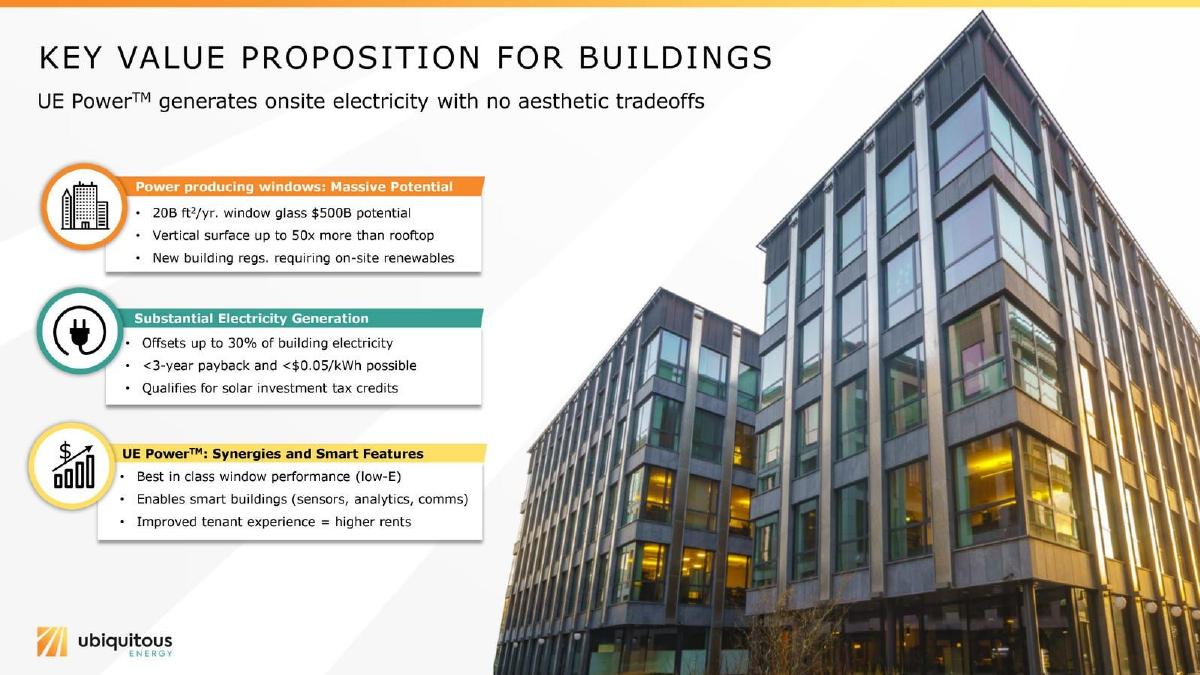
- Ubiquitous Energy targets a $500B potential market based on 20B square feet of window glass produced annually (Slide 6).
- The product claims to offset up to 30% of building electricity with a potential payback period of less than 3 years (Slide 6).
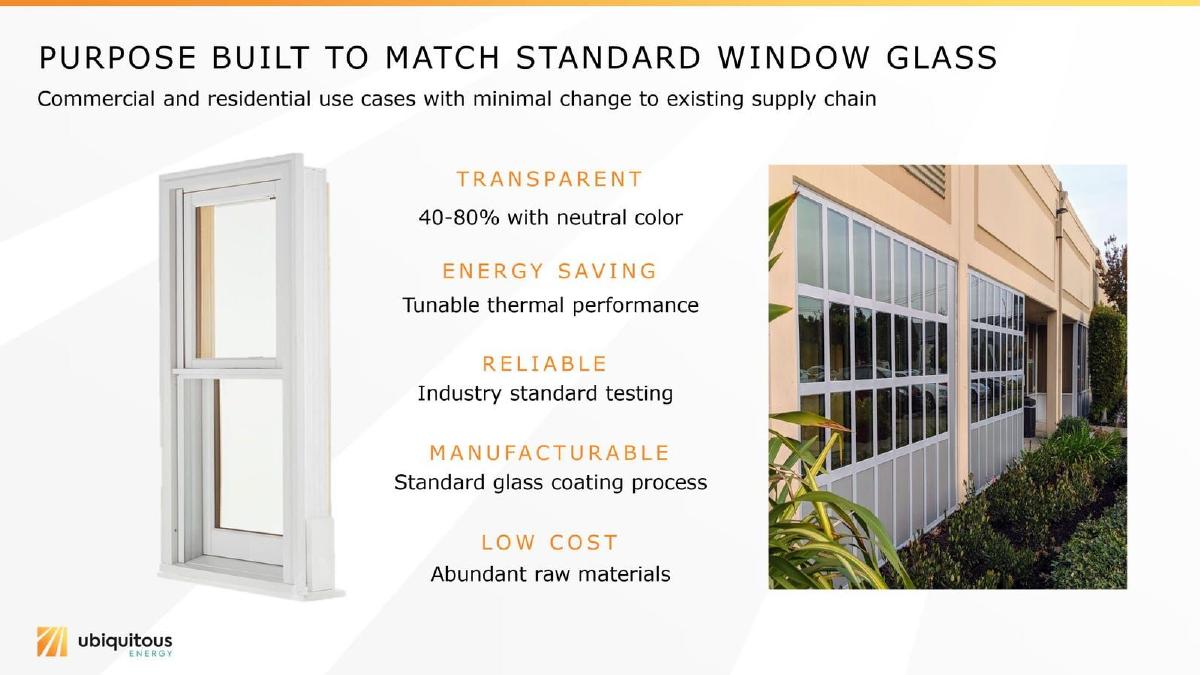
- Transparency levels are stated to be between 40-80% with a neutral color, matching standard window glass aesthetics (Slide 7).
- The technology was invented at MIT and is protected by patents (Slide 5).
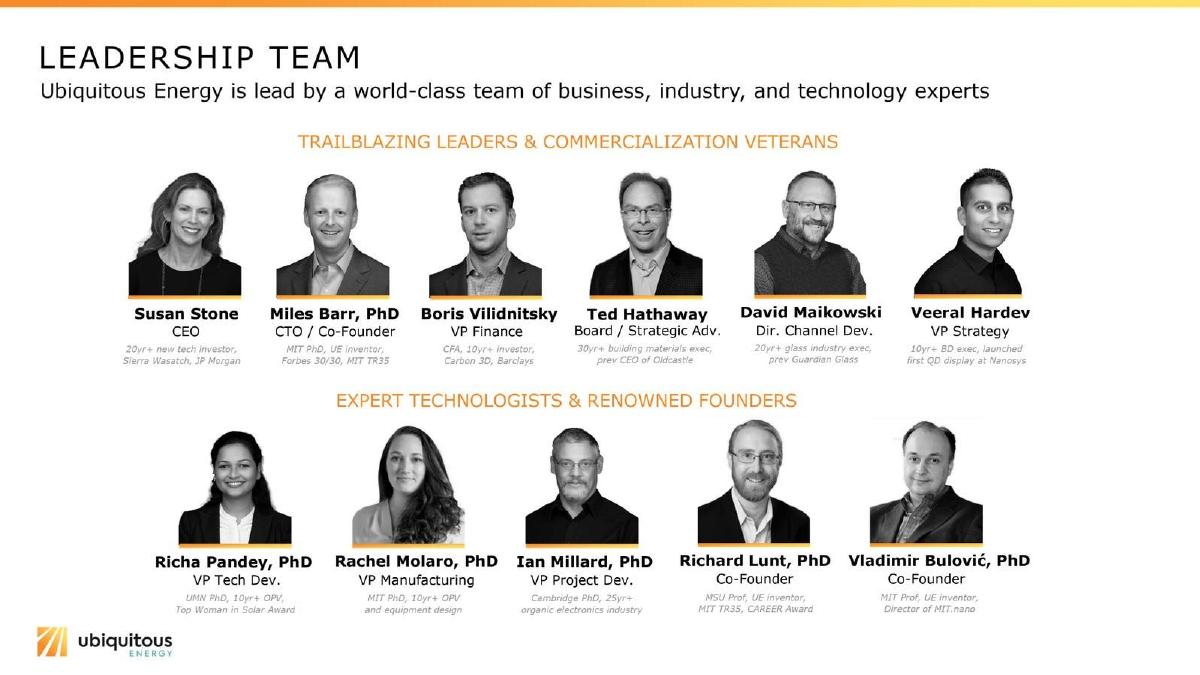
- The leadership team includes veterans from the glass industry, including a former CEO of Oldcastle and an executive from Guardian Glass (Slide 8).
- The deck omits a specific funding 'Ask' slide, focusing instead on the introduction and value proposition (Slide 9).
- Economic viability is highlighted by a target cost of less than $0.05/kWh and eligibility for solar investment tax credits (Slide 6).
Introduction: The Power of Invisible Tech
Ubiquitous Energy’s Series B deck is a masterclass in brevity. At just 9 slides, it manages to convey a complex hardware proposition—transparent solar glass—without losing the investor in technical jargon. The deck, used to raise a reported $30M in 2024, focuses heavily on the 'why now' and the 'how it looks,' addressing the two biggest hurdles in building-integrated photovoltaics (BIPV): efficiency and aesthetics.
Slide 1-3: The Hook and the Vision
The deck opens with a standard title slide (Slide 1) but quickly moves into a high-level vision. Slide 2 asks the central question: 'What if every surface around us could generate invisible renewable electricity?' This slide uses a city-scape visualization to show the breadth of the application, from skyscrapers to mobile devices and wearables. It sets the stage for a massive Total Addressable Market (TAM) before a single metric is shown.
Slide 3 provides the 'aha' moment. It features a high-resolution photo of a person holding a pane of glass that looks entirely ordinary. The text '...truly transparent solar makes it possible' is the core value proposition. By showing the product in a physical, tangible way, the company immediately overcomes the skepticism associated with 'solar windows,' which are often expected to be dark or reflective.
Slide 4-5: The Product and the Physics
Slide 4 transitions from the vision to the first specific application: commercial buildings. It uses a split-screen visual comparing a traditional horizontal solar farm to a modern skyscraper, labeled as a 'vertical solar farm.' This is a powerful metaphor that reframes the skyscraper not just as a consumer of energy, but as a generator.
Slide 5 introduces the brand name, UE Power. This is the most technical slide in the deck, yet it remains remarkably simple. It uses a wave diagram to explain that the technology absorbs ultraviolet and infrared light (non-visible) to generate electricity while allowing visible light to pass through. The slide anchors its credibility with four key pillars: Transparent, Electricity Generating, Patented, and Invented at MIT. This combination of proprietary IP and prestigious academic origin is a classic Series B trust signal.
Slide 6: The Economic Value Proposition
For a Series B round, investors need to see the math. Slide 6 delivers this through three categories: Massive Potential, Substantial Electricity Generation, and Synergies. The figures are aggressive: a $500B potential market based on 20B square feet of window glass produced annually. The slide also claims that vertical surfaces provide up to 50x more area than rooftops for solar collection.
Crucially, the slide addresses the bottom line for developers. It cites a 'less than 3-year payback' and an energy cost of ' Hardware startups often fail because they cannot scale manufacturing. Slide 7 addresses this by stating the product is 'purpose built to match standard window glass' with 'minimal change to existing supply chain.' It lists transparency specs (40-80%) and confirms the use of a 'standard glass coating process.' This slide is designed to de-risk the investment by showing that the company isn't trying to reinvent the wheel of glass manufacturing, but rather adding a high-value layer to an existing industrial process.
Slide 8: The Leadership Team
The team slide is divided into 'Trailblazing Leaders & Commercialization Veterans' and 'Expert Technologists & Renowned Founders.' This is a strategic split. The top row features executives with backgrounds at JP Morgan, Barclays, and—most importantly—industry giants like Oldcastle and Guardian Glass. This tells investors that the company has the 'adults in the room' who understand how to sell to the construction industry. The bottom row maintains the technical edge with PhDs from MIT, MSU, and Cambridge, ensuring the R&D pipeline remains robust.
Slide 9: Contact and Disclaimer
The deck ends abruptly with a contact slide. There is no 'Ask' slide detailing how the $30M will be spent, nor is there a roadmap slide showing milestones for the next 18-24 months. While these may have been included in a supplemental data room, their absence in the main deck is notable for a Series B pitch.
What Works in This Deck
Visual Proof: The use of Slide 3 to show the actual transparency of the glass is the most important element of the deck. In hardware, seeing is believing.
Market Reframing: By calling buildings 'vertical solar farms' (Slide 4), the company creates a new category in the investor's mind, moving away from 'expensive windows' to 'revenue-generating assets.'
Industry Integration: The emphasis on using the 'standard glass coating process' (Slide 7) addresses the massive capital expenditure (CapEx) fears that often plague hardware investments.
What Is Missing
The Financial Ask: As noted, there is no slide stating how much capital is being raised or what the specific use of funds will be. For a Series B, investors typically expect to see a breakdown of spend across manufacturing, sales, and R&D.
Competitive Landscape: The deck claims to be the 'only' fully transparent solar technology (Slide 5), but it does not mention competitors in the BIPV space or how it compares to traditional high-efficiency coatings (Low-E glass) that don't generate power.
Traction and Milestones: There are no mentions of existing pilot projects, square footage installed to date, or signed letters of intent (LOIs) from developers. For a $30M round, evidence of commercial pull is usually a requirement.
Founder Takeaway
If you are building a 'deep tech' or hardware company, copy the way Ubiquitous Energy handles complexity. They don't explain the chemical composition of their organic photovoltaics; they explain that it absorbs invisible light and looks like a normal window. They focus on the economic outcomes (payback period, tax credits) rather than the scientific process. However, ensure your deck includes a clear roadmap and a 'Use of Funds' slide to provide the full picture of the investment opportunity.
Frequently asked questions
- What is the core technology behind Ubiquitous Energy?
- As shown on Slide 5, the technology, branded as UE Power, is a transparent solar coating that generates electricity by absorbing non-visible light (ultraviolet and infrared) while allowing visible light to pass through. This allows the glass to remain transparent while functioning as a solar cell, a distinction the company claims is unique to their patented process invented at MIT.
- How does the company address the aesthetic concerns of solar windows?
- Aesthetics are a primary focus of the deck. Slide 7 specifies that the glass maintains a 'neutral color' with 40-80% transparency. Slide 6 reinforces this by stating there are 'no aesthetic tradeoffs,' which is critical for adoption in high-end commercial architecture where traditional, tinted, or opaque solar panels are often rejected by architects.
- What are the stated economic benefits for building owners?
- According to Slide 6, the technology can offset up to 30% of a building's electricity usage. It offers a potential payback period of under three years and an energy cost of less than $0.05/kWh. Furthermore, the company notes that the installation qualifies for solar investment tax credits and can lead to higher rents through improved tenant experiences in 'smart buildings.'
- Is the manufacturing process compatible with existing industries?
- Yes, Slide 7 explicitly states that the product is 'manufacturable' using standard glass coating processes. This suggests that Ubiquitous Energy intends to integrate into the existing glass supply chain rather than building entirely new manufacturing paradigms, which significantly lowers the barrier to scale in the hardware sector.
- Who is leading the company through its Series B?
- The team (Slide 8) is led by CEO Susan Stone, a 20-year tech investor. The technical side is anchored by Co-Founder/CTO Miles Barr (MIT PhD) and Co-Founders Richard Lunt and Vladimir Bulović. Notably, the team includes 'commercialization veterans' from major glass companies like Oldcastle and Guardian Glass, providing necessary industry-specific expertise.