Frag Paul’s demo day deck is a masterclass in visual storytelling for a specific niche: the hospitality industry. By focusing on the 'Personalassistent' (personal assistant) persona, the company humanizes what is typically a dry SaaS product—HR and time-tracking software. The deck successfully identifies a gap in the market, positioning itself against generalist HR giants like Personio by focusing exclusively on the SMB restaurant segment. While the deck excels at showing the product interface and defining the target market size (162,000 businesses), it lacks specific financial traction, unit…
Key takeaways
- The company positions itself as 'Der Personalassistent' (The Personal Assistant), humanizing HR software for restaurant owners (Slide 1).
- A competitive matrix clearly separates Frag Paul from general HR software like Personio and mid-sized competitors like Gastromatic (Slide 6).
- The deck identifies a specific target market of 162,000 businesses and approximately 1 million employees (Slide 7).
- Product screenshots demonstrate a four-step onboarding process: Company Data, Employee Data, Training, and Completion (Slide 4).
- The dashboard view highlights key metrics for managers, including employee count, hour deviations, and total personnel costs (Slide 5).
- The team slide introduces three founders (CPO, CEO, CTO) and includes 'Paul' as a Customer Success mascot (Slide 8).
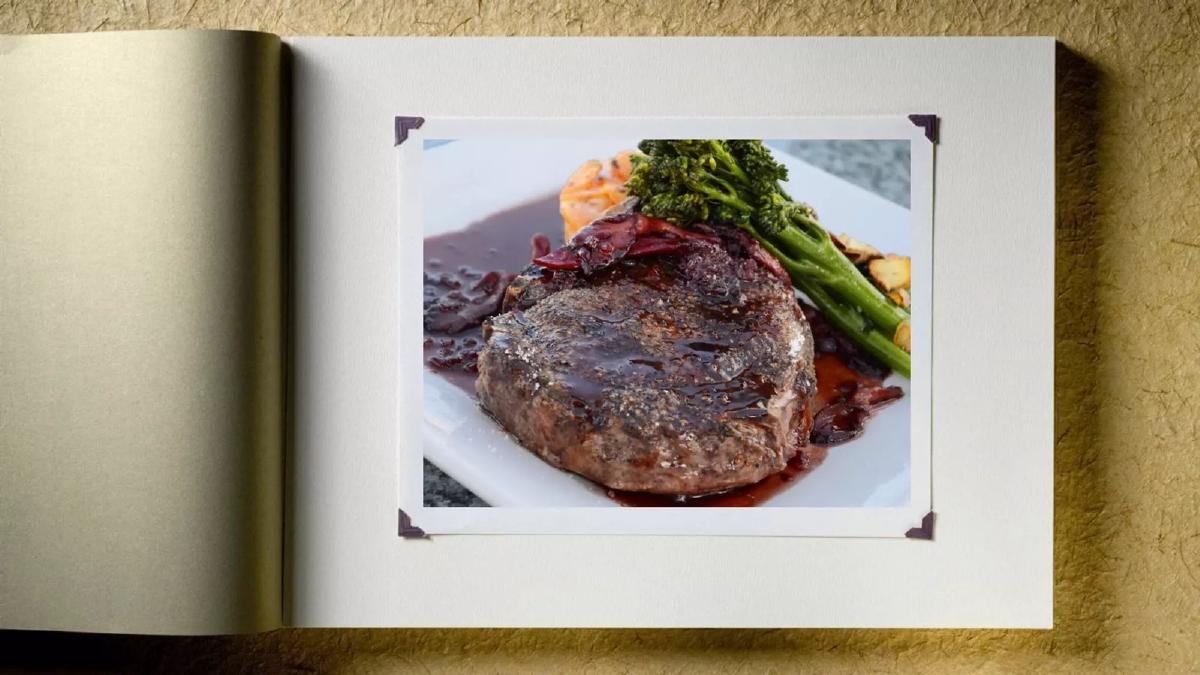
- Visual metaphors, such as a photo of a steak in a scrapbook, are used to anchor the product in the hospitality industry (Slide 2).
- The deck omits a formal 'Ask' slide, financial projections, and current revenue or growth metrics.
Frag Paul: The Niche HR Assistant for Hospitality
Frag Paul’s pitch deck, delivered at the METRO Accelerator Hospitality demo day, is a focused presentation that prioritizes brand identity and market positioning over raw data. The name itself, which translates to 'Ask Paul,' sets the tone for a service-oriented software solution designed for non-technical restaurant owners. By analyzing the nine slides provided, we can see a clear strategy to dominate the small-to-medium business (SMB) segment of the German hospitality market.
Slides 1-3: Setting the Scene and the Problem
Slide 1 serves as the title card, featuring the logo and the tagline 'Der Personalassistent.' The background image of two people in a casual business setting suggests a collaborative, approachable environment. This is a deliberate departure from the cold, corporate aesthetic often found in enterprise HR software.
Slide 2 is purely atmospheric, showing a high-quality photo of a steak and vegetables in what looks like a scrapbook. This slide serves no functional purpose other than to immediately signal to the audience that this product is built specifically for the food and beverage industry. It builds empathy with the target user—the restaurateur.
Slide 3 moves into the problem space using iconography. We see a gavel, representing the legal complexities of labor laws; a group of people, representing staff management; a computer and phone, representing the need for digitization; and a checklist, representing administrative tasks. The background image of a cluttered desk with 'Past Due' notices reinforces the pain point: restaurant owners are overwhelmed by paperwork and compliance.
Slides 4-5: The Product Solution
Slide 4 provides the first look at the software interface. It shows an onboarding screen titled 'FRAGPAUL EINRICHTUNG' (Frag Paul Setup). The process is broken down into four simple steps: 1. Company Data, 2. Employee Data, 3. Training, and 4. Completion. This emphasizes ease of use, a critical factor for SMB owners who do not have dedicated IT or HR departments.
Slide 5 displays the main dashboard, which is the heart of the value proposition. The interface is clean and data-rich. It tracks five employees in this example, showing 208.4 hours of deviation, 502.9 hours present, and 504.2 hours of total work time. Most importantly, it calculates 'Personalkosten' (personnel costs) at 356,234 €, broken down by employee type (permanent, hourly, and 450€-limit workers). This slide proves the software provides real-time financial visibility that manual systems cannot match.
Slide 6: Competitive Positioning
Slide 6 is perhaps the most important strategic slide in the deck. It uses a grid to categorize the HR software market. The Y-axis separates 'General HR Software' from 'Restaurant Focussed' solutions. The X-axis scales from 'Large Businesses' to 'Mid Sized Businesses' to 'SMBs.' Frag Paul places itself in the top-right corner: the only solution that is both restaurant-focused and built for SMBs. By doing this, they effectively dismiss giants like Personio and HeavenHR as too general, and competitors like Gastromatic as too complex or expensive for the small operator.
Slide 7: Market Size
Slide 7 quantifies the 'Why Now' and the 'How Big.' Against a backdrop of hundreds of restaurant photos, the deck lists two key figures: 162,000 businesses and c.1m employees . This defines the Total Addressable Market (TAM) within the specific niche they have carved out. It suggests that even with a low Average Revenue Per User (ARPU), the sheer volume of fragmented businesses presents a massive opportunity for a scalable SaaS product.
Slides 8-9: Team and Closing
Slide 8 introduces the founders: Wladislaw Kanewski (CPO), Marc Stratmann (CEO), and Peter Praeder (CTO). The presentation of the team is standard, but the inclusion of the 'Paul' avatar as the head of Customer Success is a clever branding touch. It reinforces the idea that the software is a team member, not just a tool.
Slide 9 is a closing slide that mirrors the opening, featuring the logo and a background image of a calendar. The calendar imagery likely refers back to the core functionality of scheduling and time tracking, leaving the audience with a final reminder of the product's utility.
What Frag Paul Does Well
The deck is exceptionally disciplined in its niche focus . Every slide, from the photography to the competitive matrix, screams 'hospitality.' This is a highly effective way to pitch at an industry-specific accelerator like METRO. By narrowing the focus, they make the product feel indispensable to a specific type of buyer.
The visual hierarchy of the product slides is also strong. Instead of listing features in bullet points, they show the dashboard. This allows the investor to see the 'magic moment' of the product—the instant calculation of personnel costs—without needing a lengthy explanation.
What is Missing from the Deck
Despite the strong narrative, the deck is missing several critical components for a traditional venture capital raise:
Traction Metrics: There is no mention of how many customers Frag Paul currently has, their Month-over-Month growth, or their churn rate. · Business Model: While we can infer it is a SaaS model, the deck does not state the pricing tiers or the Customer Acquisition Cost (CAC) vs. Lifetime Value (LTV). · The Ask: There is no slide indicating how much money the company is looking to raise or what those funds will be used for (e.g., sales expansion, product development). · Roadmap: The deck focuses on what the product does today but doesn't show the vision for the next 3-5 years.
Founder Lessons
Humanize your SaaS: If you are building a tool that automates a boring task, give it a personality. By naming the product 'Paul' and calling it an 'assistant,' Frag Paul makes the software feel like a helpmate rather than a chore.
Own a Quadrant: When building a competitive matrix, don't just put yourself in the top right because you are 'better.' Put yourself there because you serve a specific segment (like SMBs) that the big players are ignoring. Specificity is a competitive advantage.
Show, Don't Tell: Slide 5 shows the personnel cost calculation. This is much more powerful than a bullet point saying 'We help you track costs.' If your software solves a math problem for the user, show the solved equation.
Frequently asked questions
- What is the primary problem Frag Paul is solving?
- Based on the visual cues in Slide 3, the company addresses the administrative burden of hospitality management. The icons represent legal compliance (gavel), team management (people), digital transition (devices), and task checklists. It aims to replace manual, paper-based processes with a digital 'personal assistant' that handles time tracking and personnel costs.
- How does Frag Paul differentiate itself from competitors like Personio?
- Slide 6 uses a 2x3 grid to map the competitive landscape. Frag Paul positions itself in the top-right quadrant: 'Restaurant Focussed' and 'SMBs.' It differentiates by being more niche-specific than general HR software (Personio, HeavenHR) and more accessible to small businesses than mid-market solutions like Gastromatic or E2N Gastro.
- What specific features are shown in the product demo slides?
- Slides 4 and 5 show a web-based interface. Key features include 'Schichtplanung' (shift planning), 'Zeiterfassung' (time tracking), and 'Abwesenheitsplanung' (absence planning). The dashboard specifically tracks 'Personalkosten' (personnel costs) across different employee types, such as permanent staff, hourly workers, and 450-Euro mini-jobbers.
- What is the scale of the market opportunity presented?
- Slide 7 quantifies the opportunity within the hospitality sector, citing 162,000 businesses and roughly 1 million employees. The use of a collage of restaurant and staff photos emphasizes that this is a high-volume, fragmented market consisting of many small individual operators.
- Who are the founders of Frag Paul?
- Slide 8 identifies the leadership team: Wladislaw Kanewski (CPO), Marc Stratmann (CEO), and Peter Praeder (CTO). Notably, they include 'Paul' as an illustrated character responsible for 'Customer Success,' reinforcing the brand's identity as a helpful assistant rather than just a software tool.