Gearflow’s 2021 Seed deck is a masterclass in establishing industry-specific urgency. By highlighting that a broken crane can cost a contractor $1M per hour (Slide 3), the company immediately transforms a 'parts marketplace' from a convenience into a critical financial necessity. The deck focuses heavily on the fragmentation of the current offline supply chain, contrasting it with their digital 'one-stop shop.' While the deck is light on detailed unit economics—omitting LTV and CAC specifics—it compensates with strong social proof and a clear 10% take rate model (Slide 10). The narrative succ…
Key takeaways
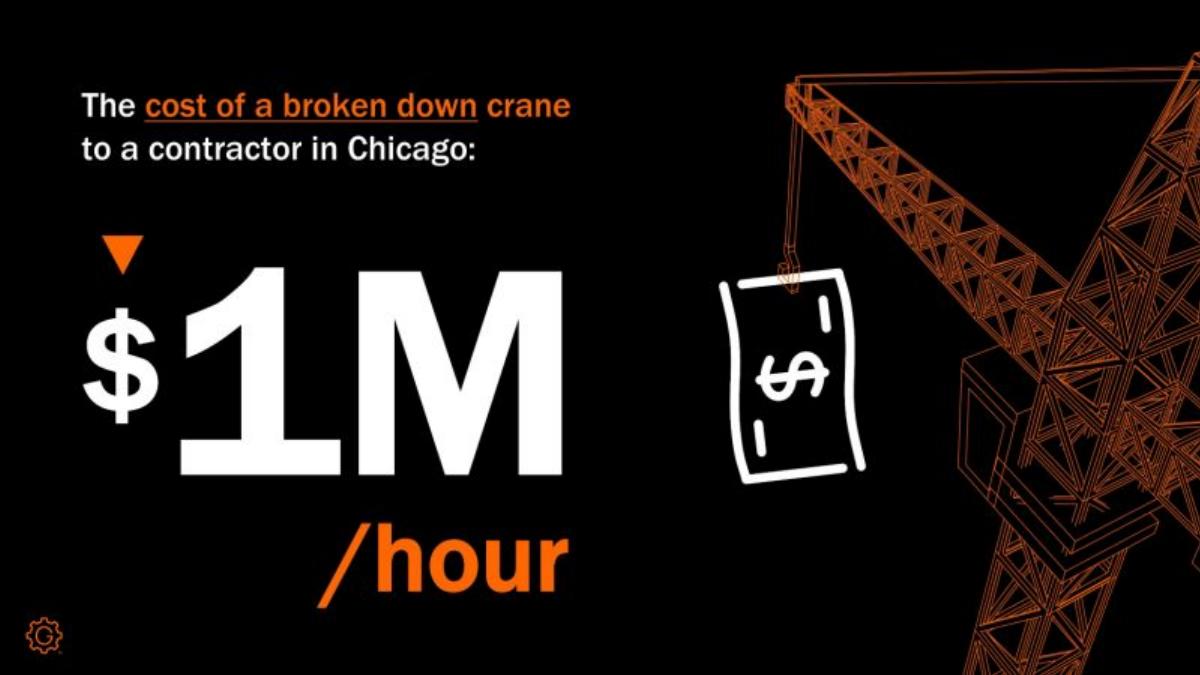
- The deck leads with a high-stakes problem: a broken crane costs $1M per hour in Chicago (Slide 3).
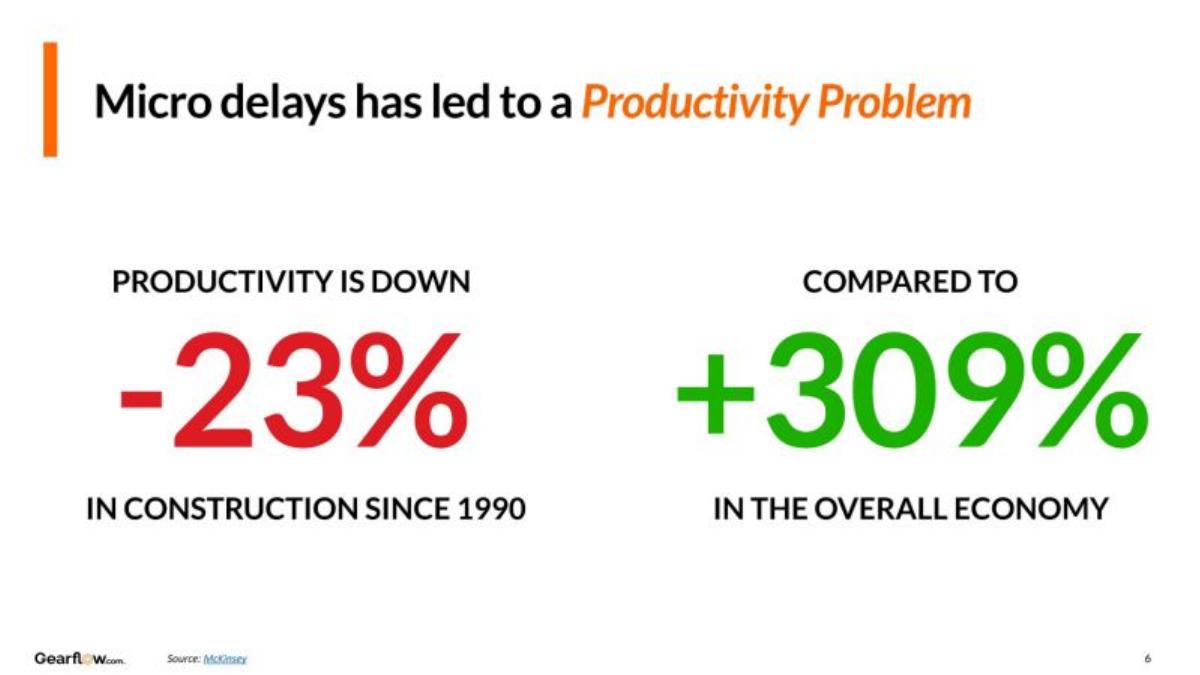
- Industry productivity in construction is down 23% since 1990, while the overall economy is up 309% (Slide 6).
- Gearflow operates on a 10% take rate and reported 6x growth driven by organic demand (Slide 10).
- The marketplace has a significant 'power buyer' segment, with repeat customers making up 50% of GMV (Slide 11).
- The supplier pipeline is robust, with 126 active suppliers and 14.4M SKUs in the queue (Slide 13).
- The Total Addressable Market (TAM) for construction equipment parts is estimated at $45B annually (Slide 14).
- The company targets a Serviceable Obtainable Market (SOM) of $21B from 'underserved contractors' earning $1M-$50M in revenue (Slide 14).
- The product roadmap aims for 'Auction Avoidance' by providing fleet valuation data to users (Slide 15).
The Hook: High-Stakes Downtime
Slides 1-3: Setting the Scene
Gearflow opens with a minimalist title slide (Slide 1) that clearly defines its category: "The equipment parts marketplace built for the construction industry." This is immediately followed by Slide 2, which uses wireframe imagery of heavy machinery to establish the context: contractors are entirely dependent on their equipment. Slide 3 is the 'anchor' for the entire pitch. It states that a broken crane costs a contractor in Chicago $1M per hour. By quantifying the cost of failure so aggressively, Gearflow moves the conversation from 'buying parts' to 'preventing catastrophic financial loss.' This justifies why a specialized marketplace must exist.
The Problem: Offline Fragmentation
Slides 4-6: The Productivity Gap
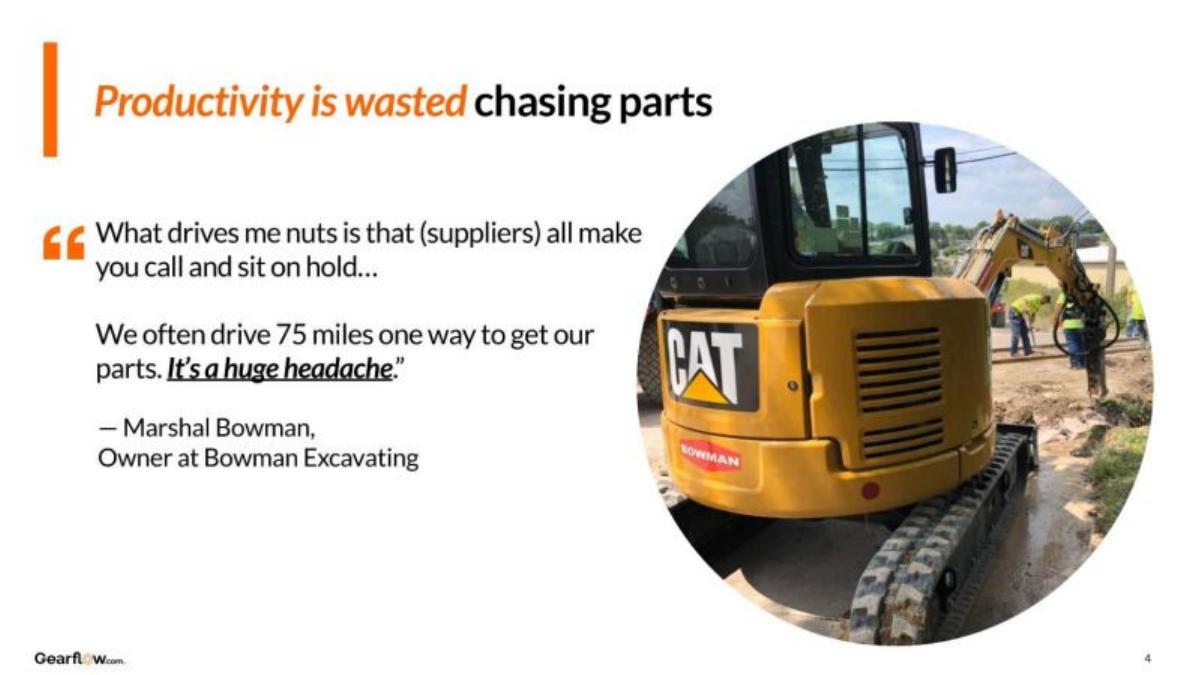
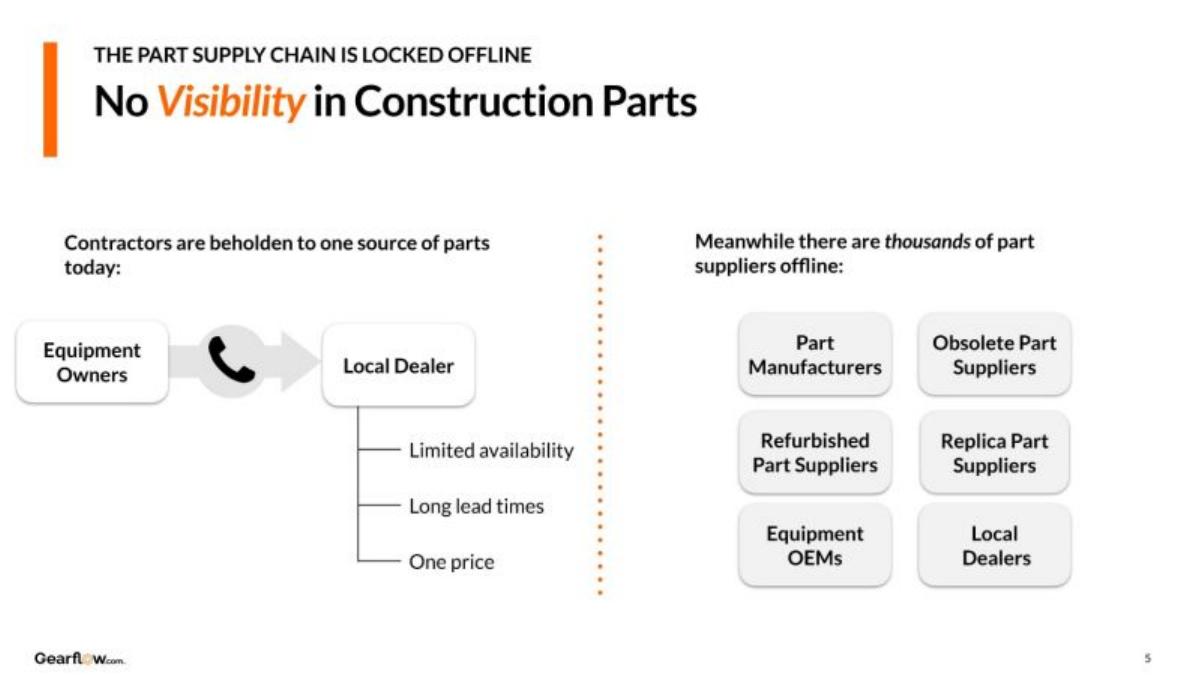
Slide 4 introduces the human element through a quote from Marshal Bowman, an excavation owner, who describes the "headache" of driving 75 miles one way for parts. This slide effectively bridges the gap between the $1M/hour macro-problem and the daily micro-frustrations of the target customer. Slide 5 visualizes the current state of the supply chain: a 'locked offline' system where owners are beholden to local dealers with limited availability and long lead times. Slide 6 provides the macroeconomic justification for the startup, citing McKinsey data that construction productivity has dropped 23% since 1990, while the rest of the economy has grown by 309%. This data point suggests that the industry is overdue for a digital overhaul.
The Solution: A Transparent Marketplace
Slides 7-8: Product and Value Proposition
Slide 7 shows the first glimpse of the Gearflow interface on a laptop, emphasizing its role in streamlining procurement for "construction's majority." Slide 8 breaks down the value proposition for both sides of the marketplace. For suppliers, it offers "turnkey e-commerce" and "unparalleled online exposure." For customers, it promises "best value," "mind-blowing support," and a "one-stop shop." The use of the phrase "Find your part and get back to work!" reinforces the speed-to-resolution theme established in the opening slides.
Competitive Landscape: Specificity vs. Scale
Slide 9: The 2x2 Matrix
In Slide 9, Gearflow tackles the 'Amazon threat' head-on. They use a standard 2x2 matrix to plot themselves against incumbents. General marketplaces like Amazon, eBay, and Craigslist are placed in the bottom-right (low industry specificity), while traditional brokers and auctions are in the top-left (high specificity but low 'modern marketplace' tech). Gearflow claims the top-right quadrant. Interestingly, they include a screenshot of an article titled "Amazon Business is coming for the construction industry," using it as validation of the market's attractiveness rather than a threat they cannot overcome.
Traction and Retention
Slides 10-12: The Engine of Growth
Slide 10 reveals the core business model: a 10% take rate. While the specific GMV figures are redacted in this public version of the deck, the slide claims "6x Growth" driven by organic demand. Slide 11 focuses on the 'Power Buyer,' noting that repeat customers make up 50% of GMV. This is a critical metric for marketplaces, as it proves the platform isn't just a one-time emergency tool but a recurring procurement habit. Slide 12 provides social proof through SEO results and Facebook comments, showing customers pledging to "never go anywhere else now."
Supply Side and Market Size
Slides 13-14: The $45B Opportunity
Slide 13 addresses the 'Trust' barrier. Gearflow claims to acquire suppliers through pre-existing relationships and editorial authority. They list a massive pipeline: 126 active suppliers, 700k live SKUs, and 14.4M SKUs in the queue. This suggests that their primary challenge isn't finding parts, but the technical task of onboarding them. Slide 14 defines the TAM/SAM/SOM. The $45B TAM is narrowed down to a $21B SOM of "underserved contractors" (those with $1M-$50M in revenue). This is a smart segmentation; the largest contractors likely have direct OEM contracts, while the mid-market relies on the fragmented dealer network Gearflow is digitizing.
The Future: Roadmap and Team
Slides 15-18: Vision and Execution
Slide 15 outlines a product roadmap that moves from simple parts buying to "Fleet Maintenance" and "Auction Avoidance." By providing fleet valuation data, Gearflow intends to become the system of record for equipment owners. Slide 16 projects that by 2023, 90% of their core customers' parts will run through the platform. Slide 17 introduces the team, highlighting Luke Powers (CEO) and Ben Preston (CMO). The team descriptions focus heavily on "Heavy Equipment Industry Expertise," which is essential for a vertical B2B marketplace. Slide 18 summarizes the pitch with three pillars: Urgent Need, Proven Demand, and a One of a Kind Team.
What Works in This Deck
The 'Cost of Inaction' Hook: Starting with the $1M/hour downtime cost immediately justifies the need for a specialized solution. · Clear Segmentation: By targeting the $1M-$50M revenue contractor (Slide 14), they avoid the 'boil the ocean' trap and focus on a specific, underserved niche. · Supplier Pipeline: Showing 14.4M SKUs in the queue (Slide 13) demonstrates that they have cracked the supply-side interest, which is often the hardest part of a marketplace. · Macro-Context: Using McKinsey data (Slide 6) to show construction's productivity decline provides a 'why now' that feels inevitable rather than speculative.
What Is Missing
Unit Economics: The deck mentions a 10% take rate but omits Customer Acquisition Cost (CAC) and Lifetime Value (LTV). For a marketplace, these are the most scrutinized metrics. · Logistics and Fulfillment: The deck doesn't explain how parts are actually moved. Is Gearflow a pure drop-ship marketplace, or do they handle any logistics? In an industry where speed is everything, this is a major operational question. · The 'Ask': There is no slide detailing how much capital is being raised or how it will be allocated (e.g., hiring, marketing, R&D). · Detailed Financial Projections: While Slide 16 shows a growth curve, it lacks specific revenue or GMV targets.
What Other Founders Should Copy
The 'Quote and Photo' Slide: Slide 4 is excellent. It combines a real customer quote with a photo of the equipment in the field. It makes the problem feel visceral. · The 2x2 Matrix with a Twist: Instead of just saying "we are better," Gearflow uses the Amazon threat as market validation (Slide 9). This is a sophisticated way to handle the 'big tech' question. · The Roadmap as a Value Ladder: Slide 15 doesn't just list features; it explains how those features deepen supplier reliance and entrench buyer dependence. It shows a clear path from a 'tool' to a 'platform.'
Frequently asked questions
- What is Gearflow's business model?
- Gearflow operates as a specialized B2B marketplace for construction equipment parts. According to Slide 10, they charge a 10% take rate on transactions. They position themselves as a 'turnkey e-commerce' solution for suppliers who are currently offline, providing them with online exposure while offering contractors a one-stop shop to reduce equipment downtime.
- How does Gearflow differentiate itself from Amazon or eBay?
- Slide 9 explicitly addresses this using a 2x2 matrix. Gearflow positions itself high on 'Industry Specificity' and 'True Modern Marketplace' functionality. Unlike generalists like Amazon or eBay, Gearflow focuses on the 'long tail' of construction parts and builds trust through industry-specific expertise, which they claim is a prerequisite for these high-stakes transactions.
- What is the primary growth driver for Gearflow?
- The deck emphasizes organic demand and SEO. Slide 12 highlights that they 'win SEO for the long tail supply of parts,' allowing them to acquire customers who are searching for specific, hard-to-find components. This organic pull is supported by the fact that 50% of their GMV comes from repeat 'power buyers' (Slide 11).
- What are the key market size figures cited?
- On Slide 14, Gearflow identifies a $45B TAM for annual construction equipment parts spend. They narrow this down to a $21B SOM, specifically targeting the 'underserved' segment of 525,000 contractors with revenues between $1M and $50M, who lack the procurement resources of massive firms.
- Who is on the Gearflow leadership team?
- The team is led by Luke Powers (Founder/CEO) and Ben Preston (Co-Founder/CMO). Slide 17 highlights a mix of heavy equipment industry expertise, performance marketing, and database architecture. The presence of a dedicated Content Specialist and Director of Business Development suggests a heavy focus on supply-side acquisition and SEO-driven growth.