Paranoid Fan's 2014 seed deck is a study in minimalism and emotional resonance. Eschewing the traditional data-heavy approach of early-stage startups, the company relied on high-resolution imagery to illustrate the 'chaos' of live sporting events—crowded gates, packed parking lots, and long concession lines. This visual narrative built a compelling case for their social mapping platform, which aims to drive mobility around venues. The deck successfully translated this emotional hook into institutional credibility by showcasing 'deals with leading teams' across the NFL, NCAA, NHL, and MLS. Des…
Key takeaways
- The deck uses four consecutive wordless photo slides (Slides 2-5) to establish the problem of stadium congestion without needing a single bullet point.
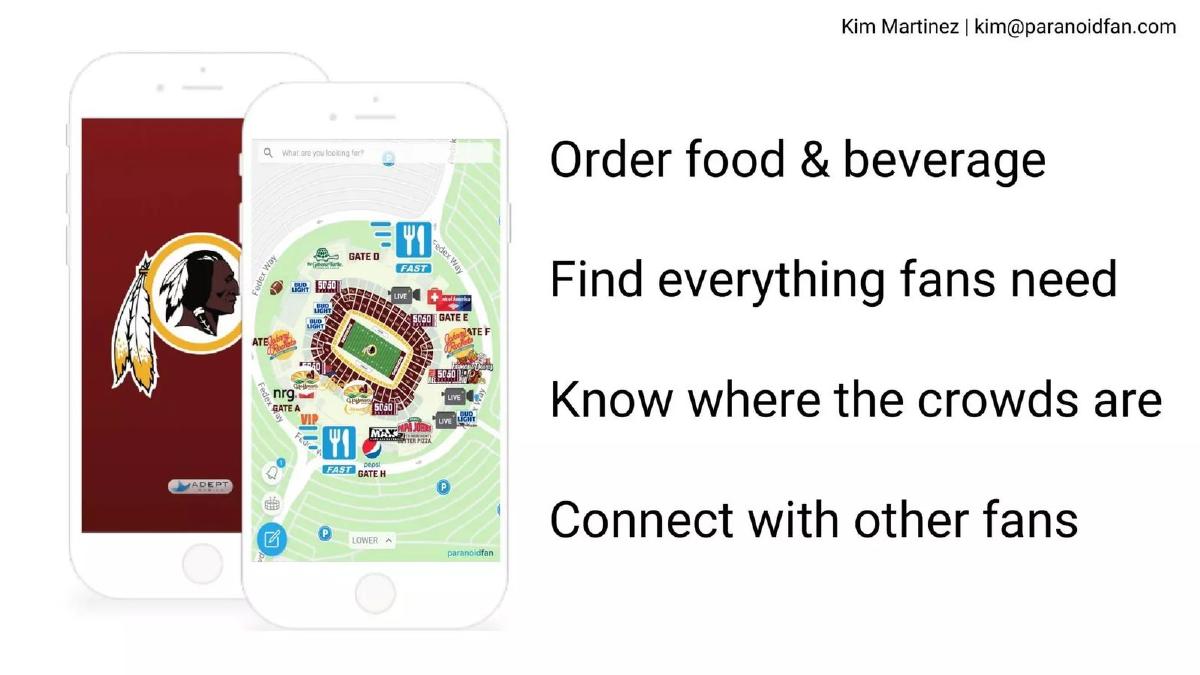
- Paranoid Fan defines its core value proposition through four specific actions: ordering food, finding fan needs, tracking crowds, and connecting with fans (Slide 6).
- Traction is demonstrated through a comprehensive logo wall featuring teams from the NFL, NCAA, NHL, MLS, and Liga MX (Slide 7).
- The company claims a reach of '+10 million fans,' though the deck does not specify if this refers to active users or total stadium capacity (Slide 8).
- A clear expansion plan is stated: adding '+100 Division 1 college stadiums' in partnership with IMG and the NCAA (Slide 9).
- The team slide highlights diverse backgrounds including Merrill Lynch, Lockheed Martin, and Y Combinator, adding corporate and technical weight (Slide 10).
- The deck mentions a '$2M Seed Round' involving ABInBev on the team slide, though catalogue facts indicate the total raised was $3,000,000 (Slide 10).
- The deck completely omits a business model, financial projections, and a specific 'ask' for the current round.
The Visual Narrative of Paranoid Fan
Paranoid Fan’s pitch deck is a departure from the typical text-heavy Seed-stage presentation. Instead of leading with a mission statement or a market size graph, the company uses a series of high-impact photographs to evoke the specific frustrations of a sports fan. This teardown examines how they leveraged existing partnerships and a clear product vision to raise $3,000,000 in 2014.
Slides 1-5: The Problem is the Experience
Slide 1 introduces the brand with a friendly, cartoonish logo and a simple subtitle: "Live & interactive mapping platform for sports events." This immediately anchors the company in the 'Utility' and 'Social' categories. The contact information for Kim Martinez, VP of Business Development, is present on almost every slide, ensuring the presenter is always reachable.
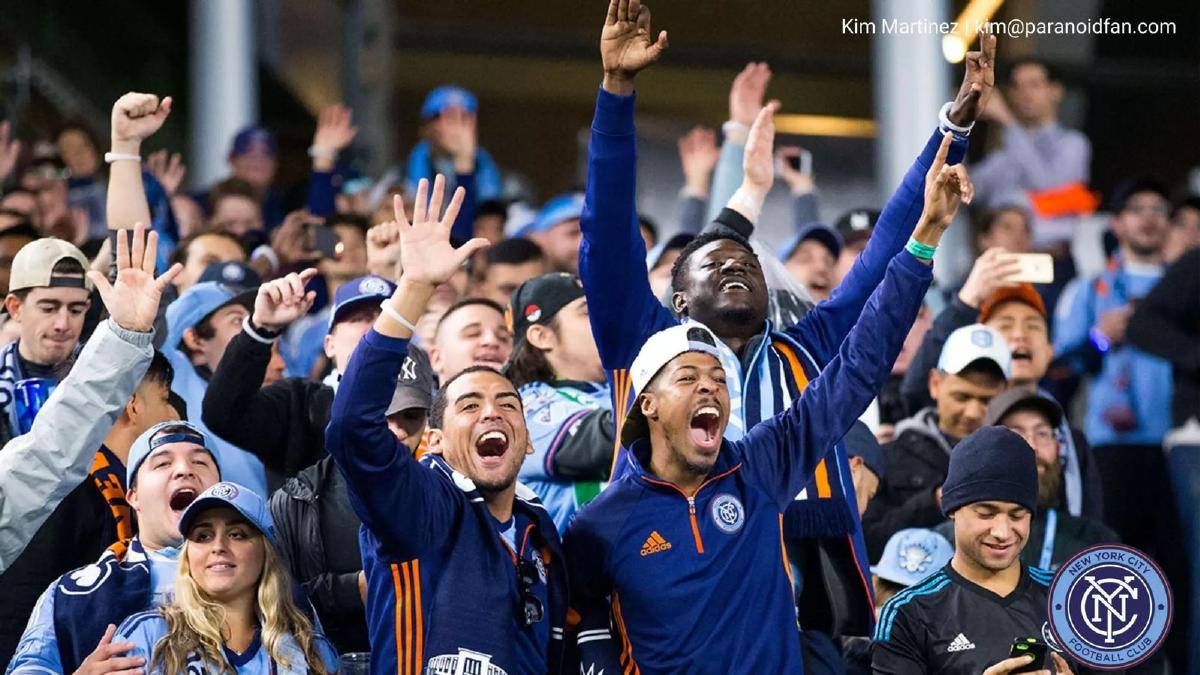
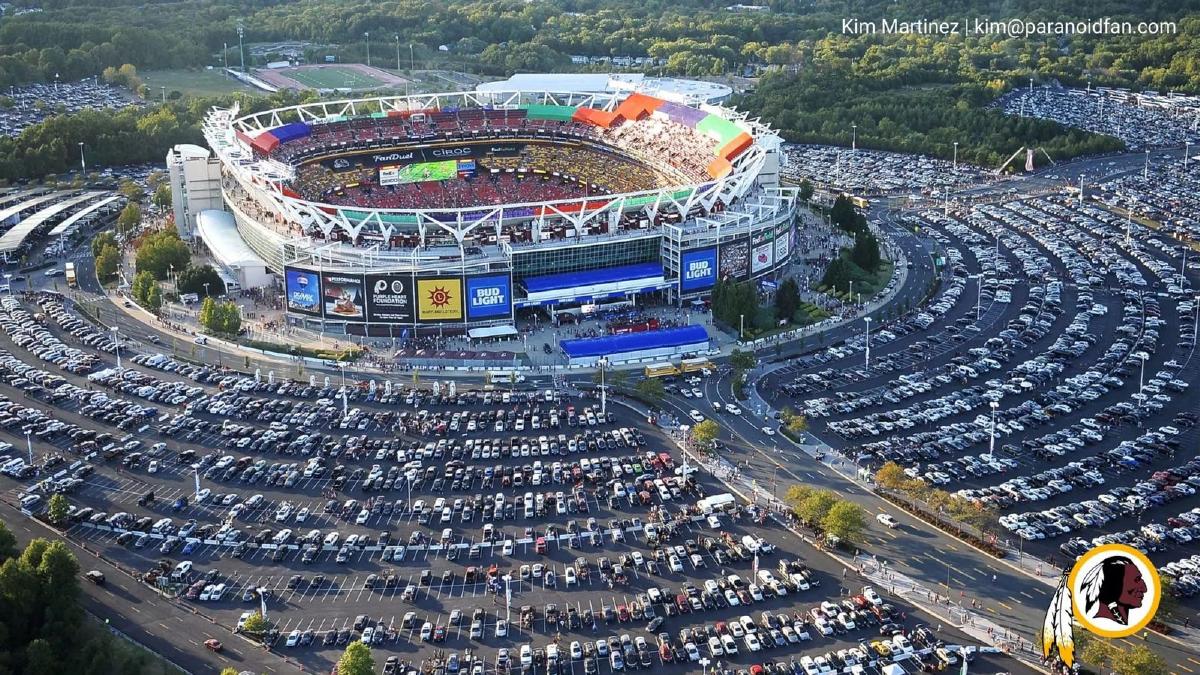
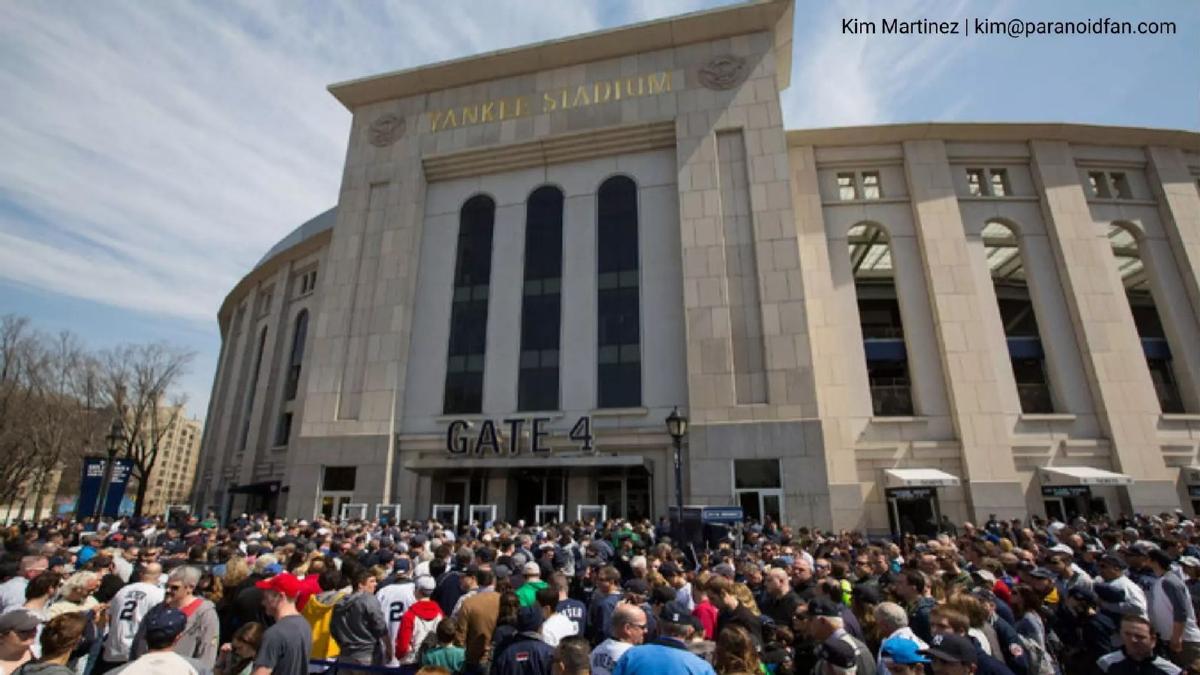
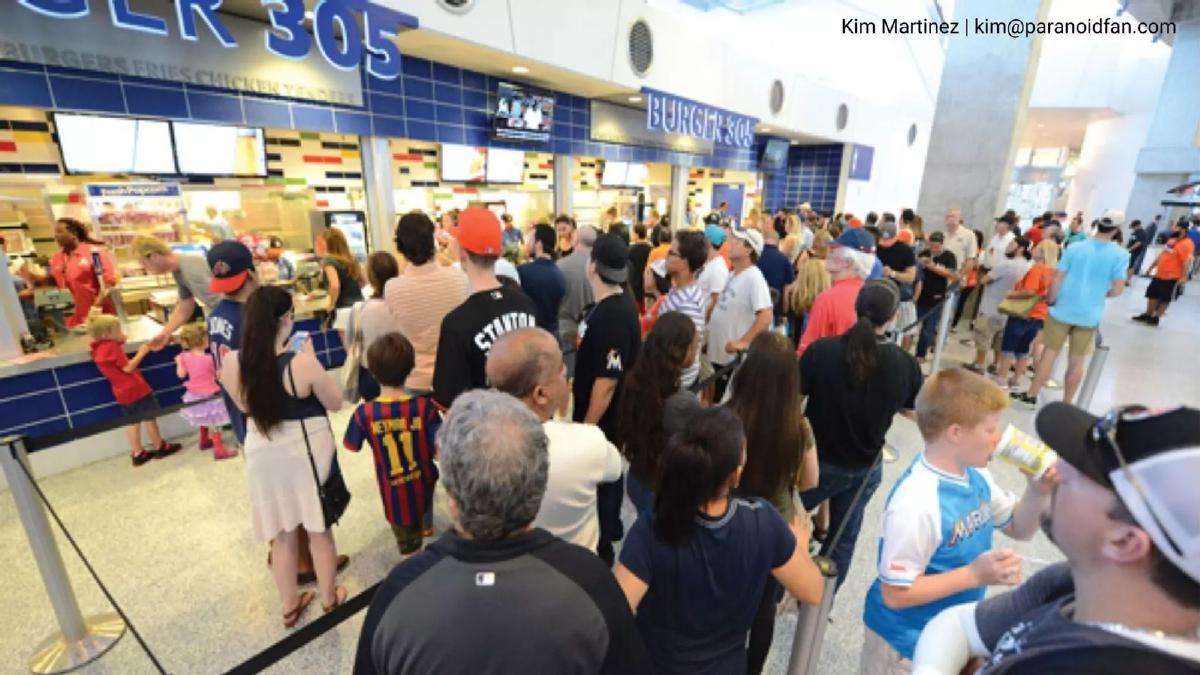
Slides 2 through 5 contain no text other than the contact header. This is a bold choice. Slide 2 shows a crowd of fans, establishing the target demographic. Slide 3 is an aerial shot of a massive, congested parking lot at a Washington Redskins game. Slide 4 shows a dense, bottlenecked crowd at Yankee Stadium’s Gate 4. Slide 5 depicts a long, stagnant line at a stadium concession stand titled "Burger 305." Together, these images tell a story of friction, wasted time, and logistical chaos. By the time the viewer reaches Slide 6, the 'Problem' has been felt viscerally without the need for a single statistic on wait times or lost revenue.
Slide 6: The Solution and Product Interface
Slide 6 finally introduces the app. It uses a split-screen layout: on the left, two iPhone mockups showing the app interface; on the right, four clear value propositions. The app interface is a detailed, top-down map of a stadium (specifically showing the Washington Redskins branding) populated with icons for food, drink, and gates. The text highlights four key features: Order food & beverage , Find everything fans need , Know where the crowds are , and Connect with other fans . This slide effectively bridges the gap between the 'chaos' shown in previous slides and the 'order' provided by the platform.
Slides 7-9: Traction and Scalability
Slide 7 is the 'credibility' slide. Titled "Deals with leading teams," it displays a comprehensive list of logos across multiple leagues. The sheer volume of logos—including five NFL teams, six NCAA programs, three NHL teams, and a massive presence in Mexican baseball and soccer leagues—suggests that the product has already passed the 'proof of concept' stage. It demonstrates that the founders can navigate the complex procurement processes of major sports franchises.
Slide 8 provides a single metric: "Reach +10 million fans." While the deck does not clarify if this is a monthly active user (MAU) count or the total aggregate capacity of their partner stadiums, the number is large enough to satisfy the 'scale' requirement of a seed investment. Slide 9 follows up with a growth target: "Adding +100 Division 1 college stadiums." The inclusion of the IMG and NCAA logos on this slide implies that these are not just targets, but active partnerships that will facilitate this expansion.
Slide 10: The Team and the Round
Slide 10 introduces the leadership team. Agustin Gonzalez (CEO) is associated with Merrill Lynch and the Air Force; Gregg Wilson (COO) brings corporate weight from Lockheed Martin and Boeing; Syed Adeel Asim (CTO) is tagged with the Y Combinator logo; and Kim Martinez (VP Business Development) comes from Telemundo. This is a well-rounded team combining finance, operations, high-level engineering, and media sales.
Interestingly, this slide also mentions a "$2M Seed Round" and features the ABInBev logo. This indicates that a significant portion of their funding came from a strategic corporate investor, which makes sense given the app's focus on concession sales (where ABInBev products are a staple). While the catalogue facts state a total of $3,000,000 raised, this slide likely reflects the lead investment or a specific milestone in the round.
Slide 11: The Closing
Slide 11 returns to the logo and the tagline "Turning frustration into fun." It is a clean bookend to a deck that focused heavily on the emotional journey of the sports fan.
What Works in the Paranoid Fan Deck
The most successful element of this deck is its visual storytelling . By using full-bleed photos of real-world problems (parking, lines, crowds), the founders bypass the need for long explanations. Any investor who has ever been to a stadium immediately understands the value proposition. The deck also excels at logo-dropping . By categorizing their partners by league (NFL, NCAA, etc.), they show a systematic approach to market penetration rather than a random collection of clients.
The simplicity of the product slide (Slide 6) is also a strength. It doesn't get bogged down in technical specifications of the mapping technology. Instead, it focuses on the user outcomes: ordering food and avoiding crowds. This is exactly what a seed-stage investor needs to see—a clear link between a user's pain and a product's feature set.
What is Missing from the Paranoid Fan Deck
The most glaring omission is the Business Model . The deck explains what the app does, but not how it makes money. Does Paranoid Fan take a cut of the food and beverage orders? Do they charge stadiums a SaaS fee for the mapping data? Is there an advertising component? Without this, the deck feels more like a product pitch than a business pitch.
Furthermore, there is no Competitive Landscape . In 2014, the 'stadium tech' space was becoming crowded with beacon technology and other venue-specific apps. Paranoid Fan does not explain why their social mapping approach is superior to existing stadium apps or general-purpose maps like Google or Waze. Finally, there is no Financial Projection or Use of Funds slide. While Slide 9 mentions adding 100 stadiums, it doesn't explain the cost associated with that expansion or the projected revenue it would generate.
What a Founder Should Copy
Founders should emulate the 'Show, Don't Tell' approach of the first five slides. If your startup solves a physical, real-world problem, use high-quality imagery to prove it. It creates an emotional connection that bullet points cannot replicate. Additionally, the Team Slide (Slide 10) is a great example of how to use logos to validate individuals. By placing the Y Combinator logo under the CTO and Boeing under the COO, the founders borrow the credibility of those institutions to bolster their own profiles.
Lastly, the Roadmap Slide (Slide 9) is effective because it names specific gatekeepers (IMG, NCAA). If you are pitching a B2B or B2B2C product, showing that you have the 'keys to the kingdom' through a specific partnership is often more valuable than a generic growth chart.
Final Thoughts
Paranoid Fan’s deck is a masterclass in brevity. At only 11 slides, it manages to establish a problem, offer a solution, prove traction, and introduce a high-pedigree team. While it lacks the financial rigor usually required for later-stage rounds, its focus on the 'Fan Experience' was clearly enough to resonate with seed investors and strategic partners like ABInBev. It proves that in the early stages, a clear vision and a few strong partnerships can be more persuasive than a spreadsheet of unproven projections.
Frequently asked questions
- How does Paranoid Fan define its market problem?
- The deck defines the problem visually rather than textually. Through Slides 2, 3, 4, and 5, the company highlights the 'frustration' of the fan experience: overcrowded seating areas, massive parking lot congestion, long security lines at stadium gates, and slow-moving concession queues. By showing these universal pain points, they set the stage for a mapping solution that promises to 'turn frustration into fun.'
- What is the specific functionality of the app according to the deck?
- According to Slide 6, the app serves four primary functions: it allows fans to order food and beverages, helps them locate specific amenities ('find everything fans need'), provides real-time data on crowd density ('know where the crowds are'), and facilitates social interaction ('connect with other fans'). The visual mockup shows a GPS-enabled map of a stadium with icons for various vendors and gates.
- Which major sports leagues had Paranoid Fan already partnered with?
- Slide 7 lists a significant roster of partners. In the NFL, they list the Vikings, Bills, Jaguars, Redskins, and Colts. In the NHL, they cite the Canucks, Sharks, and Sabres. They also list New York City FC in the MLS, the Mexico National Team in FIFA, and several teams in Liga MX and Liga Mexicana de Béisbol. This breadth suggests a product with international and multi-sport applicability.
- What is the significance of the IMG and NCAA logos on Slide 9?
- Slide 9 serves as the growth roadmap. By placing the IMG and NCAA logos alongside the goal of 'Adding +100 Division 1 college stadiums,' the company signals that they have the necessary institutional gatekeepers on board to scale rapidly. This move shifts the narrative from a few pilot programs to a massive, nationwide expansion strategy.
- What critical investor information is missing from this pitch deck?
- The deck is notably light on business fundamentals. It lacks a slide explaining how the company makes money (revenue model), what the current burn rate or unit economics look like, and who the primary competitors are. Furthermore, there is no 'The Ask' slide detailing how much they are currently raising or how those specific funds will be allocated beyond the general goal of stadium expansion.