Shopify’s Q3 2015 investor deck captures a pivotal moment in the company’s history, shortly after its IPO. The deck emphasizes the transition from a simple web-store builder to a comprehensive multi-channel retail platform. Key metrics include a merchant base exceeding 200,000 and a quarterly Gross Merchandise Volume (GMV) of over $1.9 billion. The narrative focuses on the 'Partner Ecosystem'—comprising app developers, agencies, and theme designers—as a primary moat. By showcasing consistent triple-digit GMV growth (128% in 2013 and 133% in 2014) and a clear path toward international penetrat…
Key takeaways
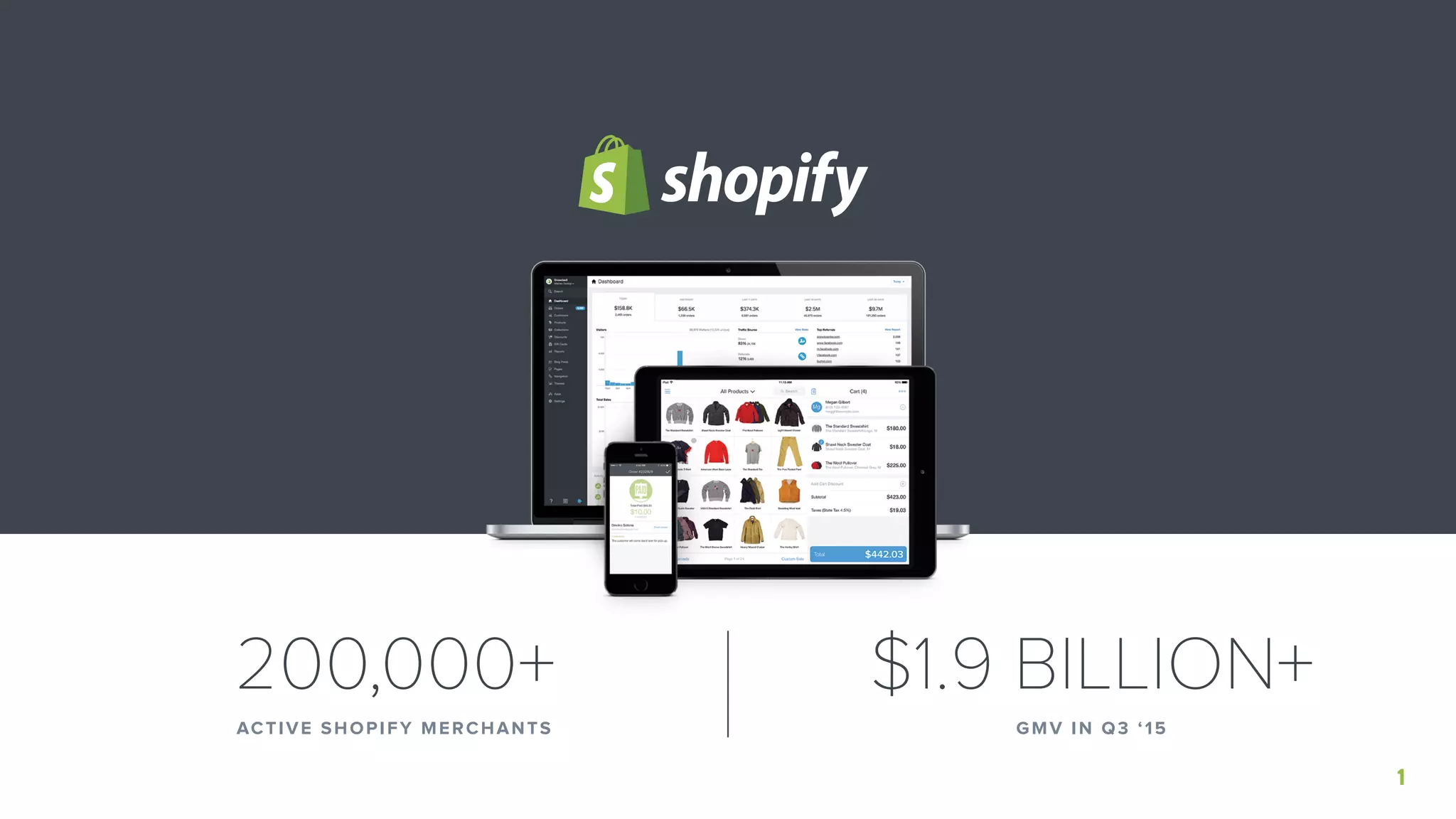
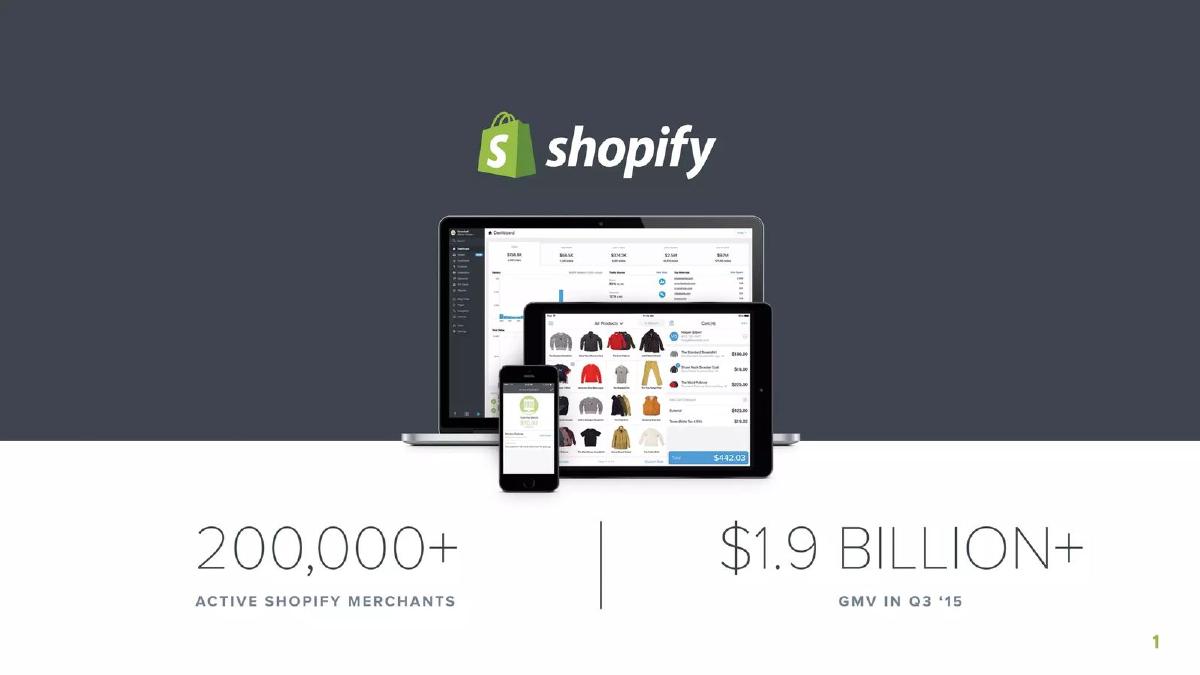
- Shopify reported over 200,000 active merchants and $1.9 billion+ in GMV for Q3 2015 on slide 1.
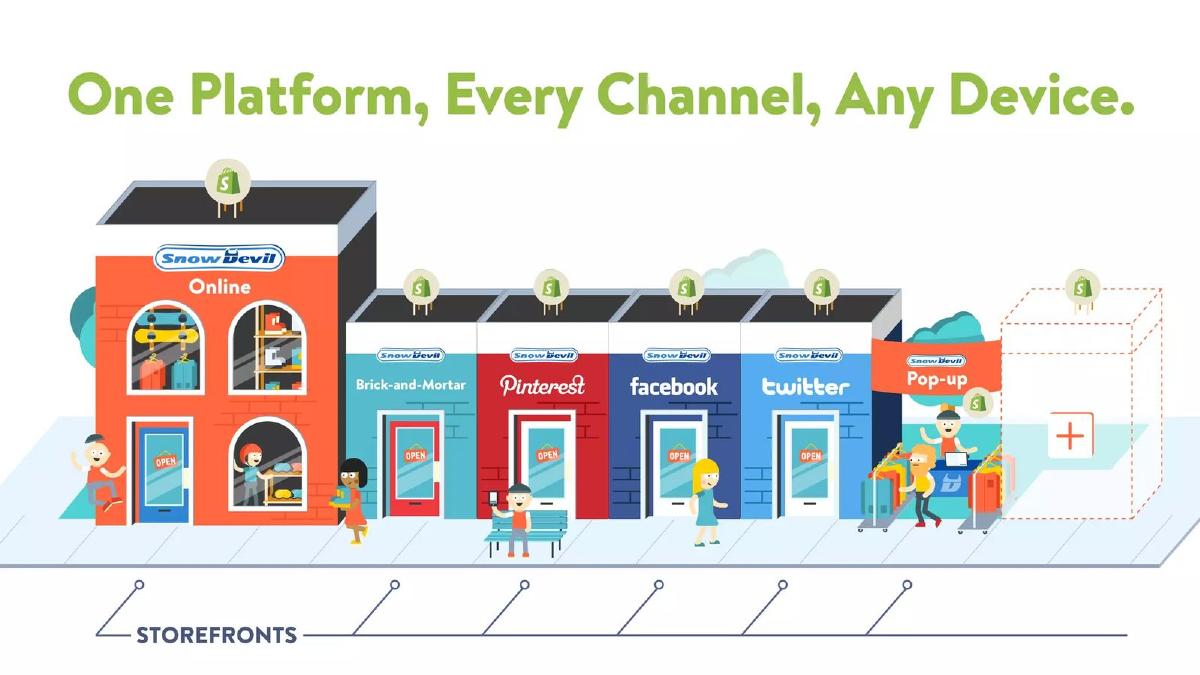
- The platform positioning shifted to 'One Platform, Every Channel, Any Device,' including Pinterest, Facebook, and Twitter integrations as seen on slide 4.
- A tiered pricing strategy starting at $29/month for Basic up to Shopify Plus targets the entire merchant lifecycle on slide 7.
- The company identifies its 'Partner Ecosystem' as a core growth driver, funneling developers and designers to its 200k merchants on slide 13.
- Google Trends data on slide 16 shows 'Shopify' search interest overtaking the generic term 'Ecommerce' in the USA by 2015.
- Gross Merchandise Volume (GMV) grew from $0.7B in 2012 to $3.8B in 2014, representing a 133% increase in the final year shown on slide 22.
- The deck identifies five specific growth vectors on slide 25: More Merchants, More Solutions, More Channels, More Partners, and International Penetration.
- The introduction of Point of Sale (POS) is cited as a key driver for higher average GMV per merchant on slide 22.
Introduction: The Operating System for Retail
The Shopify Q3 2015 investor deck is a retrospective look at a company that had successfully transitioned from a startup to a public market leader. At this stage, Shopify was no longer just trying to prove it could build a website; it was proving it could own the entire commerce stack. The deck is characterized by clean design, heavy reliance on growth metrics, and a clear articulation of a multi-channel future. It serves as a blueprint for how to present a platform business that relies on an ecosystem to sustain its competitive moat.
Slide 1: The Hook
The cover slide is a masterclass in the 'Big Number' opening. It features the Shopify logo and product mockups across desktop, tablet, and mobile, immediately establishing the cross-platform nature of the software. The two primary anchors are 200,000+ Active Shopify Merchants and $1.9 Billion+ GMV in Q3 '15 . By leading with these figures, Shopify removes any doubt about product-market fit or scale. The message is clear: this is a massive, functioning economy.
Slide 4: The Multi-Channel Vision
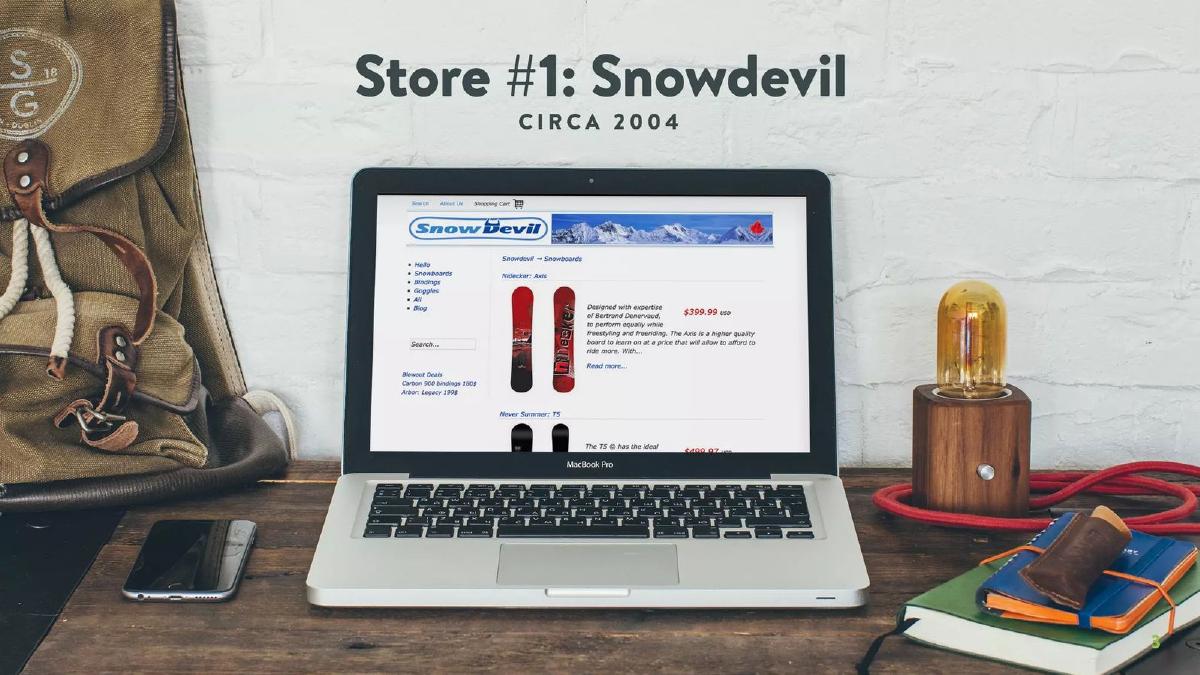
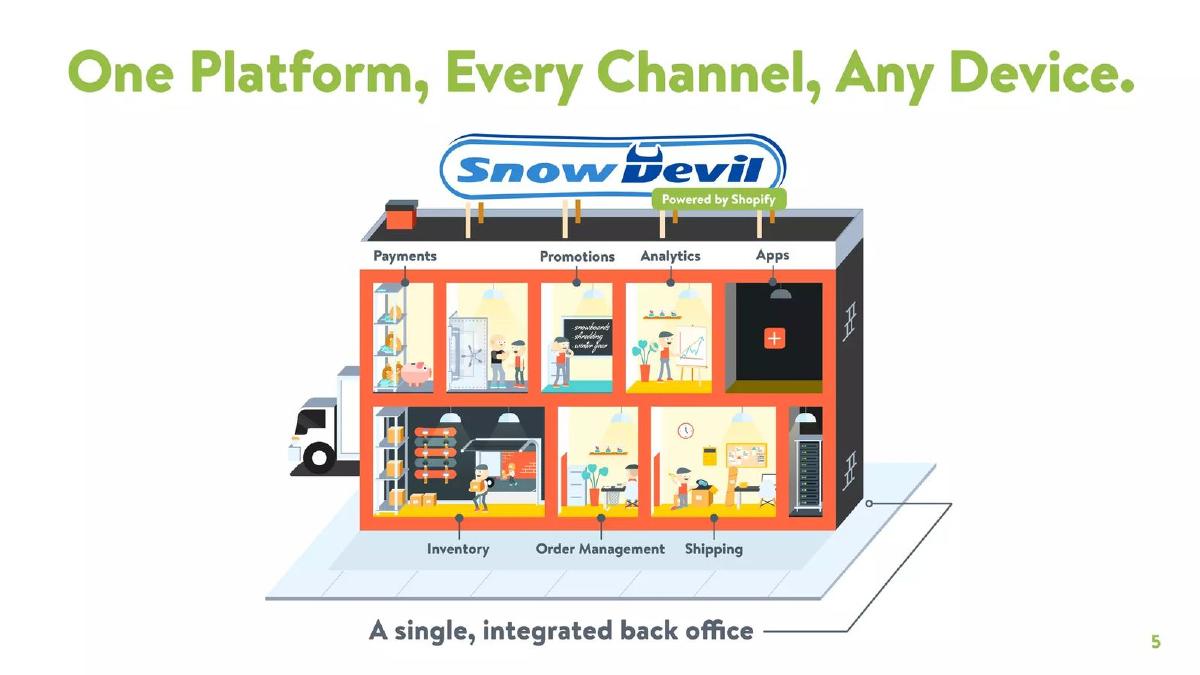
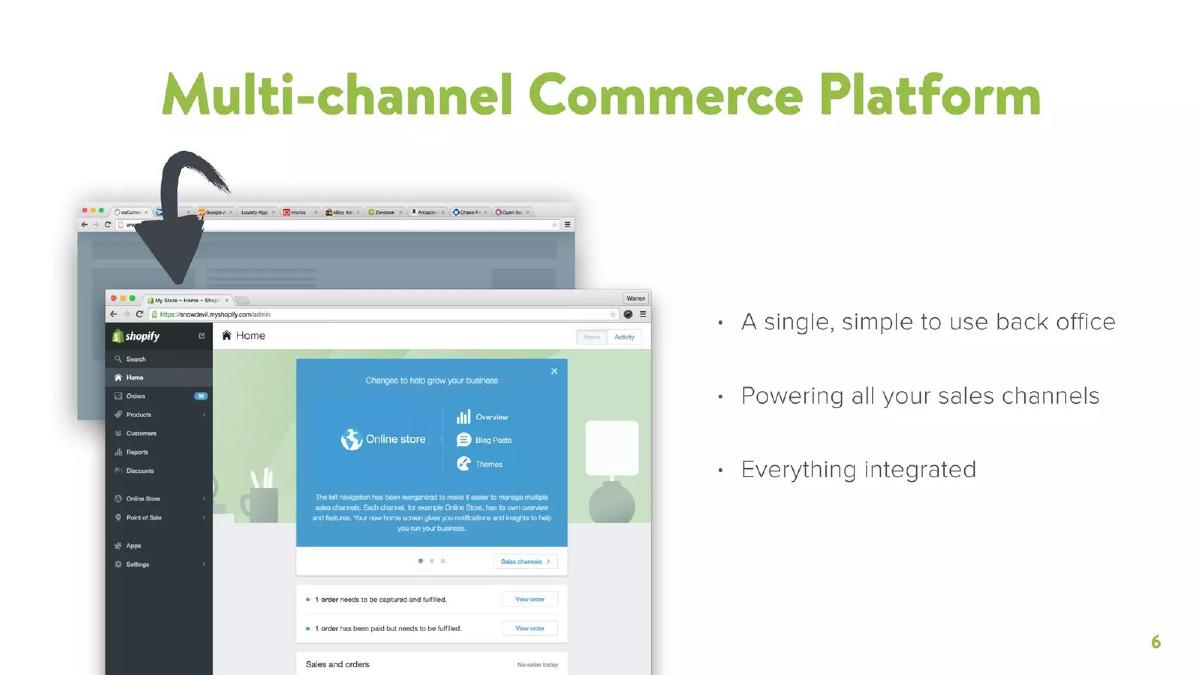
Slide 4 uses an illustrative graphic to explain the value proposition: "One Platform, Every Channel, Any Device." It depicts a merchant named 'Snow Devil' (a nod to Tobi Lütke’s original snowboard shop) operating across various storefronts: Online, Brick-and-Mortar, Pinterest, Facebook, Twitter, and Pop-up shops. This slide is critical because it reframes Shopify from a 'website builder' to a 'centralized retail brain.' It shows that regardless of where the customer buys, the merchant manages everything from one Shopify dashboard.
Slide 7: Market Segmentation and Pricing
The 'Our Market' slide uses a pyramid to show the tiered pricing strategy. The tiers are listed as $29 per month (Basic) , $79 per month (Professional) , and $179 per month (Unlimited) , with Shopify Plus sitting at the apex. This visual representation communicates that Shopify has a solution for every stage of a business's life cycle. It suggests a low barrier to entry with a high ceiling for expansion revenue, a classic SaaS growth lever.
Slide 10: The Entrepreneurship Lifecycle
Slide 10 connects the pricing tiers to the merchant journey. It shows a circular flow of Idea > Build > Did it work? If the answer is 'Yes,' the merchant moves up the pyramid. The slide notes that "Small merchants today can become our largest merchants tomorrow." This is a powerful narrative for investors because it implies that Shopify’s growth is baked into the success of its customers. It also claims that this model "Leaves little room for disruption from below" because they own the entry-level market.
Slide 13: The Partner Ecosystem Moat
This is arguably the most important strategic slide in the deck. It shows how App Developers, Agencies, and Theme Designers feed into the Shopify App Store, Shopify Experts, and Shopify Theme Store , which in turn serve the 200k Merchants . This illustrates a virtuous cycle: more merchants attract more developers, which leads to more apps, which makes the platform more capable, which attracts more merchants. This ecosystem is what makes Shopify 'sticky' and creates a barrier to entry for competitors.
Slide 16: Brand Dominance
Slide 16 uses Google Trends data to show that by 2015, the search term "Shopify" had overtaken the generic term "Ecommerce" in the USA. This is a bold claim of brand synonymity. It suggests that when people think about starting an online business, they no longer look for a category; they look for the specific brand. For an investor, this indicates extremely efficient organic customer acquisition and a dominant market position.
Slide 19: Financial Highlights
This slide summarizes the investment thesis into three pillars: Growth (Revenue, MRR, and GMV), Powerful Business Model (Success-based revenue on top of a recurring SaaS base), and Long-Term Focus (Cash management and investing for the future). It’s a high-level transition slide that prepares the audience for the specific financial data that follows.
Slide 22: GMV Growth Trajectory
The data on slide 22 is staggering. It shows GMV growing from $0.7B in 2012 to $1.6B in 2013 (+128%) and $3.8B in 2014 (+133%) . It also shows a comparison of the first nine months of 2014 ($2.4B) versus 2015 ($4.9B), a 102% increase . The slide attributes this growth to more merchants, higher average GMV per merchant, and the "Introduction of POS." This slide proves that Shopify isn't just growing its user base; it's growing the value of each user.
Slide 25: Future Growth Vectors
The deck concludes its narrative with five 'Growth Vectors' represented by a rising bar chart. These include More Merchants & More GMV , More Solutions , More Channels , More Partners , and More International Penetration . This slide is designed to show that despite their current scale, Shopify still has multiple levers to pull for future expansion. It specifically highlights international growth as the highest bar, suggesting it is the largest untapped opportunity.
Slide 29: The Appendix
The final slide in this selection is a simple Appendix divider featuring a photo of the Shopify office. While it contains no data, it signals that the company is transparent and prepared for deep-dive questions regarding the metrics presented in the main deck.
What Shopify Does Well
Shopify excels at visualizing the 'Platform Play.' Instead of just listing features, they use slides like the 'Partner Ecosystem' (Slide 13) and 'Multi-Channel' (Slide 4) to show how their product sits at the center of a merchant's world. They also do an excellent job of showing growth acceleration. Many companies show growth, but Shopify shows that their growth rate was actually increasing (from 128% to 133% GMV growth) as they scaled, which is a rare and highly desirable trait in a venture-backed or public company.
What is Missing from the Deck
In this specific selection of slides, there are a few notable omissions. There is no Team Slide , which is common for a company that is already public or well-known, but vital for earlier-stage startups. There is also a lack of Unit Economics (CAC, LTV, Churn). While they mention 'consistent growth in MRR,' they don't provide the specific churn rates that would prove the long-term sustainability of that growth. Finally, there is no Competitive Landscape slide. Shopify relies on the Google Trends data to imply they have won, but they don't address specific threats from players like Magento, BigCommerce, or Amazon's third-party seller services.
What Founders Should Copy
The Ecosystem Slide: If you are building a platform, you must show how third parties add value to your users. Slide 13 is the perfect template for this. · The 'Synonymous with Category' Slide: Using Google Trends (Slide 16) is a low-cost, high-impact way to show brand authority and market pull. · The Lifecycle Pyramid: Slide 7 and 10 together show how a company can capture a user at the 'Idea' stage and grow with them. This 'land and expand' strategy is highly attractive to investors. · Clear Growth Drivers: On Slide 22, Shopify doesn't just show a bar chart; they explicitly list the 'Drivers' (More merchants, higher GMV per merchant, POS). This tells investors exactly what the management team is focused on to move the needle.
Frequently asked questions
- What was Shopify's scale at the time of this deck?
- According to slide 1, Shopify had over 200,000 active merchants and had achieved more than $1.9 billion in Gross Merchandise Volume (GMV) specifically within the third quarter of 2015. This established them as a major player in the e-commerce infrastructure space, moving beyond a niche tool for small hobbyists into a massive retail engine.
- How does Shopify describe its competitive advantage?
- The deck highlights the 'Partner Ecosystem' on slide 13 as a primary advantage. By connecting app developers, agencies, and theme designers directly to their merchant base, Shopify creates a network effect where the platform becomes more valuable as more third-party services are built on top of it, making it difficult for merchants to switch to competitors.
- What is Shopify's pricing and market strategy?
- Slide 7 illustrates a pyramid market strategy. It starts with a 'Basic' tier at $29/month, moves to 'Professional' at $79/month, 'Unlimited' at $179/month, and culminates in 'Shopify Plus' for enterprise clients. This allows the company to capture entrepreneurs at the 'Idea' stage and retain them as they scale into large-scale retailers.
- What were the primary drivers of Shopify's GMV growth?
- Slide 22 identifies three main drivers: an increasing number of merchants, a higher average GMV per merchant, and the introduction of Point of Sale (POS) systems. The POS integration allowed Shopify to capture offline transaction data, significantly boosting the total volume of commerce processed through their platform.
- What future growth opportunities did the company identify?
- Slide 25 outlines five 'Growth Vectors.' These include acquiring more merchants, offering more solutions (like shipping or payments), expanding into more sales channels (social media, marketplaces), growing the partner ecosystem, and increasing international penetration. The deck suggests that the company is only in the early stages of global market capture.