The Venture Fast Track deck, presented by The Capital Network in 2015, functions as a dual-purpose document: a funding strategy guide for early-stage founders and a retrospective case study of ListenCurrent (now Listenwise). The deck outlines the specific journey of founder Monica Brady-Myerov, who transitioned from self-funding and family support to securing a $950,000 priced round. Key investors included Launchpad Venture Group, NewSchools Venture Fund, and Investors Circle. The presentation is notable for its transparency regarding the 'false start' phase—where a successful demo day presen…
Key takeaways
- ListenCurrent successfully raised a $950,000 priced round involving three distinct investment groups (Slide 9).
- The company initially struggled to close funding despite presenting to 150+ investors at a LearnLaunch Demo Day (Slide 5).
- Key operational triggers for the successful raise included hiring COO Karen Gage and increasing sales (Slide 7).
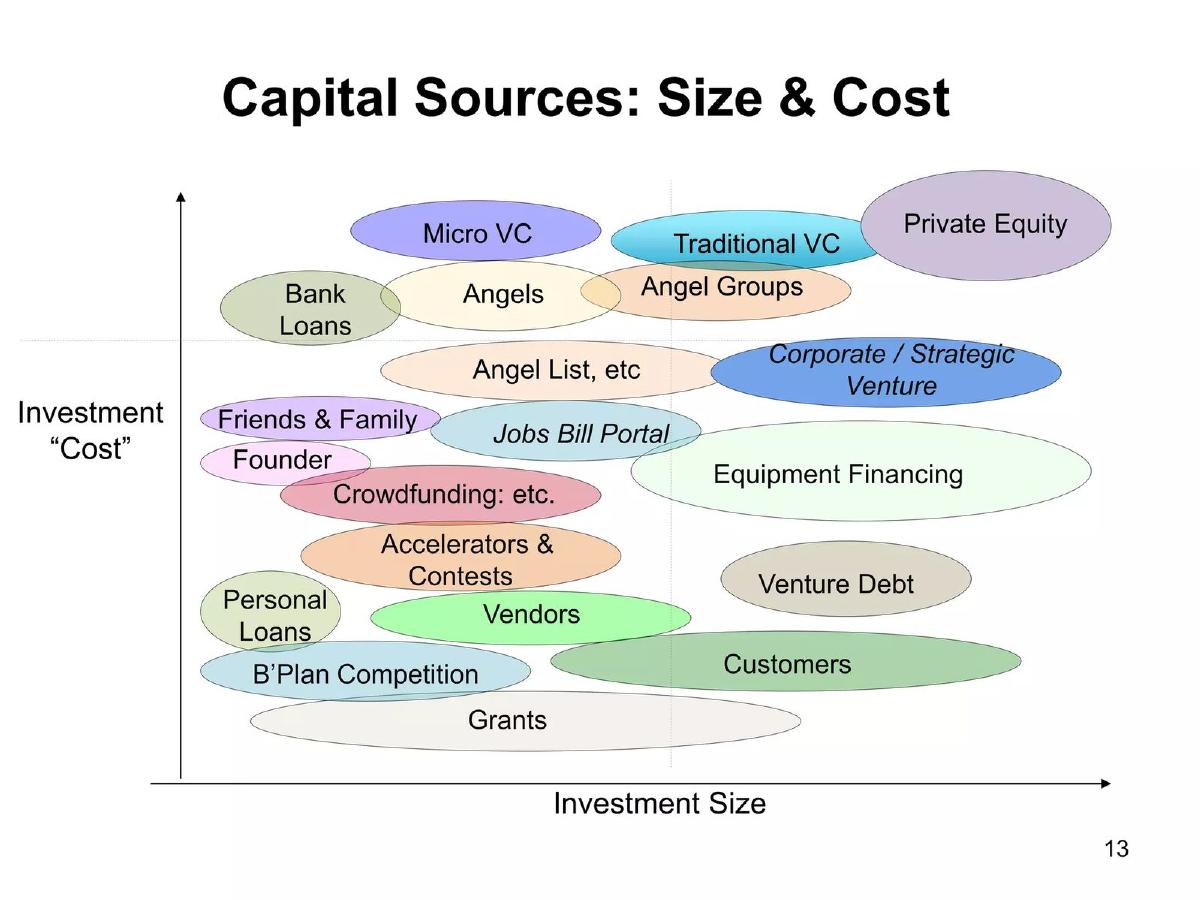
- The deck categorizes capital sources by 'Cost' and 'Size,' placing Traditional VC and Private Equity at the highest cost and size tiers (Slide 13).
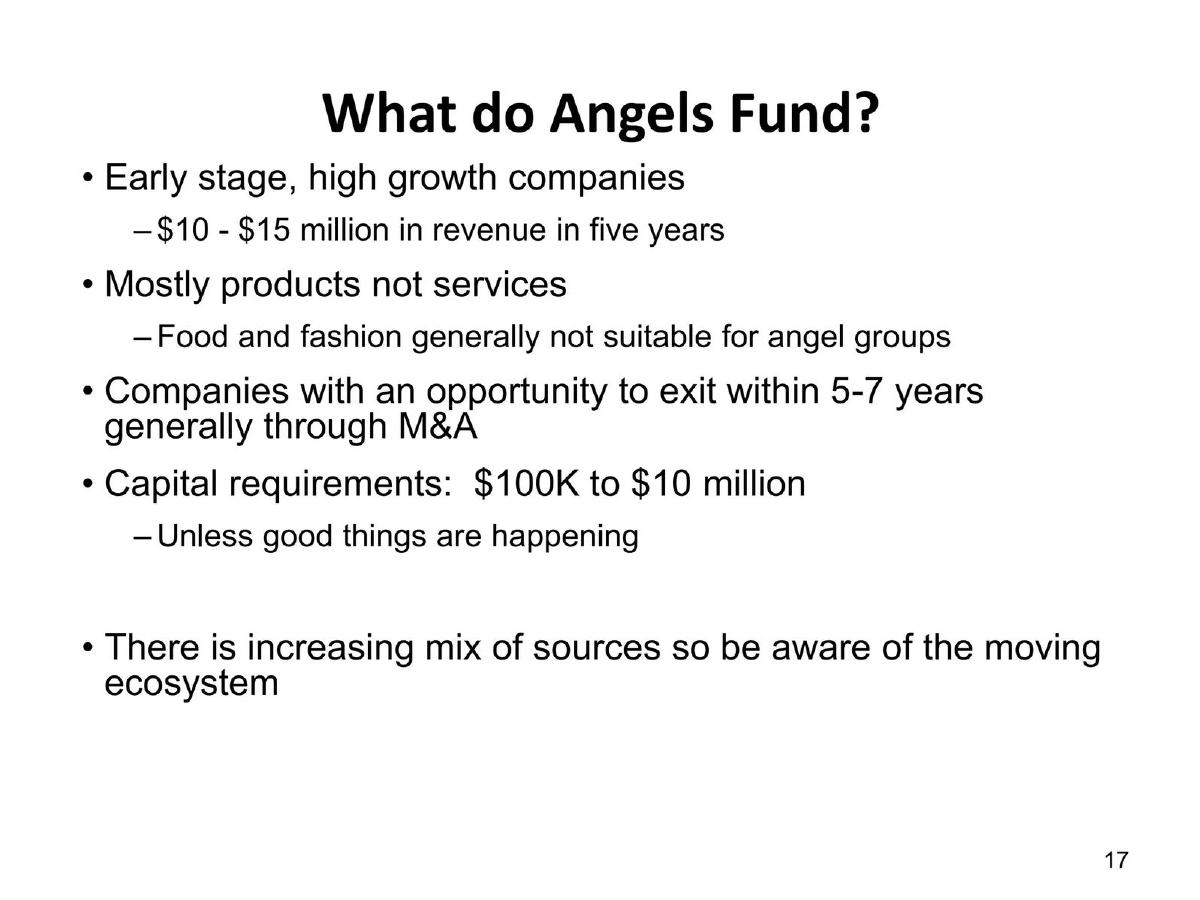
- Angel investors in this ecosystem typically look for companies capable of reaching $10M-$15M in revenue within five years (Slide 17).
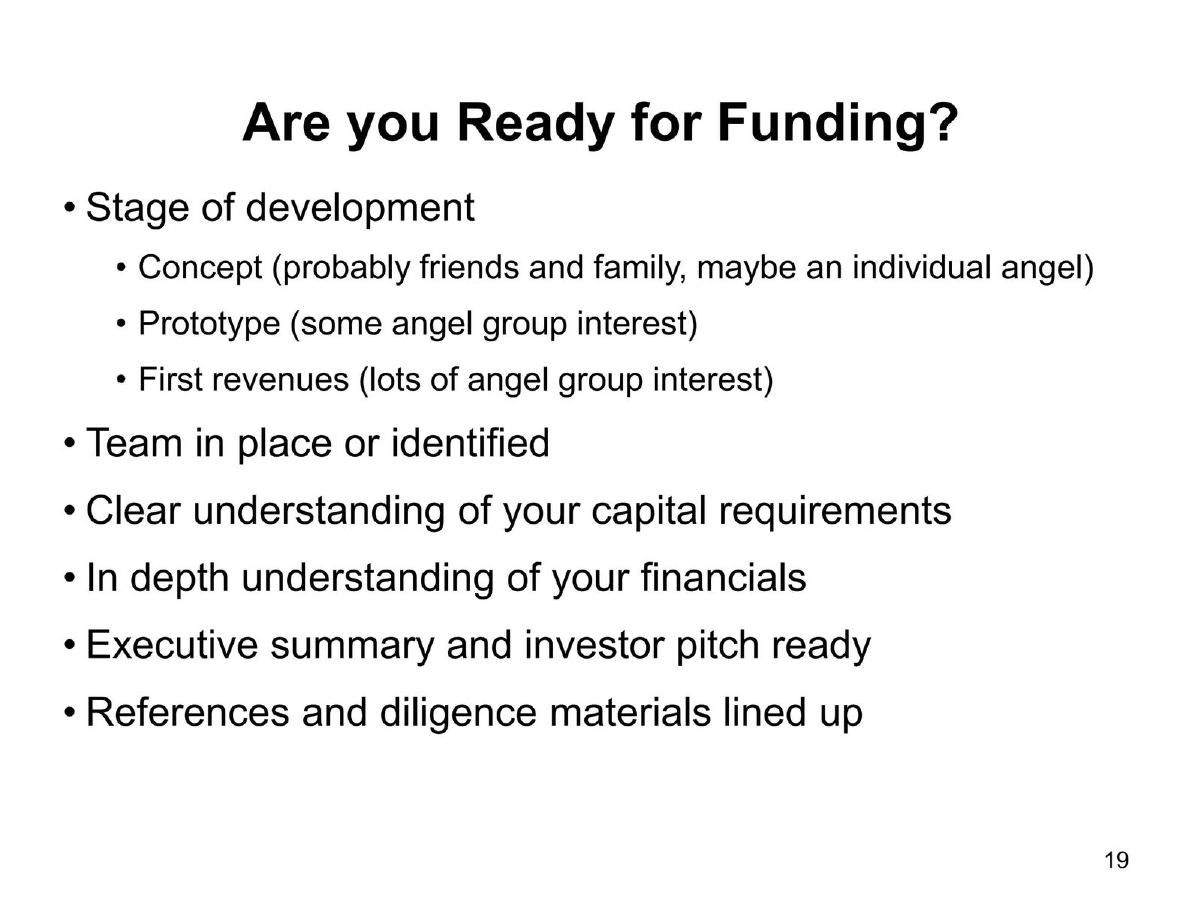
- The transition from 'Concept' to 'First Revenues' significantly increases interest from angel groups (Slide 19).
- A comparative analysis shows that 'coachable' CEOs and teams with matching skills are primary drivers for securing angel investment (Slide 23).
- The deck emphasizes that first-time entrepreneurs must move from 'negative to positive' by surrounding themselves with experts and showing milestone accomplishments (Slide 21).
Introduction: The Dual-Purpose Strategy Deck
The Venture Fast Track deck, dated March 10, 2015, is a unique artifact in the fundraising world. It is not a standard pitch deck used to solicit capital, but rather a post-mortem and educational tool presented by The Capital Network. It uses the real-world example of ListenCurrent to illustrate the friction points of early-stage fundraising. For founders, this teardown provides a look at the specific milestones required to move from an accelerator demo day to a nearly million-dollar priced round.
Slide 1: Title and Context
The cover slide establishes the presenter as The Capital Network and the topic as "Funding Options for Early Stage Companies." The date, March 10, 2015, places this in a specific era of EdTech growth. The branding is professional and minimalist, signaling an educational rather than promotional intent.
Slides 3-5: The 'Breaking Out' Phase and Initial Friction
Slide 3, titled "Breaking Out," details the raw beginnings of ListenCurrent. The founder quit their job, contributed personal funds, and secured "family funding." This is the standard 'pre-seed' narrative. Crucially, it mentions getting a "story in place" to apply for the LearnLaunch Accelerator .
Slide 5 provides a reality check for many founders. Titled "Ready for Funding...Not Really...", it notes that the founder presented at LLX Demo Day to 150+ investors , felt proud, and collected many cards. However, the sub-text of the title indicates that these meetings did not immediately translate into capital. This slide highlights the common misconception that a good presentation equals a closed round.
Slides 7-9: The Pivot to Operational Readiness
Slide 7, "REALLY Ready for Funding," is perhaps the most important slide for founders. It lists the four pillars that actually closed the round: hiring a COO (Karen Gage) , reworking financials, creating strategy documents, and—most importantly—increasing sales. This suggests that the investors were not just buying the vision, but the operational structure.
Slide 9 celebrates the "Success..." of the raise. The company secured a term sheet with Launchpad Venture Group and raised a total of $950,000 . The inclusion of NewSchools Venture Fund and Investors Circle indicates a syndicate that valued both EdTech expertise and social impact.
Slide 11: Business Nature and Scaling
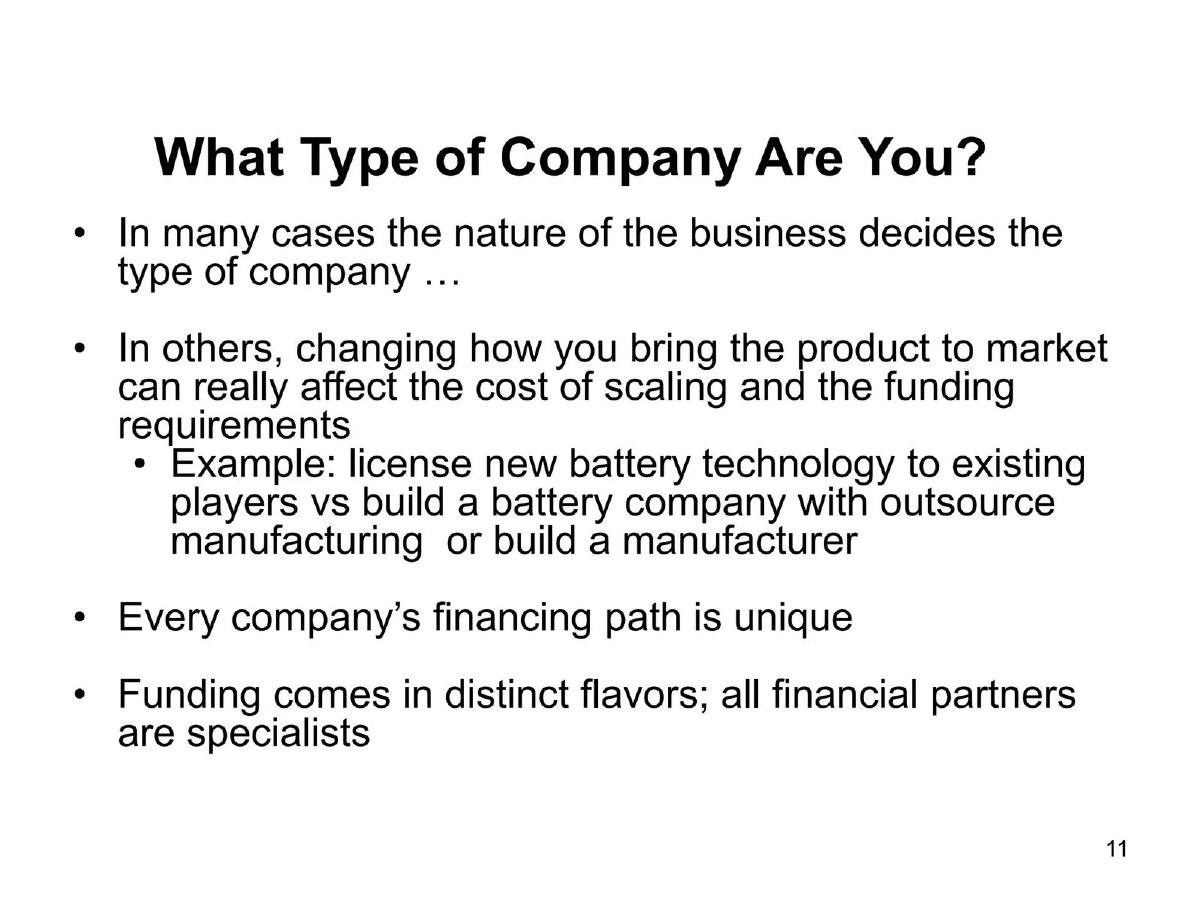
This slide asks, "What Type of Company Are You?" It argues that the nature of the business dictates the funding path. It uses a battery technology example to contrast licensing versus manufacturing. This is a prompt for founders to consider their capital intensity before choosing a funding route.
Slides 13 & 25: The Capital Matrix
These slides provide a visual mapping of capital sources based on Investment Size and Investment Cost . It is a comprehensive list including:
Low Cost/Small Size: Grants, B'Plan Competitions, Personal Loans. · Medium Cost/Medium Size: Accelerators, Crowdfunding, Angel List, Micro VC. · High Cost/Large Size: Traditional VC, Private Equity, Corporate Venture.
The repetition of this slide at the end of the deck reinforces the idea that a founder's path is "likely personal" and must be tailored to their specific needs.
Slide 15: Debt Capital Definitions
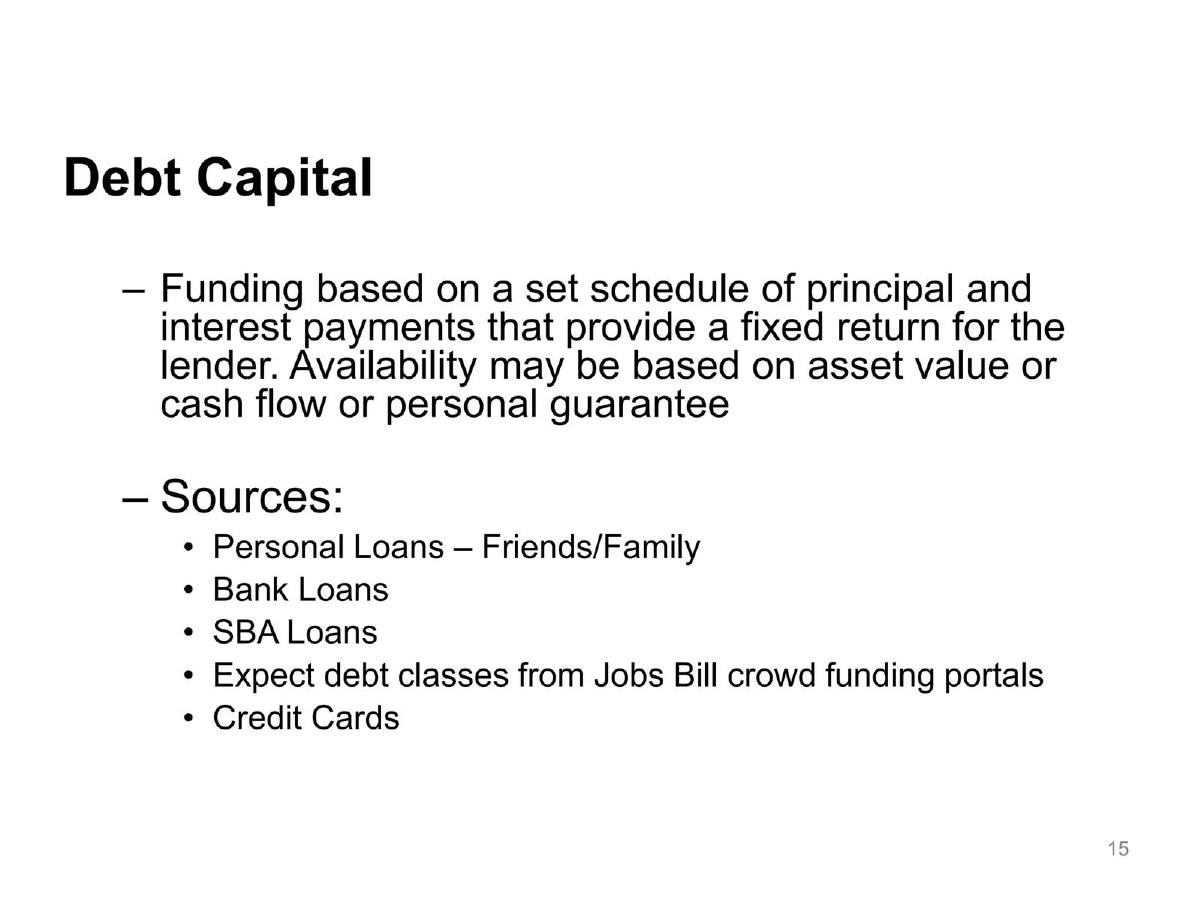
This slide defines debt as funding based on a set schedule of principal and interest. It lists sources such as SBA loans, bank loans, and credit cards. It also mentions the Jobs Bill crowdfunding portals , which was a trending topic in 2015 regarding new debt classes for startups.
Slide 17: The Angel Investor Profile
This slide provides specific benchmarks for what angels fund:
Revenue: $10 - $15 million in five years. · Sector: Mostly products, not services (noting food and fashion are often unsuitable). · Exit: 5-7 years via M&A. · Capital Requirements: $100K to $10 million.
These figures give founders concrete targets to aim for when building their financial models.
Slide 19: Readiness by Development Stage
This slide maps investor interest to the stage of development:
Concept: Friends and family, individual angels. · Prototype: Some angel group interest. · First Revenues: "Lots of angel group interest."
It also lists the necessary 'diligence materials' like executive summaries and reference lists.
Slide 21: Advice for First-Time Entrepreneurs
The deck acknowledges that funding is a challenge without a track record. It advises founders to "move from negative to positive" by surrounding themselves with experts and showing milestone accomplishments. The final bullet is a stern warning: "Don’t ask us to take a leap of faith – show us how you are going to be successful."
Slide 23: The Comparative Success Table
This slide is a rubric comparing companies that get investment versus those that don't. Key differentiators include:
CEO: Coachable vs. fixated on their own expertise. · Team: Enthusiastic/skilled vs. solo founders who won't hire without cash. · Market: Big and reachable vs. huge but fragmented. · Valuation: Willing to discuss a range vs. fixated on unrealistic high values.
What Works in This Deck
Transparency regarding failure: By admitting that the first Demo Day didn't lead to funding (Slide 5), the deck gains immense credibility. It moves away from the 'overnight success' myth and focuses on the hard work of operational improvement.
Specific Metrics: Citing the $950,000 raise (Slide 9) and the $10M-$15M revenue target (Slide 17) provides founders with a clear yardstick for success.
The Capital Matrix: Slides 13 and 25 are excellent educational tools that help founders visualize the trade-offs between different types of money.
What Is Missing
Unit Economics: While the deck mentions "reworked financials," it does not show the actual CAC (Customer Acquisition Cost) or LTV (Lifetime Value) that ListenCurrent used to convince investors.
Product Visuals: The deck is very text-heavy. There are no screenshots of the ListenCurrent platform or data visualizations of their "increased sales."
Competitive Landscape: While it mentions the "nature of the business," it doesn't show how ListenCurrent positioned itself against other EdTech players in 2015.
Founder Takeaways
Build the team before the round: The hire of a COO was a clear catalyst for ListenCurrent's success. Founders should look for 'gap-fill' hires that increase investor confidence in execution.
Focus on 'First Revenues': The jump in angel interest from the prototype stage to the revenue stage (Slide 19) is significant. Bootstrapping to the first dollar of revenue is often more effective than pitching a perfect prototype.
Be 'Coachable': The rubric on Slide 23 highlights that investor perception of the CEO's personality and willingness to listen is a primary factor in the 'Yes/No' decision.
Frequently asked questions
- How much did ListenCurrent raise and from whom?
- According to slide 9, ListenCurrent raised $950,000 in a priced round. The investors included Launchpad Venture Group, NewSchools Venture Fund, and Investors Circle. This round followed a period of self-funding and participation in the LearnLaunch Accelerator.
- What changed between the failed initial funding attempt and the successful raise?
- Slide 7 outlines the specific actions taken: the company hired Karen Gage as COO, reworked their financial models, created formal strategy documents, and demonstrated increased sales. This suggests that the initial 'pitch' was ready, but the 'business' required more operational maturity to close professional investors.
- What are the revenue expectations for companies seeking angel funding according to this deck?
- Slide 17 states that angels typically fund early-stage, high-growth companies aiming for $10 million to $15 million in revenue within five years. They also look for an opportunity to exit via M&A within a 5-7 year timeframe.
- How does the deck categorize different types of startup capital?
- Slides 13 and 25 use a matrix comparing 'Investment Cost' against 'Investment Size.' Low-cost, small-size options include grants and business plan competitions. High-cost, large-size options include Traditional VC and Private Equity. Mid-tier options include Angel List, Micro VC, and Corporate Venture.
- What advice does the deck give to first-time entrepreneurs?
- Slide 21 advises first-time founders to mitigate their lack of a track record by hiring a compelling management team, surrounding themselves with experts, and focusing on milestone accomplishments. It explicitly warns against asking investors to take a 'leap of faith' without evidence of potential success.