BIEX is a health-tech startup developing a wearable patch for immediate sweat analysis, targeting athletes and fitness professionals. The deck is notably brief at just eight slides, focusing on a staged market entry that moves from high-margin professional use (€15-25 per unit) to mass-market health applications at a lower price point (<€10 per unit). Led by CEO Christof Neuman, a certified personal trainer, the company relies heavily on a six-person advisory board featuring multiple PhDs to provide scientific credibility. While the deck outlines a clear €60,000 ask to reach an MVP, it lacks…
Key takeaways
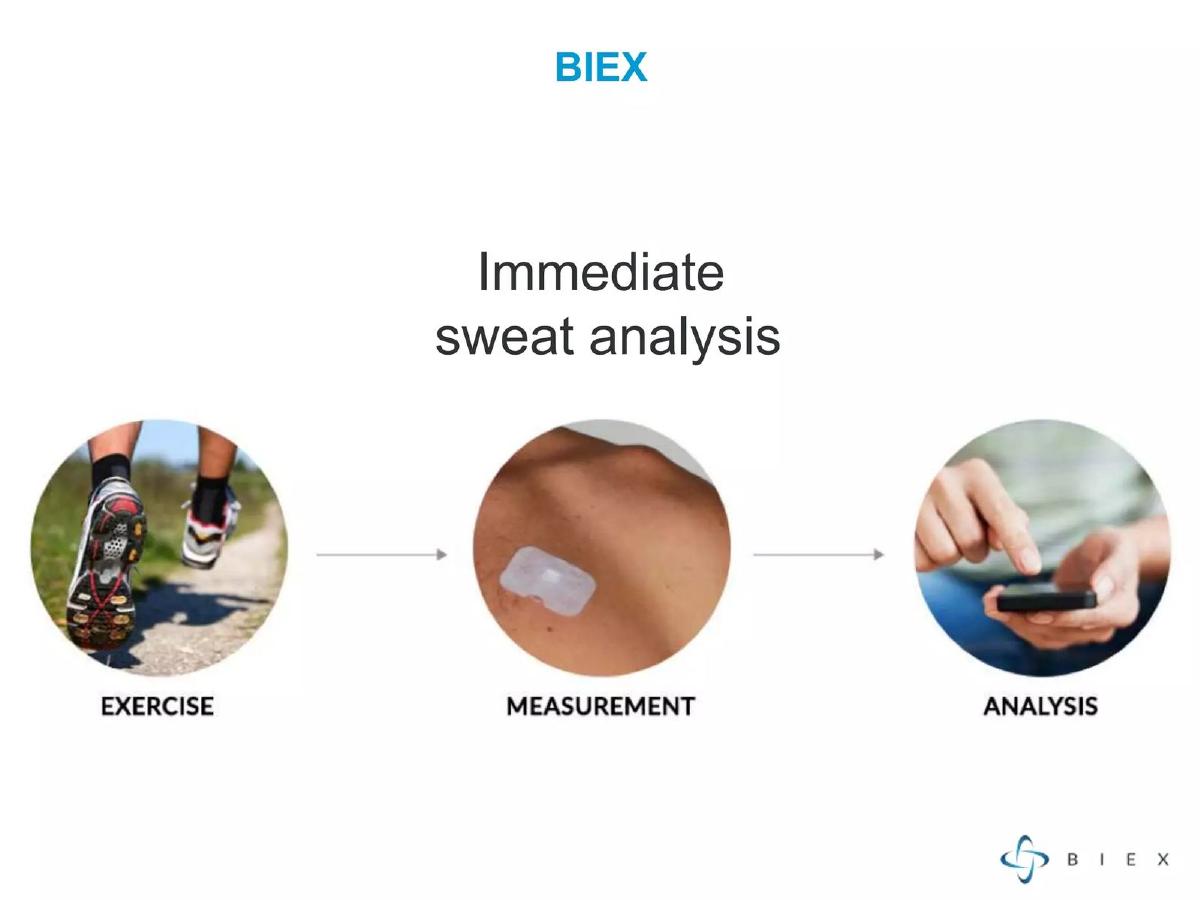
- The product workflow involves three steps: exercise, measurement via a skin patch, and analysis on a mobile device (Slide 2).
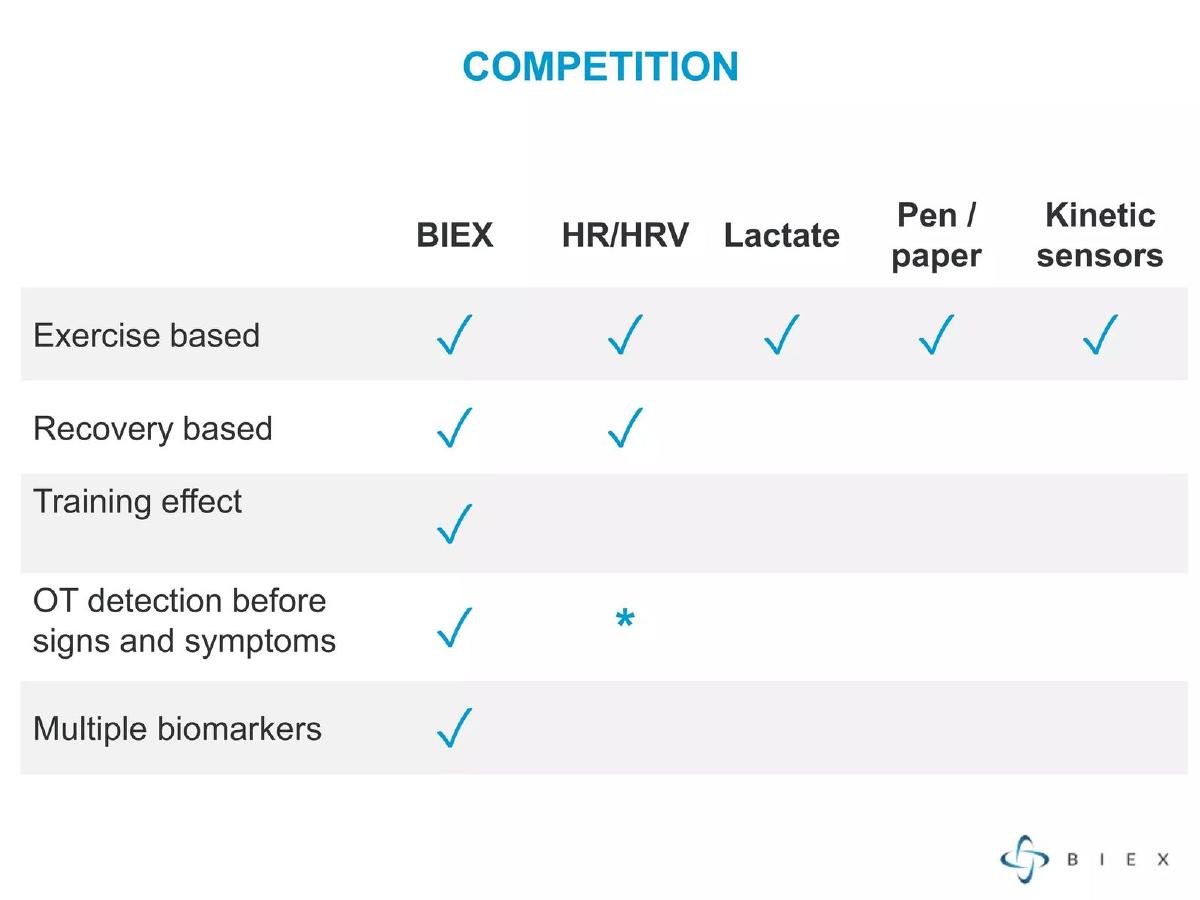
- BIEX differentiates itself from heart rate monitors and lactate tests by claiming to detect overtraining (OT) before symptoms appear (Slide 3).
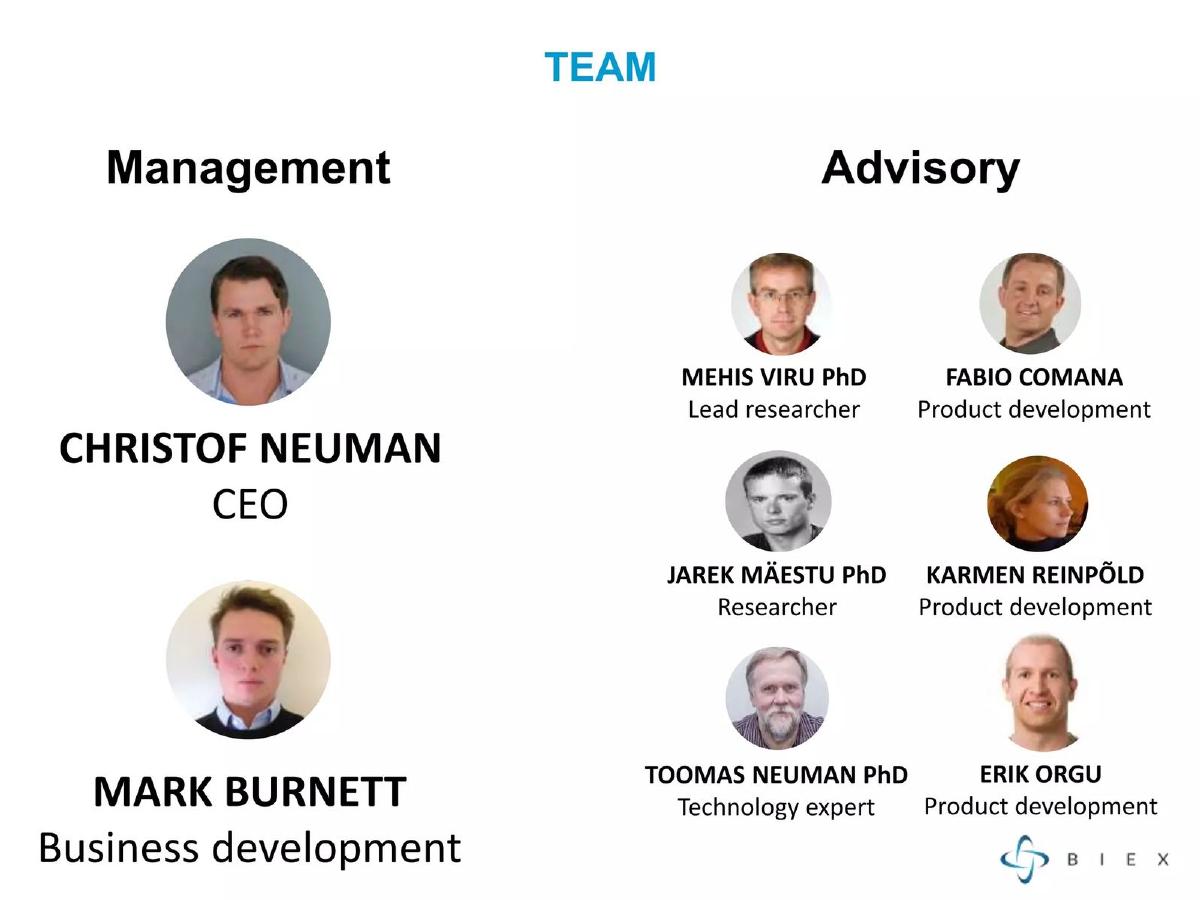
- The management team is lean, consisting of a CEO and a Business Development lead, supported by six advisors including three PhDs (Slide 4).
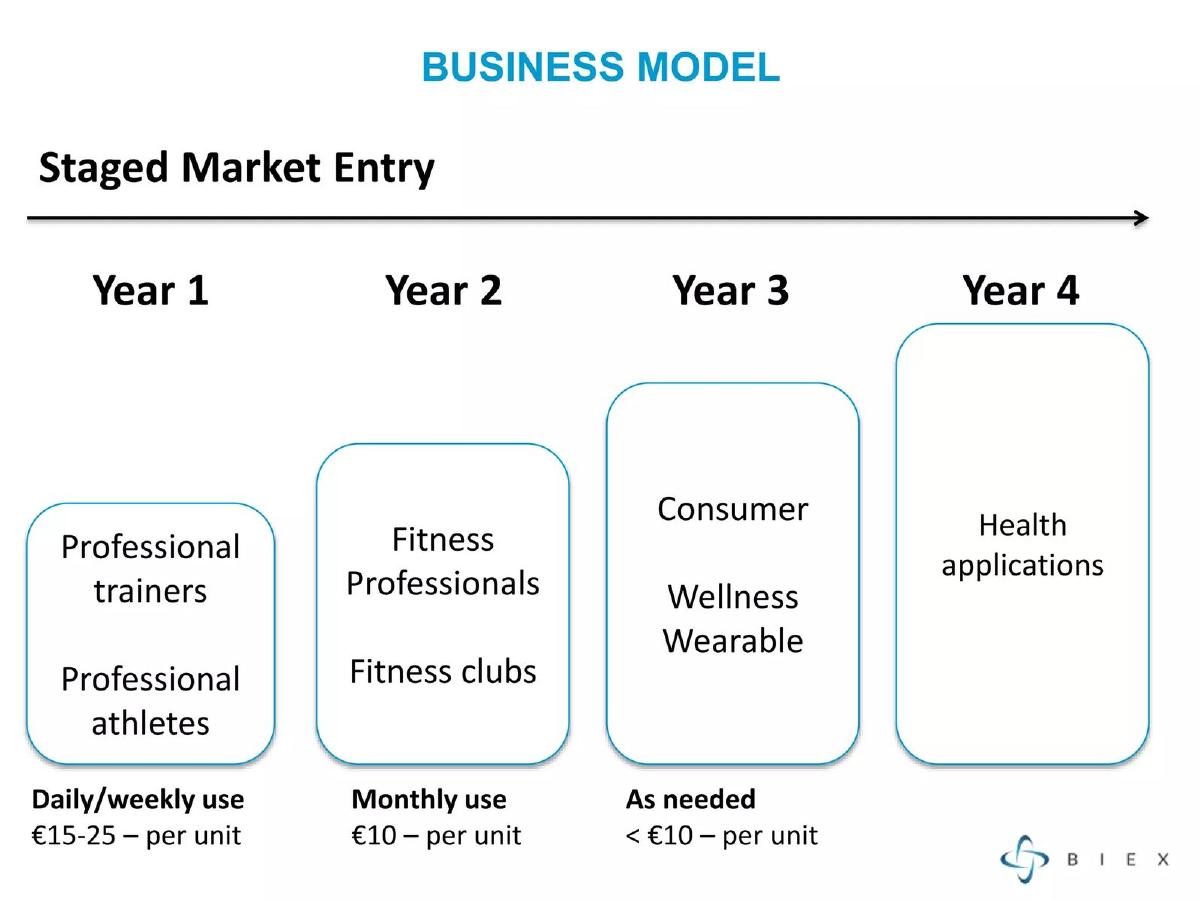
- A staged market entry strategy plans to drop unit prices from €25 in Year 1 to under €10 by Year 3 as they move to consumer wellness (Slide 5).
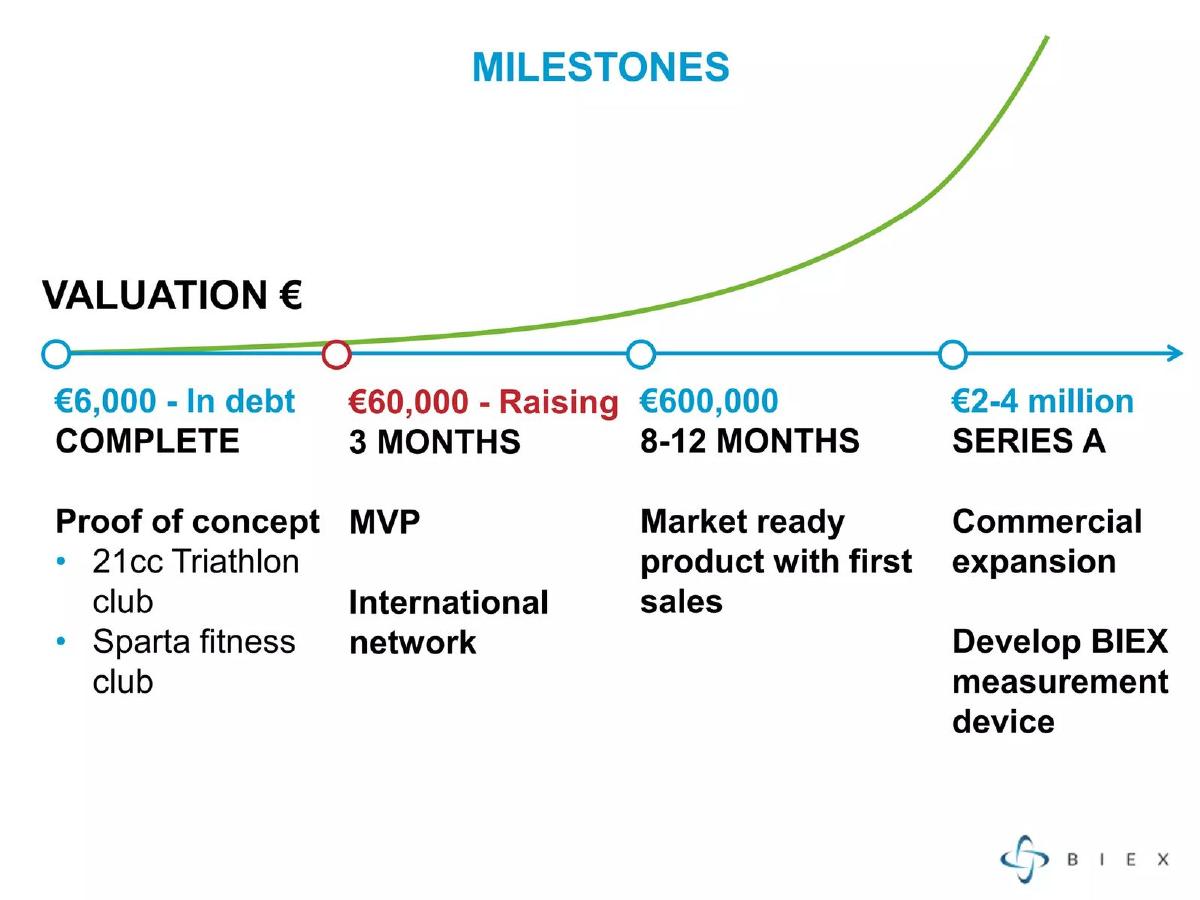
- The company has completed proof-of-concept trials with the 21cc Triathlon club and Sparta fitness club (Slide 6).
- The financial roadmap targets a Series A valuation of €2-4 million within approximately two years (Slide 6).
- The Go-To-Market strategy relies on free trials with elite sports clubs and market influencers to drive initial adoption (Slide 7).
- The current funding ask is €60,000, specifically earmarked for MVP development and international expansion (Slide 8).
Executive Summary: The 8-Slide Micro-Seed Deck
The BIEX pitch deck is a minimalist presentation for a health-technology startup focused on sweat analysis. With only eight slides, the deck attempts to bridge the gap between a certified personal trainer's vision and a PhD-backed research project. The company is seeking a modest €60,000 to move from a validated proof-of-concept to a functional MVP. The core value proposition is the ability to detect overtraining and recovery needs through non-invasive sweat monitoring, a niche that sits between traditional heart rate monitors and invasive blood lactate testing.
Slide 1: Title and Branding
The cover slide introduces the BIEX logo—a blue, stylized cross-link—and the tagline "Harness the power of sweat." It identifies Christof Neuman as the presenter, highlighting his credentials as a NASM and ACSM Certified Personal Trainer. The inclusion of the URL (WWW.BIEX.EU) suggests a European base of operations, though no specific headquarters location is listed on the slide.
Slide 2: The Product Workflow
Slide 2, titled "Immediate sweat analysis," uses a simple three-step visual to explain the user experience. The steps are: Exercise (represented by a runner), Measurement (showing a small white patch applied to the skin), and Analysis (showing a user interacting with a smartphone). This slide establishes that the product is a wearable-app ecosystem, though it does not explain how the data is transmitted from the patch to the phone (e.g., NFC, Bluetooth, or optical scanning).
Slide 3: Competitive Landscape
The "Competition" slide uses a standard checkmark grid to compare BIEX against Heart Rate/HRV, Lactate testing, Pen/Paper, and Kinetic sensors. BIEX claims to be the only solution that covers all five categories: Exercise based, Recovery based, Training effect, OT (overtraining) detection before signs and symptoms, and Multiple biomarkers. Notably, it marks HR/HRV with an asterisk for OT detection, implying it is less effective than their proposed sweat analysis. This slide is the only place where the product's functional output—biomarkers—is mentioned, though the specific biomarkers remain unnamed.
Slide 4: The Team and Advisors
The team is split into "Management" and "Advisory." The management consists of Christof Neuman (CEO) and Mark Burnett (Business Development) . The advisory board is significantly larger, featuring six individuals. Key technical roles include Mehis Viru PhD as Lead Researcher and Toomas Neuman PhD as Technology Expert. The presence of three PhDs and three product development specialists (Fabio Comana, Karmen Reinpõld, and Erik Orgu) suggests the company is currently more of a research collective than a fully staffed commercial entity.
Slide 5: Business Model and Pricing Evolution
The business model slide outlines a "Staged Market Entry" over four years. It is a classic price-skimming strategy:
Year 1: Professional trainers and athletes at €15-25 per unit (Daily/weekly use). · Year 2: Fitness professionals and clubs at €10 per unit (Monthly use). · Year 3: Consumer wellness wearables at <€10 per unit (As needed). · Year 4: Expansion into general health applications.
This slide provides a clear roadmap for how the company intends to scale from a high-touch professional tool to a mass-market commodity.
Slide 6: Milestones and Valuation Roadmap
This slide provides a timeline for funding and valuation. It notes that the Proof of Concept is "COMPLETE," citing trials with the 21cc Triathlon club and Sparta fitness club. The current phase is listed as "€60,000 - Raising" for the next 3 months to develop the MVP. Future milestones include a €600,000 raise in 8-12 months for a market-ready product and a Series A of €2-4 million for commercial expansion and the development of a proprietary BIEX measurement device. This implies the current patch might rely on third-party hardware or a simpler chemical reaction.
Slide 7: Go To Market Strategy
The GTM strategy is a linear progression: Product Development (partnering with Universities and Athletic centers) leads to Free Trials (targeting Elite sport clubs and Market Influencers), which eventually leads to Sales (targeting Midlevel trainers and Amateur sports). The bottom of the slide lists target demographics: Triathletes, Runners, Cyclists, Rowers, and Footballers. This is a standard "bottom-up" approach common in sports tech.
Slide 8: The Ask
The final slide, "Call to Action," specifies the ask: €60,000 . The funds are allocated to three goals: Develop MVP, Expand internationally, and Gain early customers. This is an exceptionally low ask for a hardware startup, which may raise questions about the actual complexity of the device or the founders' manufacturing assumptions.
What BIEX Does Well
The deck is highly focused. It does not waste time on fluff or generic market trends. The Staged Market Entry (Slide 5) is a logical way to handle the high cost of new technology by starting with the most price-insensitive users (pros) and scaling down. The Advisory Board (Slide 4) is also a strong point; for a seed-stage company, having three PhDs involved in research and technology provides necessary scientific weight to the claim that sweat can predict overtraining better than heart rate variability.
What is Missing from the BIEX Deck
The most glaring omission is the Problem Slide . While the competitive grid hints at the limitations of current methods, there is no explicit statement of the pain point athletes face. Furthermore, the Technical Specifications are absent. An investor in health-tech needs to know if this is a colorimetric patch (changes color), an electrochemical sensor, or something else. There is also no mention of Intellectual Property ; in the wearable space, patents are the primary defense against larger incumbents like Garmin or Apple. Finally, the Market Size (TAM) is missing, making it difficult to judge if the €2-4 million Series A valuation is realistic.
Founder's Guide: What to Copy and What to Avoid
Copy the Milestone Clarity: Slide 6 is an excellent example of how to map out the relationship between funding rounds, time, and specific business achievements. It tells the investor exactly where their money goes and what the next valuation inflection point looks like.
Avoid the "Vague Biomarker" Trap: If your product is based on science, name the science. Claiming to measure "Multiple biomarkers" without naming them (e.g., Cortisol, Glucose, Sodium) makes the pitch feel like a black box. Founders should always be specific about their core technology to build trust with technical due diligence teams.
Avoid the Micro-Ask: Asking for €60,000 to "develop an MVP, expand internationally, and gain customers" is unrealistic for a hardware product. International expansion alone can cost more than that. Founders should ensure their ask is commensurate with the complexity of their industry; otherwise, they risk looking under-capitalized or naive about operational costs.
Frequently asked questions
- What exactly does the BIEX wearable measure?
- The deck is vague on technical specifics. Slide 3 mentions 'Multiple biomarkers' and the ability to detect 'OT' (overtraining) before signs and symptoms appear. However, it does not list specific chemicals or electrolytes (like sodium, chloride, or potassium) that the patch identifies in the sweat. This lack of technical detail is a significant omission for a hardware-based health-tech pitch.
- How does the pricing model change over time?
- BIEX proposes a price skimming strategy. According to Slide 5, Year 1 targets professional athletes at €15-25 per unit for daily/weekly use. By Year 2, they target fitness clubs at €10 per unit. By Year 3, they aim for the mass consumer market at a price point of less than €10 per unit, shifting the product into the 'Wellness Wearable' category.
- Who is the primary driver behind the technology?
- While Christof Neuman is the CEO, the technical weight appears to reside in the Advisory section of Slide 4. This includes Mehis Viru PhD (Lead Researcher), Jarek Mäestu PhD (Researcher), and Toomas Neuman PhD (Technology Expert). The deck suggests a heavy reliance on external academic or research expertise rather than in-house engineering leads.
- What is the current stage of the company?
- BIEX is at the pre-MVP stage. Slide 6 indicates they have 'Complete' proof-of-concept testing with two fitness/triathlon clubs. The current €60,000 raise is specifically intended to build the Minimum Viable Product (MVP) over the next three months, as stated on Slide 6 and Slide 8.
- What are the biggest risks identified in this deck?
- The primary risks are the low funding ask and the lack of intellectual property (IP) mention. A €60,000 raise is extremely low for a hardware/biotech play, suggesting either a very limited scope or a lack of understanding of manufacturing costs. Additionally, without a slide detailing patents or proprietary sensor technology, the 'Multiple biomarkers' claim (Slide 3) is difficult to verify against competitors.