Bmark’s pitch deck is a product-centric presentation that attempts to address the noise of the modern internet through crowdsourced content curation. The deck uses a narrative persona, 'Mike,' to illustrate the pain point of fragmented content across platforms like Facebook, Twitter, and YouTube. By positioning itself against algorithmic aggregators like Flipboard and StumbleUpon, Bmark argues that human-curated 'Smart Bookmarking' is a superior discovery method. However, the deck is significantly weakened by a lack of hard data. There are no slides covering market size, financial projections…
Key takeaways
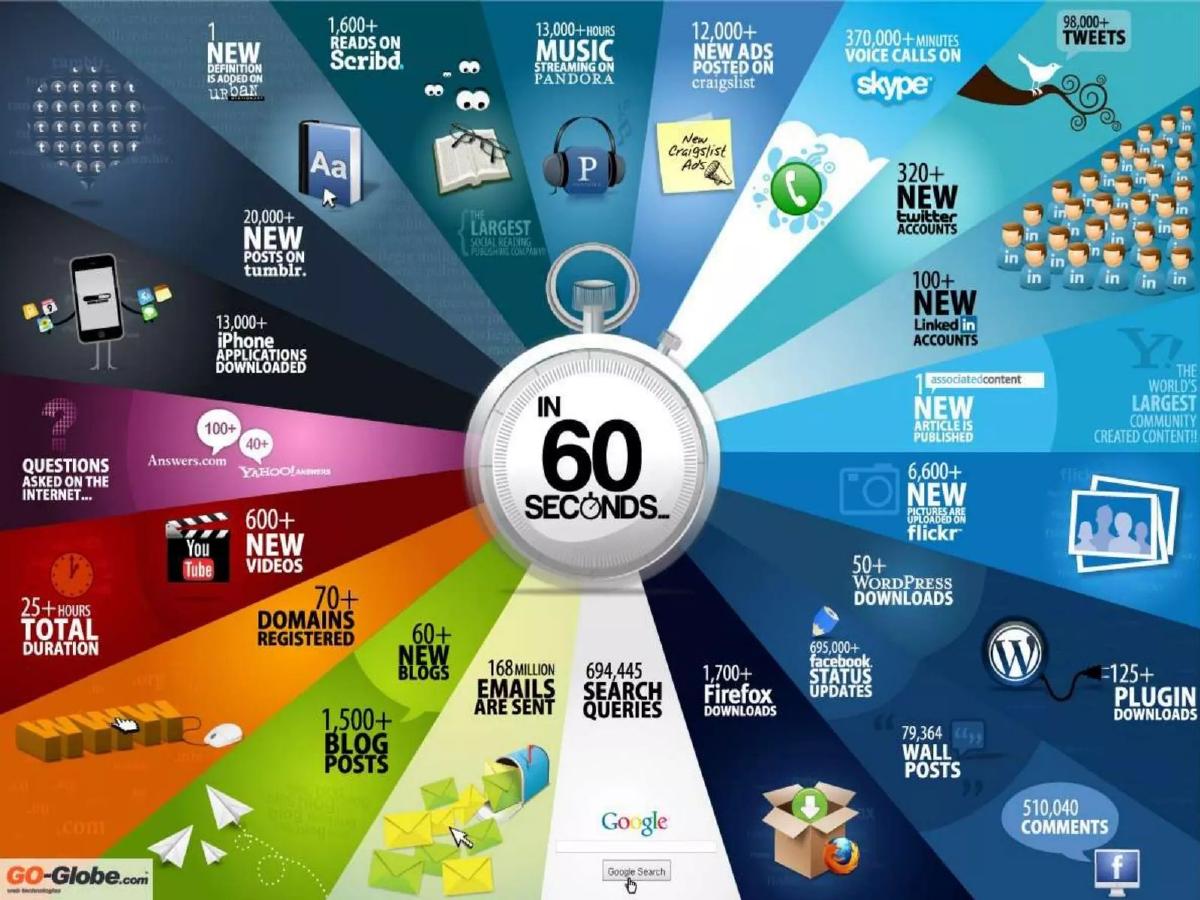
- The deck uses a 60-second internet activity infographic on slide 2 to establish the scale of global content production.
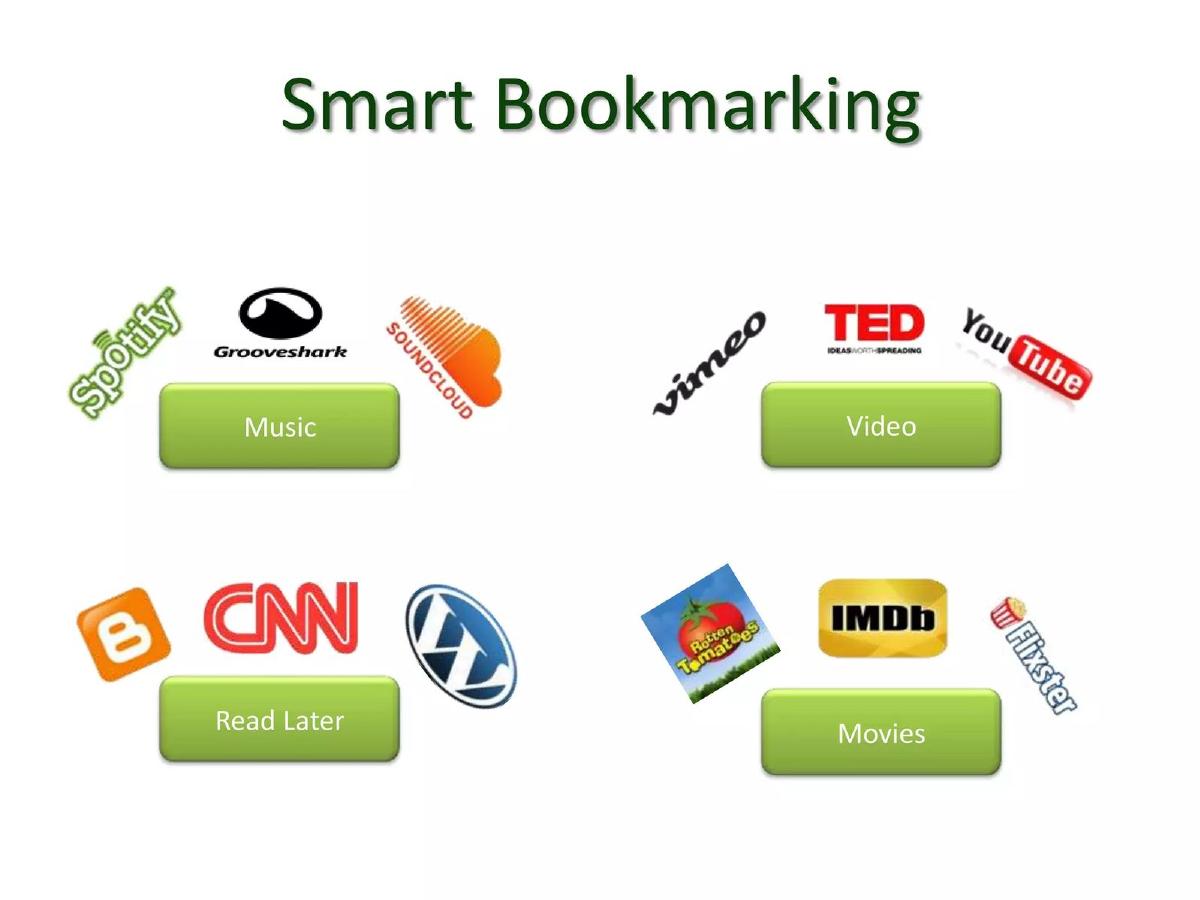
- Bmark identifies its core value proposition as 'Smart Bookmarking' for music, video, reading, and movies on slide 6.
- The product architecture aims to aggregate content from mobile, laptop, and tablet devices into a single hub (slide 7).
- Bmark differentiates itself from competitors like Flipboard and Zite by focusing on 'Crowd Sourcing Bookmarks' rather than 'Analyzing Browsing Behavior' (slide 9).
- The business model slide (slide 10) suggests a B2B2C approach involving major sports and media brands like ESPN and Sky Sports.
- The team consists of two members, Justin Butlion (CEO) and Gil Tankus (CTO), with backgrounds at LivePerson and Modelity Technologies (slide 12).
- The deck completely omits financial data, market sizing (TAM/SAM/SOM), and a specific funding request.
Slide-by-Slide Analysis
Slide 1: Title Slide
The deck opens with the Bmark logo, featuring a green box with a white asterisk and the word 'mark.' The tagline is 'Discover the best of your web.' It also includes a 'BETA' tag on the logo, indicating the product is in an early stage of development.
Slide 2: The 60-Second Internet
This slide uses a well-known infographic from GO-Globe.com to illustrate the volume of data generated online every minute. It cites figures such as 168 million emails sent, 694,445 Google search queries, and 98,000+ tweets. This slide serves to establish the 'noise' and scale of the internet, setting the stage for a curation solution.
Slide 3: The User Pain Point
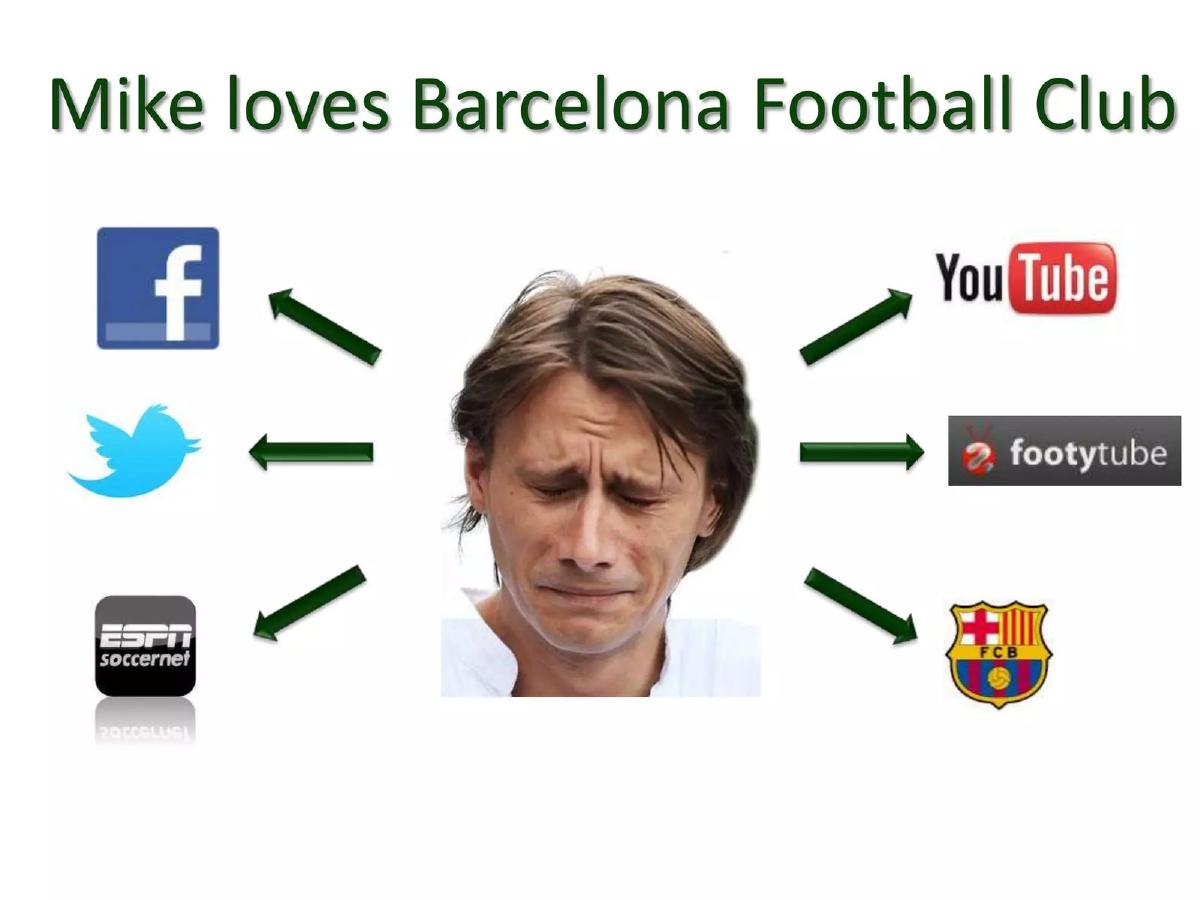
The deck introduces a persona, 'Mike,' who 'loves Barcelona Football Club.' The slide shows Mike looking distressed, surrounded by logos for Facebook, Twitter, ESPN Soccernet, YouTube, and Footytube. The visual message is that Mike's interest is fragmented across too many platforms, making it difficult to consume content efficiently.
Slide 4: Content Overload
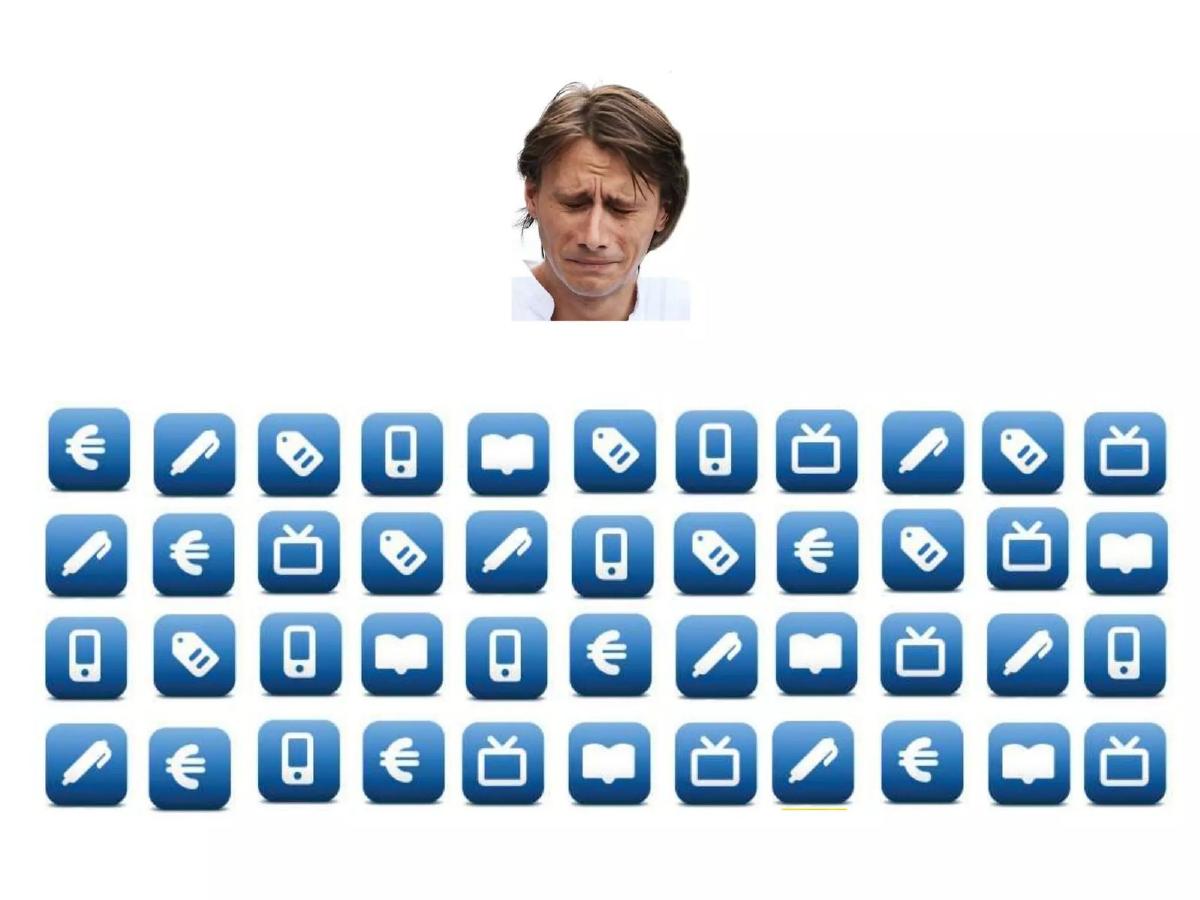
This slide continues the visual narrative of Mike's distress. Below him is a grid of 40 generic icons representing different media types (video, text, tags, currency). It reinforces the idea that the sheer volume of available content is overwhelming for the individual user.
Slide 5: The Curation Gap
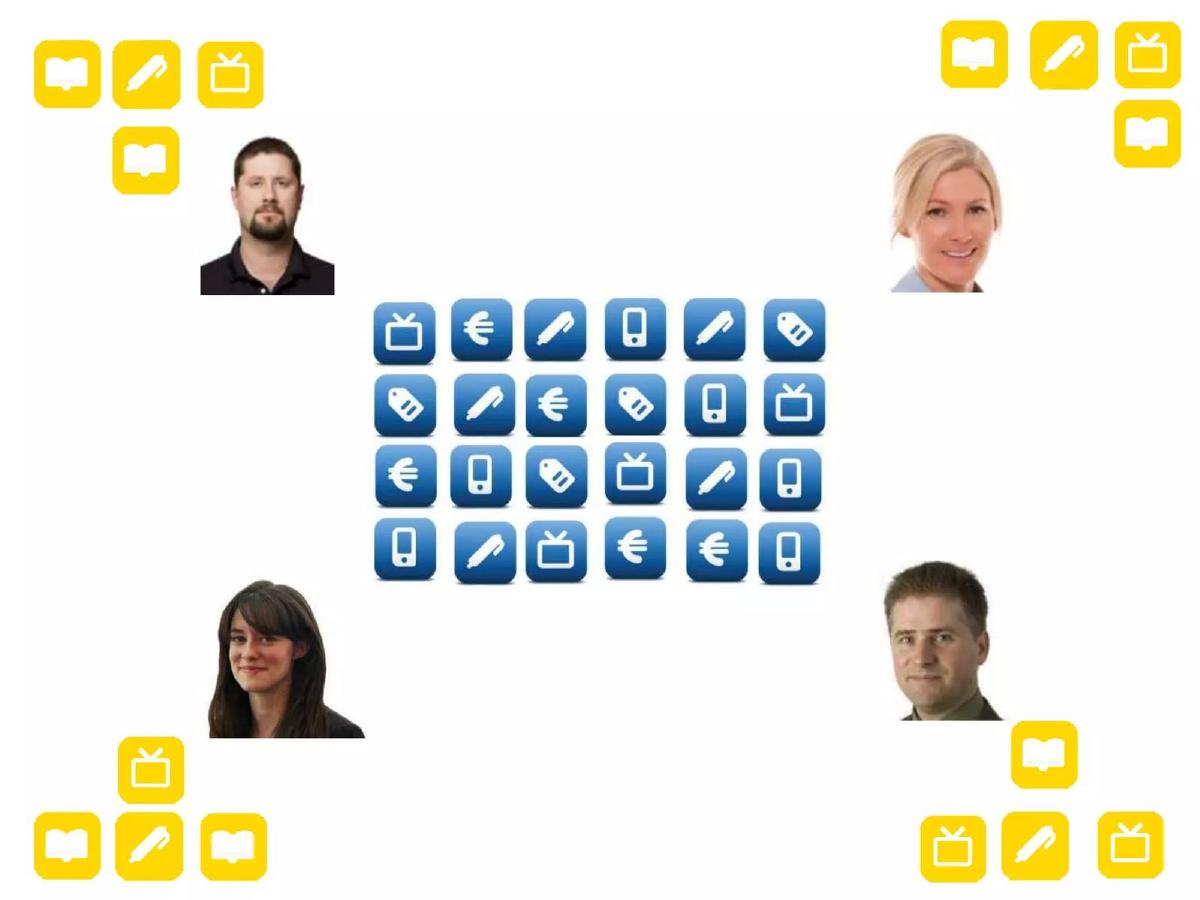
This slide shows four different individuals, each surrounded by a small cluster of content icons, with a large, disorganized grid of icons in the center. It visually represents the current state of the web: vast amounts of content with only small pockets of individual curation that are not being shared or aggregated effectively.
Slide 6: Smart Bookmarking
Bmark introduces its solution: 'Smart Bookmarking.' The slide categorizes content into four buckets: Music (Spotify, Grooveshark, Soundcloud), Video (Vimeo, TED, YouTube), Read Later (Blogger, CNN, WordPress), and Movies (Rotten Tomatoes, IMDb, Flixster). This defines the scope of the Bmark platform as a cross-media aggregator.
Slide 7: Cross-Device Integration
This slide shows the Bmark logo at the bottom of a funnel, receiving content icons from a smartphone, a laptop, and a tablet. It communicates that Bmark is a cross-platform service that syncs a user's bookmarks and discoveries across all their devices.
Slide 8: Demo Placeholder
A simple white slide with the word 'Demo' in the center. In a live presentation, this is where the founders would transition to a functional version of the app or a recorded walkthrough.
Slide 9: Competitive Differentiation
Bmark compares itself to StumbleUpon, Flipboard, Zite, and a fourth logo (likely Prismatic). It categorizes these competitors as 'Analyzing Browsing Behavior' (algorithmic). Bmark positions itself on the right side of the slide under 'Crowd Sourcing Bookmarks,' emphasizing human curation as its unique selling point.
Slide 10: The Business Model
This slide is purely conceptual. It shows logos for ESPN, Sky Sports, and FCB pointing toward a user. There is no text explaining the revenue streams (e.g., SaaS, advertising, affiliate, or data licensing). It implies that Bmark facilitates a connection between major content brands and the end consumer.
Slide 11: Social Discovery Loop
The slide shows a user receiving recommendations (e.g., 'All of Messi's goals 2012') and then sharing those interests with other users. This illustrates the 'crowdsourced' aspect of the platform, where one user's bookmarks become another user's discovery feed.
Slide 12: The Team
The team consists of two people. Justin Butlion is listed as CEO, with a logo for LivePerson. Gil Tankus is listed as CTO, with logos for MSP (My Single Point) and Modelity Technologies. No specific titles or years of experience are provided for their previous roles.
Slide 13: Contact Information
The slide displays the URL 'bmarkcentral.com' below the company logo. This is the primary call to action for the deck.
Slide 14: Conclusion
A final slide with the text 'Thank You' in green. There is no summary of the investment opportunity or final value proposition here.
What Bmark Does Well
Visual Storytelling: The deck avoids 'death by bullet point.' By using the persona of 'Mike,' the founders create a relatable narrative about content fragmentation that most internet users can understand. The use of recognizable logos (Spotify, TED, ESPN) helps ground the abstract concept of 'bookmarking' in real-world utility.
Clear Positioning: Slide 9 does a good job of defining the company's place in the market. By splitting the discovery market into 'algorithmic' vs. 'crowdsourced,' Bmark gives investors a simple hook to remember their specific approach to the problem.
What Is Missing from the Bmark Deck
Market Validation and Traction: The most glaring omission is the lack of data. There is no mention of how many users are currently in the beta, what the engagement rates are, or how many 'bookmarks' have been created. Without traction metrics, the deck remains a theoretical exercise.
Market Size (TAM): The deck fails to quantify the opportunity. Investors need to know the size of the content discovery or digital advertising market to understand if Bmark can become a venture-scale business.
The Ask: There is no slide detailing how much capital the company is seeking, what the valuation expectations are, or how the funds will be allocated (e.g., hiring, marketing, R&D). An investment deck without an 'Ask' is essentially just a product pitch.
Financials: There are no projections or even a basic explanation of how the company intends to make money. Slide 10 shows logos but does not explain the transaction flow or unit economics.
Founder Takeaways
Show, Don't Just Tell: Bmark's use of a persona (Mike) is a great way to illustrate a problem. Founders should consider using a similar narrative device to make their problem slide more impactful. · Don't Forget the 'Business' in Business Plan: While product-focused slides are important, a pitch deck must prove that a viable business exists. Always include market sizing, revenue models, and a clear funding request. · Define Your Team's Role: Simply putting a logo of a former employer (like LivePerson) isn't enough. Founders should briefly state their specific achievements—for example, 'Led a team of 20 engineers' or 'Grew revenue by 40%.' · Address the 'Why Now?': The deck uses a 2012-era infographic. In a modern context, founders must explain why their solution is necessary today, especially given the rise of AI-driven curation which competes directly with 'crowdsourced' models.
Frequently asked questions
- What problem is Bmark trying to solve?
- Bmark addresses content fragmentation. As shown on slide 3, users who follow specific interests (like Barcelona Football Club) must navigate multiple disconnected platforms—Facebook, Twitter, YouTube, and niche sites—to stay updated. Bmark aims to centralize these disparate content streams into a single, curated discovery engine.
- How does Bmark differ from Flipboard or StumbleUpon?
- According to slide 9, Bmark differentiates itself through its methodology. While competitors like Flipboard, Zite, and StumbleUpon rely on 'Analyzing Browsing Behavior' (algorithmic curation), Bmark utilizes 'Crowd Sourcing Bookmarks.' This implies a human-centric curation model where user-saved content drives the discovery engine for others.
- What is Bmark's revenue strategy?
- The deck is vague on monetization but hints at a partnership-driven model on slide 10. It shows logos for ESPN, Sky Sports, and FCB (Barcelona) pointing toward a user, suggesting that Bmark may act as a distribution or affiliate layer for major content owners to reach targeted enthusiasts.
- Who are the founders of Bmark?
- The company is led by Justin Butlion (CEO) and Gil Tankus (CTO). Slide 12 indicates that Butlion has experience with LivePerson, while Tankus has a background with MSP (My Single Point) and Modelity Technologies. The deck does not specify their specific roles or achievements at these previous companies.
- Is this a complete investment deck?
- No. This deck lacks several critical components required for a professional fundraise. It omits a 'The Ask' slide (how much money is being raised), a 'Market Size' slide, 'Traction' metrics (current users or growth), and any 'Financial Projections.' It serves better as a high-level product vision deck.