Ecomiles is a sustainability-focused startup that gamifies eco-friendly transportation by allowing users to earn 'ecomiles' for their routes, which are then redeemable in a dedicated marketplace. The deck positions the company as a data-driven solution to the volatility seen in the micro-mobility sector, citing the failures and pivots of major players like Lime and Ofo on slide 2. By targeting students, bike delivery personnel, and local businesses (slide 4), Ecomiles aims to build a multi-stakeholder ecosystem. The startup reports early traction with over 1,000 active users and five partners…
Key takeaways
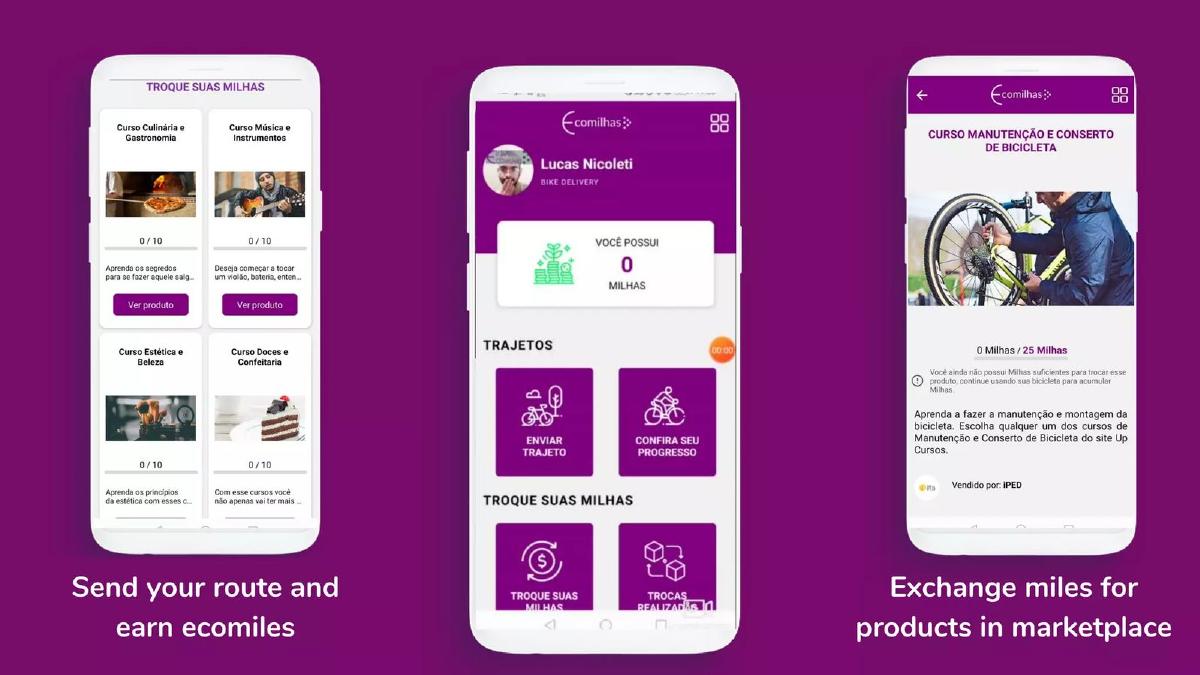
- The platform allows users to send their routes and earn rewards, which are redeemable for educational courses and products (slide 3).
- Ecomiles identifies four primary target segments: Students, E-commerces/Local Business, Bike Deliveries, and Mobility users (slide 4).
- The startup differentiates itself from competitors like SmashPoints and Ecobonuz by claiming to offer a unique combination of Big Data and Gamification (slide 5).
- The business model aligns with four specific UN Sustainable Development Goals, including Sustainable Cities and Communities (slide 6).
- The founding team is composed of six members with backgrounds in sustainability, cloud computing, and compliance (slide 7).
- Traction is evidenced by 1,000+ active users and five partnerships established within a 12-month period (slide 8).
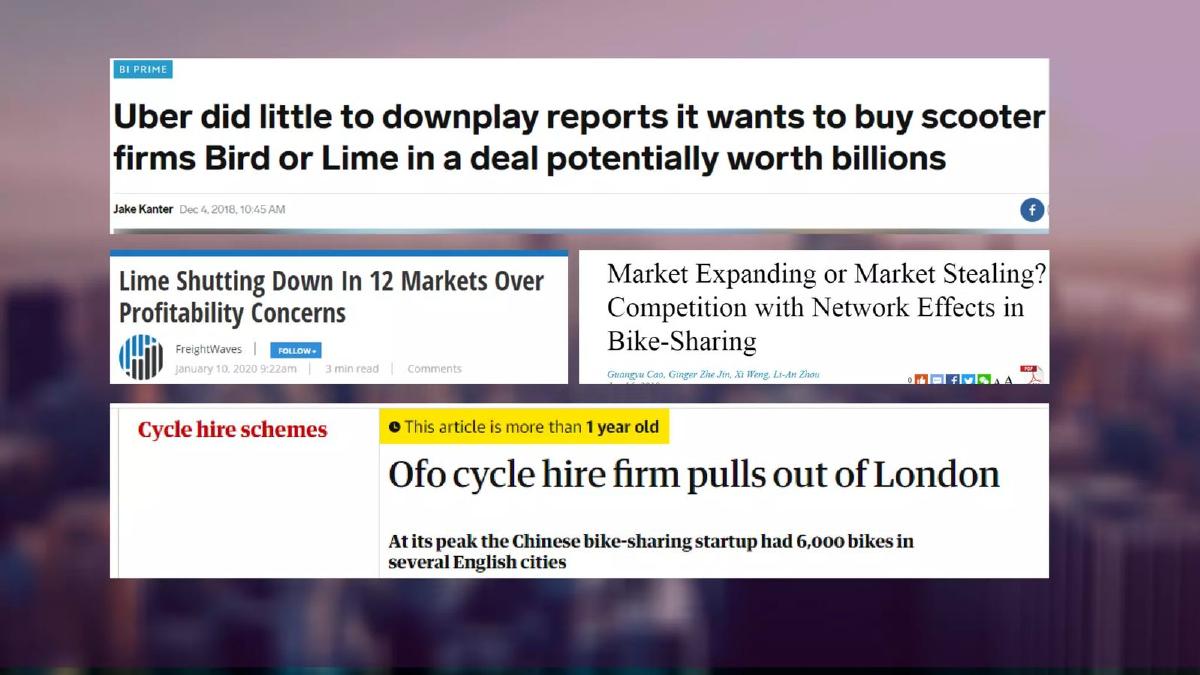
- The deck highlights the instability of the bike-sharing market, referencing Lime's profitability concerns and Ofo's exit from London as a market gap (slide 2).
- The product is currently available on the Google Play store, as indicated by the app badge and QR code (slide 8).
Ecomiles Pitch Deck Analysis
Ecomiles presents a vision for a gamified sustainability ecosystem. The deck focuses heavily on the 'why' and the 'how' of their platform, emphasizing the social and environmental impact of rewarding green transit. By connecting commuters, delivery workers, and local businesses, Ecomiles attempts to solve the engagement problem that has plagued many previous green-tech initiatives.
Slide 1: Title and Contact
The cover slide is minimalist, featuring the Ecomiles logo—a stylized 'E' with green dots suggesting movement or connectivity. It identifies Lucas da Silva Nicoleti as the primary contact, providing a Brazilian phone number (+55 19 9 8448 7675) and a professional email address. The use of a network-style background pattern reinforces the idea of a connected ecosystem or data-driven platform.
Slide 2: Market Context and Problem
Rather than a standard 'Problem' slide, slide 2 uses a collage of news headlines to illustrate the volatility of the micro-mobility market. It cites Uber's interest in Bird and Lime (valued at billions), but balances this with headlines about Lime shutting down in 12 markets due to profitability concerns and Ofo pulling out of London. This suggests that while the demand for mobility is high, the current business models are fragile. Ecomiles implicitly positions itself as a more stable, software-centric layer on top of these physical services.
Slide 3: Product UI and User Flow
This slide provides three screenshots of the mobile application. The first screen, titled 'Troque Suas Milhas' (Exchange Your Miles), shows a marketplace offering courses in gastronomy, music, beauty, and confectionery. The middle screen shows the user profile (Lucas Nicoleti) with a '0 Milhas' balance and buttons to 'Enviar Trajeto' (Send Route) and 'Confira Seu Progresso' (Check Progress). The third screen shows a specific reward: a 'Bicycle Maintenance and Repair Course' costing 25 miles. The text confirms the core loop: 'Send your route and earn ecomiles' and 'Exchange miles for products in marketplace.'
Slide 4: Target Segments
Ecomiles identifies four distinct user and partner categories: Students , E-commerces and Local Business , Bike Deliverys , and Mobility . The inclusion of 'Bike Deliverys' is a strategic choice, as these users generate high volumes of route data and would be highly motivated by a rewards program that offsets their operational costs (like the bike maintenance course shown on slide 3).
Slide 5: Competitive Landscape
The startup uses a standard checkmark grid to compare itself against SmashPoints, Uudi, and Ecobonuz. Ecomiles claims to be the only player that satisfies all five of its self-defined criteria: Environmental responsibility, Big data, Multi-manager of sustainability, Gamification, and Marketplace. Notably, it claims competitors like SmashPoints and Uudi lack 'Environmental responsibility' and 'Big data' capabilities, though the slide does not define what 'Multi-manager of sustainability' entails.
Slide 6: Impact and UN Goals
This slide anchors the company's mission in the United Nations Sustainable Development Goals (SDGs). It highlights four specific goals: 3 (Good Health and Well-being), 5 (Gender Equality), 11 (Sustainable Cities and Communities), and 12 (Responsible Consumption and Production). The tagline 'Measure what matters' suggests that Ecomiles intends to use its data to help cities or corporations track their progress toward these global targets.
Slide 7: The Team
The team consists of six members, each with a specific functional role. Lucas (CEO) is noted for his involvement with the University of Alberta Sustainability Council. Matheus (COO) holds a B.Comm from FAI. David (CTO) has an MSc in Cloud Computing. The lower row includes Murilo (Marketing) , Bruno (Sales) , and Aline (Legal) , who holds an MSc in Compliance. The team appears well-balanced for an early-stage startup, covering technical, operational, and regulatory needs.
Slide 8: Traction and Partnerships
The final slide in this set provides the most concrete evidence of progress. The company claims 12 months of operation, more than five partnerships, and over 1,000 active users. The logos for Tembici and the Ford Foundation provide significant third-party validation. A QR code and Google Play badge indicate that the app is live and available for download, moving the project beyond the conceptual phase.
What Ecomiles Does Well
The deck excels at demonstrating a functional product and early market fit. By showing actual screenshots of the marketplace (Slide 3), the founders prove they have built the necessary infrastructure to handle both user tracking and reward redemption. The alignment with UN SDGs (Slide 6) is a smart move for attracting ESG-focused (Environmental, Social, and Governance) investors who prioritize impact alongside financial returns. Furthermore, the focus on 'Bike Deliverys' (Slide 4) identifies a high-frequency user base that can provide the 'Big Data' the company claims as a competitive advantage.
What is Missing from the Deck
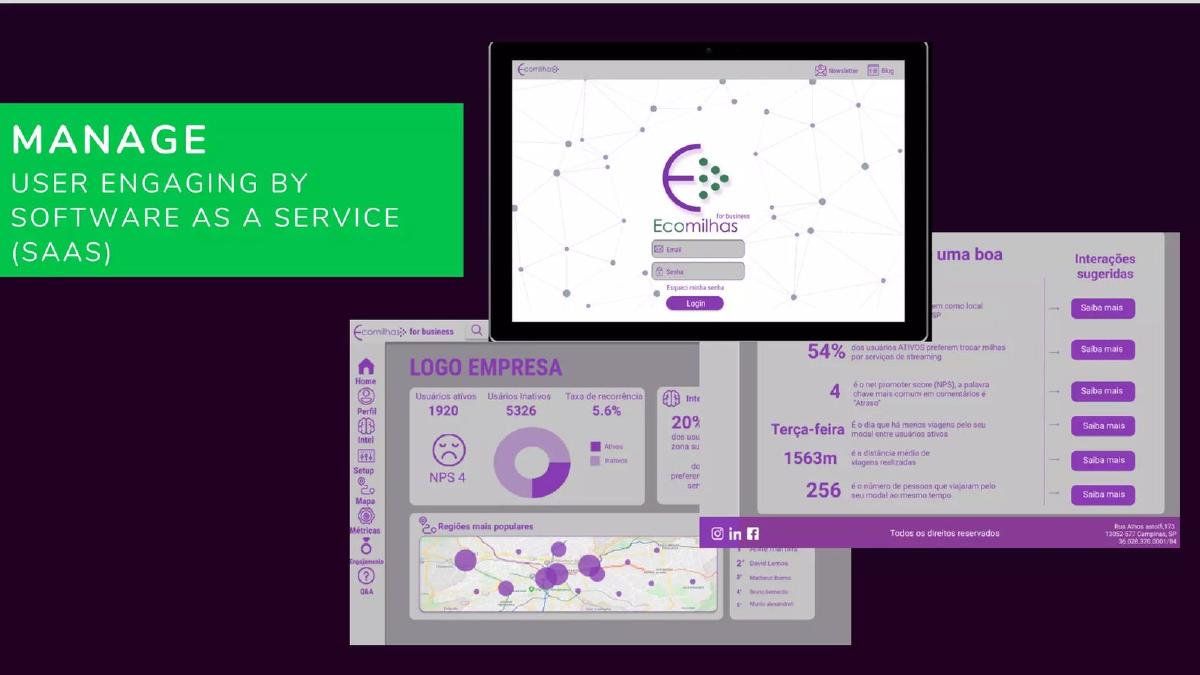
The most glaring omission is the Business Model . While we see how users earn and spend miles, it is unclear how Ecomiles makes money. Do they charge the marketplace vendors? Do they sell anonymized transit data to urban planners? Do they have a SaaS fee for corporate partners? Without this, it is impossible to evaluate the company as a commercial venture. Additionally, there is no Financial Ask . A pitch deck is a tool for fundraising, yet this deck does not state how much capital is being sought or how it will be deployed. Finally, there is a lack of Unit Economics ; knowing the cost to acquire a user (CAC) versus the value of the data or transactions they generate (LTV) is critical for this type of marketplace model.
Founder's Guide: What to Copy
Founders should emulate the way Ecomiles uses Third-Party Validation . Listing the Ford Foundation and Tembici on the traction slide (Slide 8) immediately elevates the company's credibility. If you are an early-stage founder, securing even one recognizable partner can be more persuasive than a dozen slides of theory. Additionally, the Competitive Matrix (Slide 5) is a good example of how to define the 'playing field' in your favor. By choosing specific categories like 'Gamification' and 'Big Data,' Ecomiles creates a narrative where they are the only logical choice for a comprehensive solution. Finally, the Team Slide (Slide 7) is clean and professional, using consistent headshots and clearly stating the educational and professional background of each member, which builds trust in their ability to execute.
Frequently asked questions
- What is the core value proposition of Ecomiles?
- Ecomiles functions as a loyalty program for sustainable travel. Users track their eco-friendly commutes (like cycling or walking) via a mobile app to earn digital currency called 'ecomiles.' These miles can be exchanged in an integrated marketplace for items such as bicycle maintenance courses, music lessons, or culinary classes. The goal is to incentivize green behavior through tangible rewards and gamification.
- Who are the primary competitors identified in the deck?
- Slide 5 lists three main competitors: SmashPoints, Uudi, and Ecobonuz. Ecomiles claims superiority by offering a 'full stack' of features that its rivals lack, specifically citing its use of Big Data and a more robust Gamification engine. While competitors might offer a marketplace or sustainability management, Ecomiles positions itself as the only one providing all five key pillars, including environmental responsibility.
- What stage of development is Ecomiles currently in?
- Based on slide 8, the company is in the early traction phase. It has been operating for 12 months, has secured five partnerships, and has surpassed 1,000 active users. The presence of a Google Play store link and a functional marketplace UI in the screenshots suggests the product is live and in-market, rather than a mere concept or prototype.
- What specific partnerships has the company secured?
- Slide 8 displays the logos of five partners: Brisa, Tembici (a major Latin American bike-sharing operator), the Ford Foundation, and two others represented by green leaf and colorful circle logos. These partnerships likely serve as either data providers for user routes or as sponsors/vendors within the Ecomiles rewards marketplace.
- What is missing from the Ecomiles pitch deck?
- The deck is notably missing a 'The Ask' slide, meaning there is no specified funding goal or valuation. Additionally, it lacks a business model slide explaining how the company generates revenue (e.g., transaction fees, data sales, or B2B subscriptions). There are also no financial projections, churn metrics, or detailed user acquisition cost (CAC) figures provided in the eight slides shown.