Rosaly’s 13-slide deck is a masterclass in identifying a regulatory tailwind to solve a massive consumer pain point. By highlighting that companies in France, Spain, and Belgium are legally required to fulfill earned wage requests, Rosaly positions itself not just as a 'nice-to-have' benefit, but as a necessary infrastructure layer for HR departments. The deck effectively contrasts the +25 B€ in annual European overdraft fees against the inefficiency of manual salary advances. While the deck is light on specific unit economics and revenue models, it leans heavily on the pedigree of its foundi…
Key takeaways
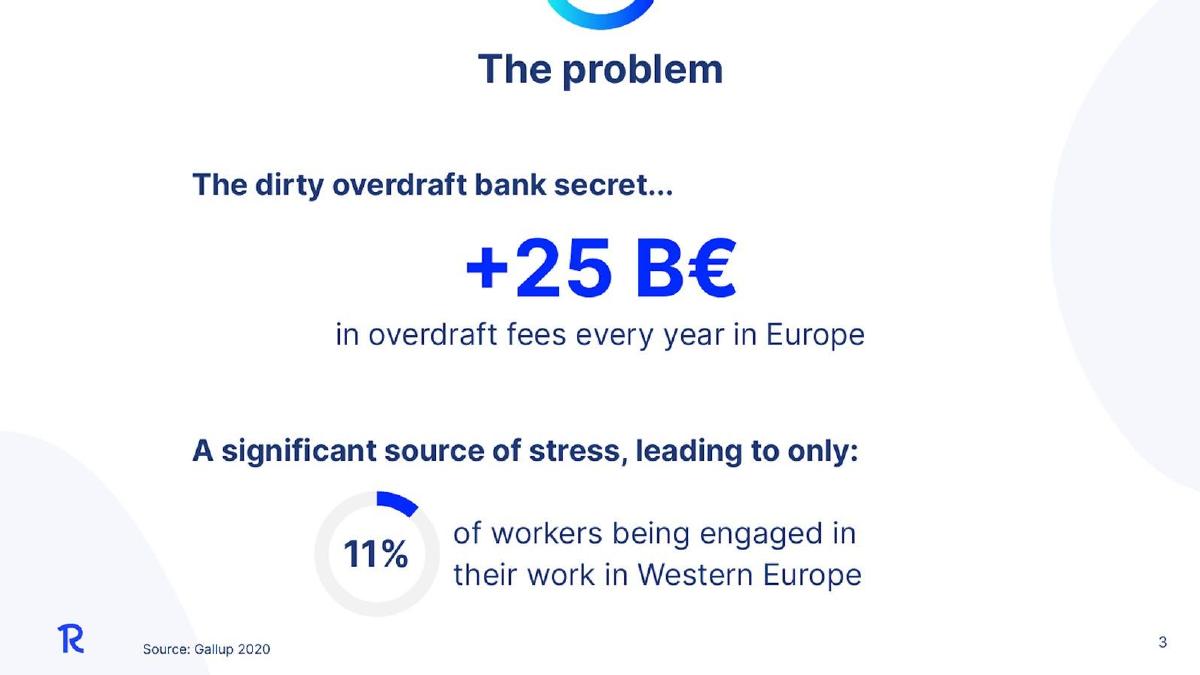
- The deck identifies a massive market opportunity citing +25 B€ in annual overdraft fees in Europe on slide 3.
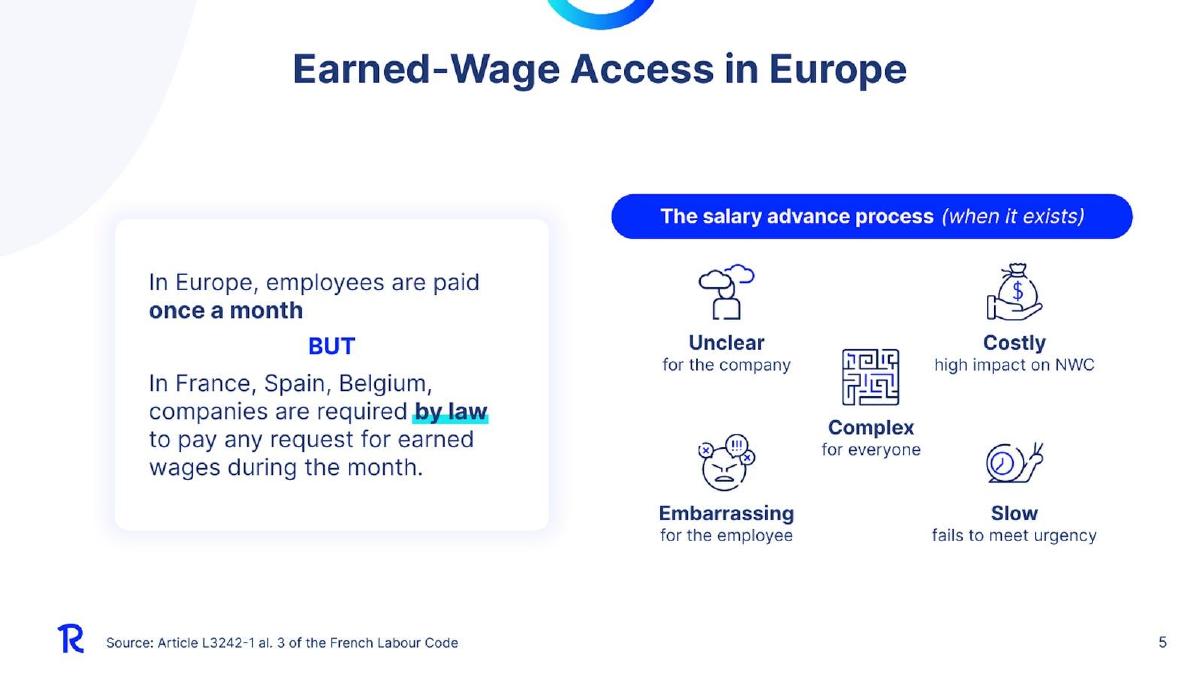
- Rosaly utilizes a 'regulatory hook' by noting that companies in France, Spain, and Belgium are legally required to pay earned wage requests (slide 5).
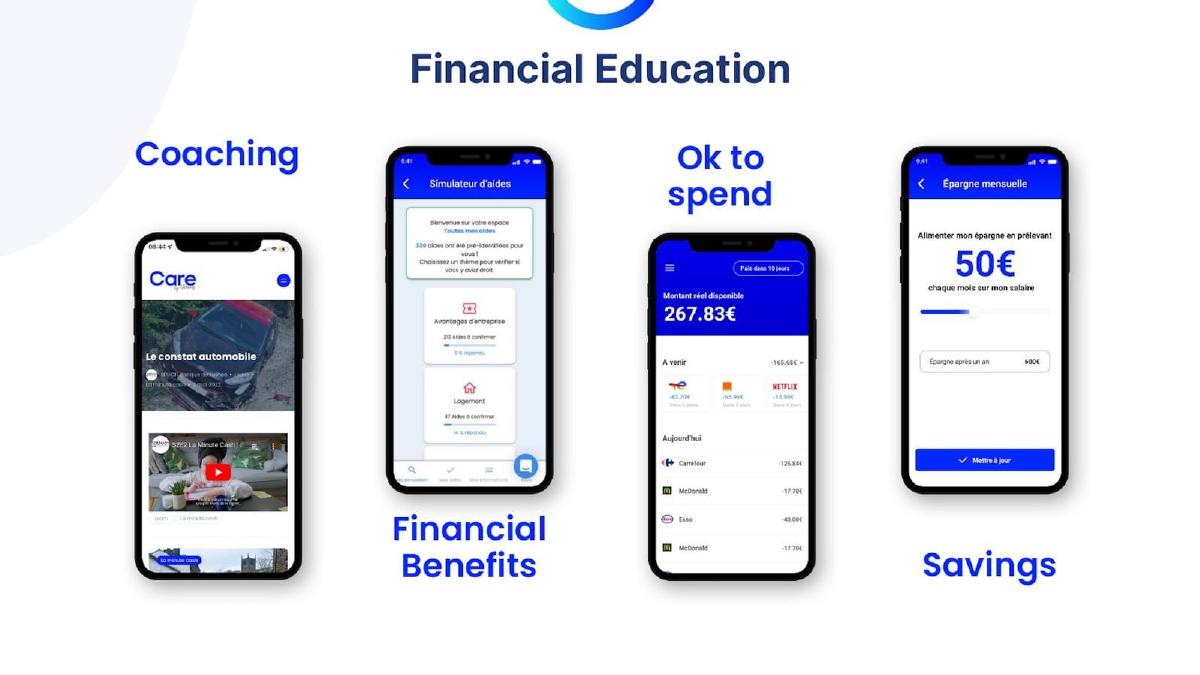
- The product vision extends beyond wage access to include 'Coaching,' 'Financial Benefits,' and 'Savings' as shown on slide 7.
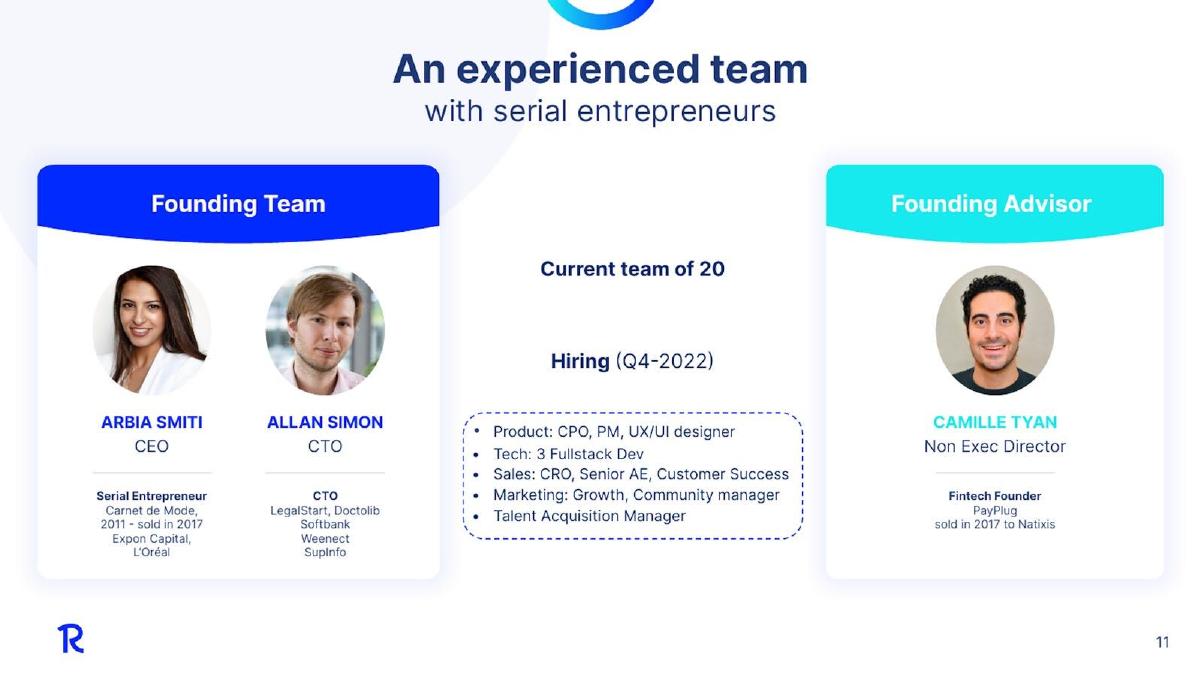
- The team slide (11) emphasizes serial entrepreneurship, noting CEO Arbia Smiti sold her previous company in 2017.
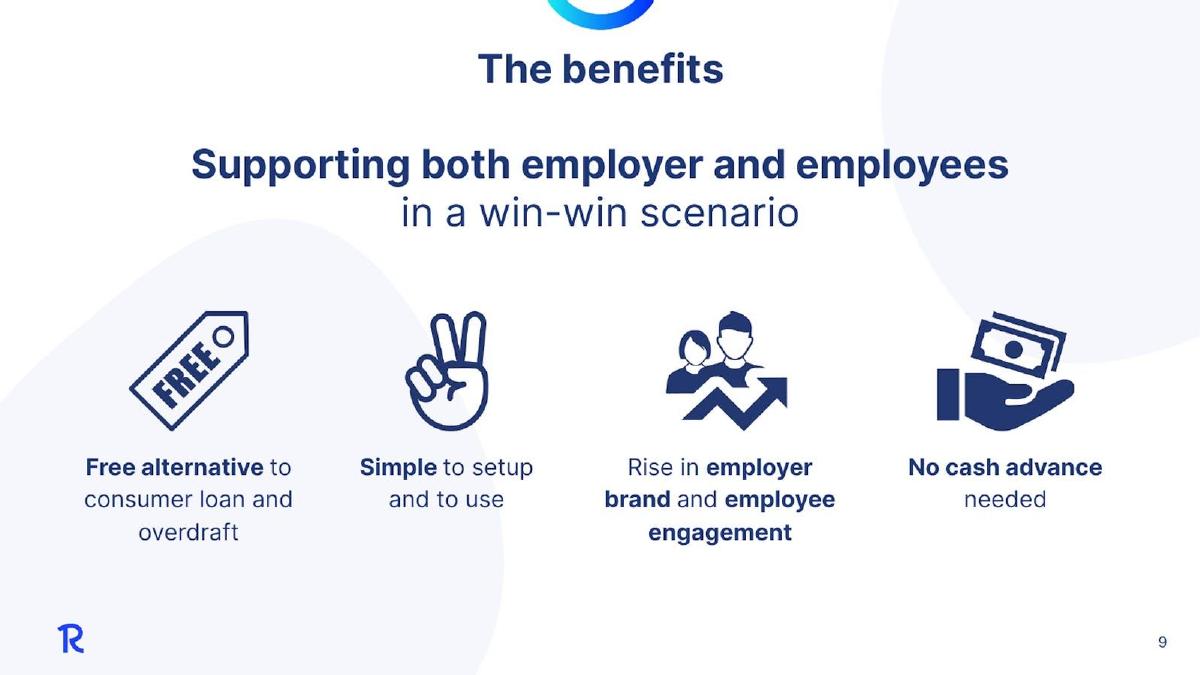
- The deck highlights a 'win-win' scenario for employers, claiming no cash advance is needed from the company's side (slide 9).
- Rosaly positions itself as a social impact company, displaying B Corp certification and 'Tech for Good France' logos on slide 13.
- The deck lacks a specific 'Ask' slide detailing the exact amount raised or the intended use of funds beyond general hiring goals.
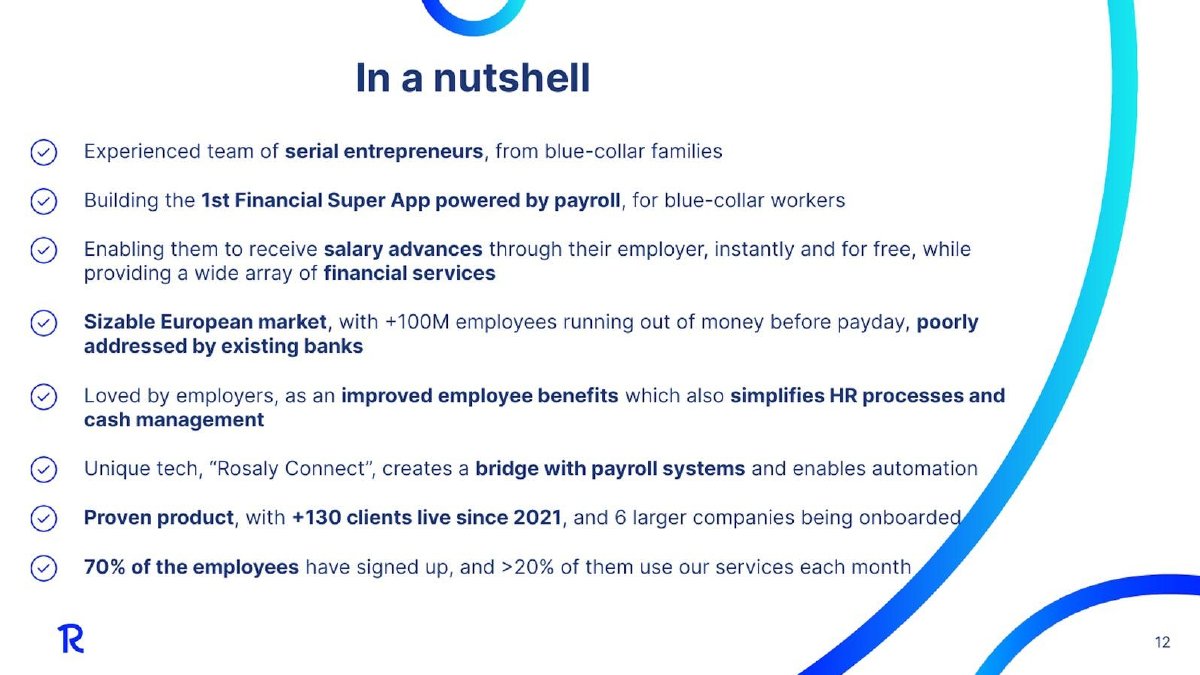
- There is no mention of current traction metrics, such as number of partner companies or active users, in the provided slides.
Executive Summary: The Regulatory Arbitrage of Earned Wage Access
Rosaly’s pitch deck for their 2022 Seed round, which successfully raised $10M, focuses on a specific friction point in the European labor market: the monthly pay cycle. While Earned Wage Access (EWA) is a mature category in the US (with players like DailyPay and Earnin), Rosaly identifies a unique legal catalyst in Europe. By citing specific labor codes, the deck transforms a fintech product into a compliance and HR efficiency tool. The narrative moves from the macro problem of overdraft fees to the micro solution of a streamlined, automated advance process, eventually landing on a broader vision of a financial wellness neobank.
Slide 1-2: Branding and Positioning
The deck opens with a minimalist blue aesthetic. Slide 1 establishes the core value proposition: "Earned Wage Access & Financial Education." This dual-threat positioning is critical. EWA alone can sometimes be perceived by regulators or critics as a form of high-frequency lending; by tethering it to "Financial Education," Rosaly frames the company as a wellness platform rather than a credit provider. The visual language is clean and professional, signaling a B2B2C approach where the employer is the gatekeeper and the employee is the end-user.
Slide 3: The Macro Problem - Overdraft Fees
Slide 3 hits the investor with a massive number: +25 B€ in overdraft fees paid every year in Europe. This is a classic 'hair on fire' problem. By framing the bank's profit as a "dirty secret," Rosaly creates a villain (traditional banks) and a victim (the worker). The slide also connects financial stress to productivity, citing a Gallup 2020 source stating only 11% of workers in Western Europe are engaged. This connects the social problem to a business problem: disengaged workers cost employers money, making Rosaly’s solution relevant to the C-suite, not just the HR department.
Slide 5: The Regulatory Catalyst
This is arguably the most important slide in the deck. It highlights a legal requirement that many investors might not be aware of: In France, Spain, and Belgium, companies are required by law to pay any request for earned wages during the month. Rosaly cites "Article L3242-1 al. 3 of the French Labour Code." This turns the product from a 'perk' into a 'process optimizer.' The slide lists the current manual process as Unclear, Costly, Complex, Embarrassing, and Slow. By automating a legal requirement, Rosaly reduces the sales friction significantly.
Slide 7: Product Ecosystem and Financial Education
Slide 7 moves beyond the transaction. It showcases the mobile interface with four distinct pillars: Coaching , Financial Benefits , Ok to Spend , and Savings . The "Financial Benefits" screen is particularly interesting, showing a "Simulateur d'aides" (benefits simulator) with "330 aides" identified. This suggests the app helps users tap into government subsidies or company perks they might be missing. The "Ok to spend" feature (showing a balance of 267.83€) positions the app as a daily financial co-pilot, increasing user retention beyond the once-a-month wage withdrawal.
Slide 9: The Win-Win Value Proposition
Slide 9 summarizes the benefits for both parties. For the employee, it is a "Free alternative to consumer loan and overdraft." For the employer, it offers a "Rise in employer brand" and, crucially, "No cash advance needed." This last point is a technical highlight; it implies that Rosaly (or its banking partners) sits in the flow of funds so that the employer’s working capital isn't disrupted by early payouts. The "Simple to setup" claim addresses the primary objection of overworked HR managers.
Slide 11: Team Pedigree and Hiring Roadmap
The team slide is a high-conviction asset. CEO Arbia Smiti is labeled a "Serial Entrepreneur" with a successful exit in 2017 (Carnet de Mode). CTO Allan Simon brings technical credibility from high-growth French startups like Doctolib and LegalStart. The inclusion of Camille Tyan as a Founding Advisor—who founded PayPlug and sold it to Natixis—provides the fintech 'stamp of approval.' The slide also lists a specific hiring roadmap for Q4-2022, including a CPO, 3 Fullstack Devs, and a CRO, showing exactly how the Seed capital will be deployed to scale the organization.
Slide 13: The Vision and Social Impact
The final slide features a quote from the CEO: "We can build the greatest neobank and help millions of people across the globe live healthier, happier financial lives." This signals the long-term ambition—Rosaly doesn't want to be a feature; it wants to be the primary financial interface for the working class. The slide is crowded with impact logos: Certified B Corporation , French Impact , Tech for Good France , and the UN Sustainable Development Goals . This reinforces the mission-driven nature of the company, which is a strong draw for ESG-focused venture funds.
What Rosaly Does Well
Regulatory Leverage: Most startups struggle to find a 'must-have' reason for their product. By pointing to specific French labor laws, Rosaly makes their platform an essential tool for compliance and administrative efficiency. They aren't just selling a benefit; they are selling a way to handle a legal mandate without the manual headache.
Founder-Market Fit: The deck leans heavily on the founders' past successes. In a Seed round, where data might be thin, the 'pedigree' of the team acts as a proxy for de-risking the execution. Mentioning specific exits (2017) and well-known companies (Doctolib, Softbank) builds immediate trust.
Holistic Wellness: By including features like the benefits simulator and savings tools, Rosaly avoids the 'payday loan' stigma. They position the early wage access as just one tool in a broader kit designed to improve the user's overall financial health.
What is Missing from the Deck
Unit Economics and Revenue Model: The deck states the service is a "Free alternative" for employees, but it doesn't explicitly state how Rosaly makes money. Is it a SaaS fee paid by the employer? A transaction fee? Interest on the float? A lead-gen model for other financial products? This is a significant omission for a $10M round.
Traction Data: There are no mentions of how many companies have signed up, how many employees are currently using the app, or the volume of wages processed. While this might have been shared in a separate data room, its absence in the main deck makes it hard to judge the current momentum.
Competitive Landscape: The deck doesn't acknowledge other EWA players in Europe or the UK. Investors would want to know how Rosaly differentiates itself from competitors like Wagestream or Hastee, especially regarding their specific focus on the French and Belgian markets.
Founder's Playbook: Lessons to Copy
Use the 'Villain' Strategy: Start your deck by identifying a clear, quantifiable antagonist. Rosaly uses the "25 B€ in overdraft fees" as the villain. This makes the solution feel morally and economically necessary.
Cite the Code: If your industry is regulated, find the specific clause that makes your product necessary. Citing "Article L3242-1" adds a level of authority that a simple marketing claim cannot match. It proves you have done the deep work on the legal landscape.
Show, Don't Just Tell, the Vision: Instead of just saying "we will add more features later," Rosaly uses Slide 7 to show high-fidelity mockups of what those features (Savings, Coaching) look like. This helps investors visualize the product evolution from a utility to a platform.
Highlight the 'Win-Win': B2B2C companies must clearly articulate value for both the buyer (employer) and the user (employee). Rosaly’s Slide 9 is a perfect example of a balanced value proposition that addresses the fears of the buyer (cost and complexity) while highlighting the benefits for the user (free access to cash).
Frequently asked questions
- What is Rosaly's core product offering?
- Rosaly provides Earned Wage Access (EWA) and financial education tools. As shown on slide 7, the platform includes features for coaching, identifying financial benefits, an 'Ok to spend' budget tracker, and automated savings tools. The primary hook is allowing employees to access wages they have already earned before the standard monthly payday, which is the norm in many European countries.
- How does Rosaly address the employer's pain points?
- On slide 5, Rosaly explains that while European employees are typically paid monthly, laws in countries like France require companies to fulfill mid-month wage requests. Rosaly argues that the manual process is 'costly,' 'complex,' and 'slow.' Slide 9 claims their solution is a 'free alternative' for the employer that requires 'no cash advance' from the company's own treasury, simplifying a legal obligation.
- What is the scale of the problem Rosaly is solving?
- According to slide 3, European workers pay over 25 billion Euros in overdraft fees annually. The deck links this financial stress to low employee engagement, citing a Gallup 2020 study that shows only 11% of workers in Western Europe are engaged in their work. Rosaly positions its tool as a way to alleviate this stress and improve employer branding.
- Who are the founders of Rosaly?
- The founding team consists of CEO Arbia Smiti and CTO Allan Simon. Slide 11 highlights Smiti as a serial entrepreneur who sold 'Carnet de Mode' in 2017. Simon is credited with CTO experience at LegalStart and roles at Softbank and Doctolib. They are supported by Founding Advisor Camille Tyan, who founded PayPlug (sold to Natixis in 2017).
- What is missing from the Rosaly pitch deck?
- The deck is notably missing a slide on unit economics, revenue models, and current traction (e.g., MRR, number of employees covered, or growth rates). It also lacks a detailed 'Ask' slide specifying how much capital is being raised and the specific milestones that capital will achieve, though slide 11 does list specific hiring targets for Q4 2022.