Curastory’s Seed deck is a masterclass in identifying a specific pain point—the inefficiency of platform-based video ads—and proposing a structural solution. By highlighting that creators currently lose 70% of potential revenue to 'Skip Ads' (Slide 5), Curastory positions itself as a necessary middleware that allows creators to own their ad segments. The deck uses a compelling case study of an MMA fighter to show a potential earnings jump from $973 to over $14,000 per month (Slide 9). While the deck is light on long-term financial projections, its focus on immediate traction metrics like a 10…
Key takeaways
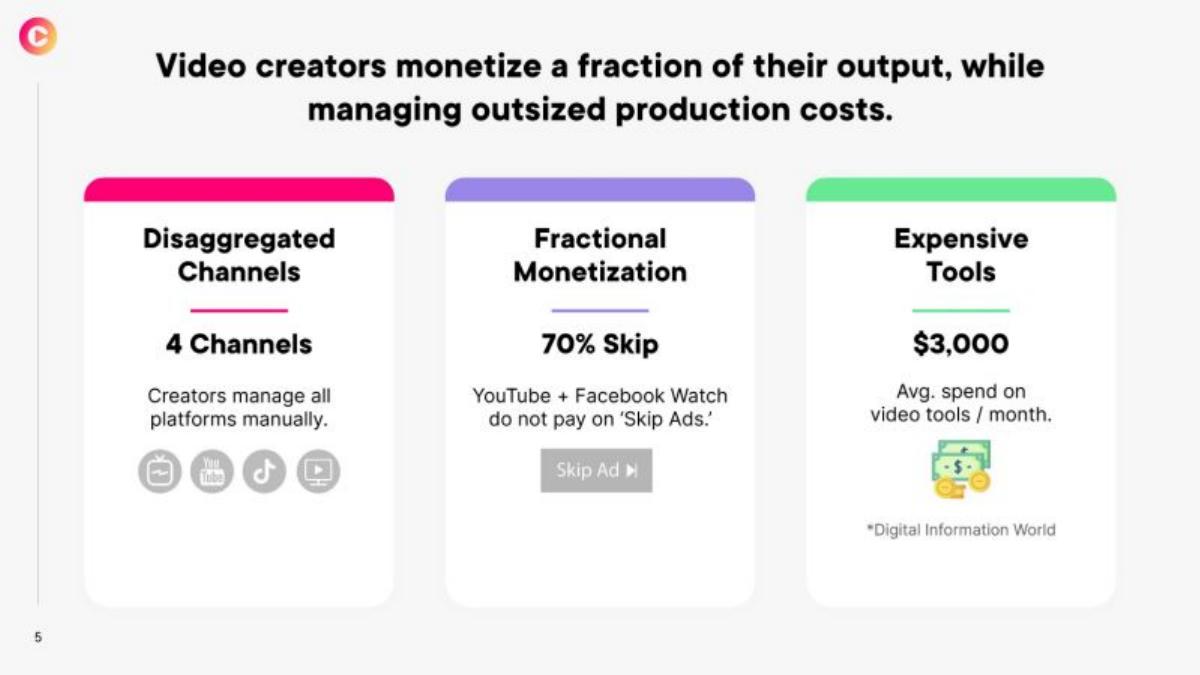
- The problem is framed around 'fractional monetization,' noting that 70% of viewers skip ads on YouTube and Facebook Watch (Slide 5).
- Creators spend an average of $3,000 per month on video tools, creating a high-cost, low-yield environment (Slide 5).
- The solution allows creators to record and stitch ad segments directly into videos for brand advertisers, bypassing platform-level ad blocks (Slide 7).
- A detailed case study demonstrates a theoretical 15x increase in monthly earnings for a mid-tier creator (Slide 9).
- Curastory differentiates itself from influencer marketplaces by focusing on 'brand agnostic' video uploads and automated matching (Slide 11).
- Traction is evidenced by $123,979 in actual and committed GMV within the first six months (Slide 15).
- The team slide highlights deep domain expertise with past experience at ESPN, NBA, Facebook, and Reddit (Slide 17).
- The growth strategy outlines a transition from a view-based model to a white-label subscription platform (Slide 25).
The Hook: Addressing the 'Crappy' State of Monetization
Slide 1: Title Slide
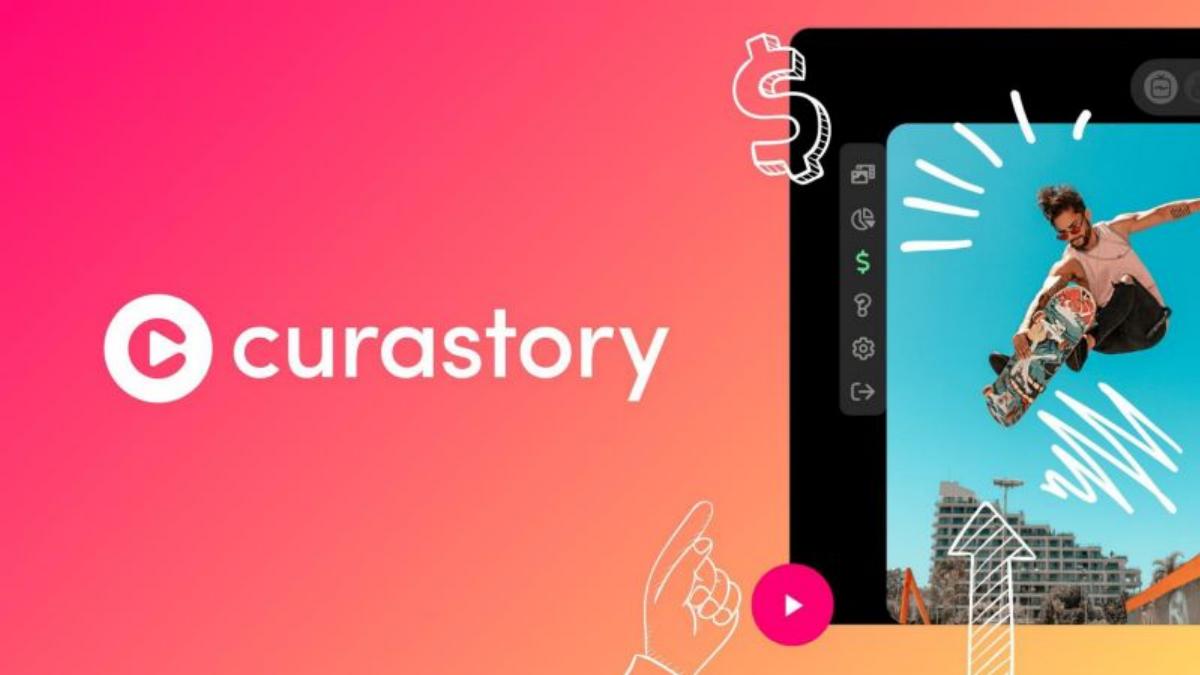
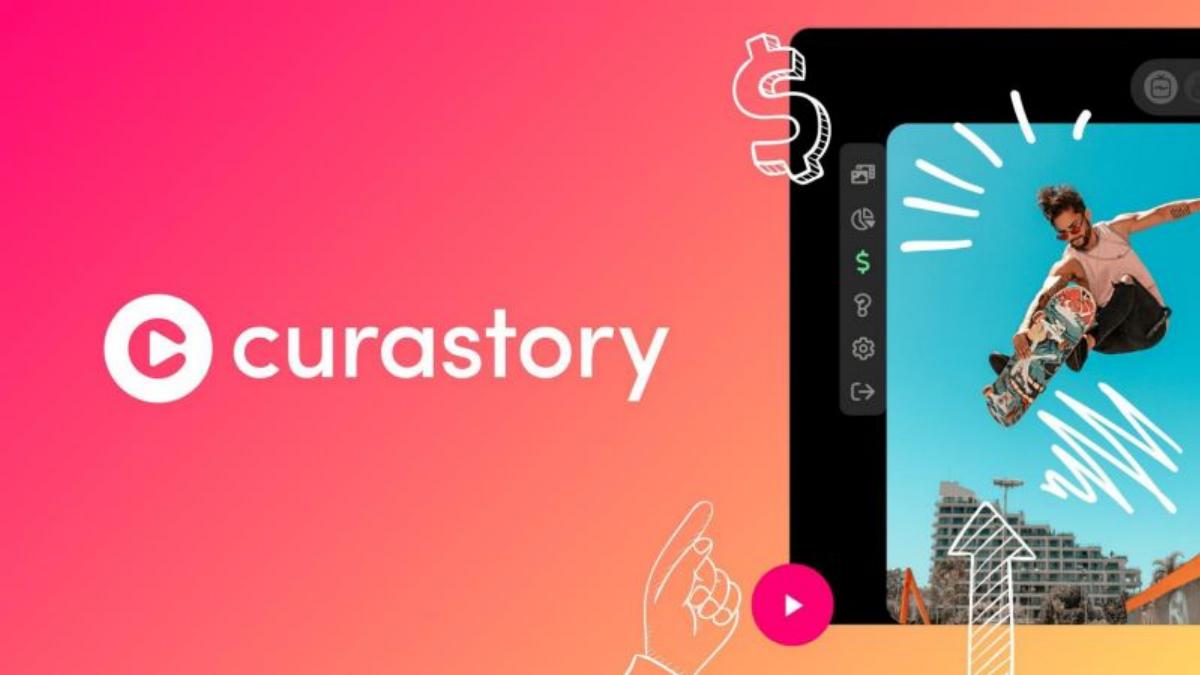
The deck opens with a vibrant, high-energy title slide featuring the Curastory logo and a stylized image of a skateboarder. The visual language—hand-drawn dollar signs and arrows—immediately signals a focus on the creator economy and financial empowerment. The branding is bold, using a pink-to-orange gradient that persists throughout the deck.
Slide 3: The Simple Question
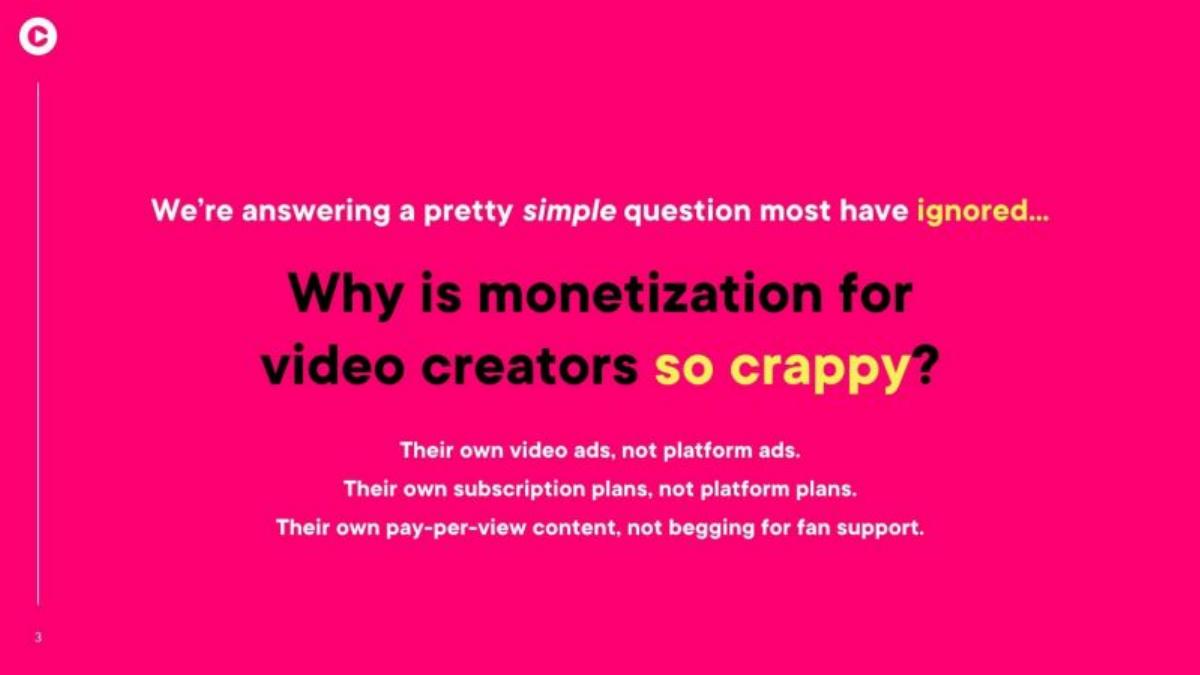
Curastory wastes no time getting to the problem statement. Slide 3 asks: "Why is monetization for video creators so crappy?" It sets the stage for a disruptive solution by contrasting 'platform ads' and 'platform plans' with 'their own video ads' and 'their own subscription plans.' This slide establishes the narrative that creators are currently beholden to platforms and need to reclaim control.
Slide 5: The Problem Breakdown
This is one of the most data-dense slides in the deck. It identifies three core pain points: Disaggregated Channels (creators manually managing 4+ platforms), Fractional Monetization (70% of viewers skip ads on YouTube and Facebook Watch), and Expensive Tools (an average spend of $3,000 per month on video tools). By citing 'Digital Information World,' the deck adds a layer of third-party validation to these claims.
The Solution: Native Integration and Creator Control
Slide 7: Control For Creators
Slide 7 introduces the product interface. It outlines a three-step process: Create Videos (using free tools and rental kits), Get Paid (recording and stitching ad segments), and Go Live (one-click posting to all platforms). The emphasis here is on 'one-click' efficiency and the ability to 'stitch' ads directly into content, which is the technical unlock for their business model.
Slide 9: The Case Study (Valerie Loureda)
This slide provides a powerful 'Before and After' comparison. Using undefeated MMA fighter Valerie Loureda as an example, it shows her current monthly earnings across YouTube, Facebook, and sponsorships totaling $973.34. Under the Curastory model, leveraging her views on TikTok (175.5K) and IGTV (26.3K) which currently pay $0 in platform ads, her earnings are projected to jump to $14,834 per month. This 15x increase is the 'wow' moment of the deck.
Slide 11: Competitive Differentiation
Curastory uses Slide 11 to distance itself from traditional influencer marketplaces like YouTube BrandConnect, AspireIQ, and #paid. They use a toilet icon for 'opendorse,' a bold move that clearly signals their intent to disrupt the status quo. Their 'stickiness' is attributed to three factors: creators upload brand-agnostic videos first, they are paid royalties rather than one-off fees, and they receive non-compete conflict alerts.
Slide 13: Discovery For Brands
While the previous slides focused on creators, Slide 13 addresses the 'demand' side of the marketplace. It shows a dashboard where brands can run campaigns based on targeting and tags, and track performance. The inclusion of 'Return on Spend' (citing figures like 2.1 and 3.5) on the dashboard mock-up highlights the platform's focus on attribution, a key selling point for brand marketers.
Traction and Team: Proving the Model
Slide 15: Exceptional Traction
The traction slide is clean and metric-focused. It reports $123,979 in GMV (actual + committed) from months 1-6. Other key figures include a 100% Net Revenue CMGR , $37,194 in Net Revenue , and a $10,514 CLTV (Customer Lifetime Value). The 82% user retention rate is a strong indicator of product-market fit in a notoriously fickle creator market.
Slide 17: The Team
The team slide features Founder + CEO Tiffany Kelly and CTO Shane Austrie. The 'Past Experience' section is impressive, featuring logos from ESPN, NBA, NCAA, Muscle Milk, Facebook, and Reddit . This suggests the team has the necessary background in both sports media (a key creator vertical) and large-scale social tech.
Slide 19: The Ask
Curastory seeks $1.25 million . The pie chart breaks down the allocation: 72% for Sales, General + Administrative; 16% for Advertising + Marketing; 7% for Legal & Professional; and 5% for COGS. The stated goal is to build requested features, a mobile app, and company culture. Note: The catalogue facts indicate they eventually raised $2M, exceeding this initial ask.
Future Outlook and Strategy
Slide 21: Brand Vision
A billboard mock-up with the slogan "Time to get your story out there" serves as a brand vision slide. It reinforces the company's mission: "The easiest way to start making content. Power to the creators."
Slide 25: Growth Strategy
This slide outlines the long-term roadmap. It moves from the current 'Seed' stage (Video Royalties/CPM model) to 'Series A' (CPC and view-through rates) and finally to an 'Exit' phase where they become a 'White-Label Channel.' This final stage involves a subscription cost for creators to host, gate content, and sell merchandise, effectively turning Curastory into a SaaS platform for creators.
Slide 27: User Testimonials
The deck concludes with 'What Our Users Think,' showing screenshots of emails from managing partners and brands. These testimonials emphasize interest in specific creator niches (like athletes) and validate the demand for a more structured video ad platform.
What Works and What is Missing
What Works: The deck is exceptionally strong at identifying a structural flaw in the current creator economy—the 'Skip Ad' problem—and offering a technical solution that benefits both sides of the market. The Valerie Loureda case study is the highlight, providing a tangible, high-impact example of the platform's value proposition. The traction slide uses the right metrics (CMGR, CLTV, Retention) to satisfy sophisticated investors.
What is Missing: There is a lack of detailed financial projections beyond the traction slide. While the growth strategy (Slide 25) hints at future revenue streams, a 3-5 year revenue forecast is absent. Additionally, while the deck mentions '4 channels,' it doesn't go into detail about the technical hurdles of API integrations with platforms like TikTok or Instagram, which are notoriously protective of their ecosystems. The 'Appendix' slide (Slide 23) is a placeholder, and the content following it is limited in this 14-slide sample.
Founder's Playbook: Lessons from Curastory
Quantify the 'Before and After': If your product increases earnings or saves time, use a real-world case study with specific numbers. The jump from $973 to $14k is much more memorable than saying "we increase revenue." · Address the 'Middleman' Problem: Curastory successfully argues that they aren't just another marketplace; they are an infrastructure layer that automates matching and payments. · Focus on Retention: In the creator economy, churn is high. Highlighting an 82% retention rate (Slide 15) is a powerful way to prove that your tool is essential, not just a novelty. · Use Industry-Standard Metrics: By using terms like GMV, CMGR, and CLTV, the founders speak the language of VC, making the traction feel professional and vetted.
Frequently asked questions
- What is Curastory's core business model?
- Curastory operates on a 'video royalty' model. Initially, they facilitate brand payments for creator-recorded advertisement spots based on a cost-per-1,000-views (CPM) basis. As they scale, they plan to move toward a percentage of CPC (cost-per-click) and eventually a white-label subscription model where creators pay to host and gate their own content.
- How does Curastory solve the 'Skip Ad' problem?
- Instead of relying on platform-inserted ads (like YouTube Pre-roll) which are often skipped, Curastory has creators record and stitch ad segments directly into their video content. This makes the advertisement a native part of the video, ensuring it is viewed as part of the creator's primary output rather than an external interruption.
- What kind of traction did Curastory have at the time of this deck?
- Within the first six months, Curastory reported $123,979 in actual and committed Gross Merchandise Value (GMV). They also boasted a 100% Net Revenue Compound Monthly Growth Rate (CMGR) and a high user retention rate of 82% based on app activity.
- Who is the target user for Curastory?
- The deck targets 'video creators' who manage multiple channels (YouTube, TikTok, Facebook Watch, IGTV). Specifically, it highlights creators with significant followings (like the case study's MMA fighter with 175k TikTok followers) who are currently under-monetized by standard platform ad-revenue shares.
- What was the intended use of the $1.25M investment?
- The deck specifies that 72% of the funds would go toward Sales, General + Administrative costs. The remaining funds were allocated to Advertising + Marketing (16%), Legal & Professional (7%), and Costs of Goods Sold (5%). The primary goal was to build requested features and a mobile app.