Lighthouse Labs secured a $7M Seed round in 2022 by positioning themselves as the essential navigation layer for a fragmented metaverse. The deck focuses heavily on the 'why now' by highlighting the explosion of virtual worlds like The Sandbox and Decentraland, arguing that users need a unified search engine to find events, friends, and commercial opportunities across disparate platforms. While the deck is visually polished and strong on macro trends, it relies heavily on external market data from Ark Invest and Grayscale rather than internal traction metrics. The team slide emphasizes a bala…
Key takeaways
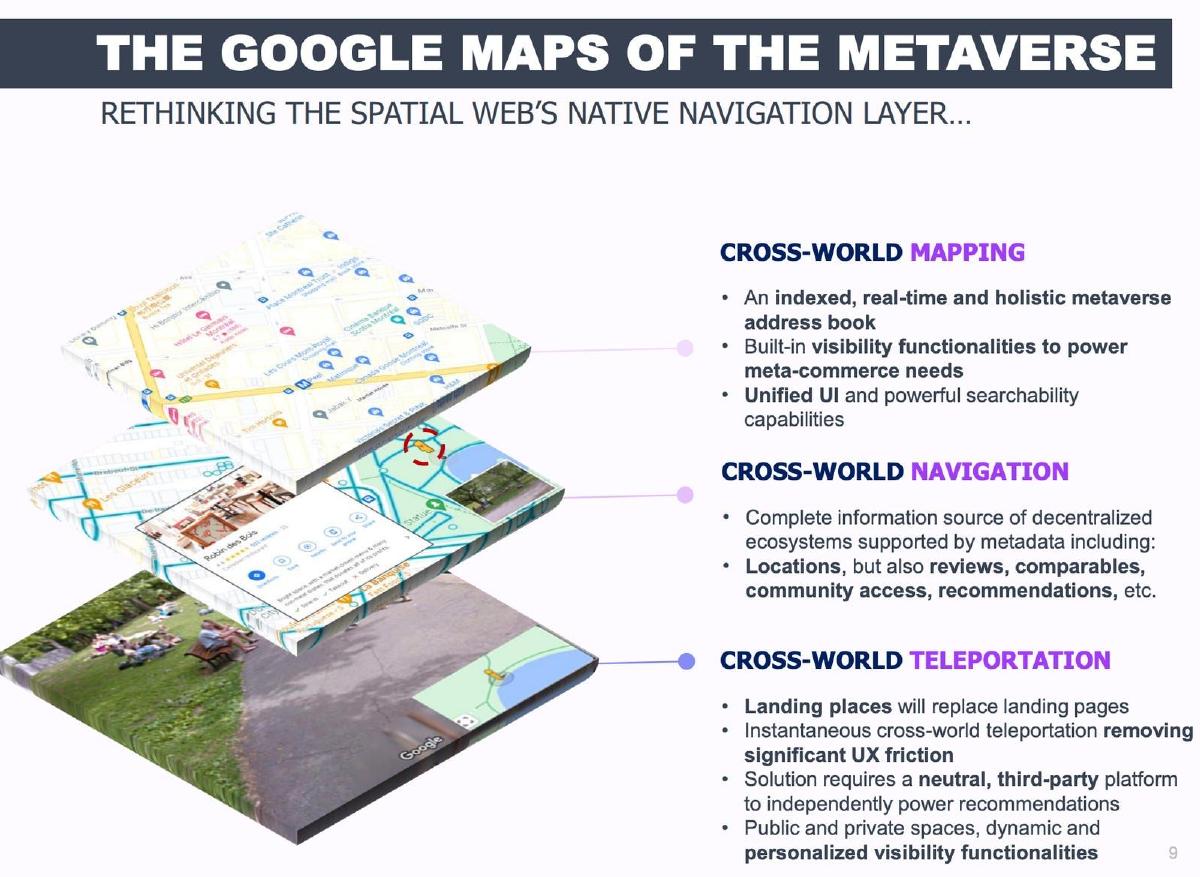
- The deck positions the company as 'The Google Maps of the Metaverse' to provide an immediate mental model for investors (Slide 9).
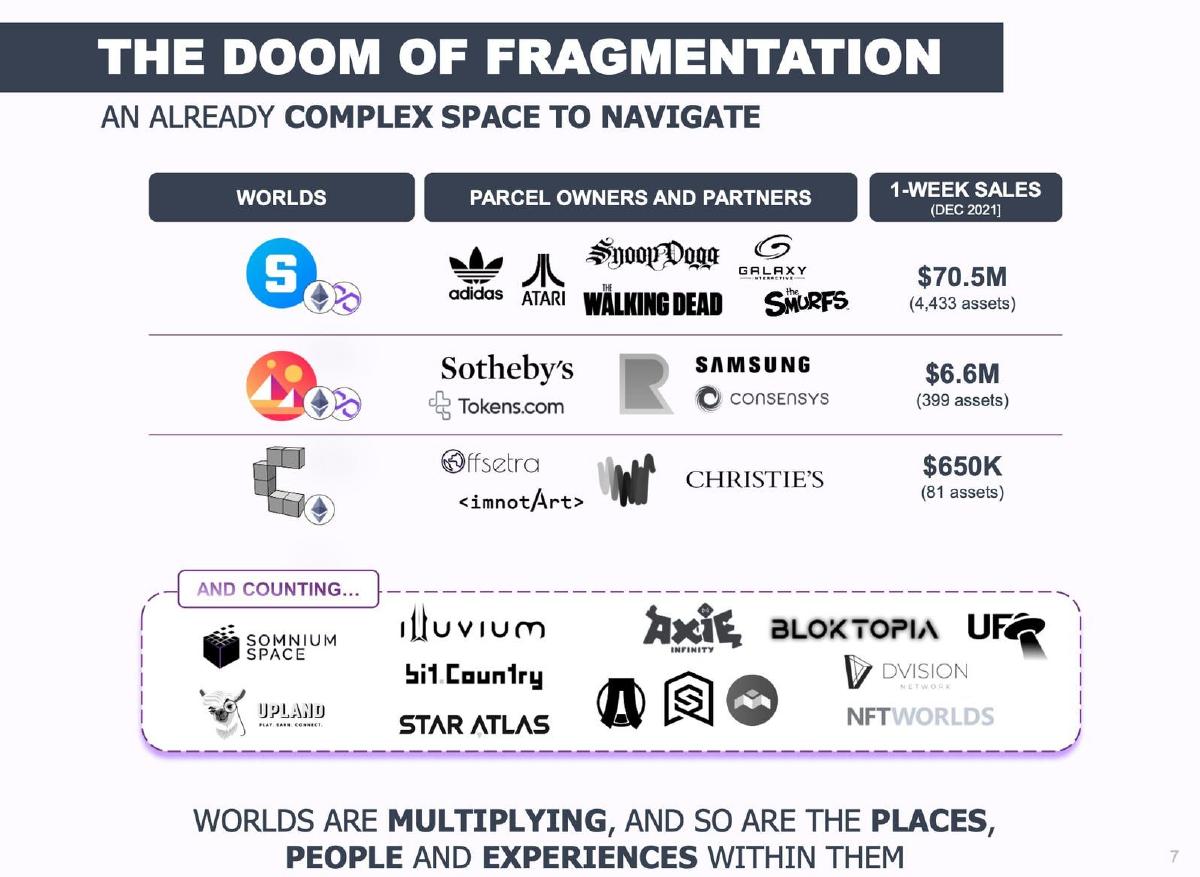
- It identifies 'The Doom of Fragmentation' as the primary market pain point, citing specific sales data like $70.5M in one-week sales for The Sandbox (Slide 7).
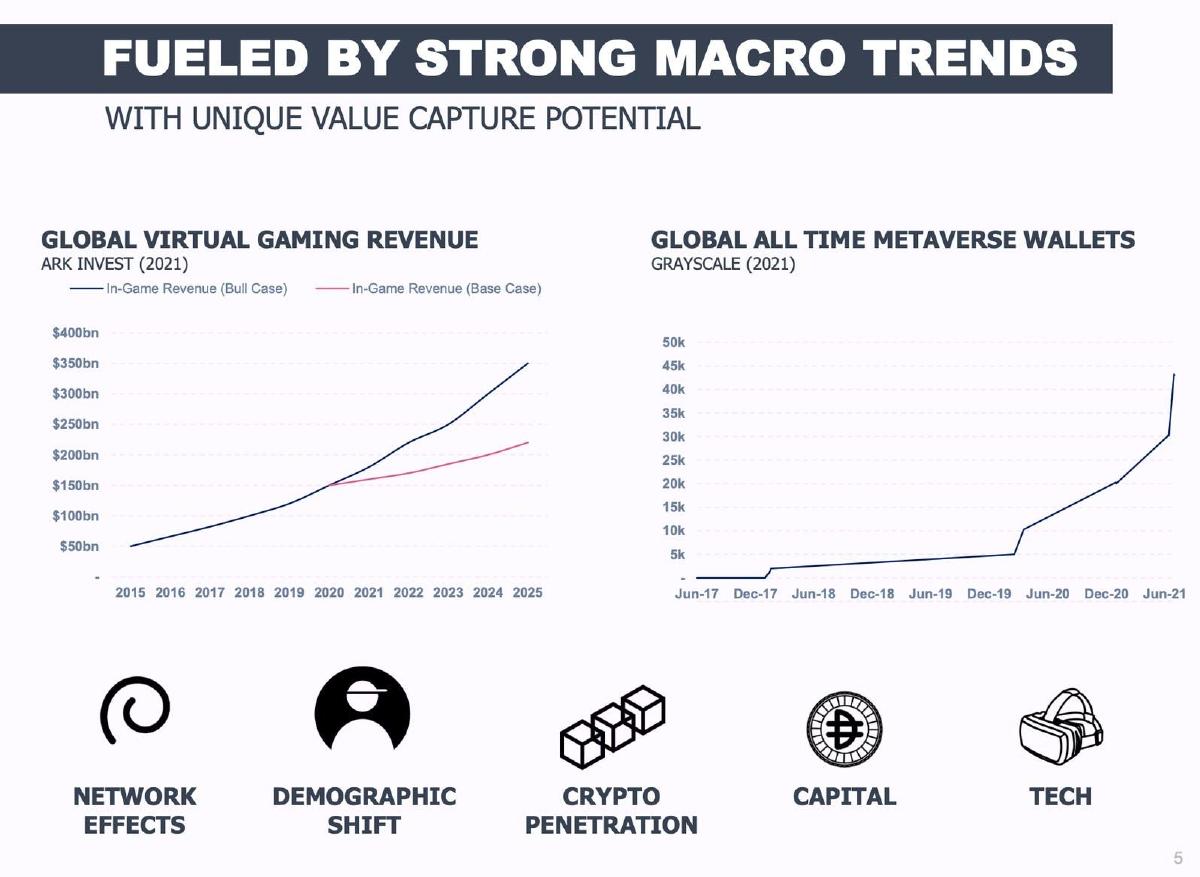
- Macro trends are supported by third-party data, projecting global virtual gaming revenue to reach $350bn by 2025 in a bull case (Slide 5).
- The product vision includes 'Cross-World Teleportation' to remove UX friction between decentralized ecosystems (Slide 9).
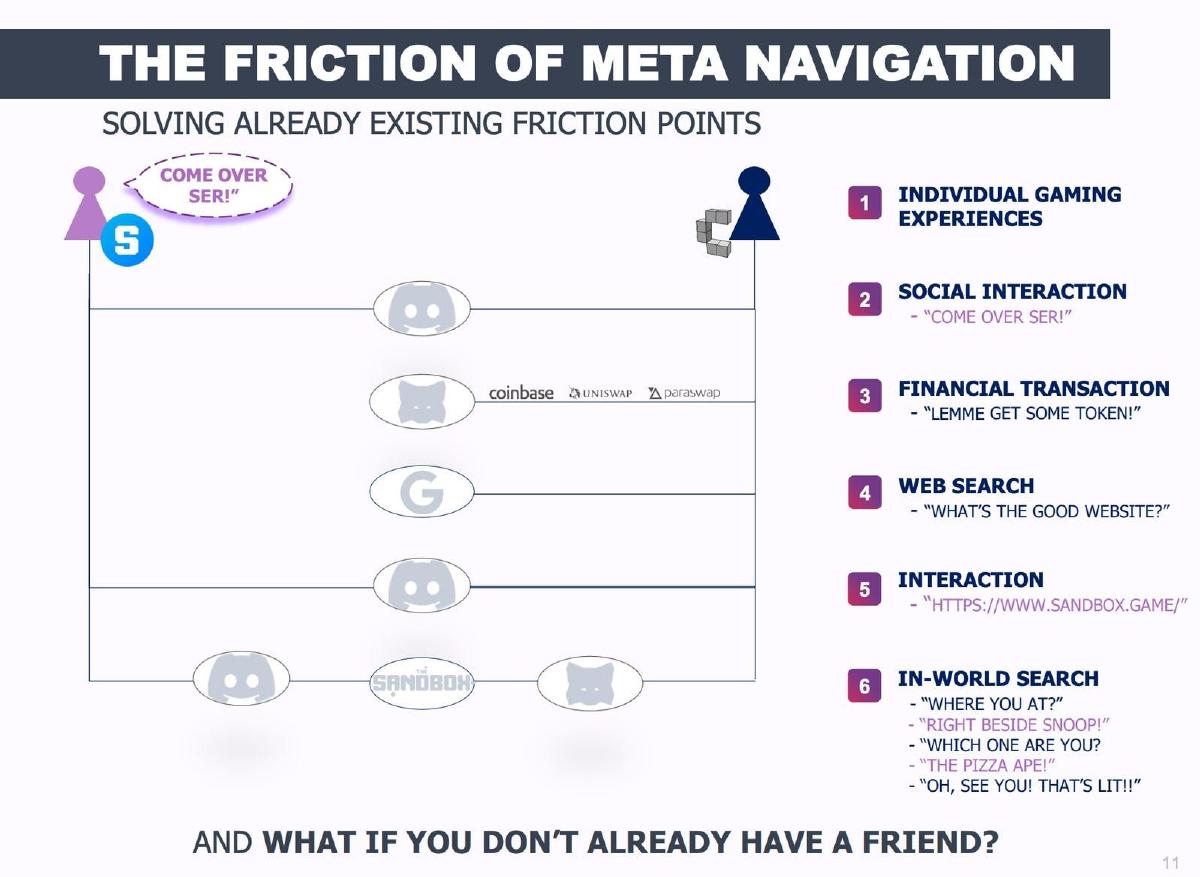
- The deck uses a complex diagram to illustrate current user friction, involving Discord, MetaMask, and Coinbase for a single interaction (Slide 11).
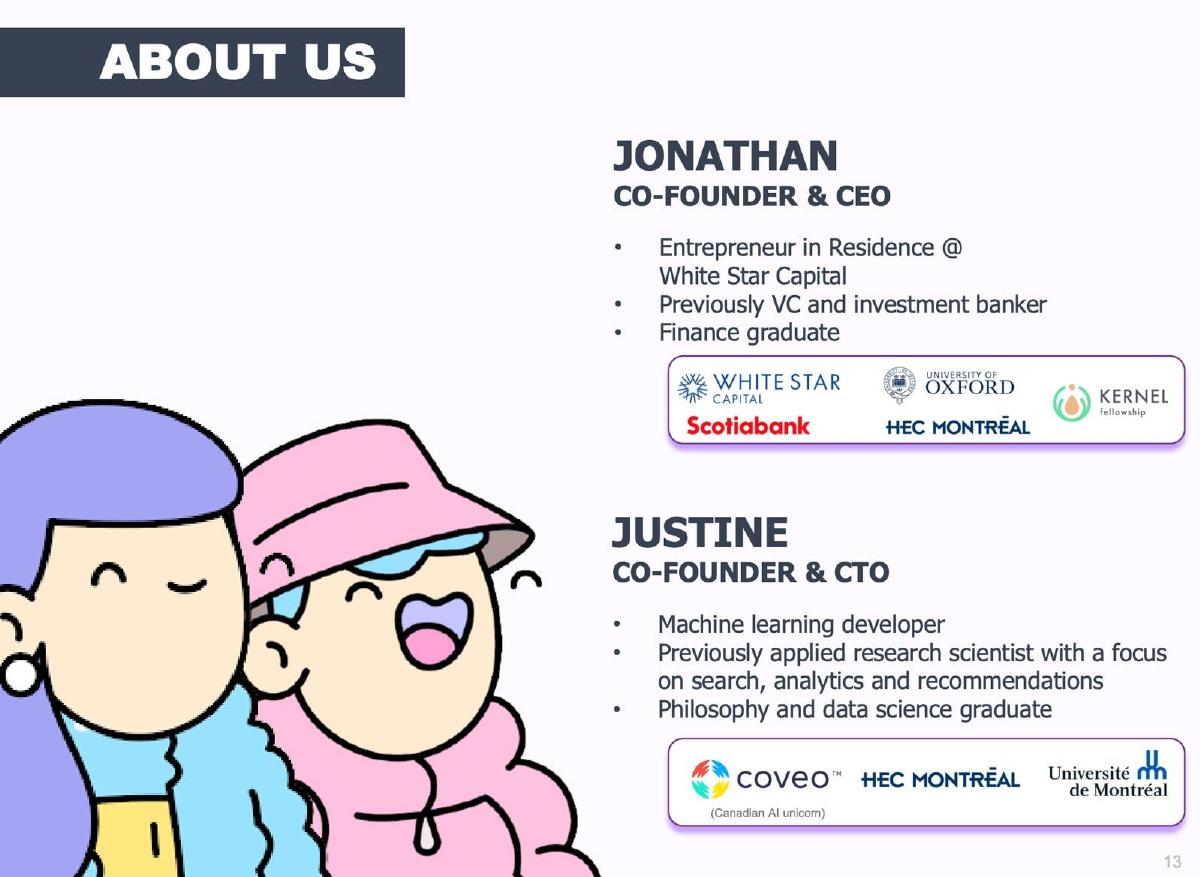
- The team slide highlights a Co-Founder & CEO with a VC background at White Star Capital and a CTO with machine learning expertise from a Canadian AI unicorn (Slide 13).
- There is a notable absence of a specific 'Ask' slide or financial projections within the provided deck materials.
- The deck relies on 2021 data regarding metaverse wallet growth, showing a spike to over 40k wallets by June 2021 (Slide 5).
Introduction: The Quest for the Metaverse Entry Point
Lighthouse Labs raised $7M in a 2022 Seed round led by Accel and BlockTower, according to reports at the time. Their pitch deck is a classic example of a 'vision-led' narrative. In 2022, the metaverse was the dominant narrative in tech, and Lighthouse sought to capture the 'navigation layer' of this emerging digital reality. The deck is structured to move the investor from a broad definition of the metaverse to the specific technical friction points that Lighthouse intends to solve.
Slide 1: The Vision Statement
The deck opens with a high-contrast purple gradient and a simple tag line: "Lighthouse: The open metaverse navigation engine." This slide establishes the brand identity immediately. It uses the word 'open,' which was a critical buzzword in 2022 to differentiate decentralized projects from 'walled garden' metaverses like those proposed by Meta (formerly Facebook).
Slide 3: Defining the Foundations
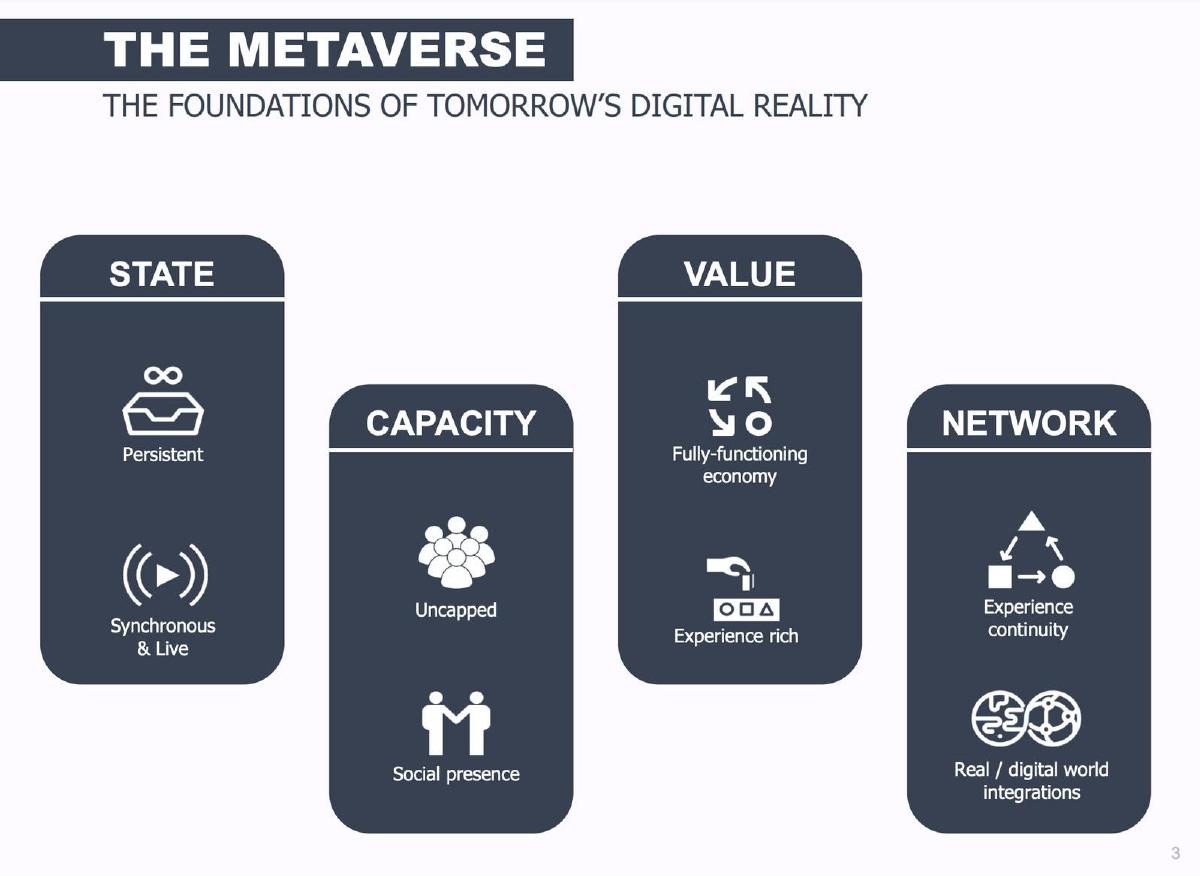
Slide 3, titled "THE METAVERSE: THE FOUNDATIONS OF TOMORROW’S DIGITAL REALITY," attempts to ground the abstract concept of the metaverse into four pillars: State, Capacity, Value, and Network. It defines these as 'Persistent,' 'Synchronous & Live,' 'Uncapped,' 'Social presence,' 'Fully-functioning economy,' 'Experience rich,' 'Experience continuity,' and 'Real / digital world integrations.' This slide serves as a pedagogical tool, ensuring the investor and founder are speaking the same language before diving into the problem.
Slide 5: Macro Trends and Market Sizing
To justify a $7M seed round, a company must demonstrate a massive TAM (Total Addressable Market). Slide 5, "FUELED BY STRONG MACRO TRENDS," uses data from Ark Invest and Grayscale. It shows a chart where 'Global Virtual Gaming Revenue' is projected to hit $350bn by 2025 in a bull case. More importantly, it shows a hockey-stick growth curve for 'Global All Time Metaverse Wallets,' which spiked from roughly 5k in late 2019 to over 40k by June 2021. The slide identifies five tailwinds: Network Effects, Demographic Shift, Crypto Penetration, Capital, and Tech.
Slide 7: The Core Problem - Fragmentation
Slide 7 is perhaps the most effective slide in the deck. Titled "THE DOOM OF FRAGMENTATION," it visualizes the chaos of the current market. It lists major 'Worlds' and their '1-Week Sales' as of December 2021: $70.5M for The Sandbox, $6.6M for Decentraland, and $650K for Cryptovoxels. By showing logos of partners like Adidas, Atari, Snoop Dogg, and Samsung scattered across different platforms, Lighthouse makes the case that the metaverse is too fragmented for a user to navigate without a central hub.
Slide 9: The Solution - The Google Maps Analogy
Slide 9 introduces the product as "THE GOOGLE MAPS OF THE METAVERSE." This is a powerful 'high-concept pitch.' It breaks the solution into three functional layers: Cross-World Mapping (an indexed address book), Cross-World Navigation (metadata, reviews, and recommendations), and Cross-World Teleportation . The mention of 'teleportation' is particularly interesting, as it suggests a technical integration that allows users to jump directly into a specific coordinate in a virtual world, bypassing the friction of traditional logins.
Slide 11: Visualizing User Friction
Slide 11, "THE FRICTION OF META NAVIGATION," uses a diagram to show the current 'user journey.' To meet a friend in a virtual world, a user currently has to navigate Discord for social interaction, MetaMask/Coinbase for financial transactions, and Google for web search, all before performing an 'In-World Search' to find the actual location. The slide ends with a provocative question: "AND WHAT IF YOU DON’T ALREADY HAVE A FRIEND?" This highlights the discovery problem that Lighthouse aims to solve for new users.
Slide 13: The Team
The final slide, "ABOUT US," introduces the founders. Jonathan (CEO) is positioned as the 'insider' with a background as an Entrepreneur in Residence at White Star Capital and a former VC/investment banker. Justine (CTO) provides the 'builder' credibility, noted as a machine learning developer from Coveo (described as a Canadian AI unicorn) with a focus on search and analytics. This 'Hustler and Hacker' duo is a standard requirement for high-valuation seed rounds.
What Lighthouse Labs Does Well
The deck excels at category definition . By using the 'Google Maps' analogy, they bypass the need to explain complex spatial indexing technology and instead focus on the utility. The use of specific sales figures for competitors (Slide 7) proves that there is real economic activity happening in these fragmented worlds, which validates the need for a search engine. The visual design is consistent, professional, and fits the 'Web3' aesthetic of the era without being overly cluttered.
What is Missing from the Deck
The most glaring omission is internal traction . While the deck is great at showing that The Sandbox has traction, it does not show that Lighthouse has any. There are no screenshots of a beta product, no user growth numbers, and no mention of existing partnerships with the worlds they intend to index. Furthermore, the business model is entirely absent. How does a metaverse search engine make money? Is it through sponsored search results, affiliate fees on 'teleportation' transactions, or data licensing? Investors are left to guess. Finally, there is no 'Ask' slide in this version of the deck, leaving the specific funding requirements and milestones undefined.
Founder Takeaways: What to Copy
Use High-Concept Analogies: Calling yourself the 'Google Maps of X' or the 'Stripe for Y' is a shortcut to investor understanding. Lighthouse uses this to great effect on Slide 9. · Quantify the Problem: Don't just say the market is fragmented; show the dollar amounts being spent in those fragments (Slide 7). This proves the 'cost of inaction' for the user. · Leverage Credible Third-Party Data: If you don't have your own data yet, use reports from recognized firms like Ark Invest or Grayscale to prove the market direction (Slide 5). · Highlight Complementary Founder Skills: The team slide (Slide 13) clearly delineates between the 'business/capital' lead and the 'technical/search' lead, which reduces perceived execution risk.
Frequently asked questions
- What is the primary problem Lighthouse Labs aims to solve?
- Lighthouse Labs addresses 'The Doom of Fragmentation.' As shown on Slide 7, the metaverse is currently split across multiple platforms like The Sandbox, Decentraland, and Cryptovoxels. Each has its own economy and user base, making it difficult for users to navigate, find friends, or discover events without a unified search and discovery layer.
- How does the deck justify the market timing?
- The deck uses Slide 5 to highlight 'Strong Macro Trends,' citing Ark Invest and Grayscale data. It points to a demographic shift, crypto penetration, and a massive increase in metaverse wallets (growing from under 5k in 2019 to over 40k in 2021) as evidence that the infrastructure for a 'navigation engine' is now necessary.
- What specific features does the 'navigation engine' include?
- According to Slide 9, the platform offers three core pillars: Cross-World Mapping (an indexed address book), Cross-World Navigation (metadata including reviews and recommendations), and Cross-World Teleportation (instantaneous movement between worlds to replace traditional landing pages).
- Does the deck include any internal traction or user metrics?
- No. The 13-slide deck focuses almost entirely on the market opportunity, the problem of fragmentation, and the product vision. It cites external sales figures for platforms like The Sandbox ($70.5M) and Decentraland ($6.6M) on Slide 7, but does not list Lighthouse Labs' own user count or revenue.
- What is the background of the founding team?
- Slide 13 profiles Jonathan (CEO) and Justine (CTO). Jonathan brings a finance and venture capital background, having been an Entrepreneur in Residence at White Star Capital. Justine provides the technical depth as a machine learning developer previously at Coveo, a Canadian AI unicorn, focusing on search and recommendations.