Monumint’s 7-slide deck is a study in efficiency, designed to provoke interest rather than provide an exhaustive operational manual. By leading with a high-pedigree team slide (Slide 2) featuring experience at Fair Square and Hightouch, the company establishes immediate technical credibility. The deck identifies a specific pain point—financial institutions losing the 'customer experience war' (Slide 3)—and proposes a multi-channel solution spanning Voice, Email, SMS, and Web (Slide 4). While the deck redacts specific revenue figures on Slide 5, the visual representation of month-over-month gr…
Key takeaways
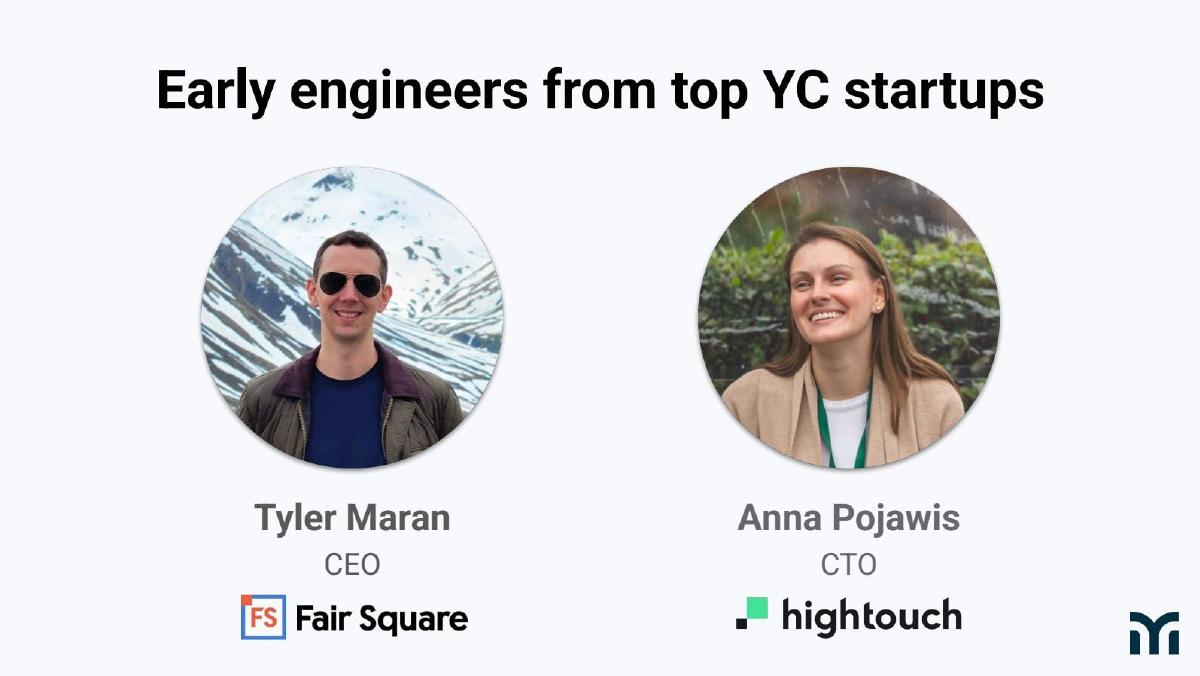
- The deck leads with team pedigree, highlighting the founders as 'early engineers from top YC startups' on Slide 2.
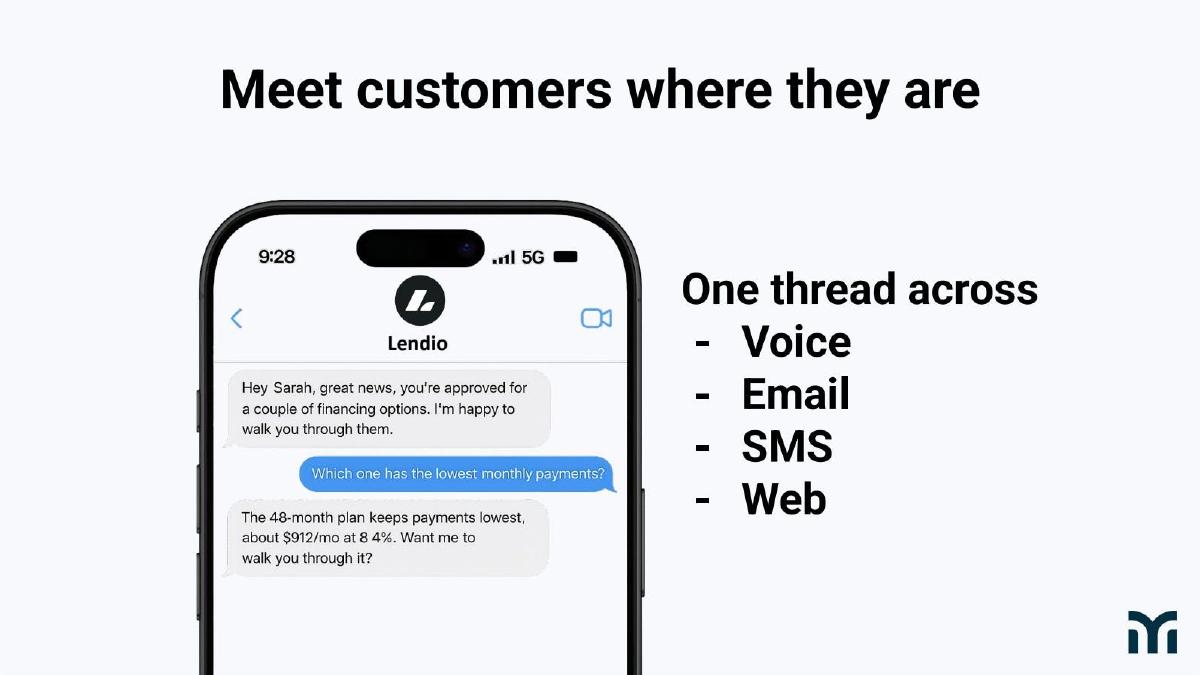
- Monumint positions its product as a unified thread across Voice, Email, SMS, and Web to 'meet customers where they are' (Slide 4).
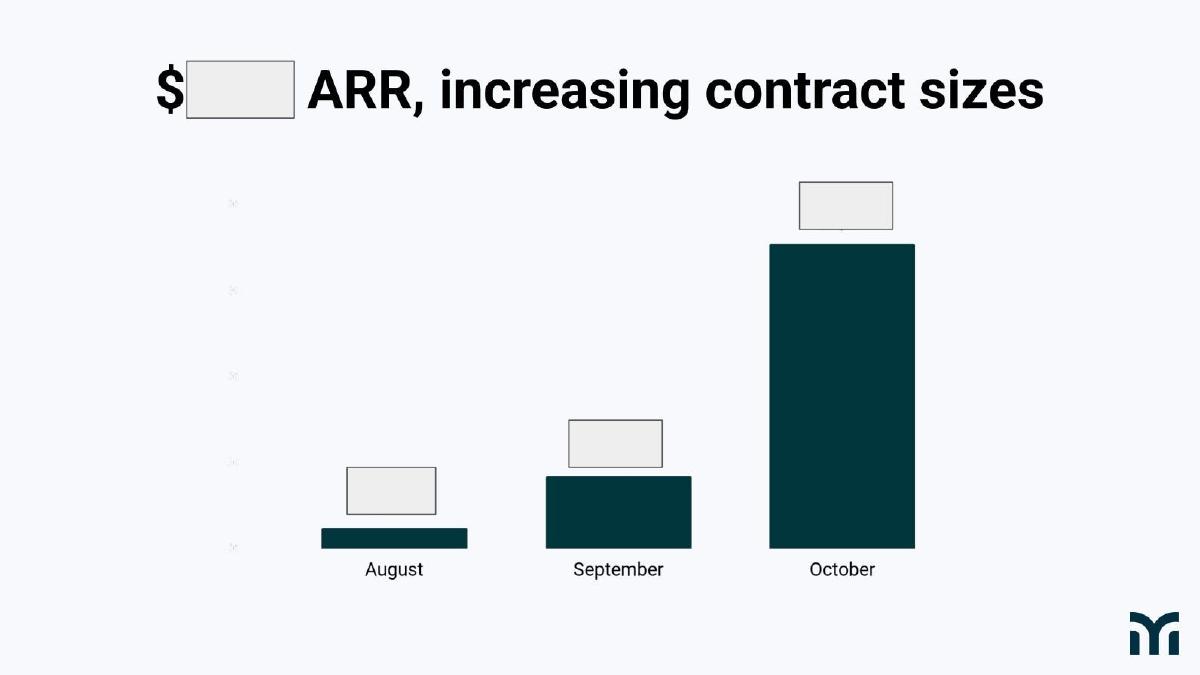
- The traction slide (Slide 5) shows three months of aggressive growth (August, September, October) with increasing contract sizes, though exact ARR figures are redacted.
- The problem statement is framed as a competitive disadvantage: 'Financial institutions are losing the customer experience war' (Slide 3).
- The vision slide (Slide 6) specifically identifies 'Voice AI' as the primary new layer for customer engagement.
- Market sizing is presented as a shift in penetration, moving from 10% today to 50% in five years (Slide 7).
- The deck completely omits a formal 'Ask' slide, competition slide, and detailed unit economics.
- The total slide count of 7 is significantly lower than the industry average of 12-19 slides for a seed round.
The 7-Slide Strategy: Narrative Over Data
Monumint’s pitch deck is an outlier in the 2024 fundraising environment. While many seed-stage companies are moving toward 20-slide decks filled with granular unit economics and technical whitepapers, Monumint relies on a 7-slide narrative arc. This approach suggests a high-conviction round where the founders’ pedigree and early traction signals do the heavy lifting. The deck is designed to be read in under two minutes, focusing on the inevitability of the market shift rather than the minutiae of the software architecture.
Slide 1: The Value Proposition
The title slide is functional and minimalist. It identifies the company as Monumint and defines the category: "Conversational AI for financial institutions." By narrowing the focus to financial institutions (FIs), the company signals that it is solving for high-compliance, high-stakes environments rather than being a general-purpose chatbot. This vertical focus is a critical component of their positioning, as FIs have unique regulatory and security requirements that generic AI agents often fail to meet.
Slide 2: The Pedigree Play
Slide 2 is arguably the most important slide in this specific deck. Titled "Early engineers from top YC startups," it features CEO Tyler Maran and CTO Anna Pojawis. The slide explicitly links them to Fair Square and Hightouch , respectively. In the venture capital world, being an "early engineer" at a successful Y Combinator company is a high-value signal. It suggests the founders have seen "what good looks like" during a period of hyper-growth and possess the technical chops to build a scalable product. By placing this slide second, Monumint establishes that the "who" is just as important as the "what."
Slide 3: The Existential Threat
Slide 3 serves as the problem statement: "Financial institutions are losing the customer experience war." This is a classic "change the world or die" framing. It doesn't just say customer service is expensive; it says FIs are losing a "war." This implies that if they do not adopt modern engagement tools, they will lose customers to more agile competitors (likely neobanks or tech-forward lenders). The dark background and centered text create a somber, urgent tone.
Slide 4: The Multi-Channel Solution
Slide 4 introduces the product concept: "Meet customers where they are." The visual shows a smartphone interface with a conversation between a customer and a lender (Lendio). The key takeaway here is "One thread across Voice, Email, SMS, Web." This addresses a major pain point in legacy banking: fragmented communication. By promising a unified thread, Monumint positions itself as a middleware layer that keeps the context of a customer's inquiry regardless of the channel they use. The example text in the mockup—discussing 48-month plans and monthly payments—highlights the AI's ability to handle complex, data-driven financial queries.
Slide 5: The Traction Signal
Slide 5 is the "proof" slide. Titled "ARR, increasing contract sizes," it shows a bar chart representing three months: August, September, and October. Although the specific dollar amounts are redacted, the growth trajectory is steep. The October bar is roughly four to five times the height of the August bar. The mention of "increasing contract sizes" is a qualitative signal that the company is moving up-market or successfully upselling existing clients. For a seed round, three months of clear, accelerating data can be more persuasive than three years of slow growth.
Slide 6: The Future State
Slide 6 acts as a transition to the vision: "Voice AI becomes the new customer engagement layer." This slide doubles down on the specific technology—Voice AI—suggesting that while they handle SMS and Email, the real frontier (and the highest value add) is replacing or augmenting phone-based support. This aligns with recent trends in LLM-powered voice agents that can handle natural language without the rigid menus of traditional IVR systems.
Slide 7: The Market Opportunity
The final slide, Slide 7, quantifies the opportunity. It uses two circles to compare "Today" ($20B market, 10% contact center penetration) with "5 years" ($100B market, 50% contact center penetration). This is a "rising tide" argument. Monumint isn't just fighting for a piece of the current pie; they are betting that the pie will quintuple as AI becomes the standard operating procedure for customer operations. The headline "Customer operations increasingly moving to conversational AI" frames this as an inevitable market shift.
What Monumint Does Well
The deck excels at narrative momentum . By keeping the slide count low, the founders force the investor to focus on three things: the team’s elite background, the rapid early traction, and the massive market tailwinds. The design is clean, professional, and avoids the "wall of text" trap that plagues many technical founders. The use of a specific customer example (Lendio) on Slide 4 makes a nebulous concept like "Conversational AI" feel concrete and deployable.
What is Missing from the Deck
The most glaring omission is a Competitive Landscape slide. The conversational AI space is incredibly crowded, with players ranging from incumbents like LivePerson and Genesys to well-funded startups like Bland AI or Sierra. Monumint does not explain why their specific approach is defensible or how they win against these giants. Additionally, there is no Business Model slide. While they mention "contract sizes," they don't clarify if they charge per seat, per resolution, or via a flat SaaS fee. Finally, the lack of an Ask slide is unusual for a pitch deck, though in high-demand rounds, this is often handled in the verbal pitch or a follow-up memo.
Lessons for Founders
Lead with your strongest asset: If you have a team with elite pedigrees (YC, FAANG, etc.), put that slide at the front. It sets the tone for the rest of the deck. · Visualise growth, even if you redact numbers: If you are sharing your deck publicly or with a wide group, you can redact specific ARR figures while still showing the shape of your growth curve. The slope of the line is often more important than the starting point for seed investors. · Focus on the 'Unified Thread': In a world of fragmented tools, the promise of a "single thread" across channels is a powerful value proposition. It suggests simplicity and better data for the end-user. · Keep it lean: You don't need 20 slides to raise a seed round. If your story is clear and your traction is undeniable, 7 to 10 slides are often enough to secure a first meeting.
Frequently asked questions
- What is Monumint's core product offering?
- According to Slide 1 and Slide 4, Monumint provides conversational AI for financial institutions. The product is designed to facilitate a single conversation thread across multiple channels, including Voice, Email, SMS, and Web, allowing banks and lenders to interact with customers on their preferred platforms.
- Who are the founders of Monumint and what is their background?
- Slide 2 identifies the leadership team as Tyler Maran (CEO) and Anna Pojawis (CTO). The deck emphasizes their technical background as 'early engineers from top YC startups,' specifically citing experience at Fair Square for Maran and Hightouch for Pojawis.
- How does Monumint view the current market opportunity?
- Slide 7 quantifies the market opportunity as a transition in contact center operations. It estimates the current market at $20B with 10% AI penetration, projecting growth to a $100B market within five years as penetration reaches 50%.
- What evidence of traction does the deck provide?
- Slide 5 features a bar chart showing month-over-month ARR growth for August, September, and October. While the specific dollar amounts are redacted in the public version, the chart visually demonstrates a significant increase in both total ARR and individual contract sizes.
- What key information is missing from the Monumint deck?
- The deck is extremely minimalist and lacks several standard components, including a slide on the competitive landscape, a detailed business model or pricing breakdown, a roadmap for future product development, and a specific 'Ask' detailing how much capital is being raised and how it will be used.