Volocopter’s 2022 Series E pitch deck, used to secure $170M, moves beyond the 'flying car' novelty to present a comprehensive Urban Air Mobility (UAM) ecosystem. The deck balances high-spec hardware (the VoloCity aircraft) with a proprietary digital operating system (VoloIQ). Rather than just selling a vehicle, Volocopter sells a solution to urban congestion, backed by concrete partnerships in Singapore, Paris, and Rome. The inclusion of 467 pre-orders and a leasing term sheet with Aviation Capital Group provides the commercial validation necessary for a late-stage round. While the deck is li…
Key takeaways
- The deck positions the VoloCity as a time-saving alternative, claiming a 15-minute flight from JFK to Manhattan versus a 60-minute cab ride (Slide 4).
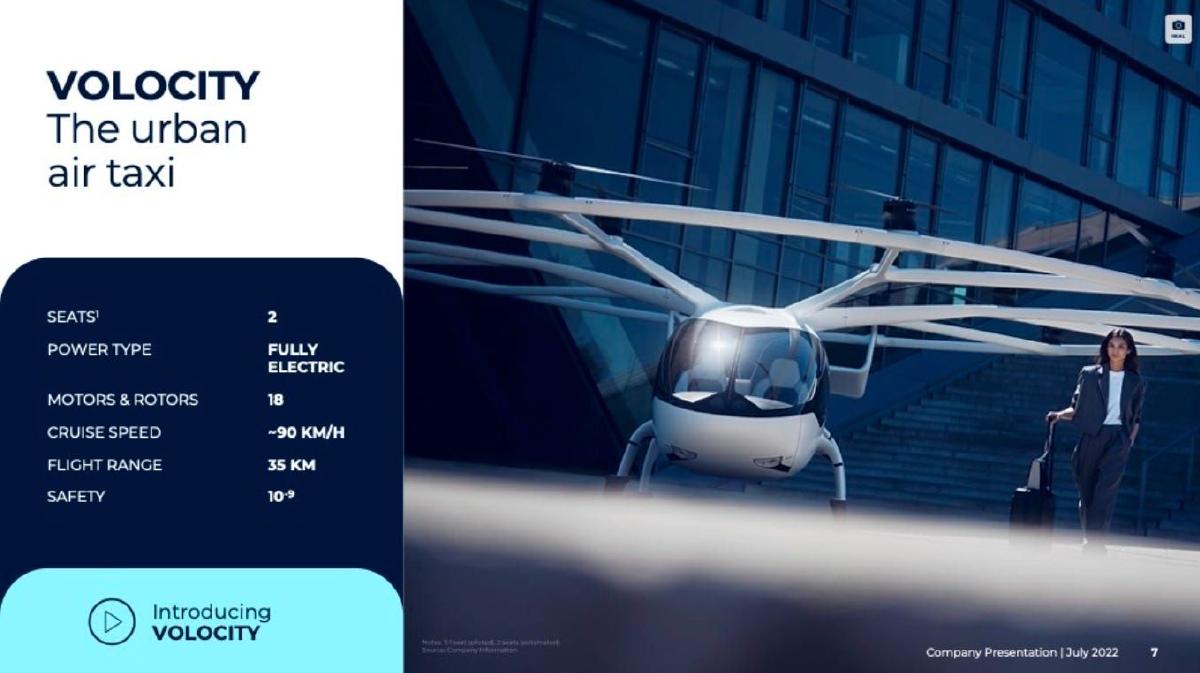
- Technical specifications for the VoloCity include 18 motors and rotors, a 35 km flight range, and a safety rating of 10^-9 (Slide 7).
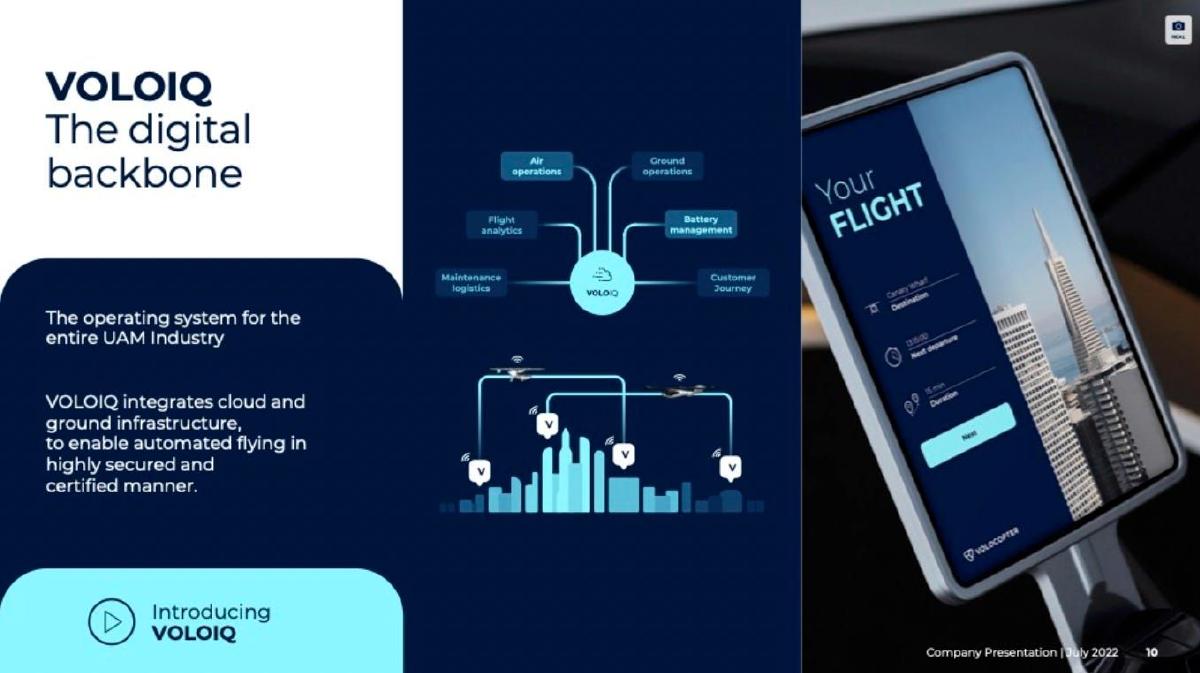
- Volocopter introduces VoloIQ as the 'digital backbone' and operating system for the entire UAM industry, covering air operations and battery management (Slide 10).
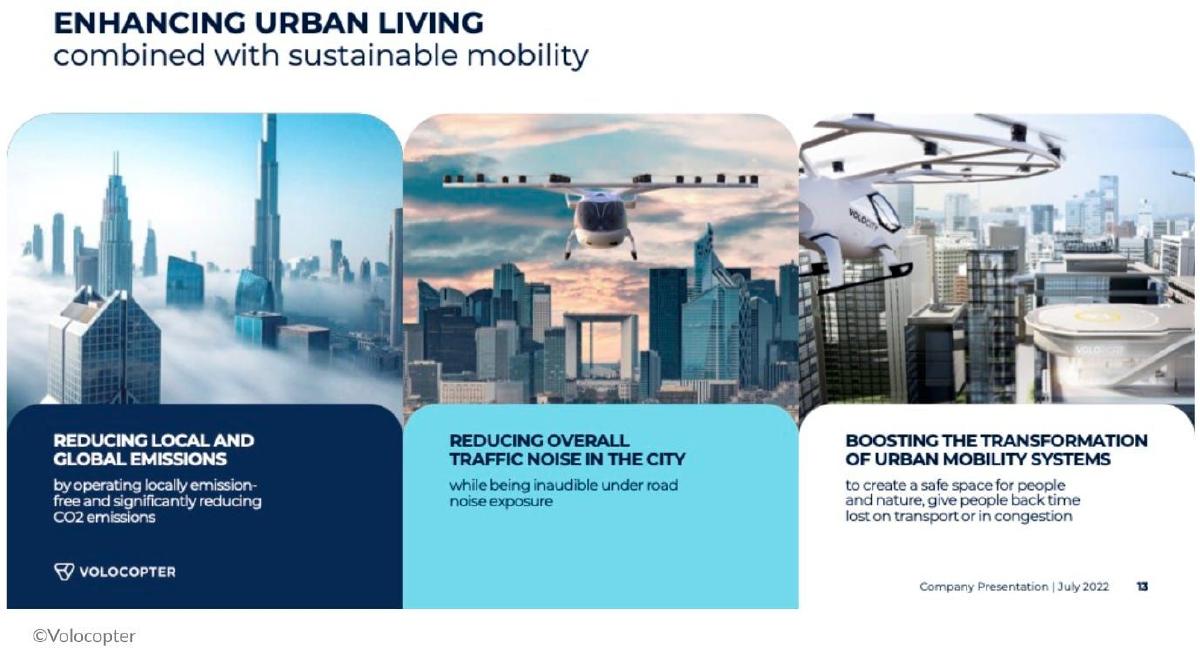
- The company emphasizes sustainability, claiming their aircraft are locally emission-free and inaudible under road noise exposure (Slide 13).
- Commercial traction is evidenced by 467 pre-orders and a signed leasing term sheet with Aviation Capital Group (Slide 19).
- Global expansion is detailed through pre-launch commitments in Singapore, Paris, Rome, South Korea, and NEOM (Slide 19).
- The deck lacks a dedicated team slide, financial breakdown, or specific use-of-funds for the $170M Series E round.
- Safety is a core pillar, with the aircraft designed for a 10^-9 failure probability, matching commercial aviation standards (Slide 7).
The Vision: Transforming Air Mobility
Slide 1-3: The Hook
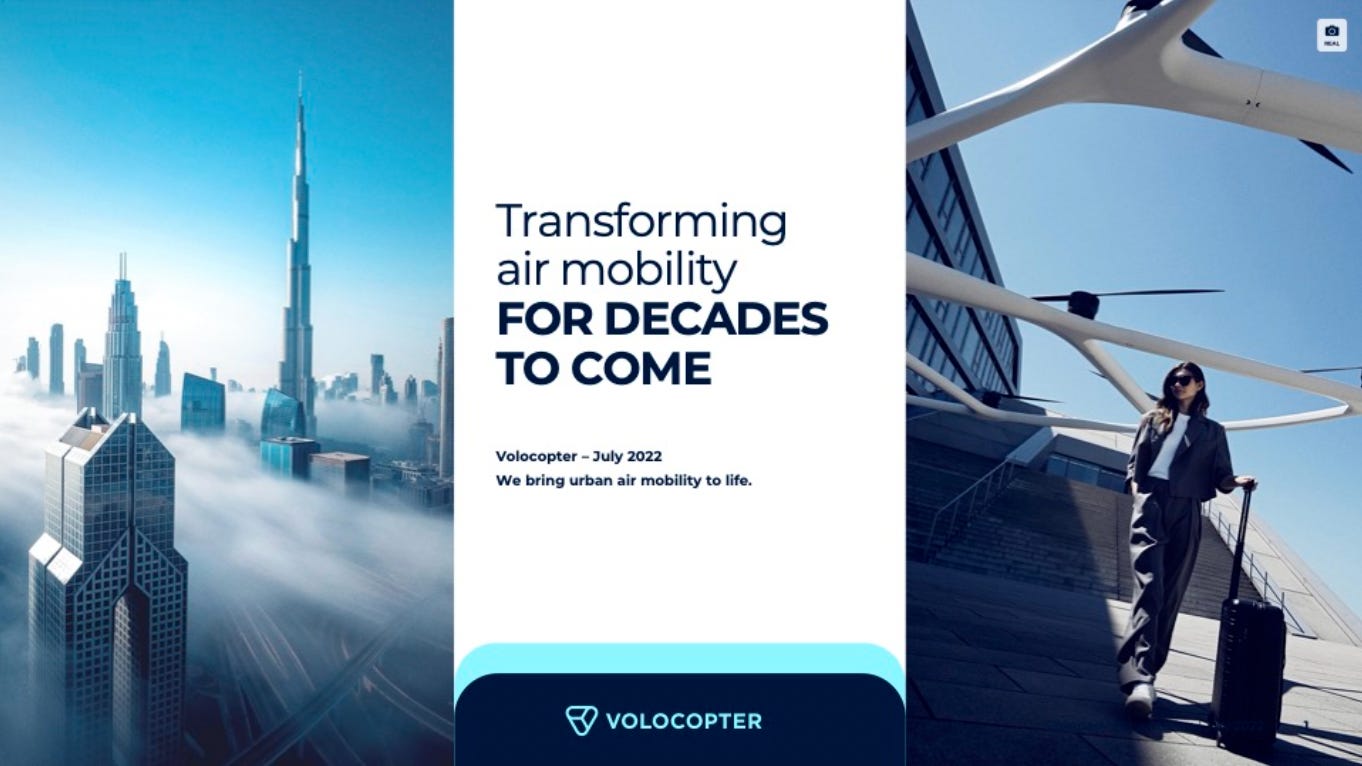
Volocopter opens with a high-production-value cover slide that sets the tone for a Series E round. The imagery focuses on a futuristic urban skyline (Dubai) and a sleek, modern aircraft design. The tagline, "Transforming air mobility FOR DECADES TO COME," signals that this is not a short-term play but a foundational infrastructure investment. By July 2022, the company was no longer just a startup; it was a leading contender in the eVTOL space, and the deck reflects this maturity through minimalist branding and bold statements.
Slide 4: The Use Case
Slide 4 provides the most relatable slide in the deck: the NYC yellow cab vs. VoloCity comparison. It takes a universal pain point—traffic between JFK International Airport and Manhattan—and offers a quantitative solution. The slide claims a ~60min travel time by car versus a ~15min travel time by VoloCity. This 75% reduction in travel time is the core economic driver for the business, justifying the likely premium price point of the service.
Slide 7: Hardware Specifications
On slide 7, Volocopter introduces the VoloCity aircraft. The technical specs are laid out clearly: 2 seats, fully electric, 18 motors & rotors, ~90 KM/H cruise speed, and a 35 KM flight range. The most important figure for regulators and institutional investors is the Safety: 10^-9 . This number represents the probability of a catastrophic failure per flight hour, matching the safety requirements for large commercial jetliners. By highlighting this, Volocopter addresses the primary hurdle for eVTOLs: certification and public trust.
Slide 10: The Software Moat
Hardware is notoriously difficult to defend, so slide 10 introduces VoloIQ , the "digital backbone." Volocopter positions this as the operating system for the entire Urban Air Mobility (UAM) industry. The diagram shows VoloIQ connecting air operations, ground operations, flight analytics, battery management, maintenance logistics, and the customer journey. This suggests that Volocopter isn't just building a vehicle; they are building the platform that will allow these vehicles to operate at scale, creating a software-based moat and recurring revenue potential.
Slide 13: Sustainability and Urban Living
Slide 13 pivots to the ESG (Environmental, Social, and Governance) narrative. It breaks down the benefits into three categories: Reducing Local and Global Emissions , Reducing Overall Traffic Noise , and Boosting the Transformation of Urban Mobility Systems . The claim that the aircraft is "inaudible under road noise exposure" is a critical selling point for city councils and urban planners who are wary of adding noise pollution to already congested areas.
Slide 16-19: Traction and Partnerships
Slide 16 serves as a transition with the bold claim, "We change the World FOR REAL." This leads into the most data-heavy slide in the deck, slide 19. Here, Volocopter lists its global footprint. It cites pre-launch commitments in Singapore (office opened 2019), Paris (partnership with RATP), Rome (partnership with ADR & Atlantia), South Korea , and NEOM . The commercial validation is capped off with 467 pre-orders and a leasing term sheet with Aviation Capital Group (ACG) . This slide proves that the company has moved past the prototype stage and into the commercialization phase.
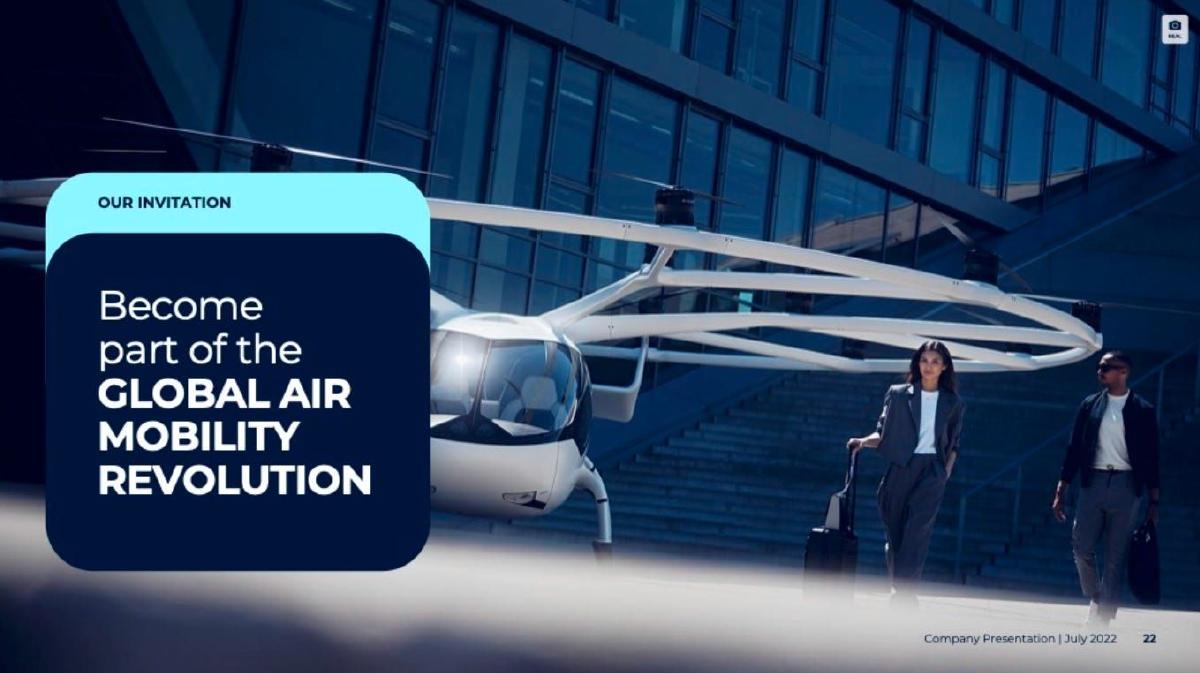
Slide 22: The Invitation
The deck concludes on slide 22 with an invitation to "Become part of the GLOBAL AIR MOBILITY REVOLUTION." It is a standard closing slide that maintains the high-end aesthetic of the rest of the presentation. Notably, there is no specific "Ask" slide in this version of the deck, which is common for late-stage companies that may be sharing specific terms in a separate data room or term sheet.
What Volocopter Does Well
The deck is exceptionally strong at contextualizing a complex technology . By using the JFK-to-Manhattan example, they take a futuristic concept and make it a tangible utility. The visual design is consistent and professional, which is vital for a company asking for hundreds of millions of dollars. Furthermore, the bifurcation of hardware (VoloCity) and software (VoloIQ) is a brilliant strategic move. It tells investors that the company is thinking about the entire ecosystem, not just the manufacturing of parts. The inclusion of the 10^-9 safety metric is a sophisticated nod to aerospace investors who understand the rigors of EASA and FAA certification.
What is Missing from the Volocopter Deck
Despite the successful $170M raise, the deck has significant gaps that would be fatal for an earlier-stage startup. First, there is no team slide . While the founders and CEO are likely well-known in the industry, a Series E deck should still highlight the depth of the engineering and regulatory talent. Second, there are no financials . There is no mention of the cost to manufacture a VoloCity, the projected ticket price for a passenger, or the path to profitability. Third, the competitive landscape is entirely absent. Companies like Joby Aviation, Archer, and Lilium were all active in 2022, and investors would want to know how Volocopter’s 18-rotor design compares to the tilt-rotor or jet-based designs of their rivals. Finally, the regulatory roadmap is vague; while they mention partnerships, they don't provide a timeline for Type Certification.
Founder Takeaways: Selling the Ecosystem
Founders should study how Volocopter sells the infrastructure, not just the product . If you are building a hardware product, you must show how it fits into the existing world. Volocopter does this by showing the "VoloPort" (Slide 13) and the digital backbone (Slide 10). Another takeaway is the power of pre-orders . Even if they are non-binding letters of intent, having a number like "467" on a slide provides a sense of inevitability that is very attractive to late-stage investors. Lastly, use comparative metrics . Don't just say your product is fast; say it turns a 60-minute drive into a 15-minute flight. That 45-minute difference is the actual product you are selling.
Frequently asked questions
- What are the primary technical specs of the VoloCity aircraft?
- According to slide 7, the VoloCity is a fully electric two-seater aircraft featuring 18 motors and rotors. It has a cruise speed of approximately 90 km/h and a flight range of 35 km. Crucially, it targets a safety level of 10^-9, which aligns with the highest standards in commercial aviation.
- How does Volocopter plan to manage its flight operations?
- Volocopter uses a proprietary system called VoloIQ, described on slide 10 as the 'digital backbone' of the UAM industry. This platform integrates cloud and ground infrastructure to manage air operations, flight analytics, maintenance logistics, battery management, and the customer journey, enabling automated flying in a certified manner.
- What evidence of commercial traction does the deck provide?
- Slide 19 highlights significant commercial momentum, including 467 pre-orders from various partners and a signed leasing term sheet with Aviation Capital Group (ACG). The company also lists active pre-launch partnerships with major cities and entities like RATP in Paris, ADR in Rome, and NEOM.
- What is the core value proposition for the end user?
- The value proposition is primarily time savings and environmental impact. Slide 4 compares a trip from JFK Airport to Manhattan, showing a reduction from 60 minutes by yellow cab to just 15 minutes via VoloCity. Slide 13 adds that the service is emission-free and significantly quieter than standard city traffic.
- What key information is missing from this pitch deck?
- The deck omits several standard fundraising elements, including a detailed team slide, a competitive landscape analysis, and specific financial projections. Furthermore, there is no 'Ask' slide detailing how the $170M Series E capital will be allocated across R&D, manufacturing, or global operations.