Gryppers presents a compelling case for a niche yet high-volume sports accessory: finger protection. The deck, published in 2016, leverages the founder's authentic background as a high-level collegiate athlete to address a specific pain point—finger injuries, which account for 2 in every 10 sports injuries annually according to slide 5. By positioning the product as 'not a glove' but a performance-enhancing protective sleeve, Gryppers targets a market of over 1.3 billion participants across major sports. While the deck excels at establishing problem-solution fit and founder credibility, it la…
Key takeaways
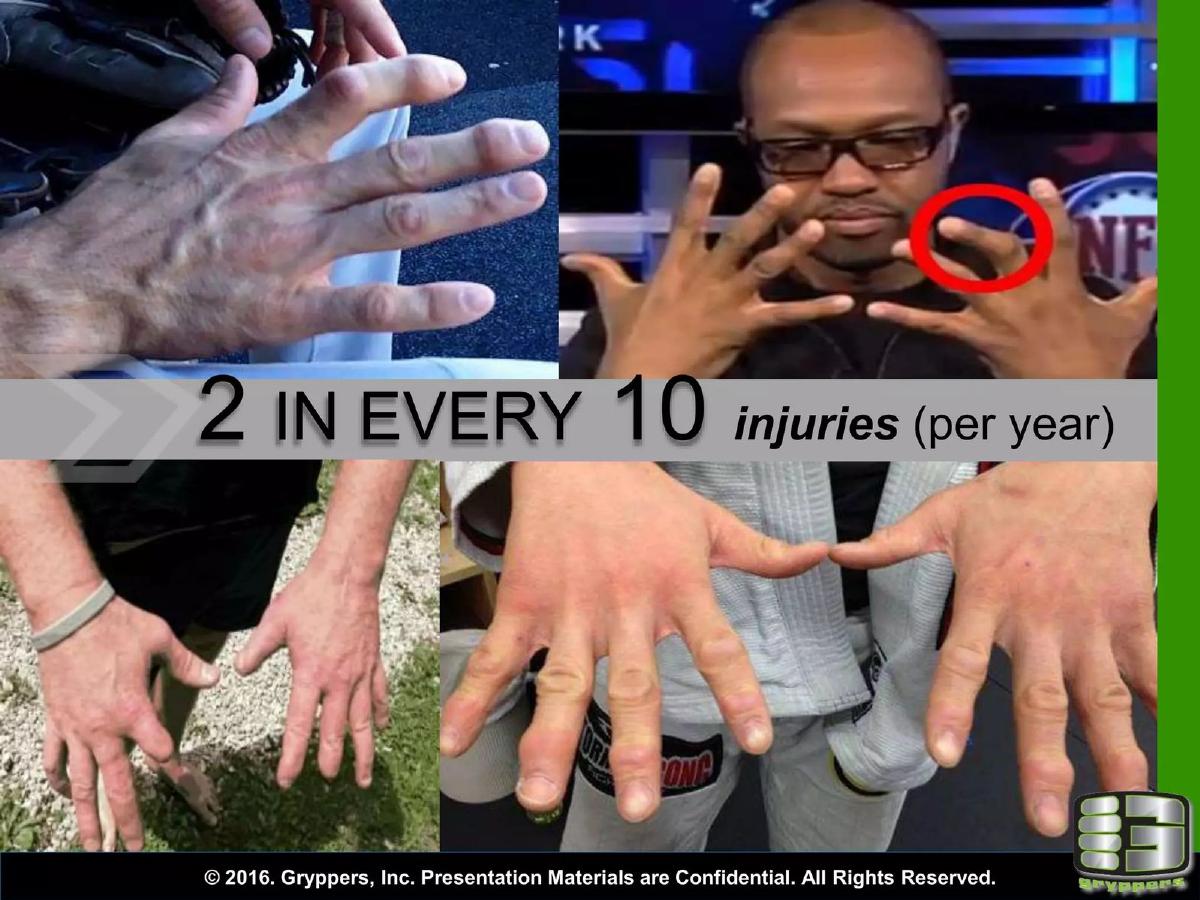
- The product addresses a significant injury gap, noting that 2 in 10 injuries per year involve the hands and fingers (Slide 5).
- Founder Jamelle Eugene brings high-level domain expertise as a former NCSU standout running back and Doak Walker nominee (Slide 12).
- The total addressable market is framed through massive participant numbers, including 400 million basketball players and 900 million volleyball players (Slide 15).
- Gryppers identifies a $200M annual market for sports gloves as its primary competitive territory (Slide 15).
- The company achieved early validation by being named one of the Top 12 most innovative companies in the U.S. at the Under Armour Future Show 13 (Slide 16).
- Product development is supported by technical partnerships, specifically with the NC State University College of Engineering (Slide 19).
- The deck lacks a specific financial 'Ask' amount, referring instead to a 'Grant' to fund the manufacturing of 2,000 units (Slide 21).
- The use of funds is prioritized toward IP, legal, and finalization of product service agreements (Slide 21).
Gryppers Pitch Deck Analysis
The Gryppers pitch deck, dating from 2016, is a classic example of a product-led startup founded on deep domain expertise. The company seeks to carve out a new category in the sports protective gear market, focusing exclusively on the fingers and hands. By moving away from the 'glove' terminology, Gryppers positions itself as a specialized performance tool rather than just another piece of apparel.
Slide 1-3: The Hook and The Identity
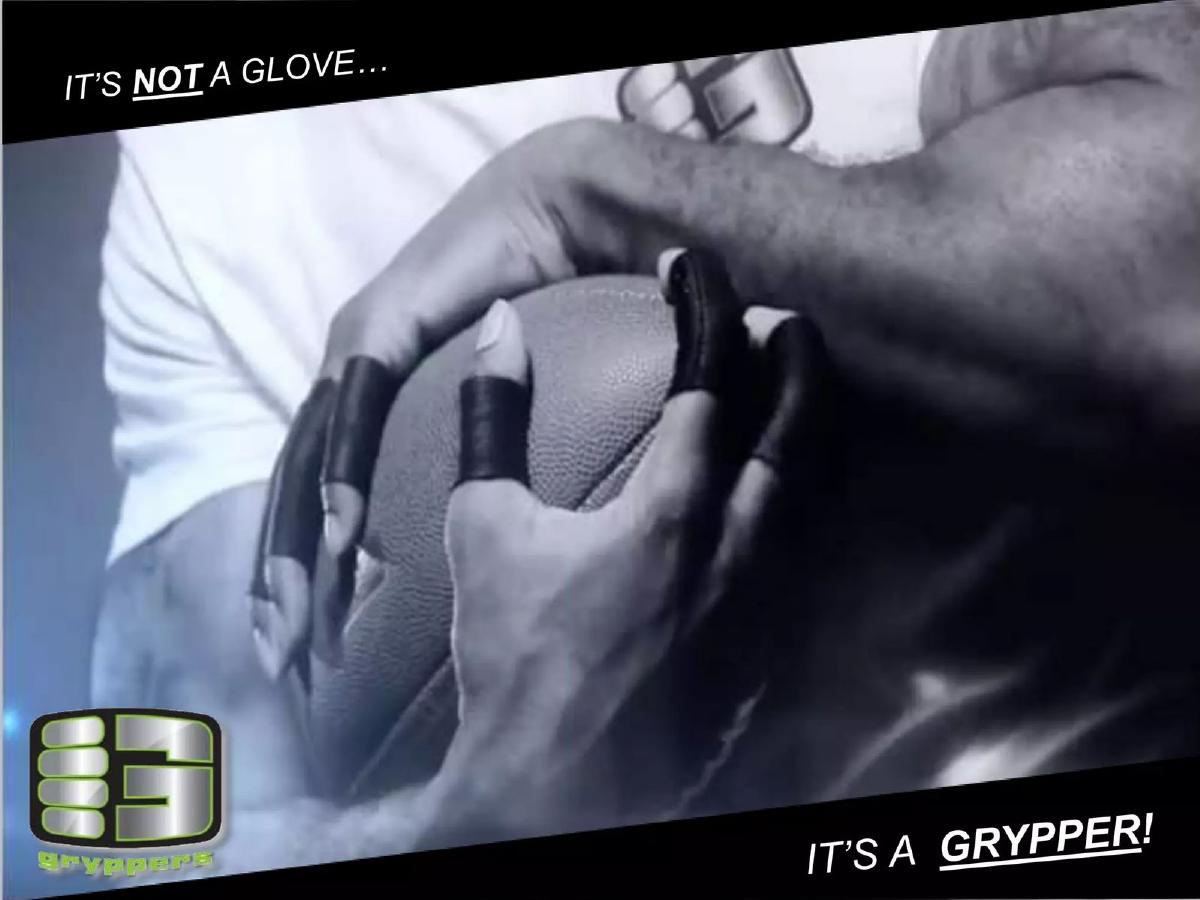
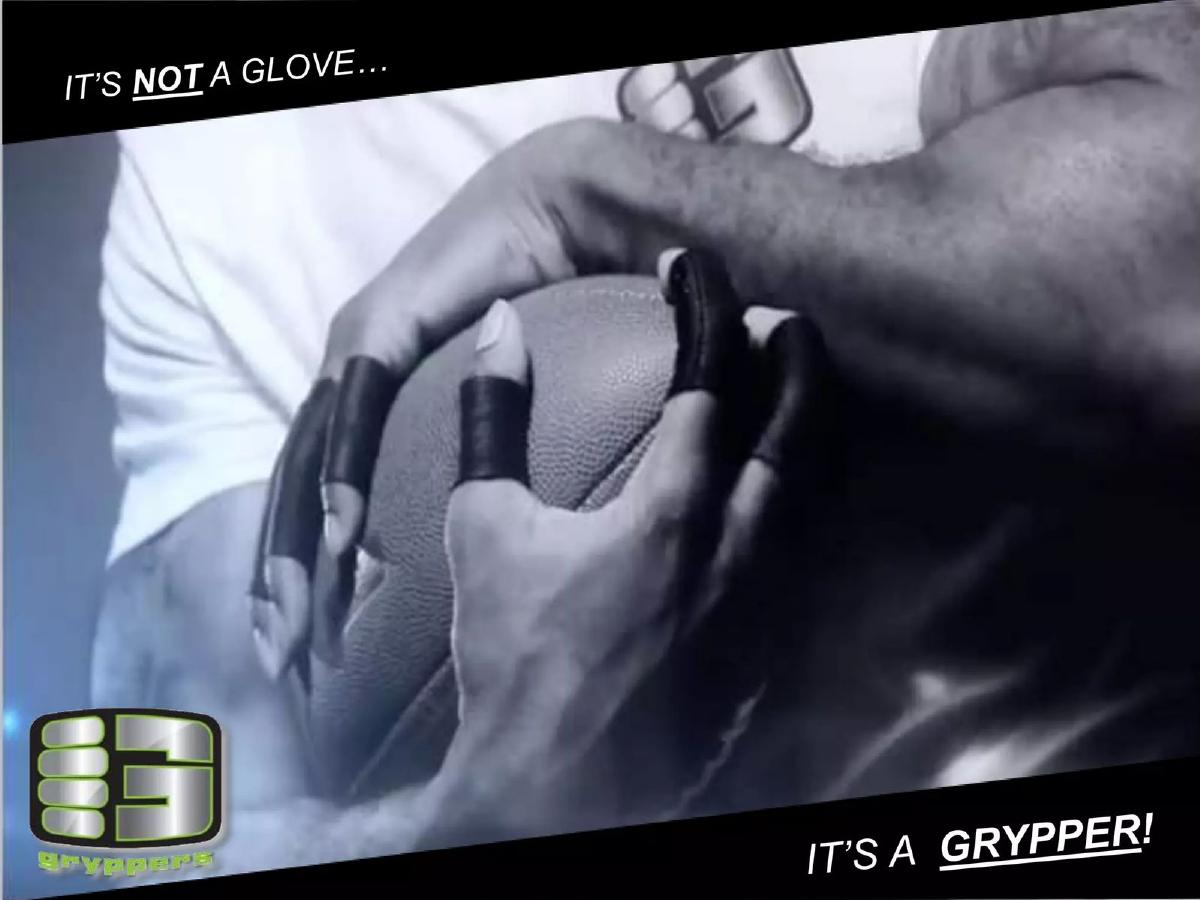
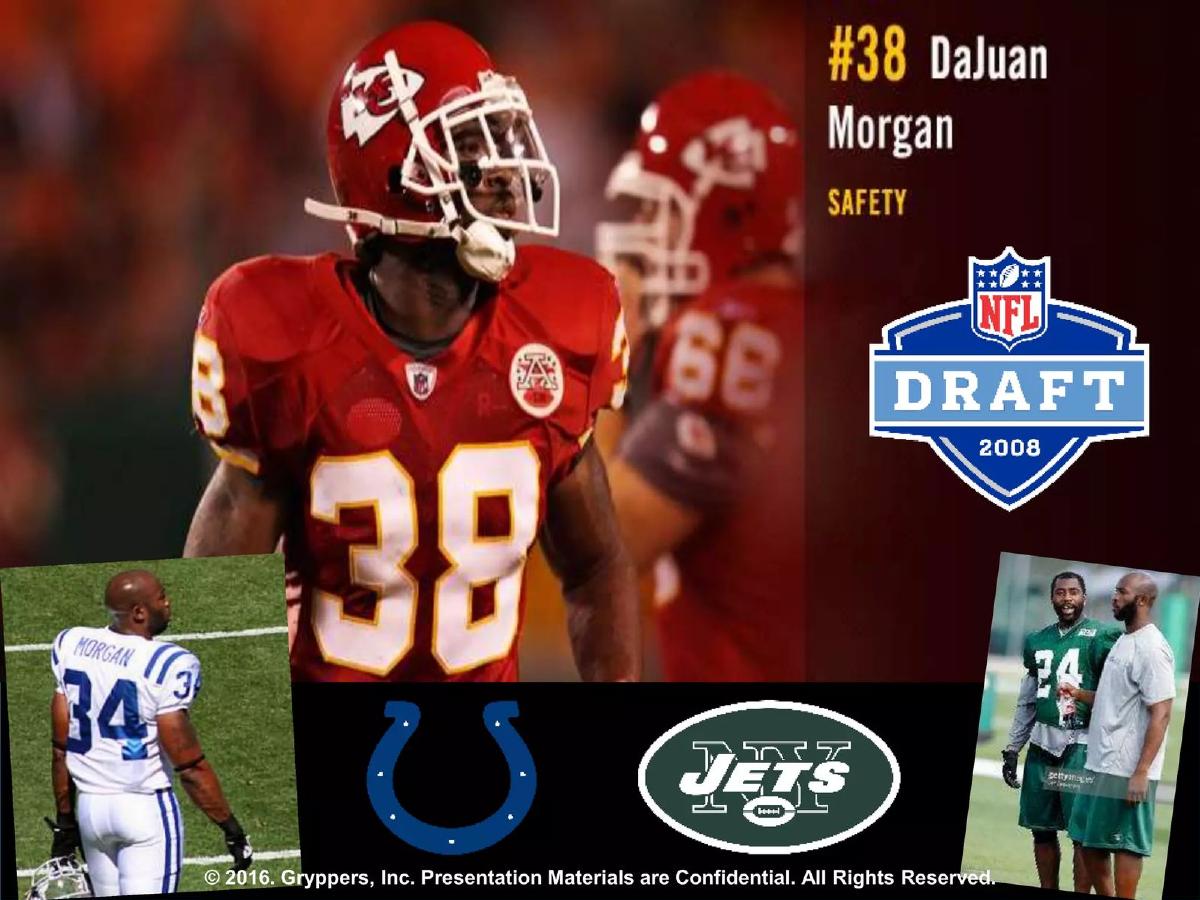
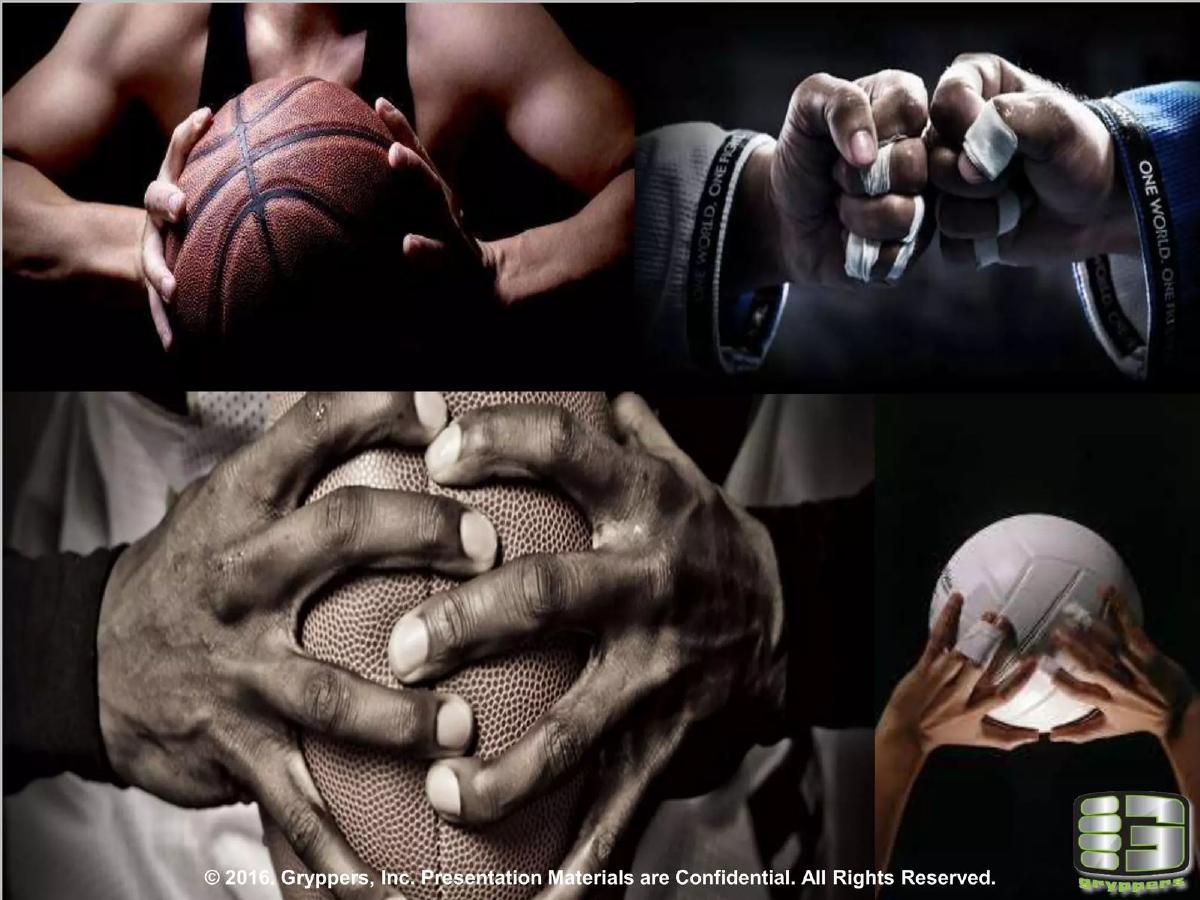
The deck opens with a high-contrast image of an athlete gripping a football, immediately establishing the brand's aesthetic. The tagline "IT'S NOT A GLOVE... IT'S A GRYPPER!" on Slide 1 is a strategic move to differentiate the product from the $200M glove market mentioned later. Slide 2 introduces DaJuan Morgan, a 2008 NFL Draft pick who played for the Chiefs, Colts, and Jets, lending professional athletic credibility to the brand right away. Slide 3 reinforces the versatility of the product, showing it in the context of basketball, football, volleyball, and combat sports (BJJ).
Slide 4-5: The Anatomy of the Problem
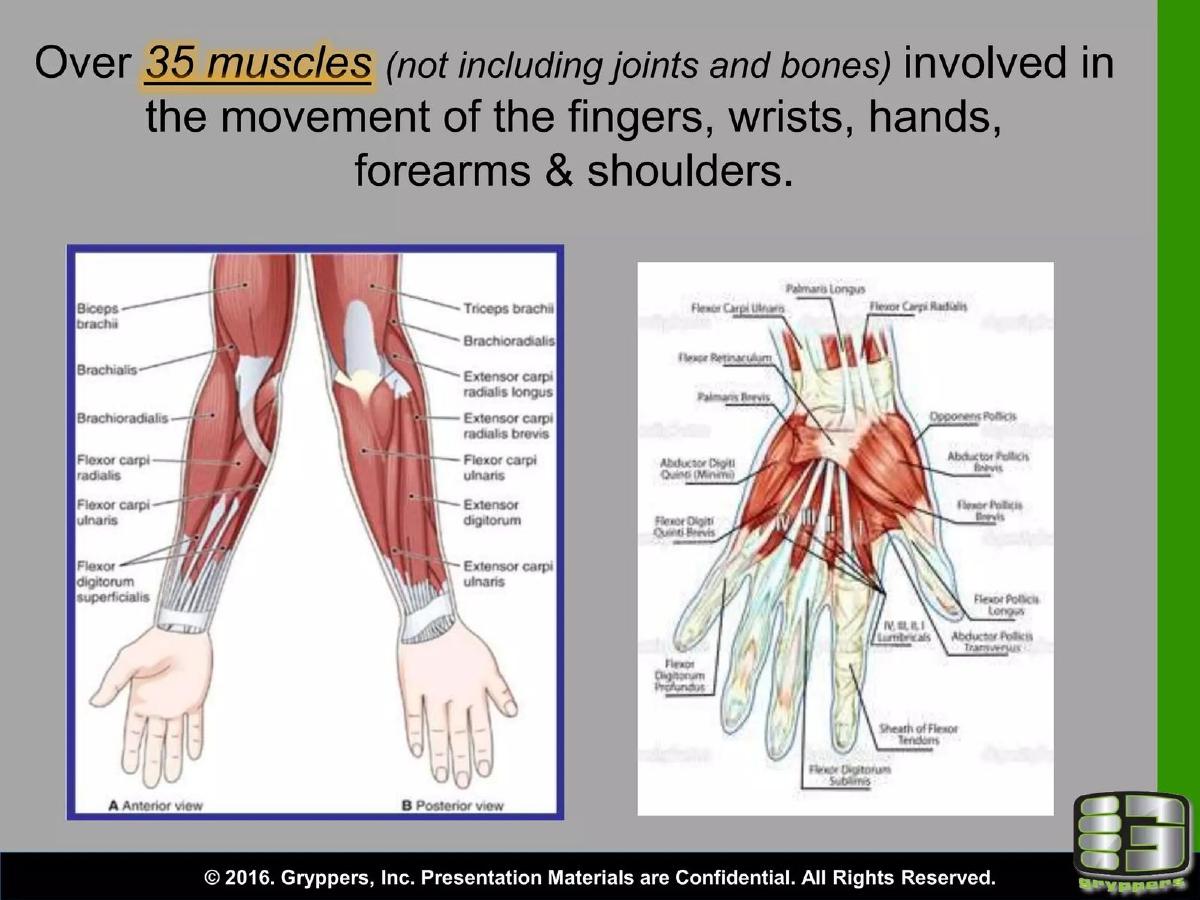
Slide 4 takes a clinical approach, showing the muscular anatomy of the hand and forearm. It notes that there are over 35 muscles involved in these movements. This sets the stage for Slide 5, which delivers the 'shock' metric: 2 in every 10 injuries per year involve the hands and fingers. The visual evidence of mangled fingers on this slide is visceral and effectively communicates the severity of the problem the product aims to solve.
Slide 6-9: Competitive Landscape and Current Failures
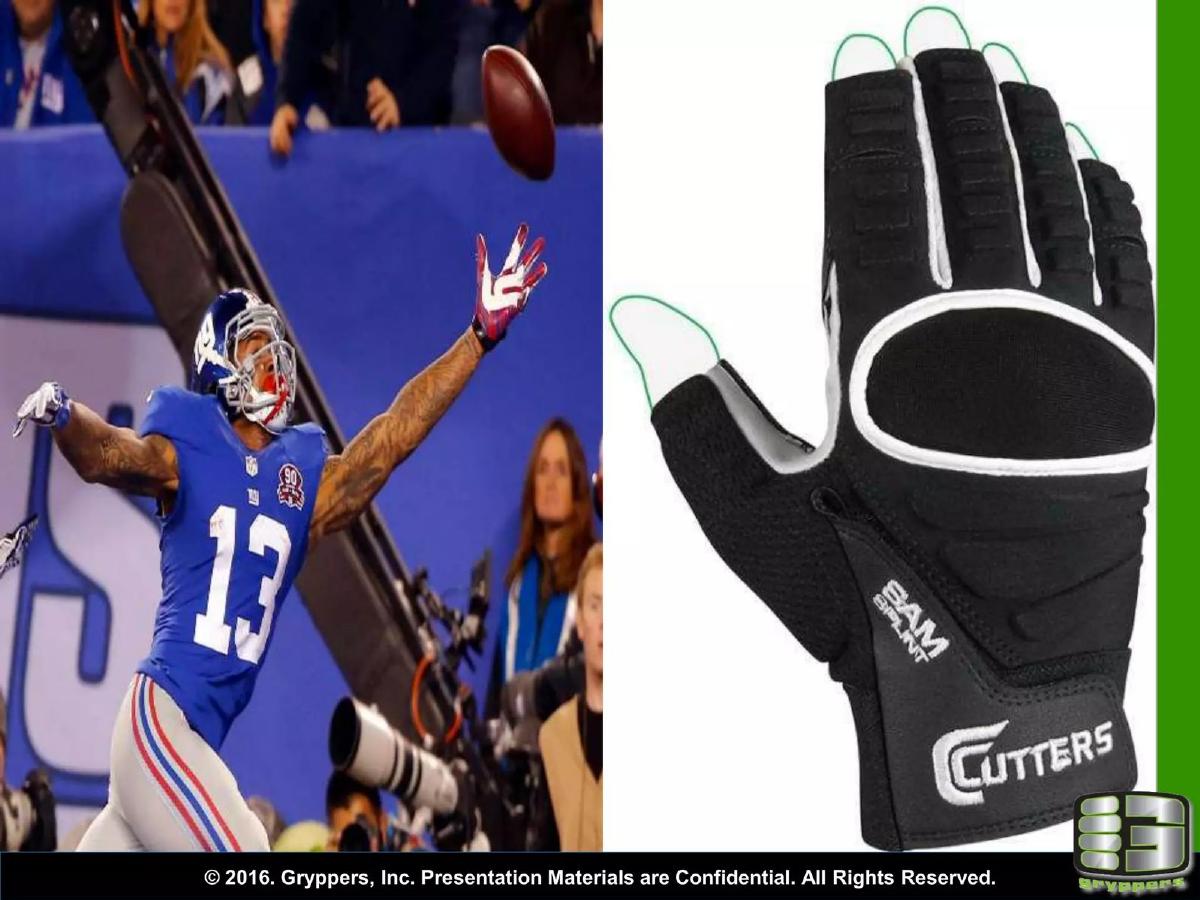
Slide 6 shows a traditional 'Cutters' brand football glove, implying that even the industry standard doesn't solve the specific finger-injury problem. Slide 7 shows the most common current solution: athletic tape. The images show athletes with multiple fingers taped up, which is bulky, limits range of motion, and is time-consuming to apply. Slides 8 and 9 use atmospheric imagery of athletes in the rain and in high-contact situations to show where traditional gear fails—specifically in maintaining grip when wet or protecting joints during impact.
Slide 10-12: The Shift in Focus and Founder Credibility
Slide 10 asks a pivotal question: "WHAT IF THE FOCUS WAS ON THE FOREFRONT OF INJURY PREVENTION???" This shifts the narrative from treatment to proactive protection. Slide 11 and 12 introduce the founder, Jamelle Eugene. His accolades as an NCSU standout running back, Team Captain, and Doak Walker Nominee are not just fluff; they establish him as a subject matter expert who has lived the problem every day on the field.
Slide 13-14: The Solution and Mission
Slide 13 showcases the physical product—a series of sleeves for the fingers. The deck claims Gryppers can be worn independently or in tandem with traditional measures to maximize performance and reduce injury. Slide 14 expands the mission to 'various sports & markets,' showing the product being used in tennis and golf, suggesting that the utility extends beyond high-contact team sports.
Slide 15-16: Market Data and Innovation Awards
Slide 15 provides the 'Big Number' market data. While the numbers for basketball (400 million) and volleyball (900 million) are global participant estimates, they serve to show the massive ceiling for a low-cost, high-utility accessory. The slide also notes $200M in annual glove sales , identifying the specific wallet share they are targeting. Slide 16 highlights their selection as a Top 12 Most Innovative Company at the Under Armour Future Show 13, which is a significant third-party validation for an early-stage hardware/apparel startup.
Slide 17-20: Testing, Validation, and Manufacturing
The deck emphasizes a localized, high-quality development process. Slide 17 mentions user testing at IMG Academy , a world-renowned sports training facility. Slide 18 highlights their North Carolina roots, and Slide 19 shows a partnership with the NC State University College of Engineering . This technical backing is crucial for a product claiming medical/protective benefits. Slide 20 provides social proof via athlete testimonials from a 2016 Spring Game, where users specifically mention improved accuracy and control with sweaty hands.
Slide 21-22: Use of Funding and Closing
Slide 21 outlines the immediate roadmap. The 'Use of Funding' includes IP & Legal, product finalization, and the manufacturing of 2,000 units . Interestingly, the deck mentions that a 'Grant' will allow them to validate claims, suggesting this specific version of the deck might have been for a pitch competition or a specific grant application rather than a traditional VC seed round. The deck closes on Slide 22 with a strong visual of the product and the slogan 'Designed to CHANGE THE GAME.'
What Works in the Gryppers Deck
Authentic Founder Story: Jamelle Eugene’s background makes the problem believable. Investors trust founders who have experienced the pain point they are solving. · Visceral Problem Statement: The use of injury statistics combined with photos of finger injuries makes the need for the product undeniable. · Clear Differentiation: By stating 'It's not a glove,' they avoid being compared to massive incumbents like Nike or Under Armour on a feature-by-feature basis, instead positioning themselves as a specialized medical/performance hybrid. · Technical Validation: Partnering with a College of Engineering (Slide 19) moves the product from 'clothing' to 'engineered gear.'
What is Missing from the Gryppers Deck
Specific Financial Ask: The deck mentions a 'Grant' and manufacturing 2,000 units but does not state the total dollar amount being raised or the valuation. · Unit Economics: There is no mention of the Cost of Goods Sold (COGS) or the target retail price. For a physical product, understanding the margin is essential for investors. · Distribution Strategy: While they mention 'outfitting teams,' there is no clear plan for how they will reach the 900 million volleyball players mentioned in the market slide. Will they sell D2C, through big-box retail, or via team contracts? · Competitive Analysis: Aside from showing tape and one glove, there is no detailed breakdown of how they compare to other finger-sleeve competitors or medical-grade splints.
What Other Founders Should Copy
The 'Top 12' Slide: If you have won an award or been a finalist in a prestigious competition (like the Under Armour challenge on Slide 16), give it a full slide. It is the ultimate shortcut to credibility. · The Anatomy Slide: For health or performance products, showing the science/anatomy (Slide 4) helps justify why your specific design works better than generic alternatives. · Testimonial Specificity: The quotes on Slide 20 aren't just 'I like it.' They mention specific benefits like 'accuracy of passes' and 'control when hands get sweaty.' Specific benefits are more persuasive than general praise.
Frequently asked questions
- What is the core problem Gryppers is trying to solve?
- Gryppers targets the high frequency of hand and finger injuries in sports. Slide 5 notes that 20% of all sports injuries involve these areas. The deck argues that traditional solutions, like standard gloves or athletic tape (shown on Slide 8), are insufficient. Gryppers aims to provide a specialized device that offers protection without the bulk of a full glove, allowing for better tactile feel and performance.
- Who is the target audience for this product?
- The deck identifies a broad range of athletes. Slide 15 lists participants in football (1.1M+), basketball (400M), volleyball (900M), Brazilian Jiu Jitsu (1M+), and rugby (1M+). Slide 14 also visualizes use cases in tennis and golf. The product is designed for any sport where grip and finger dexterity are critical but where finger joints are at risk of injury.
- What validation has the company received?
- Gryppers highlights two major forms of validation. First, Slide 16 shows they were finalists in the Under Armour Future Show 13, ranking in the Top 12 most innovative companies out of 4,000. Second, Slide 20 provides testimonials from the 2016 Spring Game, where athletes reported improved pass accuracy and better ball control even with sweaty hands.
- How does the founder's background influence the pitch?
- Founder Jamelle Eugene is central to the deck's credibility. Slide 12 details his career as a standout running back at NC State, a team captain, and a Doak Walker nominee. This 'founder-market fit' suggests the product was born out of personal necessity and first-hand experience with the rigors of elite athletics, which resonates with both investors and potential athlete-users.
- What are the immediate next steps for the company?
- According to Slide 21, the immediate focus is on 'IP & Legal' and the 'Finalization of Product.' The company intends to use its current funding to manufacture an initial run of 2,000 units. This small-scale production is intended to validate their claims and outfit teams, creating a track record to appeal to larger venture capital investors for full-scale manufacturing in 2017.