Mangrove Lithium’s 7-slide deck is a highly technical, problem-focused presentation that successfully secured $10M in Series A funding in 2021. The deck avoids traditional startup tropes like team bios or financial projections, instead focusing entirely on the lithium supply chain bottleneck and the company’s proprietary electrochemical process. By highlighting the inefficiency of conventional lithium brine processing—which requires a two-step conversion from carbonate to hydroxide—Mangrove positions its direct conversion technology as a cost-saving necessity for the EV market. The deck concl…
Key takeaways
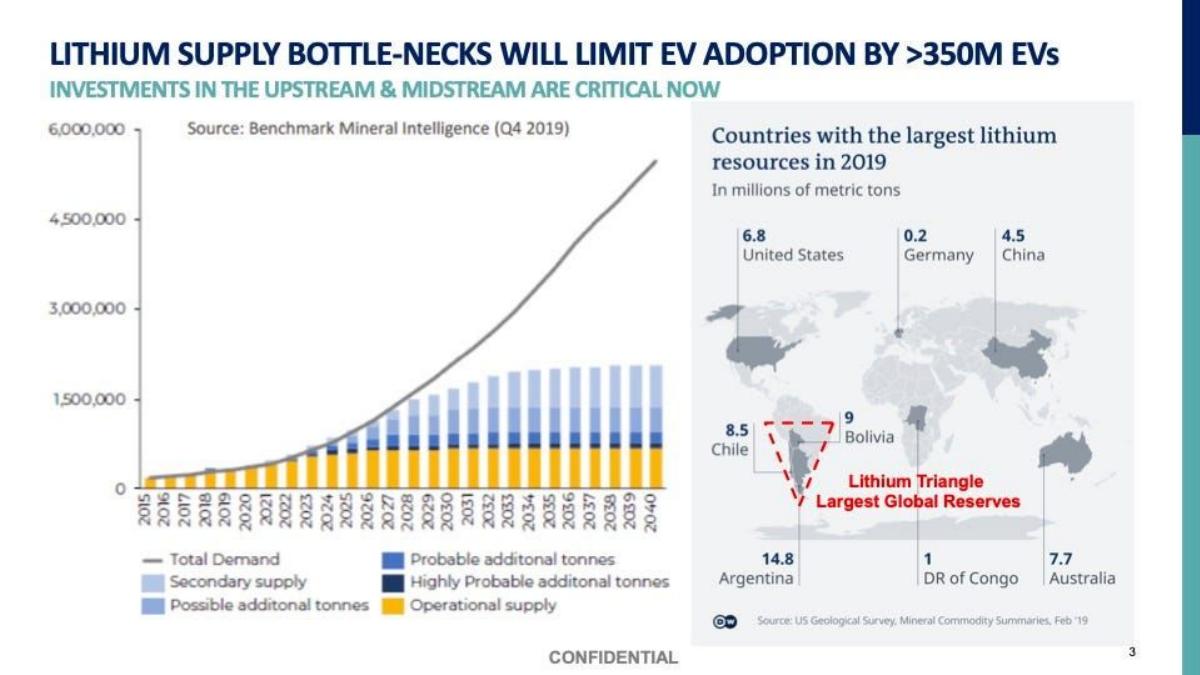
- The deck identifies a specific supply bottleneck where lithium supply limits EV adoption by over 350M vehicles (Slide 3).
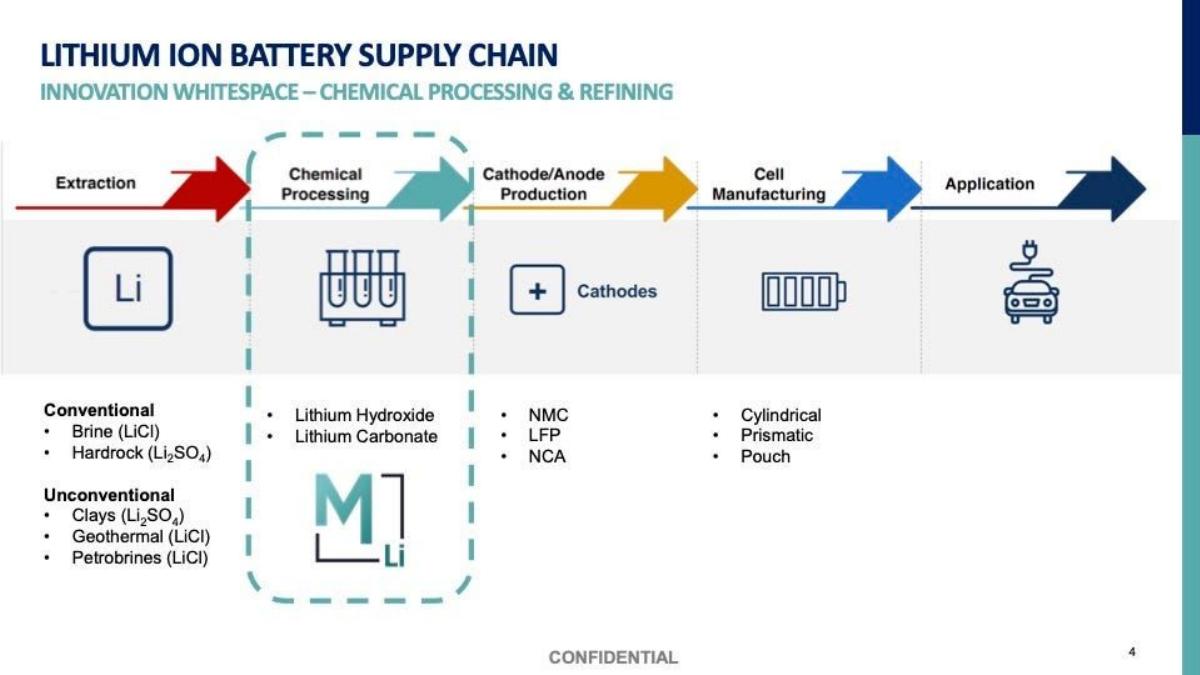
- Mangrove targets the 'Chemical Processing & Refining' whitespace within the broader lithium-ion battery supply chain (Slide 4).
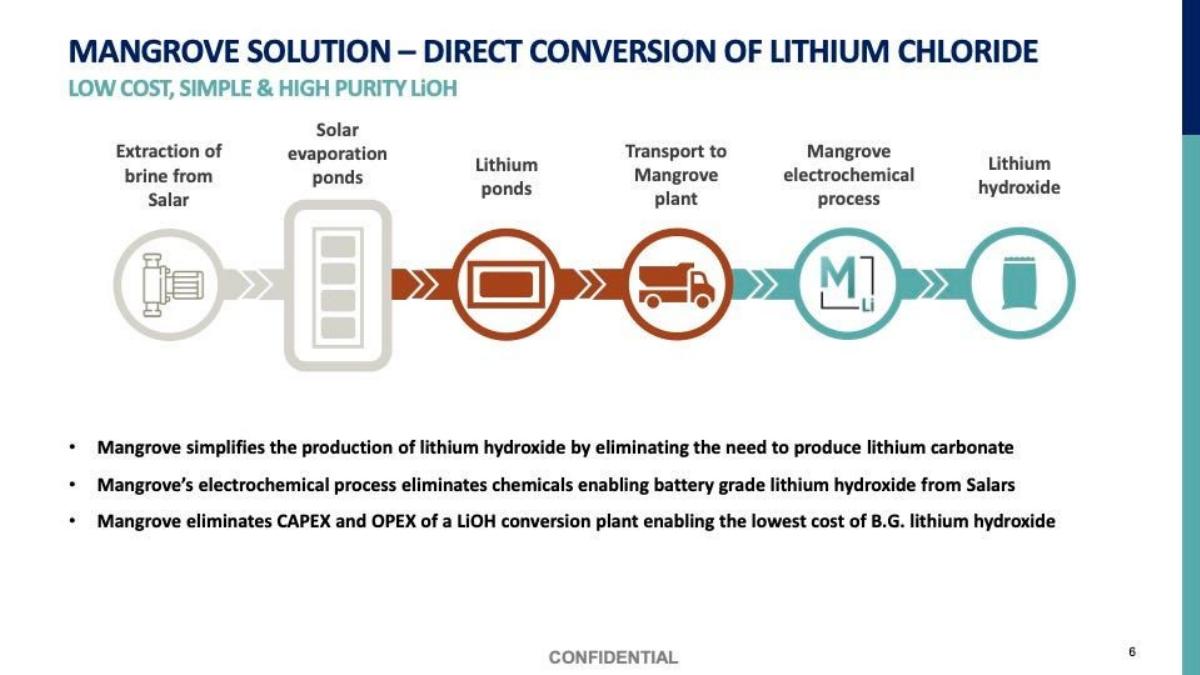
- The core value proposition is the elimination of the lithium carbonate production step, reducing both CAPEX and OPEX (Slide 6).
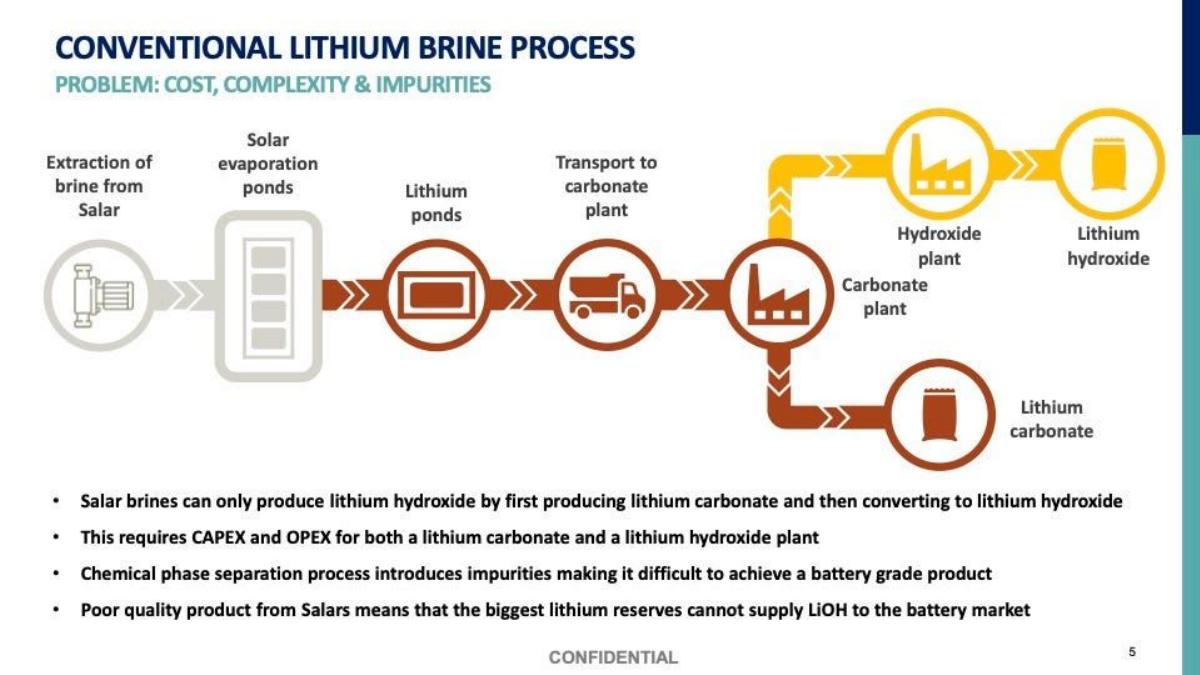
- Conventional brine processing is criticized for introducing impurities that make battery-grade products difficult to achieve (Slide 5).
- The company claims its electrochemical process eliminates chemicals, enabling battery-grade lithium hydroxide from Salars (Slide 6).
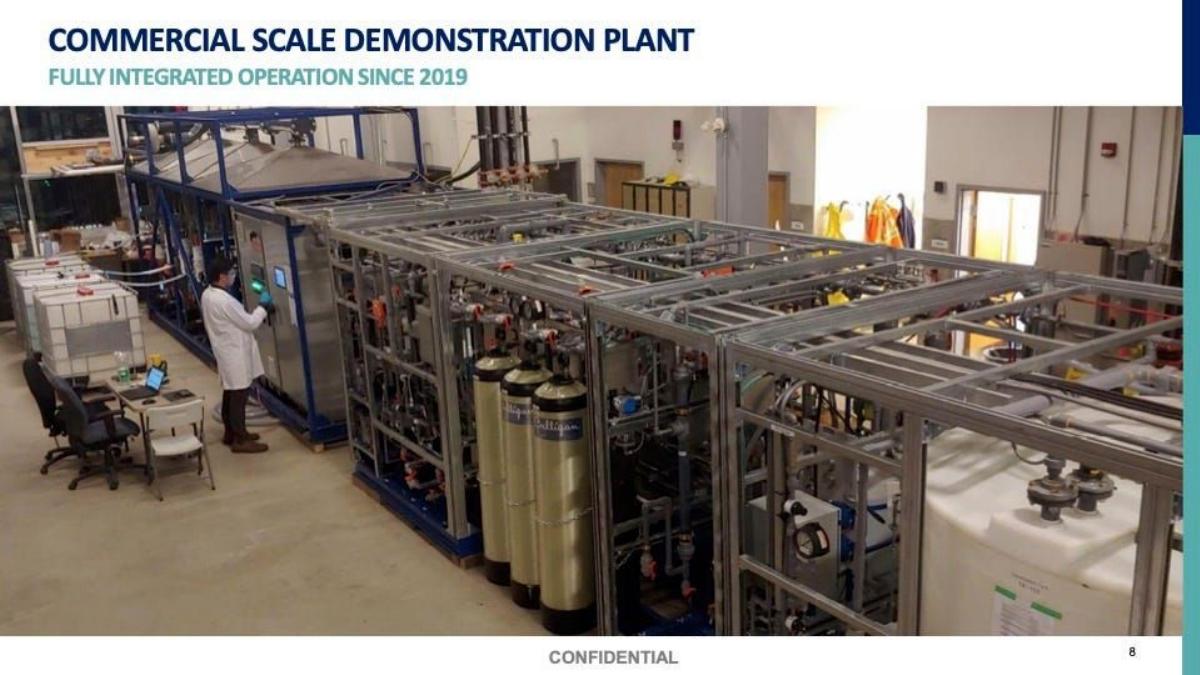
- Visual evidence of a 'Commercial Scale Demonstration Plant' operational since 2019 serves as the primary proof of concept (Slide 7).
- The deck completely omits a team slide, financial ask, and competitive landscape analysis.
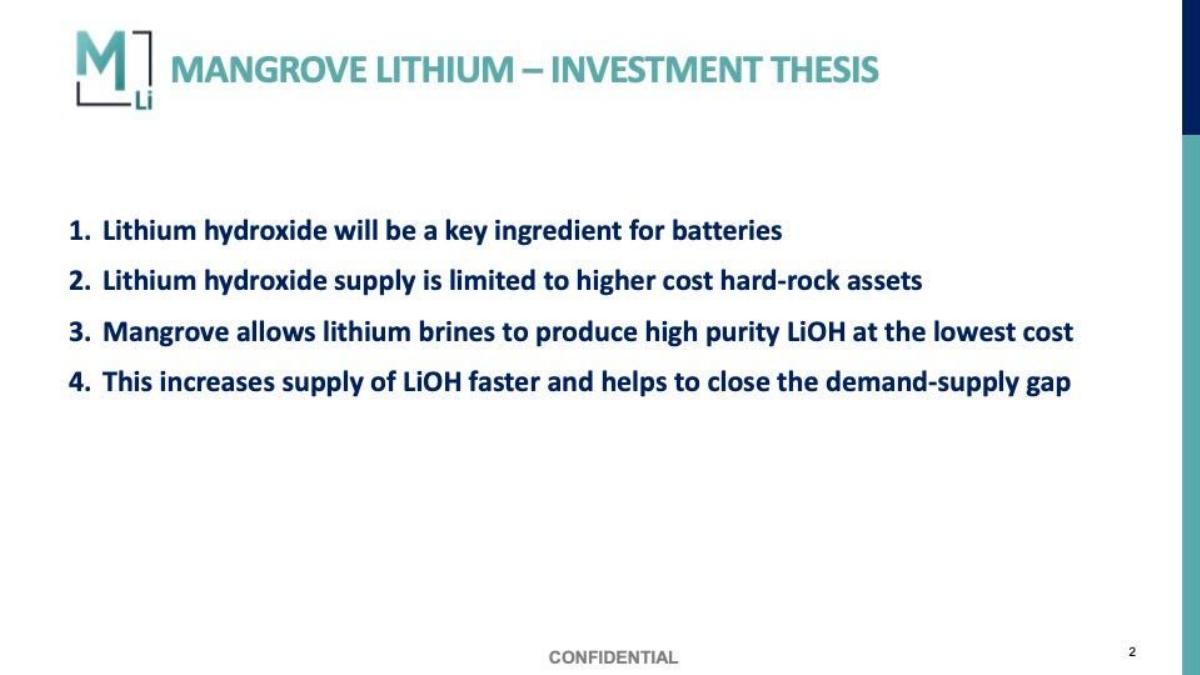
- The investment thesis relies on the transition of lithium hydroxide supply from high-cost hard-rock assets to low-cost brines (Slide 2).
The 7-Slide Industrial Thesis
Mangrove Lithium’s pitch deck is a departure from the standard 15-slide venture template. It is a technical brief designed for sophisticated investors in the energy and hardware sectors. The deck, which supported a $10M Series A in 2021 as reported by Business Insider, focuses entirely on the macro-economic necessity of lithium and the micro-chemical efficiency of Mangrove’s proprietary process. There are no slides dedicated to the founders, no marketing plans, and no financial projections. Instead, the deck builds a logical bridge from a global supply crisis to a specific chemical engineering solution.
Slide 1: Title Slide
The deck opens with a minimalist title slide. It features the Mangrove Lithium logo—a stylized 'M' with a 'Li' (the chemical symbol for Lithium) subscript—and the name of Saad Dara. The clean, professional aesthetic sets a tone of industrial reliability rather than consumer-facing flash.
Slide 2: The Investment Thesis
Slide 2 outlines the core argument for the company's existence in four concise points. It establishes that lithium hydroxide is the 'key ingredient' for batteries but notes that current supply is restricted to 'higher cost hard-rock assets.' The thesis concludes that Mangrove’s ability to produce high-purity LiOH from lithium brines at the 'lowest cost' will close the demand-supply gap. This slide acts as an executive summary, telling the investor exactly what the company does and why it matters before diving into the data.
Slide 3: Market Dynamics and Supply Bottlenecks
This slide provides the 'Why Now?' factor. Using a chart from Benchmark Mineral Intelligence (Q4 2019), it visualizes a massive divergence between total demand and operational supply. The headline is aggressive: 'LITHIUM SUPPLY BOTTLE-NECKS WILL LIMIT EV ADOPTION BY >350M EVs.' By citing the 'Lithium Triangle' in South America (Argentina, Bolivia, and Chile) as having the largest global reserves, Mangrove sets the stage for why their brine-processing technology is geographically strategic. The slide successfully transforms a technical hardware play into a solution for a global macroeconomic problem.
Slide 4: Mapping the Innovation Whitespace
Slide 4 is a supply chain map. It breaks the lithium-ion battery lifecycle into five stages: Extraction, Chemical Processing, Cathode/Anode Production, Cell Manufacturing, and Application. Mangrove places a dotted box around 'Chemical Processing & Refining,' labeling it the 'Innovation Whitespace.' By showing exactly where they sit in the value chain—between raw lithium extraction and cathode production—they clarify their business model as a midstream processor rather than a miner or a battery manufacturer.
Slide 5: The Problem with Conventional Processing
To sell a new solution, you must first discredit the old one. Slide 5 uses a flow chart to show the 'Conventional Lithium Brine Process.' It highlights the complexity: brine must go through solar evaporation, then a carbonate plant, and finally a hydroxide plant. The slide lists four critical flaws: the need for two separate plants (increasing CAPEX/OPEX), the introduction of impurities during phase separation, and the inability of the largest reserves (Salars) to efficiently supply the battery market. This slide creates the 'villain' of the story: inefficiency.
Slide 6: The Mangrove Solution
Slide 6 mirrors the previous slide’s layout but replaces the complex, multi-stage conventional process with the 'Mangrove Solution.' The flow is significantly shorter, moving from lithium ponds to a 'Mangrove electrochemical process' and then directly to lithium hydroxide. The bullet points emphasize the elimination of the carbonate step, the removal of chemical additives, and the resulting 'lowest cost' of battery-grade product. This side-by-side comparison (Slide 5 vs. Slide 6) is the strongest part of the deck, providing a clear visual representation of the value proposition.
Slide 7: Proof of Concept
The final slide is a photograph of a 'Commercial Scale Demonstration Plant.' The caption notes it has been a 'fully integrated operation since 2019.' For a hardware startup, this is the 'de-risking' slide. It proves that the technology isn't just a laboratory theory or a CAD drawing; it is physical infrastructure that has been running for two years. The presence of a technician in a lab coat and the industrial scale of the machinery provide the necessary evidence that the $10M Series A will be used to scale an existing success rather than invent something from scratch.
What Works in This Deck
Clarity of the Value Proposition: The deck does an exceptional job of explaining a complex chemical process in simple, visual terms. By focusing on the 'before and after' of the supply chain, Mangrove makes the benefit of their technology immediately obvious even to a non-chemist.
Data-Driven Urgency: Slide 3 uses reputable third-party data (Benchmark Mineral Intelligence and US Geological Survey) to prove that the market is not just growing, but is in a state of impending crisis. This creates a 'must-invest' sentiment for funds focused on the energy transition.
Strategic Omission: While many decks suffer from clutter, this deck is lean. It assumes the investor understands the basics of the EV market and goes straight to the specific technical bottleneck Mangrove solves. This efficiency likely appealed to the technical team at Breakthrough Energy Ventures.
What Is Missing from the Deck
The Team: There is no mention of the founders' backgrounds, their technical expertise, or their previous exits. In a Series A, the 'who' is usually as important as the 'what.' While Saad Dara is named on the title slide, the lack of a dedicated team slide is a notable omission.
Unit Economics and Financials: The deck claims 'lowest cost' and 'reduced CAPEX/OPEX' but provides no specific figures. Investors typically want to see a comparison of dollars per ton of LiOH produced versus conventional methods.
Competitive Landscape: Mangrove isn't the only company working on Direct Lithium Extraction (DLE) or electrochemical refining. The deck fails to mention how they protect their moat against other emerging technologies or established chemical giants.
The Ask: There is no slide detailing how much money is being raised or how the funds will be allocated. While we know from external reports that the round was $10M, the deck itself leaves the 'call to action' entirely to the verbal pitch.
Lessons for Founders
Use Visual Flowcharts for Process Innovation: If your startup improves a process, show the 'Old Way' and the 'New Way' using identical iconography. It is the fastest way to communicate efficiency gains.
Anchor Your Solution in a Global Problem: Mangrove didn't just say they have a better way to make lithium; they said the world will be short 350 million EVs if their type of technology isn't adopted. Scale your problem to the size of the market you want to capture.
Show, Don't Just Tell: A single photo of a working plant (Slide 7) is worth more than ten slides of technical specifications. If you have a physical product, show it in a real-world environment to prove you have moved past the R&D phase.
Keep it Focused: You don't always need 20 slides. If your market thesis is strong and your technical proof is visible, a short, punchy deck can be more effective at securing a follow-up meeting than a bloated presentation.
Frequently asked questions
- Why is there no team slide in the Mangrove Lithium deck?
- The provided deck consists of only 7 slides and focuses exclusively on the technical and market thesis. In deep-tech or industrial hardware rounds, the 'team' is often established through prior due diligence or a separate technical appendix. For a Series A, omitting the team in a summary deck suggests the technology's performance and the market gap were the primary drivers of the narrative.
- What is the specific 'innovation whitespace' Mangrove identifies?
- On Slide 4, Mangrove maps the supply chain from extraction to application. They identify 'Chemical Processing & Refining' as the innovation whitespace. Specifically, they aim to bypass the conventional need to produce lithium carbonate before converting it to lithium hydroxide, which is the preferred form for high-performance EV batteries.
- How does Mangrove justify the market demand for their technology?
- Slide 3 uses data from Benchmark Mineral Intelligence to show a massive gap between 'Total Demand' and 'Operational Supply' through 2040. It explicitly states that supply bottlenecks will limit EV adoption by more than 350 million vehicles, creating an urgent need for investments in midstream processing technology.
- What is the primary technical advantage claimed by the company?
- According to Slide 6, the primary advantage is 'Direct Conversion of Lithium Chloride.' By using an electrochemical process, they eliminate the need for solar evaporation ponds to produce carbonate first. This simplifies the process, removes the need for certain chemicals, and lowers the overall cost of producing battery-grade lithium hydroxide.
- Is there any mention of the $10M raise or the Series A round in the deck?
- No. The 7 slides provided do not include a 'The Ask' slide or details regarding the funding round. The information regarding the $10M Series A and the 2021 date is reported by the publisher (Business Insider) rather than being explicitly stated on the slides themselves.