Maza’s pitch deck is a masterclass in identifying a specific, underserved demographic—immigrants in the US without a Social Security Number (SSN)—and presenting a clear technical and regulatory solution. The deck, which helped secure $8M in 2023, moves quickly from a human-centric problem (the 'Jorge' persona) to a high-level vision of becoming a 'Personal Financial Identity' layer. By framing their service as a gateway to established giants like Venmo, SoFi, and Capital One, Maza avoids the 'niche' trap and instead presents as a critical infrastructure play. While the public version of the d…
Key takeaways
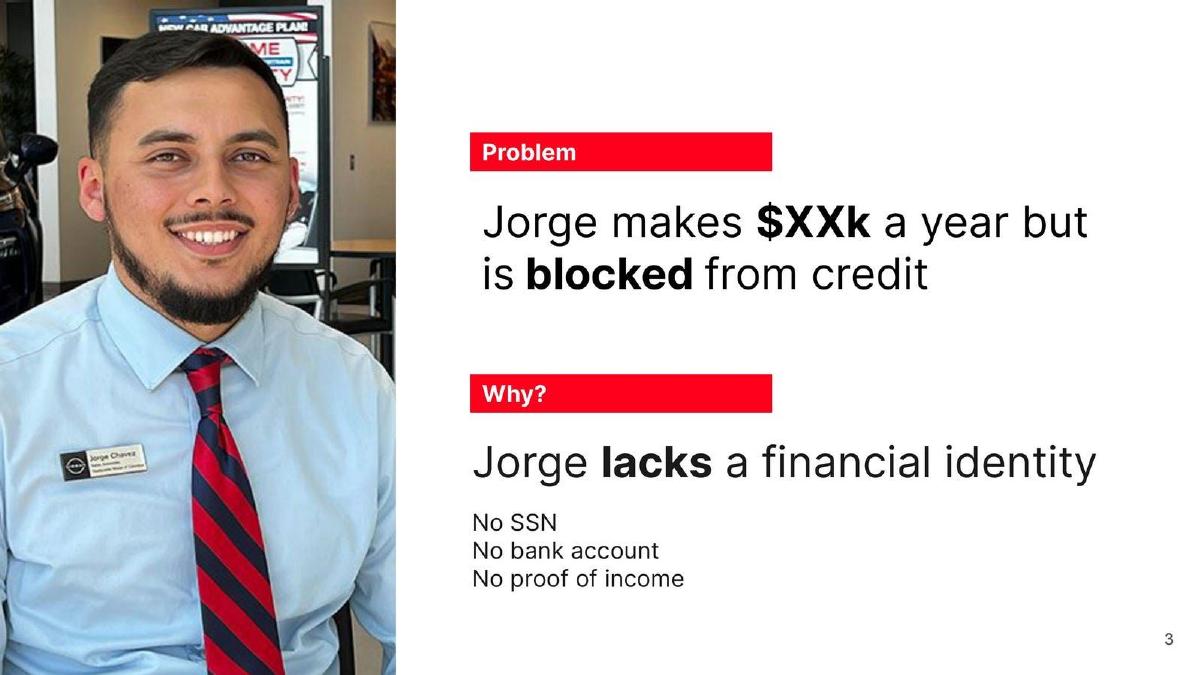
- The deck uses a specific persona, 'Jorge,' to illustrate the 'blocked' status of high-earning individuals who lack an SSN (Slide 3).
- Maza positions itself as an identity layer that 'unlocks' existing financial ecosystems like Zelle, Venmo, and SoFi (Slide 5).
- The company claims to enable access to 1099 work, health insurance, and child-tax credits beyond just banking (Slide 5).
- Retention is highlighted as a core strength, showing a stable curve over a 7-month period (Slide 7).
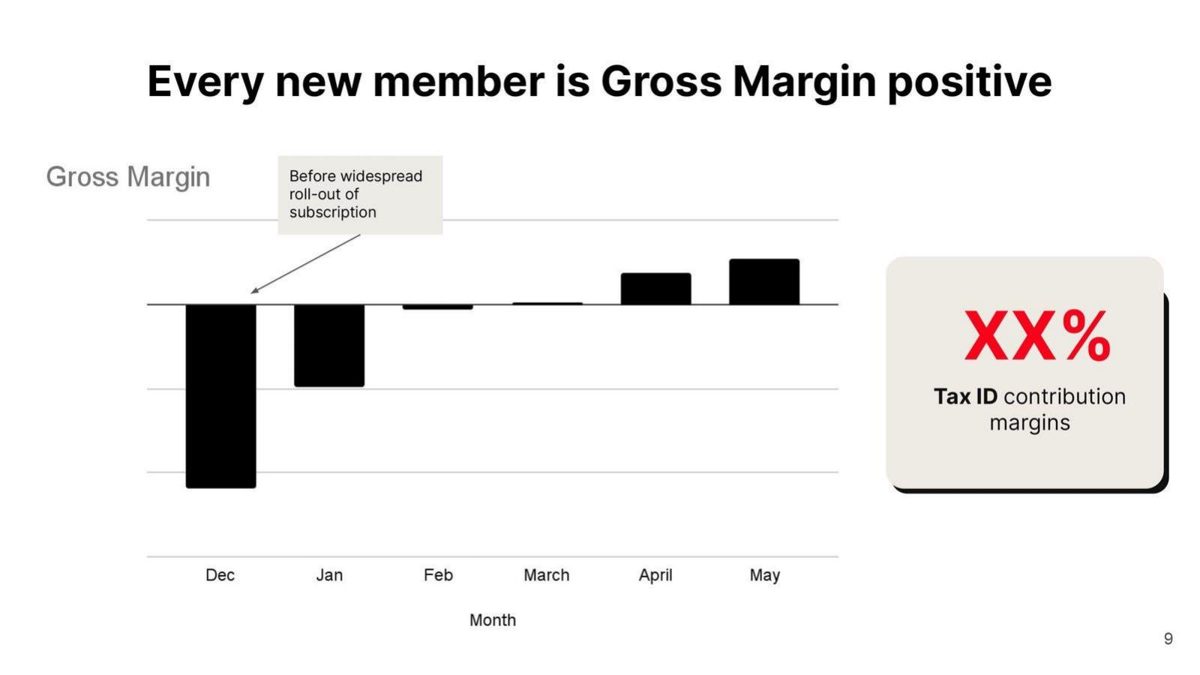
- The business model shifted to a subscription roll-out in early 2023, which turned the company gross margin positive (Slide 9).
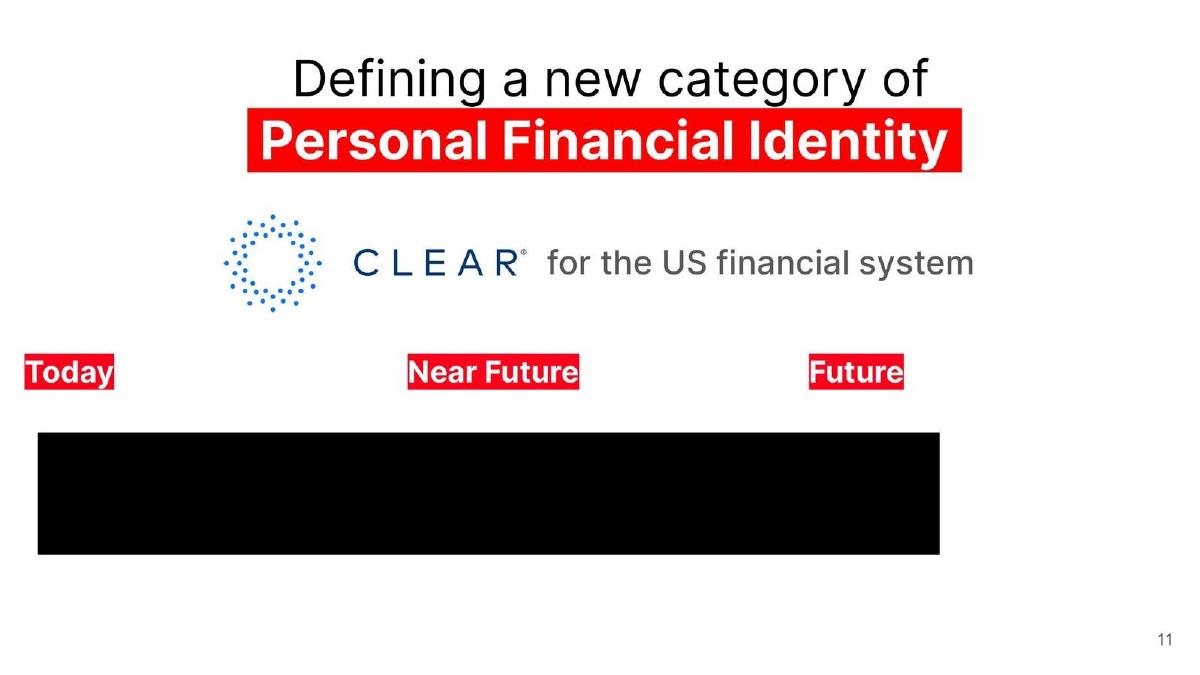
- Maza uses the 'X for Y' analogy, calling itself 'CLEAR for the US financial system' to explain its long-term vision (Slide 11).
- The founding team possesses significant pedigree, including a Harvard CS degree, a YC exit, and leadership roles at DoorDash and Slack (Slide 13).
- The deck omits a specific 'Ask' slide or a detailed breakdown of how the $8M Seed round will be allocated.
The Identity Gateway: A Teardown of Maza’s $8M Seed Deck
Maza’s pitch deck is a targeted strike at a massive, often ignored segment of the American economy: the millions of residents who earn income but lack a Social Security Number. By focusing on 'Financial Identity' rather than just 'Banking,' Maza elevates its value proposition from a simple neobank to a necessary infrastructure layer. This teardown examines how the 14-slide deck balances social utility with venture-scale economics.
Slide 1: The Mission Statement
The title slide is minimalist, featuring the Maza logo in bold red and the tagline: 'Unlock the financial system for non-SSN.' It immediately identifies the target customer and the primary friction point. There is no ambiguity here; an investor knows within three seconds exactly what the company does and who it serves.
Slide 2: The Executive Overview
Slide 2 serves as a high-level summary. While the specific text is categorized as an 'overview slide,' its placement suggests it intended to ground the investor in the scale of the opportunity before diving into the mechanics of the product. In many successful Seed decks, this slide acts as a 'Why Now' or a summary of the traction to follow.
Slide 3: The Human Element (The 'Jorge' Persona)
Slide 3 is one of the most effective slides in the deck. It uses a real-world persona, 'Jorge,' to humanize the data. It states: 'Jorge makes $XXk a year but is blocked from credit.' It then lists the specific symptoms of his problem: No SSN, no bank account, and no proof of income. This slide works because it highlights a paradox—high income but zero financial mobility—which represents a massive, low-risk opportunity for a lender or service provider who can solve the identity gap.
Slide 4 & 5: The Solution and The Ecosystem
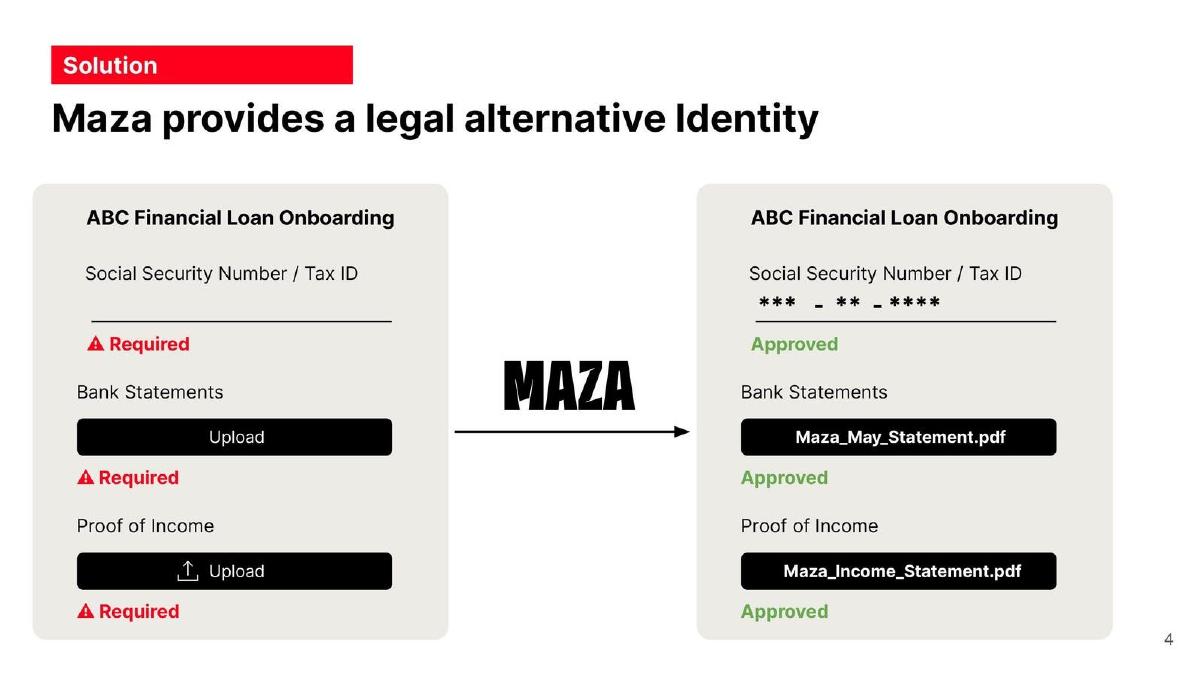
Slide 4 provides the details of the Maza solution, while Slide 5 visualizes how 'Maza’s Identity unlocks the Financial System and more.' This is a critical strategic move. Instead of claiming to replace Zelle, Venmo, or Capital One, Maza positions itself as the bridge that allows 'non-SSN' users to access those existing giants. The slide lists '1099 contractor work, health insurance, child-tax credit, and business creation' as additional unlocks, suggesting that Maza is a platform for economic participation, not just a debit card.
Slide 6 & 7: Retention and Product Stickiness
Slide 7 focuses on 'Integrated premium banking drives XX%+ retention.' The slide features a graph showing a remarkably flat retention curve from Month 1 through Month 7. In fintech, a flat retention curve is the 'holy grail,' indicating that once a user is onboarded, they do not churn. The visual of the Maza Visa debit card and the mobile app interface reinforces that the product is live and functional.
Slide 8 & 9: Growth and Unit Economics
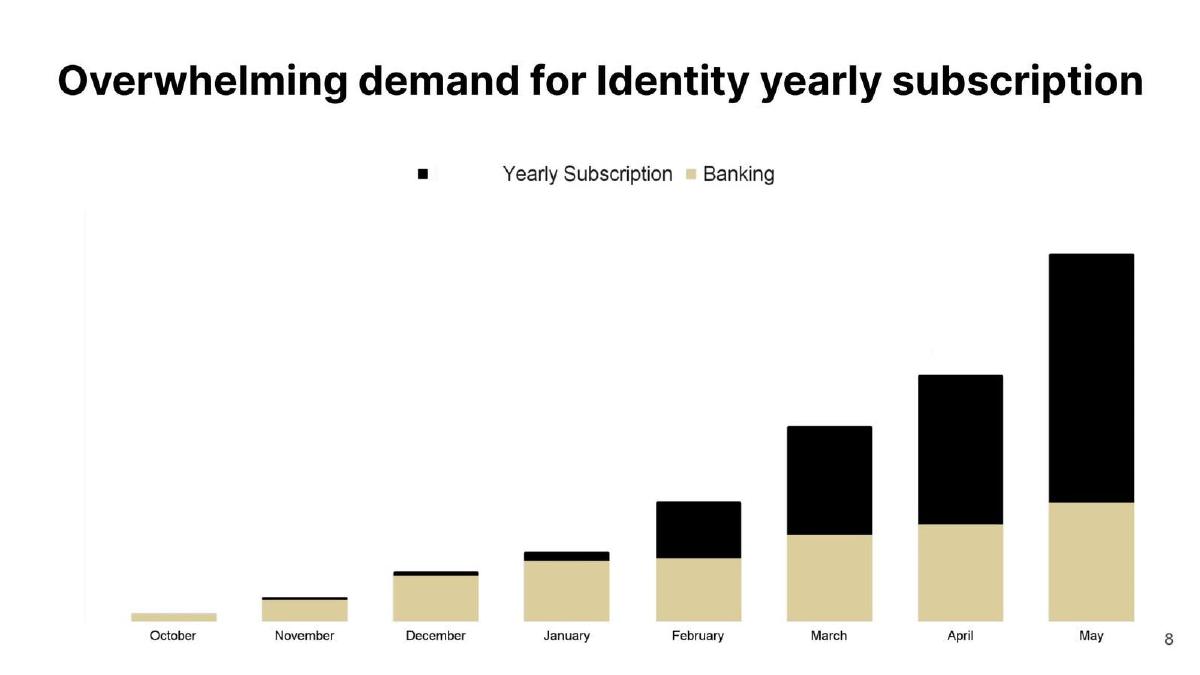
Slide 8 covers 'growth so far,' while Slide 9 addresses the most important question for any fintech: unit economics. The headline 'Every new member is Gross Margin positive' is supported by a bar chart showing the transition from negative margins in December to positive margins in May. The slide explicitly attributes this to the 'roll-out of subscription.' This proves the business model is viable and that customers are willing to pay for the identity service Maza provides.
Slide 10: The Banking Infrastructure
Slide 10 provides 'banking info,' likely detailing the partner banks or the regulatory framework Maza uses to issue accounts and cards without an SSN. For fintech investors, this is a 'must-have' slide to ensure the company isn't running afoul of KYC (Know Your Customer) and AML (Anti-Money Laundering) regulations.
Slide 11: The Vision (The 'CLEAR' Analogy)
Slide 11 attempts to define a new category: 'Personal Financial Identity.' It uses a powerful analogy: 'CLEAR for the US financial system.' Just as CLEAR allows travelers to bypass traditional identity friction at airports, Maza intends to allow immigrants to bypass traditional financial friction. The slide outlines a timeline from 'Today' to 'Future,' though the specific milestones are redacted in the provided text.
Slide 12: Future Growth
Slide 12 focuses on the roadmap. Having proven the model with a core group of users, this slide likely details the channels Maza will use to scale—potentially through partnerships with employers of 1099 workers or community organizations.
Slide 13: The Team
The team slide (Slide 13) is exceptionally strong for a Seed round. It features Luciano Arango (CEO, Harvard CS, YC exit), Siggy Bilstein (CTO, Slack, Attentive), and Robbie Figueroa (COO, DoorDash). The logos for Current, Checkr, Lyft, and Zenefits are displayed, indicating a deep bench of experience in scaling high-growth consumer and fintech platforms. This slide answers the 'Why this team?' question with significant authority.
Slide 14: The Investors
The final slide lists the investors who participated in the round. While the names are not listed in the text, the publisher reports that the round totaled $8M. This slide serves as social proof, showing that sophisticated capital has already vetted the regulatory and market risks.
What Maza Got Right
The 'Unlock' Narrative: Maza doesn't try to build a closed loop. By showing how they integrate with Venmo and Zelle, they prove they are expanding the market rather than fighting for a small piece of an existing one. · Unit Economics Transparency: Showing the transition from negative to positive gross margin (Slide 9) is vital. It proves that the 'subscription' model works for this demographic, which many investors might have doubted. · Persona-Driven Problem Solving: Starting with 'Jorge' (Slide 3) makes the problem visceral. It’s not just a 'market gap'; it’s a person with money who can’t spend or save it effectively. · Pedigree: The team slide is a 'who's who' of successful tech companies, which significantly de-risks the execution for Seed investors.
What is Missing from the Deck
The Regulatory 'How': While Slide 10 mentions banking info, the deck (in its public form) doesn't explicitly explain the legal mechanism used to verify identity without an SSN (e.g., ITIN usage or specific KYC exemptions). This is the first question any fintech VC would ask. · The Ask: There is no slide detailing how much is being raised or what the specific milestones for the next 18 months are. While we know from reports it was $8M, a standard deck usually includes a 'Use of Funds' slide. · Competitive Landscape: The deck lacks a traditional competitor matrix. While Maza positions itself as a 'new category,' they are still competing for the same 'underbanked' dollars as companies like Majority or Remitly.
Lessons for Founders
Use Analogies Wisely: The 'CLEAR for the US financial system' (Slide 11) is a perfect analogy. It takes a complex technical/regulatory product and makes it instantly understandable through a familiar consumer service. · Show the Margin Shift: If your business model changed (like Maza’s move to subscription), show the 'Before and After' on your margin slide. It proves you are learning and optimizing the business in real-time. · Focus on Retention Early: Maza included a retention slide (Slide 7) in a Seed deck. Usually, Seed decks focus on top-line growth. By showing retention, Maza proved they have Product-Market Fit, which justifies an $8M check. · Humanize the Data: Don't just show a TAM of 40 million people. Show one person, their income, and why the current system fails them. It makes the opportunity undeniable.
Frequently asked questions
- What is the primary problem Maza is solving?
- Maza addresses the lack of 'financial identity' for immigrants in the US who do not have a Social Security Number. As shown on Slide 3, these individuals may have significant income but are blocked from credit, banking, and proof of income, preventing them from participating in the modern economy.
- How does Maza generate revenue?
- According to Slide 9, Maza transitioned to a subscription-based model. The deck indicates that before the widespread roll-out of this subscription, margins were negative, but they became positive starting in early 2023, specifically highlighting 'Tax ID contribution margins.'
- Is Maza a bank or a software platform?
- Maza positions itself primarily as an identity and access layer. Slide 5 shows that Maza's identity solution allows users to interface with the broader financial system, including third-party services like Zelle, Venmo, Capital One, and SoFi for credit and mortgages.
- What is the background of the Maza founding team?
- The team has high-tier tech experience. CEO Luciano Arango is a Harvard CS graduate with a YC exit; CTO Siggy Bilstein led the Slack ecosystem and Attentive marketplace; and COO Robbie Figueroa led Latino GTM at DoorDash (Slide 13).
- What was the outcome of this pitch deck?
- As reported by Business Insider, Maza successfully raised $8 million in a Seed funding round in 2023 to expand its fintech solutions for the North American immigrant population.