OneScreen.ai’s pitch deck is a masterclass in identifying a 'broken' market and using external validation to build credibility. By highlighting that 94% of out-of-home (OOH) ads are still sold via manual methods like fax and email, the founders established a clear pain point. The deck successfully raised $1.2 million in an angel round using a convertible note with a $5M cap. While the presentation is light on specific product features, it excels at demonstrating market demand through raw customer quotes and industry leader endorsements. The inclusion of clear unit economic targets, such as a…
Key takeaways
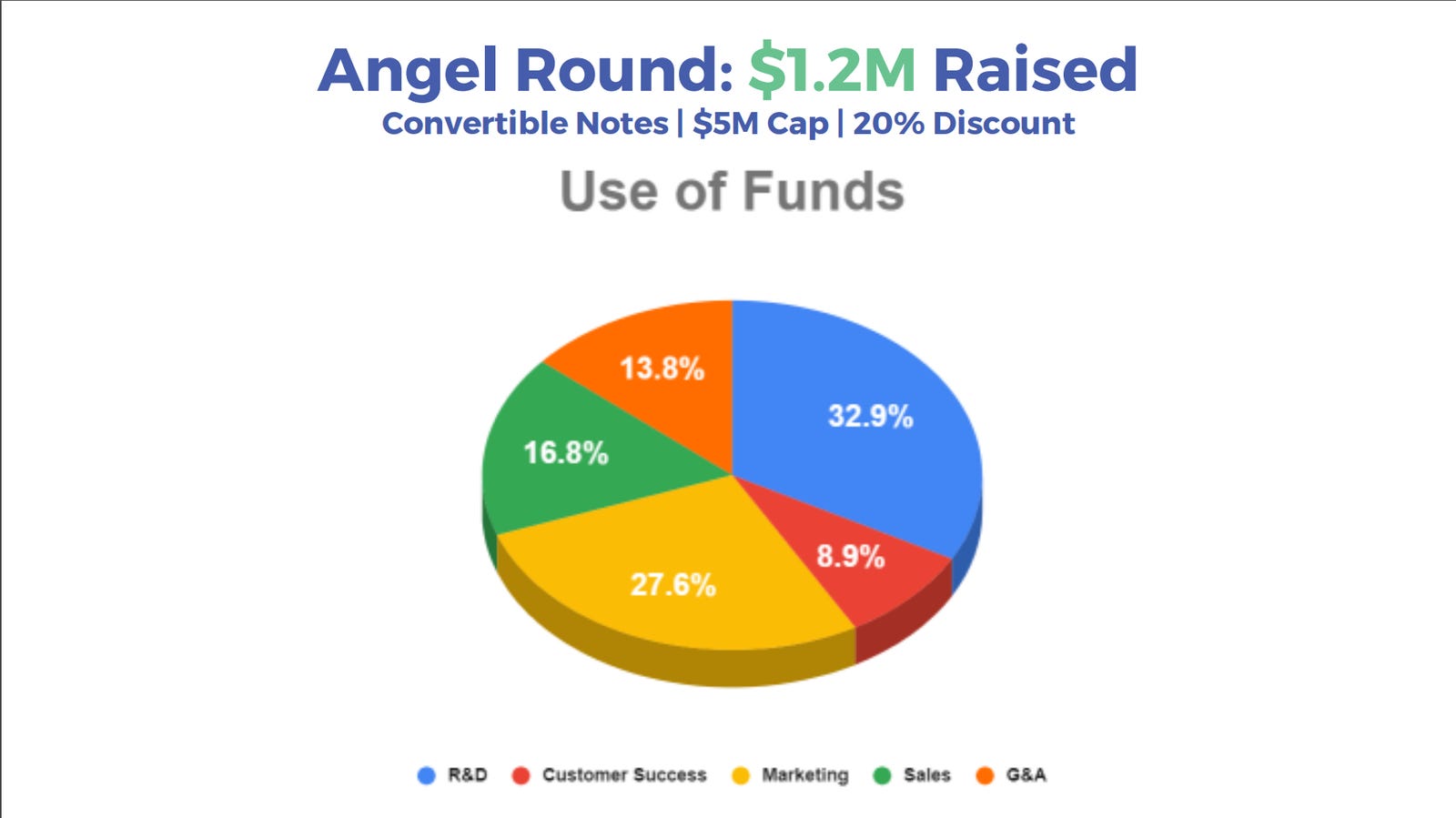
- The company raised $1.2 million via convertible notes with a $5M cap and a 20% discount (Slide 1).
- The OOH industry is valued at $30B+, yet 50% of inventory goes unsold due to fragmentation (Slide 2).
- Manual processes dominate the sector, with 94% of sales occurring via phone, email, and fax (Slide 2).
- Local owners control 88.3% of the fragmented OOH inventory ownership, presenting a massive aggregation opportunity (Slide 5).
- The product is positioned as a three-part solution: a comprehensive directory, an 'IoP' search algorithm, and a workflow SaaS platform (Slide 5).
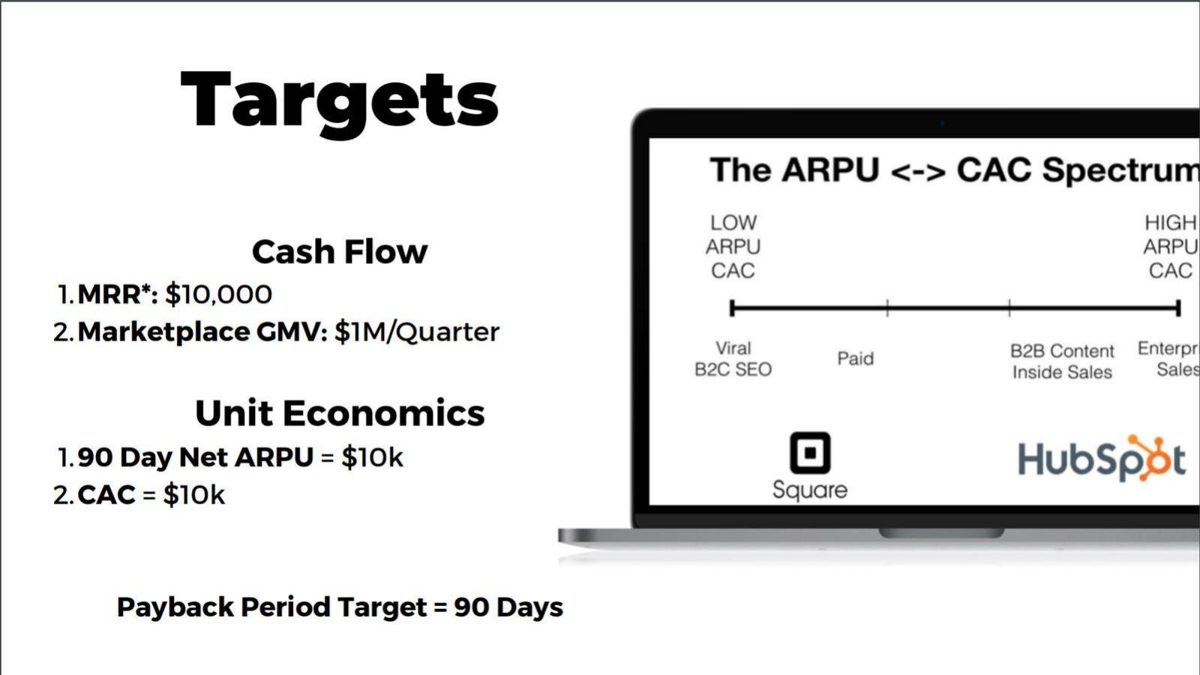
- OneScreen.ai targets a 90-day payback period with a $10k CAC and a $10k 90-day net ARPU (Slide 7).
- The deck uses a 'Why Now?' slide featuring the CEO of the DPAA to link COVID-19 market shifts to tech adoption (Slide 4).
- Marketplace Gross Merchandise Volume (GMV) targets are set at $1M per quarter (Slide 7).
OneScreen.ai: Solving the 'Operational Sht Show' of OOH
OneScreen.ai entered the market with a clear mission: to modernize the out-of-home (OOH) advertising industry. As reported by Business Insider, the company raised $1.2 million in a pre-seed/angel round to build a centralized platform for a notoriously fragmented industry. The deck consists of 14 slides, though several are repetitive placeholders in the provided sequence. The core of the pitch relies on the massive delta between the industry's $30B+ size and its archaic, manual workflows.
Slide 1: The Financial Ask and Allocation
The deck opens immediately with the results of the round. Slide 1 states that OneScreen.ai raised $1.2 million to 'transform the fragmented and manual out-of-home industry.' Crucially, it lists the instrument: Convertible Notes with a $5M Cap and a 20% Discount . This level of transparency is rare in public decks but highly effective for establishing the company's valuation baseline.
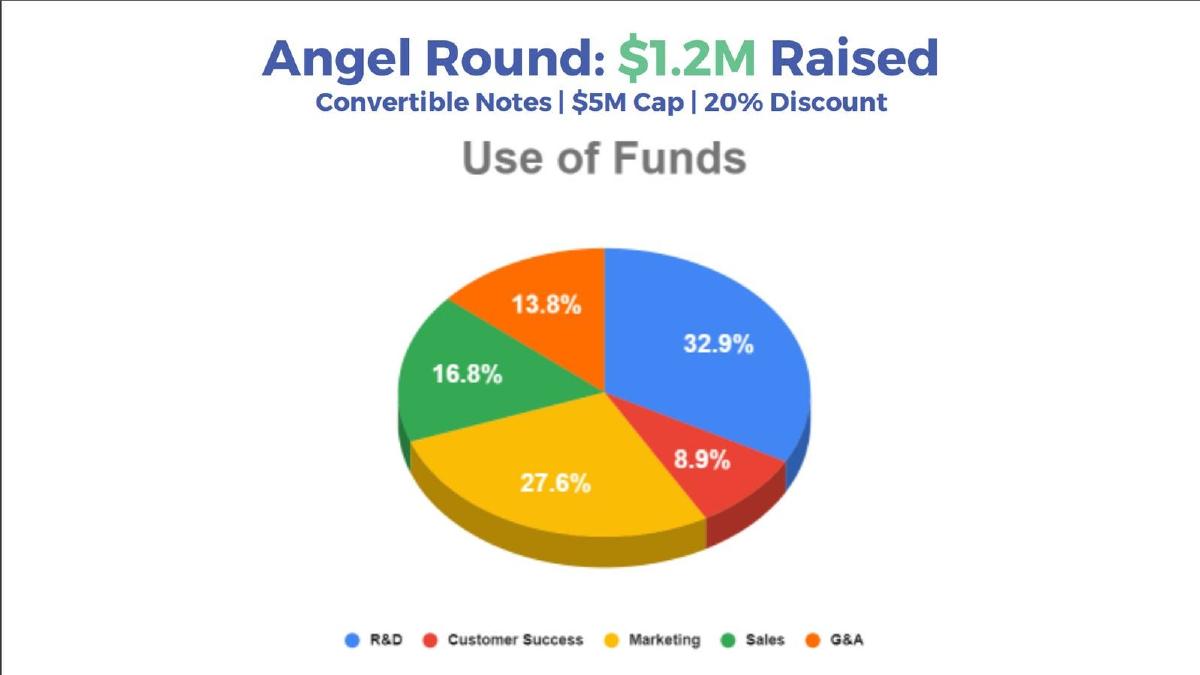
The slide also includes a 'Use of Funds' pie chart. The largest allocation is R&D at 32.9% , followed by Marketing at 27.6% and Sales at 16.8% . G&A (13.8%) and Customer Success (8.9%) round out the budget. This distribution suggests a product-led growth strategy that still requires significant engineering investment to aggregate the fragmented data sources mentioned later in the deck.
Slide 2: The $30B Problem
Slide 2 uses data from Statista to visualize the growth of outdoor advertising expenditure from 2000 to 2022. The chart shows a steady climb, peaking near $40B in 2019 before a slight dip. The text highlights a staggering inefficiency: 50% of inventory goes unsold . The slide breaks down the 'Why?' into three pillars:
Fragmented: No single entity owns more than 10% of the inventory. · Manual: 94% of inventory is sold via phone, email, and faxes. · Archaic: Basic data points like location, availability, and pricing are often unknown to the owners themselves.
By quantifying the manual nature of the business (94%), the founders create a compelling case for a digital transformation play.
Slide 3: The Voice of the Customer
Instead of a standard 'Problem' slide, Slide 3 uses a high-impact testimonial from Rob Biederman, Chairman and Co-Founder of Catalant Technologies. The quote is blunt: 'OOH was by far our best ABM channel, but we literally couldn't buy it because [incumbent] was such an operational sht show.' This slide serves two purposes: it validates the market demand ('We wanted to spend more money') and identifies the friction point that OneScreen.ai intends to remove. The inclusion of the 'LUMAscape' for Out of Home on the left side of the slide visually reinforces how cluttered and confusing the current ecosystem is for marketers.
Slide 4: The 'Why Now?' and Industry Endorsement
Timing is a critical component of any pitch. Slide 4 features Barry Frey, President and CEO of the DPAA (Digital Place Based Advertising Association). Frey notes that COVID-19 accelerated the industry's willingness to adopt new technology and economic models. This external validation from a major industry body head provides a level of credibility that internal founder claims cannot match. It positions OneScreen.ai not just as a new tool, but as the inevitable beneficiary of a post-pandemic shift in advertising behavior.
Slide 5: The Solution Architecture
Slide 5 outlines the product offering, which it calls 'The real world's first...' three-pronged solution:
Comprehensive Directory: A pie chart shows that 88.3% of inventory is held by 'Local Owners,' while giants like Lamar, Outfront, JCD, and CCO hold only small fractions. OneScreen.ai aims to be the aggregator for these local owners. · 'IoP' Search Algorithm: A screenshot shows a map interface with the caption 'Best Billboards to Reach Affluent Empty Nesters.' This suggests a data-driven approach to placement that goes beyond simple geography. · Workflow SaaS Platform: A visual of a 'Buy Now' button over the industry LUMAscape implies that OneScreen.ai simplifies the entire transaction into a single digital interface.
Slide 6: Expanding the Definition of OOH
Slide 6 introduces the concept of 'Connected Everything: Place-Based CTV.' It shows a bar/restaurant setting with multiple screens. The slide distinguishes between 'Regular Television' and 'Place-Based CTV' (Connected TV). This indicates that OneScreen.ai isn't just targeting traditional billboards, but any digital screen in a public space, significantly expanding their Total Addressable Market (TAM) into the digital signage and retail media sectors.
Slide 7: Targets and Unit Economics
The final content slide, Slide 7 , focuses on the business model and efficiency. The company sets clear near-term targets:
MRR: $10,000 · Marketplace GMV: $1M per Quarter · 90 Day Net ARPU: $10k · CAC: $10k · Payback Period Target: 90 Days
The slide includes a graphic of 'The ARPU <-> CAC Spectrum,' placing OneScreen.ai in a similar quadrant to HubSpot (high ARPU, high CAC) rather than Square (low ARPU, low CAC). By targeting a 1:1 ARPU-to-CAC ratio within the first 90 days, the company is signaling a highly efficient sales motion for an enterprise-adjacent product.
What OneScreen.ai Does Well
The deck is exceptionally strong at market education . Many investors may not realize that a $30B industry is still operating via fax machines. By highlighting the 94% manual stat and the 88.3% local ownership stat, the founders make the opportunity feel like an 'obvious' gap in the market. The use of aggressive social proof —specifically the 'operational sht show' quote—is a bold move that likely resonated with investors who have experienced similar frustrations in other legacy industries.
Furthermore, the financial transparency on Slide 1 and Slide 7 is refreshing. Most pre-seed decks hide their valuation caps or avoid specific unit economic targets. By putting these numbers front and center, OneScreen.ai projects confidence in their business model and their understanding of SaaS metrics.
What is Missing from the Deck
The most glaring omission is a Team Slide . While the publisher-reported facts mention the company is based in North America and raising an angel round, the deck itself does not introduce the founders or their relevant experience in advertising or technology. In an angel round, the 'who' is often as important as the 'what,' and this deck relies entirely on the 'what.'
Additionally, there is no Competition Slide . While Slide 3 mentions an 'incumbent' as a 'sht show,' it doesn't name names or explain how OneScreen.ai differs from other OOH platforms like Adomni or Vistar Media (which actually appear in the LUMAscape on Slide 3). A founder should typically include a 2x2 matrix or a feature comparison table to show their unique competitive advantage.
Finally, the Product Roadmap is thin. Slide 5 shows a few screenshots, but there is no timeline for when the 'IoP' algorithm or the full SaaS workflow will be fully operational across the 88.3% of local inventory they hope to capture.
Founder's Playbook: Lessons to Copy
Founders should emulate the 'Why Now?' slide (Slide 4). By linking their startup to a major global shift (COVID-19) and backing it with a quote from an industry authority, they turn a speculative venture into a timely necessity. If you are entering a legacy industry, find the 'Barry Frey' of your sector to validate your timing.
Another takeaway is the quantification of inefficiency . Don't just say an industry is 'old.' Say it is '94% manual via fax and email.' Specificity creates a sense of urgency. Investors love to solve for 'unnecessary friction,' and OneScreen.ai defines that friction with mathematical precision.
Lastly, the Unit Economics Spectrum (Slide 7) is a great way to show investors you understand your business's place in the broader SaaS ecosystem. By comparing themselves to HubSpot and Square, they give investors a mental model for how the company will scale and what kind of sales force it will eventually need to hire.
Frequently asked questions
- What were the specific terms of the OneScreen.ai angel round?
- As stated on Slide 1, the company raised $1.2 million using convertible notes. The notes carried a $5 million valuation cap and a 20% discount for investors, which are standard terms for a high-potential pre-seed or angel stage startup in the North American market.
- How does OneScreen.ai define the problem in the OOH advertising market?
- Slide 2 identifies three core issues: fragmentation (no single owner has more than 10% of inventory), manual operations (94% of transactions use archaic tools like faxes), and lack of transparency regarding location, pricing, and availability, even for the media owners themselves.
- What is the 'IoP' search algorithm mentioned in the deck?
- Slide 5 introduces the 'IoP' (Internet of Places) search algorithm as one of the company's 'real world firsts.' It appears to be a proprietary method for mapping and searching fragmented OOH inventory to help marketers find specific billboard locations, such as those reaching 'Affluent Empty Nesters.'
- What are the company's primary financial targets?
- According to Slide 7, the company is aiming for a Monthly Recurring Revenue (MRR) of $10,000 and a Marketplace GMV of $1 million per quarter. They also target a 1:1 ratio between their 90-day Net ARPU ($10k) and their CAC ($10k).
- How does the deck utilize social proof?
- The deck features two prominent testimonials. Slide 3 includes a quote from Rob Biederman (Catalant Technologies) calling the incumbent landscape an 'operational sh*t show,' while Slide 4 features Barry Frey (CEO of DPAA) endorsing the timing of the startup's entry into the market.