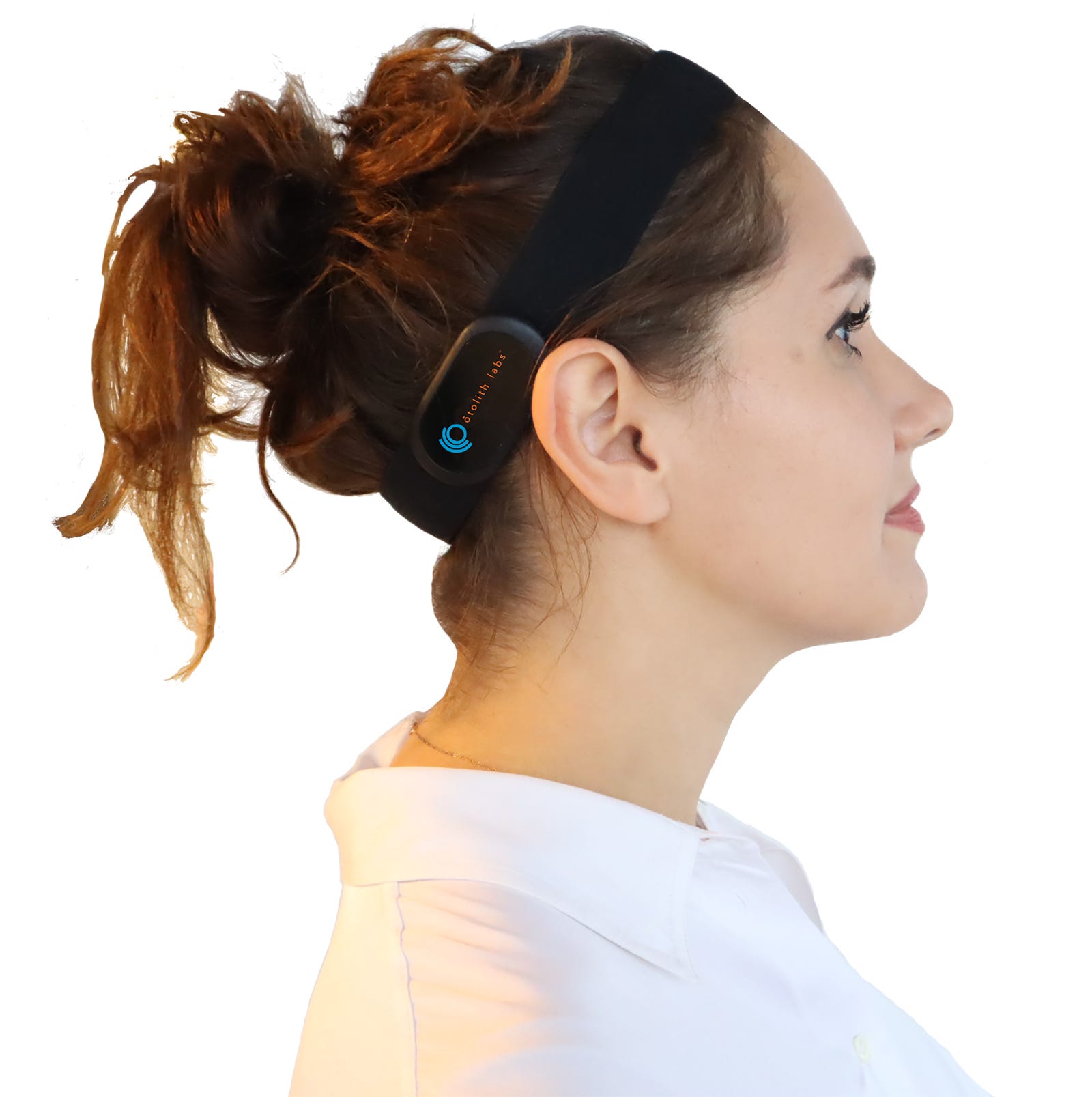
Otolith Labs successfully raised $20 million in a 2024 Series A round, as reported by Business Insider, using a deck that prioritizes clinical validation and the patient journey. The presentation highlights a significant regulatory milestone—FDA Breakthrough Designation—which serves as a primary trust signal for investors in the biotech and hardware space. By illustrating the 'Current Patient Clinical Path' as a repetitive, ineffective cycle, the deck positions its wearable headband as a disruptive alternative to traditional pharmaceuticals like Antivert. The leadership slide emphasizes deep…
Key takeaways
- The deck highlights the attainment of FDA Breakthrough Designation on Slide 2, a critical regulatory milestone for medical hardware.
- Slide 4 visualizes the 'Current Patient Clinical Path' as a cycle of ineffective treatments, specifically naming Antivert as a precursor to specialist referrals.
- The technology is currently in its '5th-Generation Model,' indicating significant R&D maturity prior to the Series A raise (Slide 2).
- The device uses 'Precise Level of Therapeutic Vibration' to mask vertiginous vestibular signals, as detailed in the anatomical diagrams on Slides 2 and 6.
- The leadership team includes a Chief Science Officer with 25 years of experience at the UMD School of Medicine (Slide 8).
- The product is positioned for future platform expansion, with Slide 6 stating it 'Can Be Integrated Into Most Headworn Wearables.'
- The deck omits a specific 'Ask' slide detailing the exact use of the $20M raised in this round.
- There are no slides dedicated to market sizing (TAM/SAM/SOM) or competitive landscape analysis beyond the clinical path diagram.
Otolith Labs: A Clinical Approach to Medical Hardware
Otolith Labs entered the Series A market with a clear objective: to transition from an experimental hardware startup to a clinically validated medical device company. As reported by Business Insider, the company raised $20 million in 2024. The deck they used is remarkably concise at 11 slides, focusing heavily on the 'why' and the 'how' of their vestibular masking technology rather than traditional business metrics. In a sector like biotech and medical hardware, the strength of the clinical argument often outweighs the immediate revenue figures, and this deck reflects that hierarchy of information.
Slide 1: The Visual Hook
The opening slide features a high-resolution profile shot of a woman wearing the Otolith device. The device itself is a small, black, oblong pod attached to a simple black headband, positioned just behind the ear. The text is minimal: 'Otolith Labs' experimental, wearable device to treat vertigo.' By leading with a lifestyle-style photograph rather than a technical schematic, the company immediately establishes that this is a wearable, non-invasive solution. It humanizes the technology before diving into the medical complexities.
Slide 2: Simple, Protected, Breakthrough
Slide 2 serves as the primary value proposition slide. It uses three powerful adjectives in the header: 'SIMPLE, PROTECTED, BREAKTHROUGH.' The slide lists five key bullet points: Precise Level of Therapeutic Vibration, Vertiginous Vestibular Signals Are Masked and Alleviated, Patented, Reliable & Durable 5th-Generation Model, and FDA Breakthrough Designation. The inclusion of an anatomical diagram of the inner ear, showing vibration waves entering the vestibular system, provides immediate context for how the device functions. The mention of the '5th-Generation Model' is a subtle but important signal to investors that the $20M raise isn't for basic prototyping; the hardware has already been through multiple iterations.
Slide 4: The Clinical Path Problem
One of the most effective slides in the deck is Slide 4, 'CURRENT PATIENT CLINICAL PATH.' It maps out the frustrating journey of a vertigo sufferer. It starts at 'First Onset' (Primary Care/ER), moves to 'ENT' where they are often prescribed 'Antivert,' and then enters a loop labeled 'x5' between ENTs and specialists like Physical Therapists and Neurologists. The final stage is 'Self-Care Expert,' which is a polite way of saying the medical system failed the patient. This slide identifies the market gap: a lack of effective, immediate treatment that prevents the expensive and time-consuming specialist loop.
Slide 6: Product Benefits and Scalability
Slide 6 repeats the 'SIMPLE, PROTECTED, BREAKTHROUGH' header but changes the bullet points to focus on patient outcomes and future potential. It claims the device 'Works Immediately,' 'Lasts Indefinitely,' and has 'No Known Side Effects.' The most interesting point for a venture capitalist is the final one: 'Can Be Integrated Into Most Headworn Wearables.' This suggests that Otolith Labs isn't just a headband company; they are a vestibular technology company that could eventually partner with giants in the consumer electronics or VR space to solve motion sickness at scale.
Slide 8: Leadership and Domain Expertise
The leadership slide (Slide 8) is designed to build technical credibility. Sam Owen is credited as the inventor of the technology. However, the 'anchor' for medical investors is likely Didier Depireux, Ph.D., the Chief Science Officer, who brings 25 years of faculty experience from the UMD School of Medicine as an 'Inner Ear Expert.' The presence of Jon Akers (CPO) with '20+ Hardware Products Launched' addresses the common investor fear that scientists can't handle the complexities of mass manufacturing hardware.
Slide 11: The Brand Identity
The final slide is a simple presentation of the Otolith logo—a series of concentric blue semi-circles resembling sound or vibration waves. While it contains no new data, it reinforces the brand's focus on 'vibration' as the core modality of their treatment. The simplicity of the deck's design—lots of white space, clear orange and blue accents—mirrors the 'Simple' part of their three-word mantra.
What Otolith Labs Does Well
The deck excels at regulatory signaling . In the world of medical devices, an FDA Breakthrough Designation is a massive de-risking event. By placing this on Slide 2, Otolith immediately separates itself from 'wellness' wearables that lack clinical backing. The deck also does a fantastic job of visualizing the pain point . Slide 4 doesn't just say 'vertigo is hard to treat'; it shows the specific, repetitive clinical failures that cost the healthcare system money and patients their quality of life.
Furthermore, the hardware maturity is emphasized. Many hardware pitches fail because the device looks like a science project. By showing a sleek, wearable form factor on Slide 1 and mentioning the 5th-generation iteration on Slide 2, they communicate that the engineering risk is largely behind them, and the Series A capital will likely be used for clinical trials and commercialization.
What is Missing from the Deck
The most glaring omission is a detailed 'Ask' slide . While we know from external reporting that they raised $20M, the deck itself does not specify the amount sought or the specific milestones that capital will achieve (e.g., 'Fund Phase III trials,' 'Scale manufacturing to 10k units').
There is also a total lack of market sizing (TAM) . While vertigo is a known issue, investors generally want to see the specific number of chronic sufferers and the projected revenue per user. Similarly, there is no financial roadmap . We don't see projected burn rates, margins on the hardware, or a timeline to profitability. In a Series A deck, these omissions are unusual and suggest that the clinical and regulatory story was so compelling that the 'business' metrics were handled in a separate data room or follow-up meetings.
Lessons for Founders
Lead with your strongest 'Trust Signal': If you have a patent, a major regulatory win (like FDA Breakthrough), or a world-class expert on the team, put it on the first three slides. Don't bury the lead. · Visualize the 'Status Quo' failure: Don't just list your features. Show the current, broken process your customers have to endure. If you can show a 'loop of failure' that your product breaks, you've won the emotional argument. · Address the 'Hardware is Hard' stigma: If you are building a physical product, explicitly mention which 'generation' of the prototype you are on. Showing that you have iterated through five versions tells investors you have already solved the early, most common engineering hurdles. · Position for the 'Platform' play: Even if you are launching a single product, show how that technology could be used elsewhere. Otolith's mention of integration into other wearables turns a niche medical device into a potential horizontal technology play.
Frequently asked questions
- What is the core technology behind Otolith Labs?
- As shown on Slide 2, the technology uses a 'Precise Level of Therapeutic Vibration' to mask and alleviate 'Vertiginous Vestibular Signals.' It is a non-invasive, mechanical approach to treating vertigo, distinct from chemical or pharmaceutical interventions. The slide notes the technology is patented and currently exists as a 5th-generation model, suggesting a refined hardware iteration.
- How does the company frame the problem they are solving?
- Slide 4, titled 'Current Patient Clinical Path,' frames the problem as a systemic failure. It shows patients cycling through primary care, emergency rooms, and ENTs, often receiving ineffective treatments like Antivert. The diagram highlights a 'x5' loop between ENTs and specialists (Physical Therapy, Neurologists, Chiropractors) before a patient is forced to become a 'Self-Care Expert,' implying a lack of definitive medical solutions.
- What regulatory progress has Otolith Labs made?
- The company prominently features its 'FDA Breakthrough Designation' on Slide 2. This is a significant indicator for Series A investors, as it suggests the FDA believes the device has the potential to provide more effective treatment for life-threatening or irreversibly debilitating conditions than existing options, often leading to prioritized review.
- Who is leading the company according to the deck?
- Slide 8 lists a five-person leadership team. It includes Sam Owen (Founder & CEO, Inventor), Didier Depireux, Ph.D. (CSO, 25-year inner ear expert), Jack Daggitt (COO, investor and board member), Tom Hardart (CBO, 20+ years startup experience), and Jon Akers (CPO, 20+ hardware products launched). This mix covers physics, medicine, business operations, and hardware manufacturing.
- What is the long-term vision for the hardware?
- While the current device is a standalone headband, Slide 6 indicates a broader integration strategy. It states the technology 'Can Be Integrated Into Most Headworn Wearables.' This suggests a potential licensing or OEM model where Otolith's vibration technology could be embedded into third-party headphones or VR headsets to mitigate motion sickness or vertigo.