A Savvy is a fintech startup aiming to disrupt the traditional banking model by offering an 'intelligent' spending account that combines features of checking, savings, and prepaid cards. The deck positions the company against early neobank pioneers like Simple and Moven, specifically targeting millennials and the unbanked through community-driven marketing and university partnerships. With a leadership team claiming over 40 years of combined experience in electronic payments and banking technology, the company seeks $1.7 million in exchange for a 20% ownership stake. The funds are earmarked f…
Key takeaways
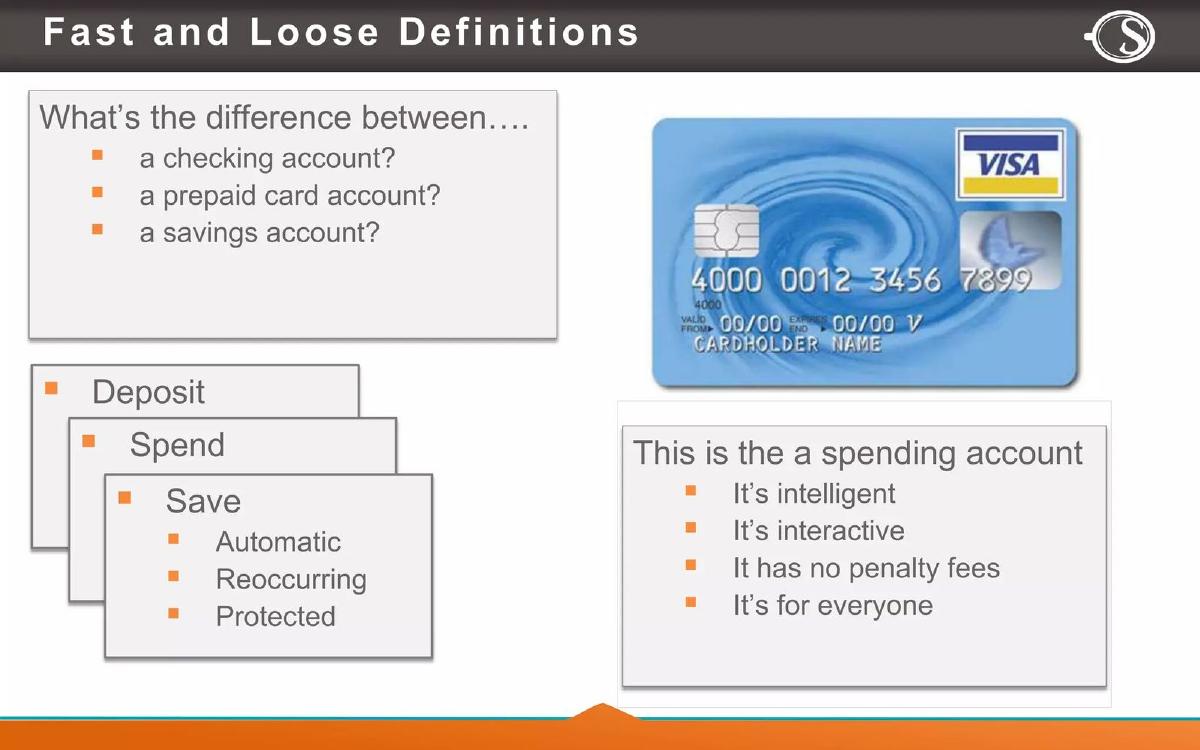
- The company defines its product as a 'spending account' that is intelligent, interactive, and has no penalty fees (Slide 2).
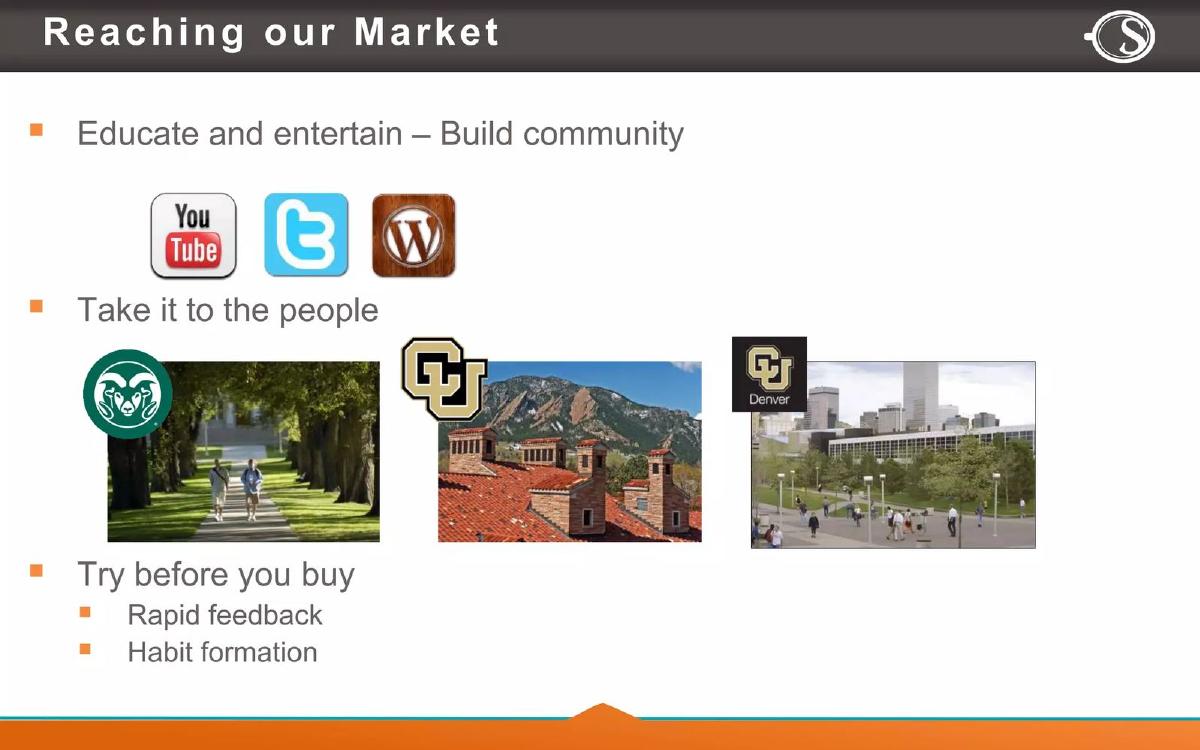
- Marketing strategy focuses on 'educating and entertaining' via YouTube, Twitter, and WordPress, alongside physical presence at universities like CU Boulder and CU Denver (Slide 3).
- The deck identifies Simple, Moven, and GoBank as primary competitors, noting Simple's $117 million sale to BBVA as a benchmark (Slide 4).
- A Savvy is seeking $1.7 million in funding to support accelerated development and professional marketing (Slide 5).
- The founders are offering a 20% ownership stake in exchange for the requested investment (Slide 5).
- CEO Matt Hubbard claims 20 years of experience in electronic payment systems and states this is his third startup (Slide 6).
- Cofounder Tom Bolger brings 20 years of banking tech experience and has previously completed a successful IPO (Slide 6).
- The team includes Bryce Leonard, who joined following a successful exit at 'Glad to Have You' (Slide 6).
A Savvy Pitch Deck Analysis
The A Savvy pitch deck is a concise, six-slide presentation (from a 12-slide total) that targets the burgeoning neobank sector. It positions itself as a solution for the unbanked and millennial demographics, leveraging a team with deep institutional banking experience to disrupt traditional financial models.
Slide 1: Title and Vision
The deck opens with a high-resolution landscape image of mountains and a lake, featuring the Savvy Finance logo. The slide is dominated by a quote from Muhammad Yunus: "...It is the ability to control capital that gives people the power to rise..." This sets a mission-driven tone, suggesting that the company's goals extend beyond mere profit to financial empowerment and social mobility. The branding is clean, utilizing a serif font for 'Savvy' and a sans-serif for 'Finance,' signaling a blend of traditional reliability and modern tech.
Slide 2: Fast and Loose Definitions
This slide serves as the problem/solution framework. It asks the viewer to consider the differences between checking, prepaid, and savings accounts, implying that these distinctions are often arbitrary or confusing for the consumer. The slide introduces the 'spending account' as the solution. Key attributes listed include: intelligent , interactive , no penalty fees , and for everyone . It also visualizes a workflow of 'Deposit,' 'Spend,' and 'Save,' with the saving component highlighted as 'Automatic,' 'Reoccurring,' and 'Protected.' A generic Visa card image is used to ground the concept in a familiar physical product.
Slide 3: Reaching our Market
The marketing strategy is focused on community and direct engagement. The slide lists three pillars:
Educate and entertain: Using social platforms like YouTube, Twitter, and WordPress to build a brand voice. · Take it to the people: Physical outreach at universities. The slide features logos and photos of the University of Colorado (CU) campuses in Boulder and Denver, suggesting a localized launch strategy focused on students. · Try before you buy: A focus on rapid feedback and habit formation, though the slide does not specify the mechanics of the 'trial' for a financial account.
Slide 4: Other Players
The competitive landscape slide is well-structured, comparing A Savvy to three established names in the early 2010s fintech space:
Simple: Noted for its $117 million sale to BBVA and great design, but criticized for targeting an older demographic. · Moven: Highlighted for its touchless system and international expansion, but noted for requiring a credit check, which excludes some of A Savvy's target market. · GoBank: Identified as a Green Dot property targeting the unbanked, but lacking 'millennial marketing' and 'account integration.'
This slide effectively carves out a niche for A Savvy: a millennial-focused, integrated account for those who might be excluded by credit checks.
Slide 5: Investment Opportunity
This is the 'Ask' slide. The company is seeking $1.7 million for three specific purposes: accelerated development, deposits to secure cards (a common requirement for fintechs issuing their own plastic), and professional marketing. In exchange, they are offering a 20% ownership stake . The slide also mentions a need for 'top notch advisors' and 'quality board members,' indicating the founders are looking for strategic partners rather than just passive capital.
Slide 6: Our Team
The final slide in this set focuses on the human capital. Matt Hubbard (CEO & Founder) is credited with 20 years of experience in electronic payment systems for large banks. Tom Bolger (Cofounder) also claims 20 years in banking tech with a focus on risk and compliance, notably mentioning a previous successful IPO. Bryce Leonard (Customer Advocacy) is highlighted for his interface design background and a successful exit at 'Glad to Have You.' The collective experience presented here is intended to de-risk the investment by showing the founders have 'been there before.'
What Works in the A Savvy Deck
The deck excels at identifying a specific market gap. By pointing out that competitors like Moven require credit checks or that GoBank lacks millennial appeal, A Savvy creates a clear 'why now' and 'why us' narrative. The team slide is particularly strong; in the highly regulated world of fintech, having 40 combined years of experience and a history of IPOs and exits is a significant trust signal for investors.
The clarity of the 'Ask' is also commendable. Many decks are vague about what they want or what they are giving up. A Savvy is explicit: $1.7 million for 20%. This transparency allows for immediate qualification of interested investors.
What is Missing from the A Savvy Deck
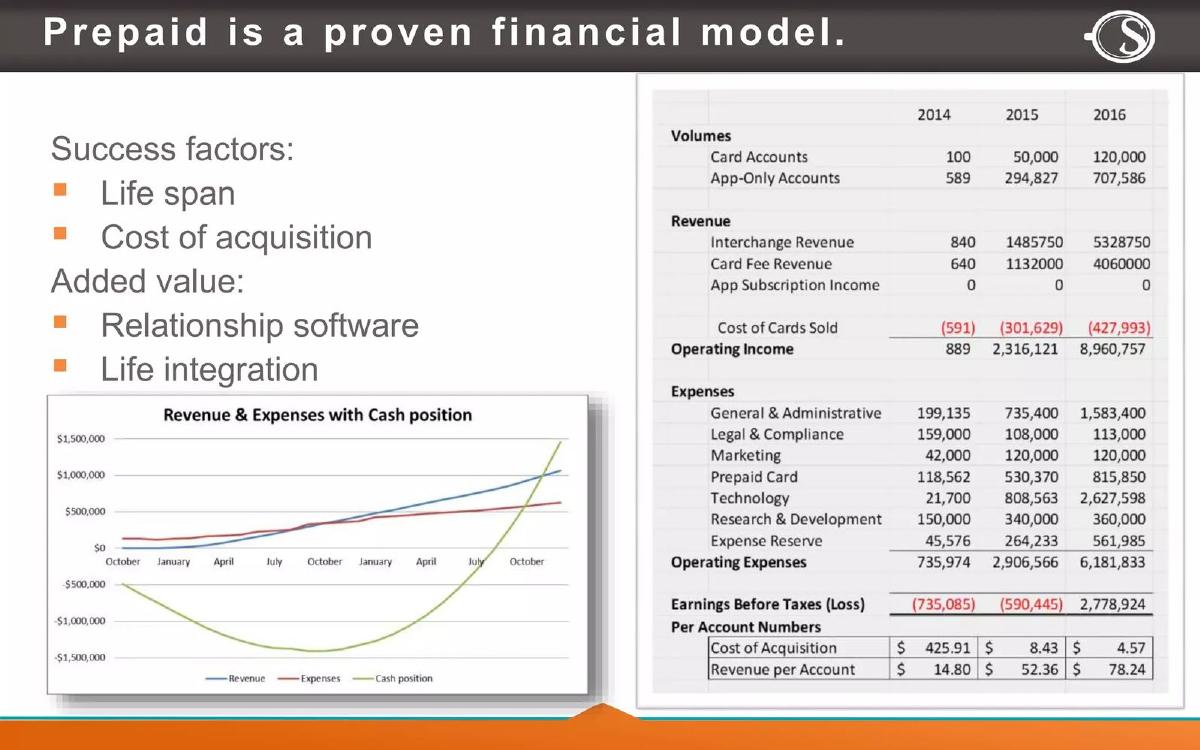
The most glaring omission in these six slides is the business model . While they mention 'no penalty fees,' they do not explain how the company actually makes money. Is it through interchange fees, interest on deposits, or a subscription model? Without this, the 'Investment Opportunity' lacks a clear path to ROI.
Additionally, there is no product roadmap or technical architecture overview. For a company seeking $1.7 million for 'accelerated development,' investors would typically expect to see what has already been built (a prototype or MVP) and what the specific technical hurdles are. The deck also lacks unit economics or projections , making it difficult to assess the scalability of the 'spending account' concept.
Founder Takeaways
Founders should emulate the way A Savvy handles the competitive landscape. Instead of just listing names, they provide specific reasons why those competitors are not meeting the needs of the target demographic. This shows a deep understanding of the market.
However, founders should avoid the 'Fast and Loose Definitions' approach used on Slide 2. While it attempts to simplify the product, it can come across as vague. In fintech, precision is key. Clearly defining the regulatory status of the 'spending account' (e.g., is it a DDA? Is it FDIC insured through a partner bank?) is essential for building credibility with sophisticated investors.
Company: A Savvy · Sector: Fintech / Neobanking · Stage: Early Stage (Seed/Series A) · Year: Not stated (Context suggests circa 2014 based on Simple/BBVA acquisition date) · Slides: 6 of 12 analyzed · Outcome: Not stated · HQ: Likely Colorado, USA (based on marketing focus)
Frequently asked questions
- What is the specific product A Savvy is building?
- According to Slide 2, A Savvy is building a 'spending account.' It is described as a hybrid that functions across depositing, spending, and saving. The slide emphasizes that the account is 'intelligent' and 'interactive,' featuring automatic and recurring saving options that are 'protected.' Crucially, the company differentiates itself by offering a service with 'no penalty fees,' aiming for a broad appeal to 'everyone.'
- How does A Savvy plan to acquire customers?
- The go-to-market strategy detailed on Slide 3 is two-pronged. First, they plan to build a digital community through content on YouTube, Twitter, and WordPress. Second, they utilize a 'take it to the people' approach by targeting college campuses, specifically showing imagery of the University of Colorado system. They also mention a 'try before you buy' model to encourage rapid feedback and habit formation among users.
- Who are the main competitors mentioned in the deck?
- Slide 4 lists three 'Other Players': Simple, Moven, and GoBank. The deck notes that Simple was sold to BBVA for $117 million but targeted an older market. Moven is described as a touchless system for a higher target market requiring credit checks. GoBank is identified as being owned by Green Dot, targeting the unbanked but lacking millennial-focused marketing, which A Savvy intends to exploit.
- What are the terms of the investment being sought?
- On Slide 5, titled 'Investment Opportunity,' the company explicitly asks for $1.7 million. In return, they are offering a 20% ownership stake in the company. This implies a post-money valuation of $8.5 million. Beyond capital, the founders state they are looking for 'top notch advisors' and 'quality board members' to help change the banking industry.
- What is the professional background of the founding team?
- The team, shown on Slide 6, consists of Matt Hubbard (CEO), Tom Bolger (Cofounder), and Bryce Leonard (Customer Advocacy). Hubbard and Bolger each claim 20 years of experience in banking and payments. The slide highlights significant milestones, including Bolger’s involvement in a successful IPO and Leonard’s experience with a successful exit at a previous company.