Envavo’s pitch deck focuses on the HeatBuff, an infrared hand heater targeting the global gaming and professional desk-worker markets. The presentation identifies a specific physiological pain point—cold hands—that affects performance and comfort. With a team featuring professional esports experience and a technical partnership with DaVinci Development, the company outlines a multi-channel sales strategy involving direct-to-consumer sales in Europe and Amazon exclusivity in the United States. The financial projections show a path from a 400,000 DKK loss in 2017 to a 1.29 million DKK profit by…
Key takeaways
- The product, HeatBuff, uses 50-watt short-wave infrared bulbs to heat hands to 33°C from 20 cm away (Slide 4).
- Envavo targets a massive gaming market of 1.2 billion computer players and a medical niche of 525 million people with Raynaud’s syndrome (Slide 3).
- The business model relies on DaVinci Development for R&D and Amazon as the exclusive U.S. retail partner (Slide 5).
- Marketing efforts are heavily focused on the esports ecosystem, including sponsorships of ESL Pro League and Dreamhack (Slide 5).
- The team includes a former professional esports athlete, Mads Sørensen, providing industry-specific domain expertise (Slide 6).
- Financial projections forecast turnover growing from 330,000 DKK in 2017 to 9,340,000 DKK in 2019 (Slide 7).
- The deck omits a specific investment ask, valuation, or use of funds breakdown (Slide 8).
- Production costs are projected to scale significantly, reaching 5,150,000 DKK by 2019 (Slide 7).
Envavo Pitch Deck Analysis
Envavo’s presentation for the HeatBuff is a straightforward hardware pitch that leans heavily on a specific, relatable pain point: cold hands while working or gaming. The deck is concise, spanning 15 slides (8 provided here), and follows a traditional narrative arc from problem to solution, market, and financials. However, as a fundraising tool, it leaves several critical questions unanswered regarding the specific terms of the investment.
Slide 1: Title Slide
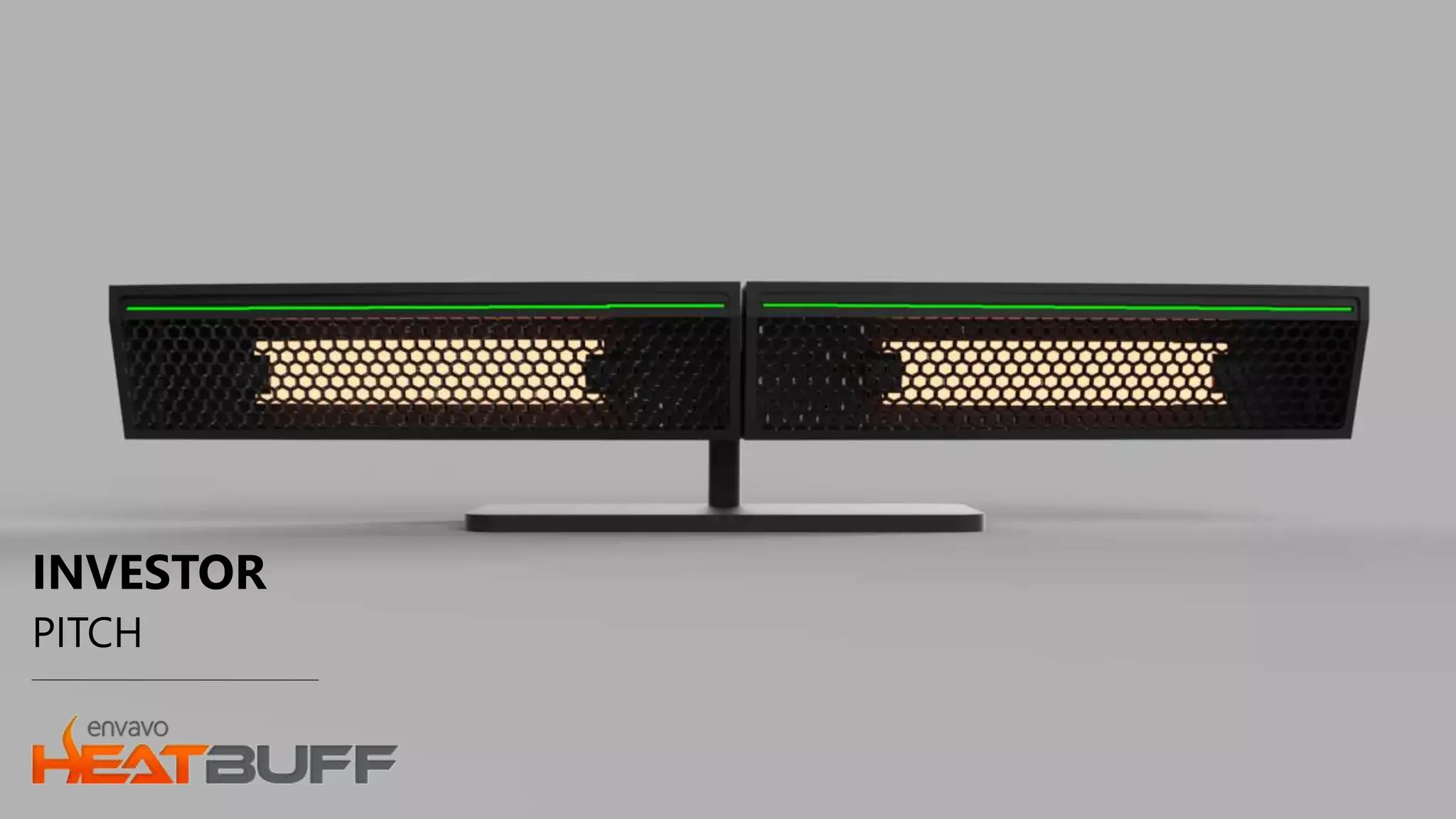
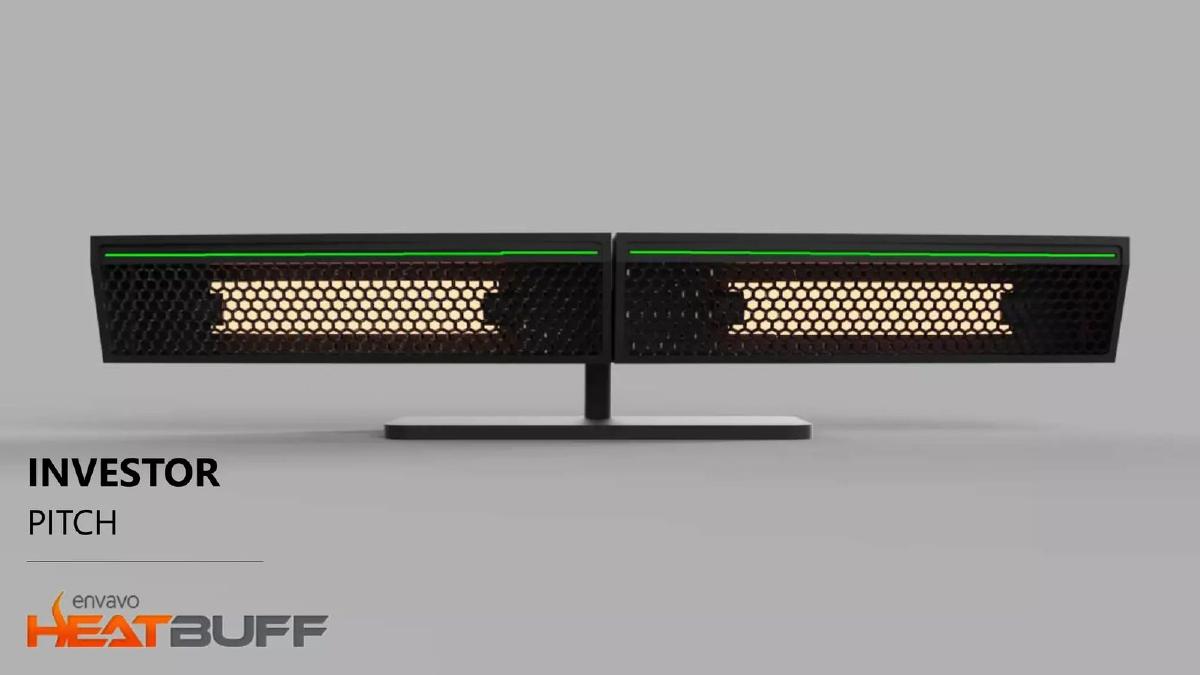
The opening slide features a high-quality product render of the HeatBuff. The design is industrial and aggressive, clearly catering to the 'gamer' aesthetic with a black chassis and a green LED strip. The branding 'Envavo HeatBuff' is prominent, and the slide is explicitly labeled as an 'Investor Pitch.' It sets a professional tone but lacks a tagline or mission statement that defines the company beyond this single product.
Slide 2: The Pain Point
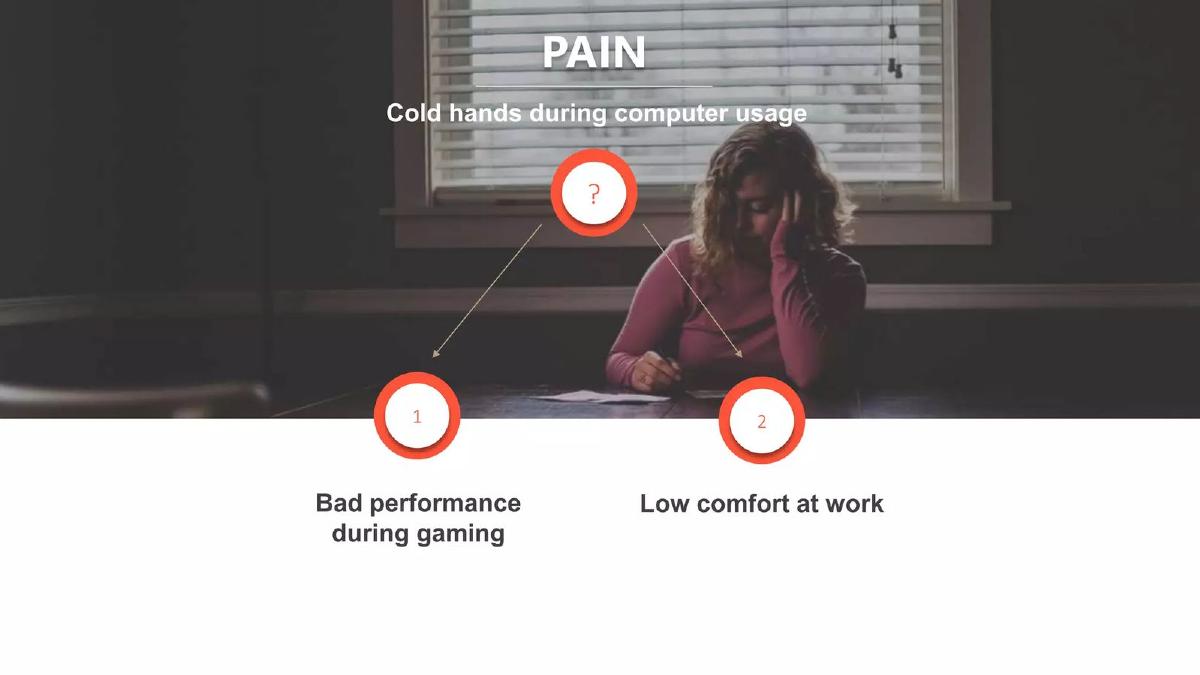
Slide 2 identifies the 'PAIN' as 'Cold hands during computer usage.' It breaks this down into two primary consequences: 'Bad performance during gaming' and 'Low comfort at work.' By using a dark, moody photo of a person at a desk, the deck attempts to evoke the discomfort of a cold environment. This is a classic 'niche' problem—while not universal, it is highly specific to a demographic that spends long hours stationary at a keyboard.
Slide 3: Market Opportunity
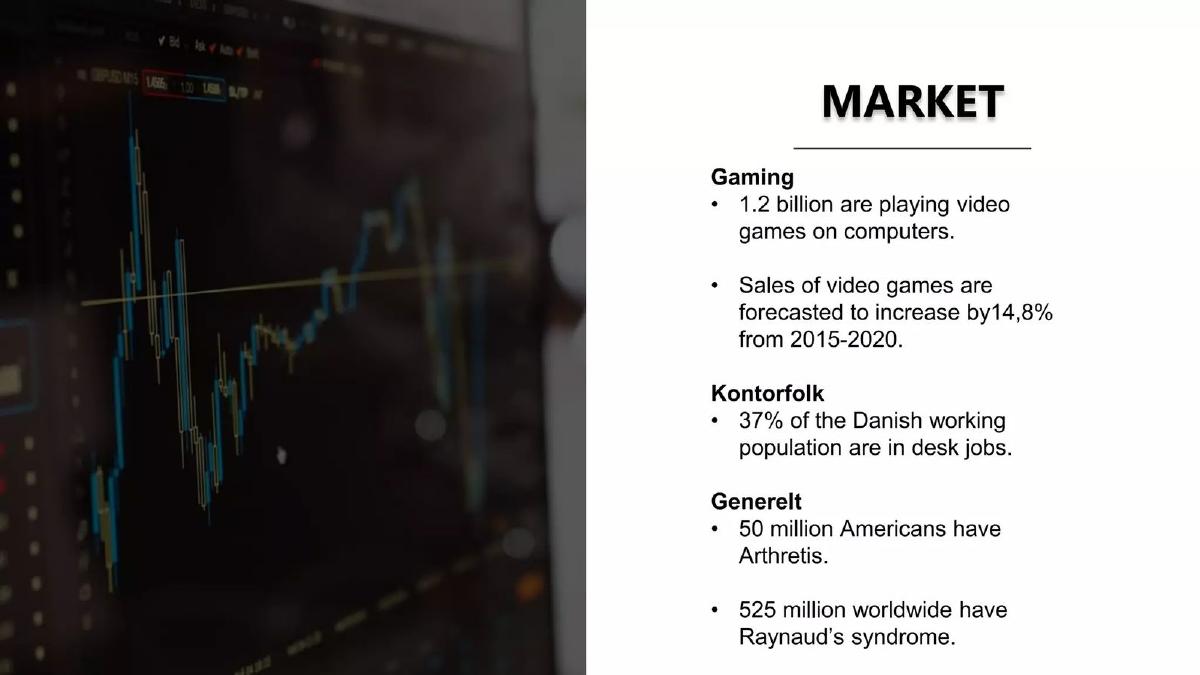
The market slide attempts to quantify the opportunity across three categories: Gaming, Kontorfolk (Office workers), and Generelt (General health). Key figures include:
Gaming: 1.2 billion people playing video games on computers. · Growth: Sales forecasted to increase by 14.8% from 2015-2020. · Office: 37% of the Danish working population are in desk jobs. · Health: 50 million Americans with Arthritis and 525 million worldwide with Raynaud’s syndrome.
The inclusion of medical conditions like Raynaud’s syndrome is a strategic move to expand the Total Addressable Market (TAM) beyond just hobbyist gamers, suggesting a path toward medical or wellness retail.
Slide 4: Product Specifications
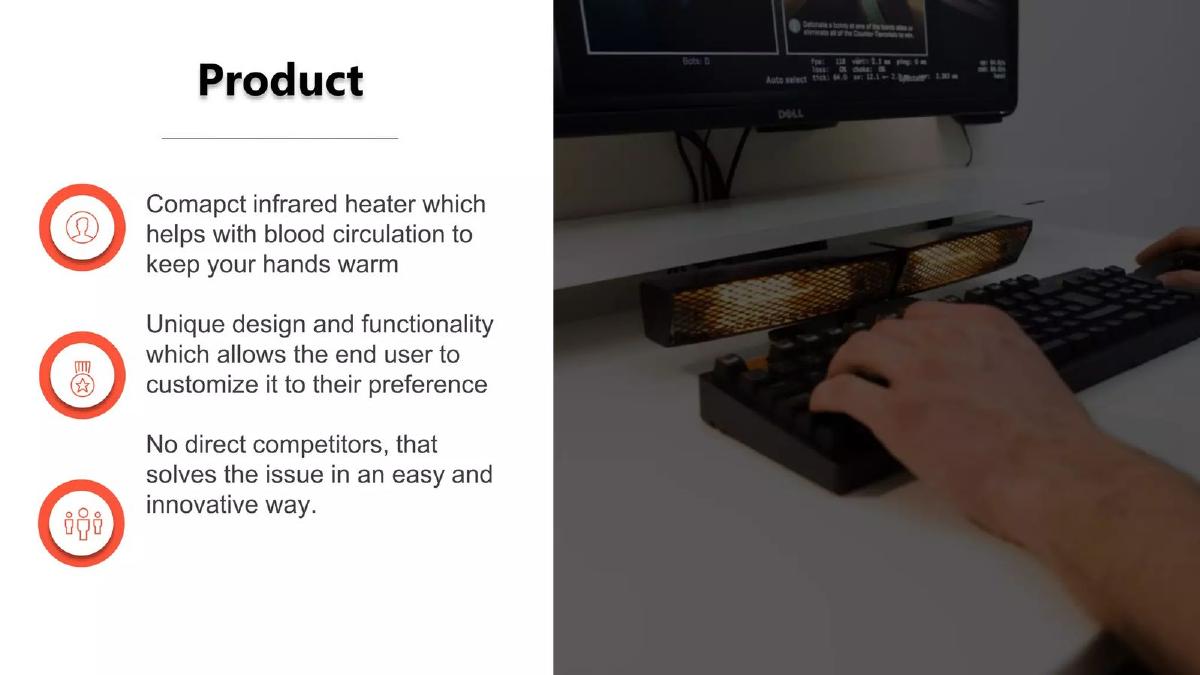
This slide provides the technical 'how-it-works' for the HeatBuff. It highlights:
Technology: Infrared short-waved bulbs at 50 Watts. · Performance: Heats hands to 33°C from up to 20 cm away. · Safety: The slide emphasizes that the product is 'still touchable.' · Adjustability: The right head can rotate up to 90 degrees. · Aesthetics: LED options in Red, Green, or natural light, and a 'weighted foot' for a premium feel.
This slide effectively communicates the value proposition of a specialized heater that won't melt a keyboard or burn the user, which are the primary objections to using a standard space heater for this purpose.
Slide 5: Business Model and Distribution
Envavo divides its business model into three pillars: Development & Production, Sales, and Marketing. Development is handled by DaVinci Development. Sales are split geographically: their own website for Europe and Amazon as the 'exclusive retailer' in the United States. Marketing is highly targeted toward the esports community, mentioning sponsorships of the ESL Pro League and Dreamhack, along with Twitch streamers and Facebook ads. This shows a clear understanding of where their primary customers congregate online.
Slide 6: The Team
The team slide introduces two founders and one corporate partner:
Mads Sørensen: A former professional esports athlete with a network in the industry and experience negotiating with ESL. · Emil Frølund: Responsible for marketing, web development, and PR, with a background in the gaming industry. · DaVinci Development: Positioned as a technical partner rather than just a vendor, described as leading RPD engineers in Denmark.
The team has strong 'founder-market fit' for the gaming sector, though the deck lacks information on their manufacturing or supply chain experience, which is often a red flag for hardware startups.
Slide 7: Budget and Projections
The financial slide provides a three-year outlook in DKK (Danish Krone). The figures show a company in the early stages of scaling:
2017: 330,000 DKK turnover with a total loss of 400,000 DKK. · 2018: 3,130,000 DKK turnover with a profit of 810,000 DKK. · 2019: 9,340,000 DKK turnover with a profit of 1,290,000 DKK.
The budget accounts for 'Molding Tools' (450,000 DKK in 2017), which is a standard upfront cost for hardware. However, the 'Production & Transport' costs jump from 0 in 2017 to 5.15 million in 2019, suggesting a significant volume increase that isn't fully explained by the marketing spend (which only doubles in that same period).
Slide 8: Contact Information
The final slide provides contact details for Mads Sørensen. It includes a phone number (+45 60 67 90 76) and an email address. Notably, this slide—and the deck as a whole—omits a 'The Ask' slide. There is no mention of how much money is being raised, what the valuation is, or what the specific milestones are for the next 12-18 months.
What Envavo Does Well
The deck excels at identifying a 'hidden' problem. While most people don't think of hand temperature as a major gaming barrier, for professional athletes, it is a known issue. By anchoring the pitch in the esports world, Envavo gains immediate credibility. The technical details on slide 4 are also well-handled; they answer the immediate safety and efficacy questions an investor would have about a desk-mounted heater. The partnership with DaVinci Development adds a layer of technical legitimacy that two young founders might otherwise lack.
What is Missing from the Deck
The most glaring omission is the Investment Ask . A pitch deck is a tool to close a deal, and without a stated capital requirement, it functions more like a company overview than a fundraising document. Additionally, there is no Competitive Landscape . While the HeatBuff is unique, it competes with fingerless gloves, standard space heaters, and even chemical hand warmers. Investors need to know why a 50-watt infrared device is the superior choice. Finally, the Unit Economics are missing. We see total turnover, but we don't know the MSRP or the margin per unit, which is the lifeblood of a hardware business.
Founder's Takeaway: What to Copy
Founders should emulate Envavo's Market Segmentation (Slide 3). Instead of just saying 'everyone with a computer,' they broke the market down into specific, reachable groups: gamers, office workers, and medical patients. This allows for a much more targeted marketing and sales strategy. The Product Callouts on Slide 4 are also a best practice; using arrows to point to specific features (like the rotating head or the weighted foot) makes the hardware's value tangible and easy to understand at a glance. Lastly, the Financial Transparency on Slide 7, including specific line items for molding tools and transport, shows a level of operational planning that many early-stage decks lack.
Frequently asked questions
- What is the primary problem Envavo is trying to solve?
- Envavo addresses the issue of cold hands during computer usage, which they claim leads to 'bad performance during gaming' and 'low comfort at work.' This is presented as both a performance issue for competitive gamers and a comfort/health issue for general office workers and those with medical conditions like Raynaud's syndrome.
- How does the HeatBuff product actually work?
- According to slide 4, the device uses infrared short-waved bulbs running at 50 Watts. It is designed to heat the user's hands to a temperature of 33°C from a distance of up to 20 cm. Notably, the slide mentions the product remains 'touchable' despite the heat output, and features a 90-degree rotating head for adjustable positioning.
- What are the key market segments identified in the deck?
- The deck identifies four segments: Gamers (1.2 billion computer players), 'Kontorfolk' or desk workers (37% of the Danish population), Arthritis sufferers (50 million Americans), and individuals with Raynaud’s syndrome (525 million worldwide). This suggests a strategy of moving from a niche gaming accessory into a broader health and wellness product.
- Who is responsible for the technical development of the hardware?
- Envavo does not appear to handle all engineering in-house. Slide 6 identifies 'DaVinci Development' as a key partner, describing them as 'Denmark’s leading RPD engineer developers.' They are listed as being responsible for developing the products, suggesting a heavy reliance on outsourced high-end engineering.
- What is missing from the financial section of the deck?
- While the 'Budget' slide provides turnover and high-level expense categories, it lacks unit economics—such as the COGS per unit or the retail price point. Furthermore, it does not state how much capital the company is currently seeking or how that capital would be allocated to achieve the 2018 and 2019 growth targets.