Open Forest Protocol (OFP) successfully raised $4.1M in a pre-seed round to address the inefficiencies of the voluntary carbon market (VCM). The deck focuses on the accessibility gap, noting that 99% of restoration areas cannot currently access Measurement, Reporting, and Verification (MRV) services. By utilizing a Web3 tech stack, OFP aims to replace the expensive, opaque legacy systems—which typically cost $50,000 and require 1,200 hectares to start—with a free, transparent, and scalable protocol. The deck relies heavily on market growth projections, citing McKinsey data that suggests a 25x…
Key takeaways
- The problem slide (Slide 4) identifies that 99% of restoration areas lack access to MRV, leaving 1.5 billion hectares unable to unlock ecosystem service value.
- Legacy accreditation is highly exclusive, with fewer than 350 reforestation projects currently accredited by Verra and Gold Standard combined (Slide 4).
- Market demand for carbon credits is projected to reach $50 billion by 2030, with 37% attributed to nature-based solutions (Slide 7).
- OFP disrupts the cost barrier by offering verification for 'Free,' compared to legacy costs starting at $50,000 USD (Slide 9).
- The protocol removes size constraints, allowing projects of any scale to participate, whereas legacy systems require a 1,200-hectare minimum (Slide 9).
- Time to value is reduced from a 2-5 year legacy window to exactly 1 year under the OFP model (Slide 9).
- The ecosystem slide (Slide 11) demonstrates significant early traction with 19 forest projects, 38 validators, and 16 contributors including Shima Capital.
- The deck lacks a specific 'Ask' slide detailing how the $4.1M will be spent or what milestones it will achieve.
Executive Summary: The Decentralization of Carbon Markets
Open Forest Protocol (OFP) entered the climate-tech space with a clear mission: to democratize access to the voluntary carbon market (VCM). Their pre-seed deck, which facilitated a $4.1M raise, focuses on the structural failures of the current carbon credit industry. By positioning themselves as a protocol rather than a traditional service provider, OFP argues that the only way to scale reforestation to the levels required by the Paris Agreement is to remove the financial and bureaucratic gatekeepers. The deck is a masterclass in 'Problem/Solution' alignment, though it leaves several questions regarding long-term monetization and operational execution unanswered.
Slide 1-3: The Vision and Belief System
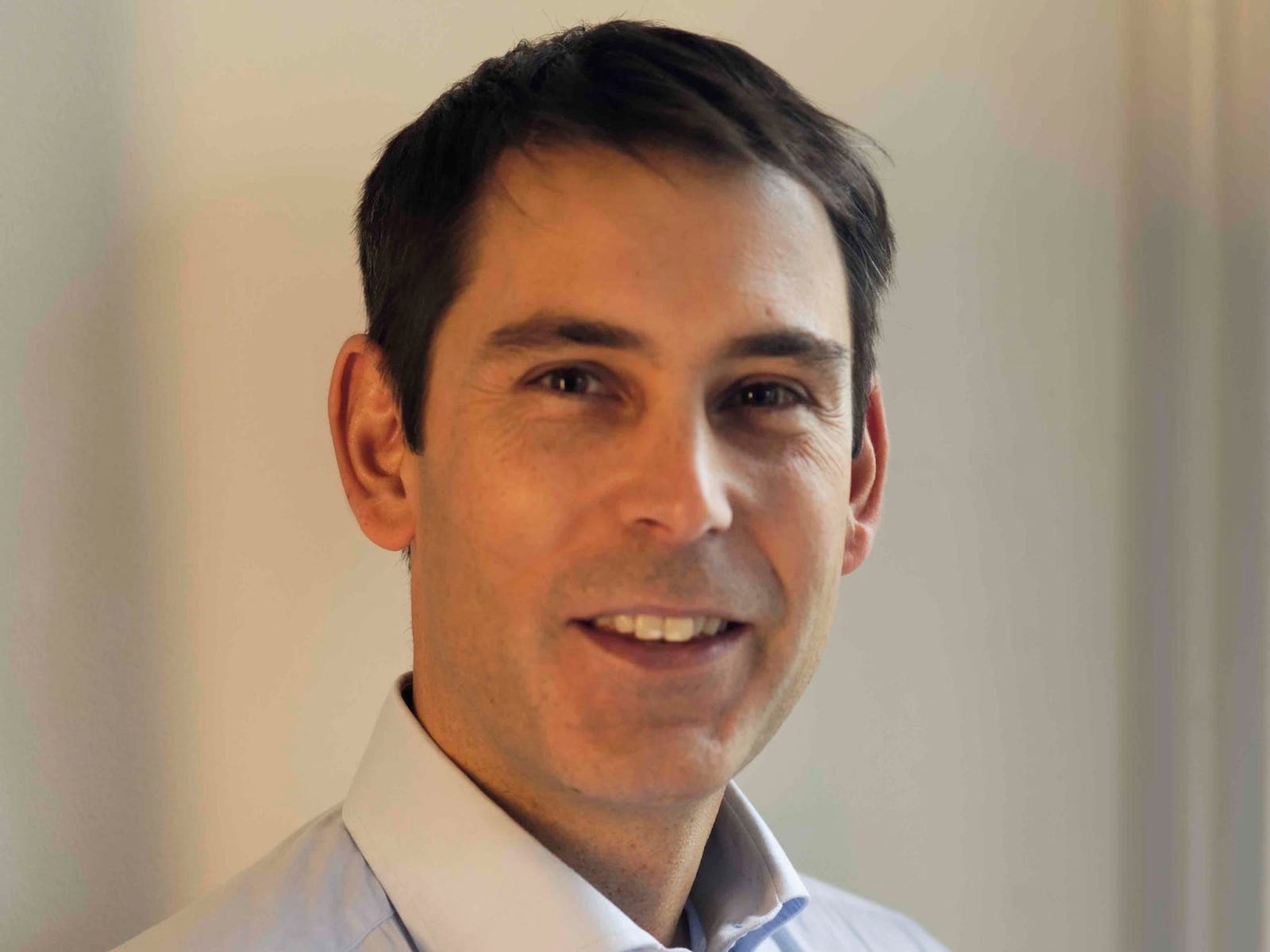
The deck opens with a personal introduction to CEO Frederic Fournier (Slide 1) before moving immediately into a 'We Believe' slide (Slide 3). This is a strategic choice often used by mission-driven startups to filter for investors who share their worldview. The three core beliefs stated are that the VCM should be available to any project, that immutable data is the only basis for a better market, and that Web3 is the only tech stack capable of delivering this at scale. By leading with these principles, OFP sets the stage for a technical solution to a moral and environmental problem.
Slide 4-5: The $50,000 Barrier
Slide 4 and 5 define the 'Problem.' The most striking statistic is that 99% of restoration areas cannot access Measurement, Reporting, and Verification (MRV). The deck quantifies this as 1.5 billion hectares of land that are 'ripe for restoration' but effectively locked out of the financial markets. The slide highlights a bottleneck: fewer than 1,000 total reforestation projects are accredited globally, with less than 350 meeting the high-tier Verra or Gold Standard requirements. This creates a compelling narrative of a massive supply-side constraint caused by an elitist and inefficient system.
Slide 6-7: The $50 Billion Opportunity
To justify a $4.1M pre-seed round, OFP points to massive tailwinds. Slide 7 uses McKinsey and Ecosystem Marketplace data to show that the VCM could grow by a factor of 25 by 2030, reaching a $50 billion market cap. Crucially, they note that 37% of this demand will be for Nature-Based Solutions (NBS). This slide serves to prove that the 'Problem' identified earlier is worth solving because the resulting market will be large enough to support multiple unicorn-scale entities.
Slide 8-10: The Product and The Protocol
Slide 8 and 10 describe the product, though the provided text is high-level. The core of the pitch is found in Slide 9, titled 'Challenging the Status Quo.' This is the most important slide in the deck. It provides a side-by-side comparison of 'Legacy System MRV' versus 'Open Forest Protocol MRV.' The differences are stark:
Verification Cost: $50,000 (Legacy) vs. Free (OFP). · Minimum Size: 1,200 Hectares (Legacy) vs. No Minimum (OFP). · Time to Value: 2-5 Years (Legacy) vs. 1 Year (OFP). · Transparency: Opaque (Legacy) vs. Immutably Trustless (OFP).
This comparison makes the OFP value proposition seem like an inevitability rather than just an alternative.
Slide 11: Ecosystem and Traction
For a pre-seed company, Slide 11 shows an impressive amount of legwork. It lists 19 forest projects already on the protocol, 38 validators, and 16 contributors. The inclusion of logos like Shima Capital, Mercy Corps Ventures, and Not Boring provides significant social proof. Furthermore, mentioning partnerships with the governments of Kenya and the Ivory Coast suggests that OFP is navigating the complex regulatory and sovereign requirements necessary for international carbon credits.
Slide 12-13: Team and Conclusion
Slide 12 introduces the team, and Slide 13 provides contact information for Jeremy Epstein, the Head of Growth. The closing call to action, 'Together, let’s build a global regenerative economy,' reinforces the mission-driven nature of the pitch. The inclusion of a QR code or link to a 'Whitepaper' is a standard Web3 move, acknowledging that the technical complexities of a decentralized protocol cannot be fully captured in a 13-slide pitch deck.
What Works in This Deck
The Contrast Strategy: Slide 9 is the strongest part of the pitch. By listing specific pain points of the legacy system (cost, size, time) and showing how OFP eliminates them, the founders make the solution feel obvious. Investors love '10x better' solutions, and 'Free' vs. '$50,000' is a 10x improvement on cost alone.
Market Timing: The deck leans heavily into the 2030 and 2050 climate targets. By framing the protocol as the only way to meet the projected $50B demand, they create a sense of urgency. They aren't just building a tool; they are building the infrastructure for a mandatory global transition.
Ecosystem Breadth: Many Web3 pitches fail because they lack real-world utility. OFP counters this by showing 19 active forest projects. This proves that land managers are actually willing to use the protocol, which is the hardest part of any two-sided marketplace.
What Is Missing From This Deck
Revenue Model: While the deck mentions that verification is 'Free' for projects, it does not explain how the protocol itself sustains operations or generates returns for investors. In a $4.1M round, investors usually want to see a path to significant revenue, whether through transaction fees, minting fees, or a percentage of the carbon credits generated.
The 'Ask' and Milestones: There is no slide detailing how much money is being raised (we only know the $4.1M figure from external reporting) or how that money will be spent. A standard deck should include a 'Use of Funds' slide that breaks down hiring, R&D, and marketing goals for the next 18 months.
Unit Economics: The deck explains the macro-opportunity well but fails to explain the micro-economics. For example, what is the cost to the protocol to onboard a new project? How many validators are needed to ensure the 'trustless' nature of the data, and what is their incentive to participate?
Founder's Guide: What to Copy
Use a 'Beliefs' Slide: If you are building in a complex or controversial space (like Web3 or Climate), starting with your core assumptions helps align you with the right investors quickly. It builds a narrative foundation before you get into the weeds of the tech.
Quantify the Barrier to Entry: Don't just say the current market is 'hard to enter.' Say it costs '$50,000' and requires '1,200 hectares.' Specific numbers make the problem tangible and the solution measurable.
Show the Ecosystem, Not Just the Product: OFP’s Slide 11 is a great template for any marketplace or protocol. By categorizing partners into 'Projects,' 'Validators,' 'Contributors,' and 'Marketplaces,' they show that they understand the entire value chain, not just their own piece of it.
Frequently asked questions
- How does Open Forest Protocol make money if verification is free?
- The deck states that verification is free for projects (Slide 9), which is a major differentiator from legacy systems. However, the specific revenue model—whether through transaction fees on the carbon credits, tokenomics, or validator fees—is not explicitly detailed in these slides. Typically, protocols like this capture value through the underlying network utility or a small percentage of the credits generated.
- What is the primary technical advantage of using Web3 for reforestation?
- According to Slide 3, OFP believes Web3 provides a 'uniquely qualified tech stack' because it creates transparent, decentralized, and immutable data. This allows for 'trustless' verification by dozens or hundreds of entities (Slide 9) rather than a single opaque legacy auditor, theoretically increasing the integrity and speed of the carbon credits produced.
- What are the barriers to entry for legacy carbon projects?
- Slide 9 outlines several barriers: high upfront costs (starting at $50,000), large minimum land requirements (1,200 hectares), and long wait times (2-5 years to create value). These barriers effectively exclude small-scale landholders and reforestation startups, which is the specific market gap OFP intends to fill.
- Who are the key partners and investors mentioned in the deck?
- Slide 11 lists a broad ecosystem including 16 contributors such as Shima Capital, Not Boring, and Mercy Corps Ventures. It also highlights partnerships with marketplaces like Toucan and Flowcarbon, as well as governmental interest from Kenya and the Ivory Coast, suggesting a multi-layered approach to market adoption.
- Is there a clear roadmap or 'Ask' in the deck?
- No. The provided slides do not include a roadmap or a specific financial ask. While we know from publisher reports that they raised $4.1M, the deck itself focuses more on the philosophical and structural shift of the market rather than the specific operational milestones the company intends to hit in the next 18-24 months.