Papercup’s Series A deck is a masterclass in narrative-driven fundraising for AI startups. Rather than getting bogged down in technical architecture, the deck focuses on the 'content explosion' and the inefficiency of traditional localization. By highlighting that 99% of video libraries are trapped in a single language (Slide 3) and showcasing high-profile use cases like the dubbing of 30 seasons of Bob Ross (Slide 5), Papercup positions itself as a critical infrastructure layer for the creator economy and legacy media. The deck successfully leverages social proof, citing millions of monthly…
Key takeaways
- The deck identifies a massive supply-side problem, stating that 99% of video and audio libraries are currently trapped in a single language (Slide 3).
- It uses recognizable logos like Netflix, Spotify, and YouTube to illustrate the scale of the addressable content market (Slide 3).
- Social proof is a core pillar of the pitch, highlighting that 30 seasons of Bob Ross were translated for platforms like Roku and Tubi (Slide 5).
- The startup provides qualitative validation through a blind survey where 98% of participants rated their AI Spanish voice-over as regular, good, or excellent (Slide 6).
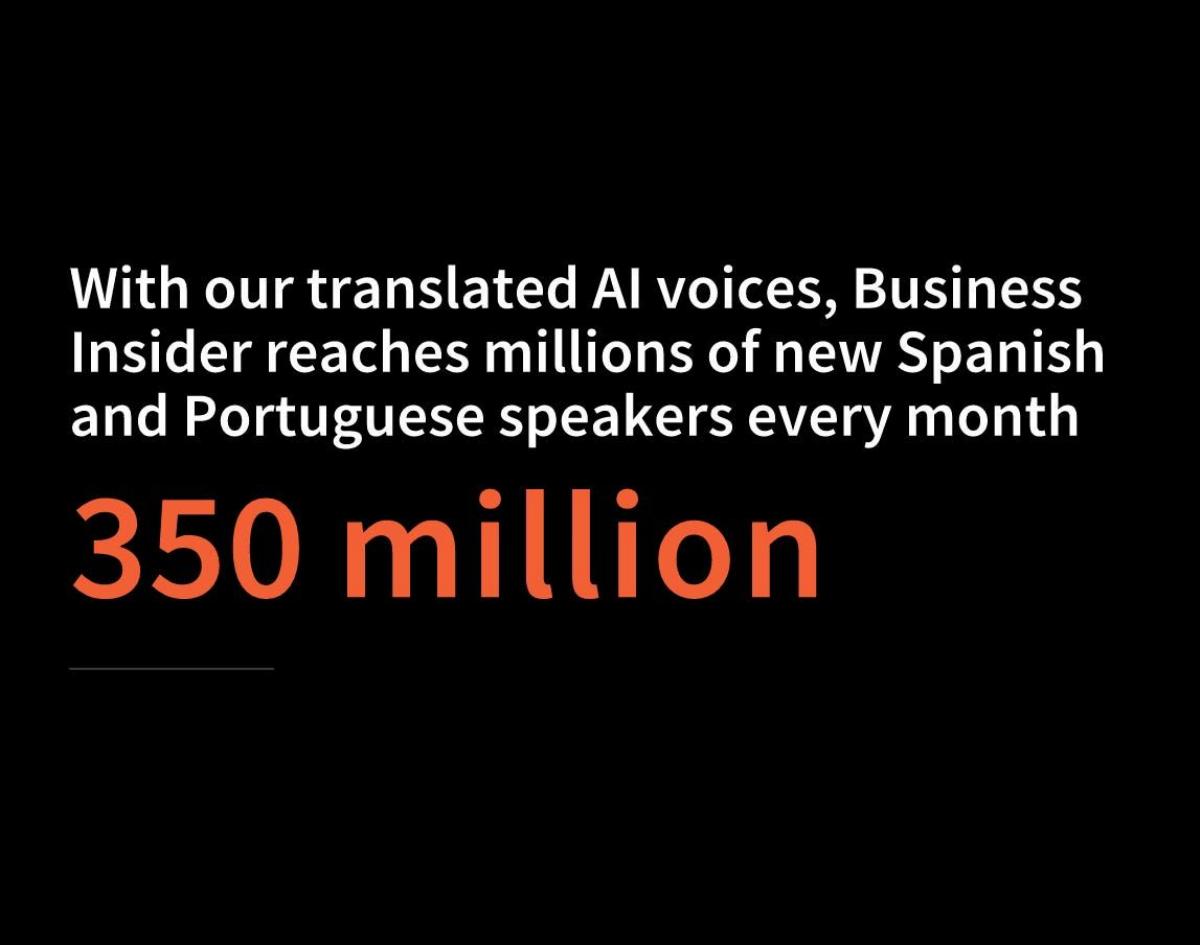
- Quantifiable impact is shown via Business Insider, which reportedly reaches millions of new speakers and 350 million monthly views using Papercup (Slide 7).
- The deck emphasizes 'human-in-the-loop' as a moat, capturing millions of annotations to improve automation over time (Slide 9).
- It omits a traditional team slide, financial ask, and roadmap, focusing instead on market validation and product efficacy.
- The presentation relies heavily on press clippings from The Washington Post, Variety, and Bloomberg to establish industry authority (Slides 2, 8).
The Narrative of Unlocking Trapped Value
Papercup’s pitch deck for their $20M Series A is a lean, 10-slide presentation that prioritizes market opportunity and social proof over technical jargon. In an era where AI startups often over-explain their neural network architectures, Papercup takes a refreshing 'outcomes-first' approach. The deck is designed to convince investors that there is a literal mountain of content that cannot be monetized globally due to language barriers, and that Papercup is the only scalable key to unlocking that revenue.
Slide 1: The Vision
The title slide is minimalist, featuring the Papercup logo and the tagline: "Making content watchable in any language." It immediately establishes the company’s mission in plain English, avoiding buzzwords like 'generative' or 'disruptive.' This clarity is essential for setting the stage for the problem-solution narrative that follows.
Slide 2: Market Desperation
Slide 2 shifts to external validation. Titled "The market is desperate to go global," it uses a collage of headlines from The Washington Post, Variety, and a screenshot of 'MrBeast en Español.' The subtext is clear: even the world’s largest creators and media companies (like Roku launching in Mexico) are struggling with localization. By citing MrBeast, who is famous for his multi-language channel strategy, Papercup aligns itself with the most successful trend in modern digital media.
Slide 3: The 'Trapped' Content Problem
This is the 'Why Now' slide. It claims that "99% of [video and audio libraries] are trapped in a single language." To visualize the scale, Papercup lists staggering statistics from industry giants:
Netflix: 50,000 hours of content · Spotify: 4 million podcasts · YouTube: 500 hours uploaded per minute · Discovery: 100,000 hours of content · TED: 90,000 educational videos · CNN: 4 million video assets
By framing the problem as 'trapped' content, Papercup isn't just selling a tool; they are selling a way to liberate existing assets and turn them into new revenue streams.
Slide 4: The Solution
Slide 4 introduces the product: "Papercup dubs videos with expressive AI voices." The key word here is 'expressive.' The company acknowledges that robotic text-to-speech isn't enough for entertainment; the AI must carry emotion. They claim to have invented a technology that generates quality translated videos at an "unprecedented scale."
Slide 5: The Bob Ross Case Study
To prove the 'scale' claim, Slide 5 highlights a specific project: "Papercup translated 30 seasons of the iconic Bob Ross series into multiple languages." This is a powerful proof point because Bob Ross is a visually driven, personality-heavy brand. If the AI can handle his specific tone and cadence across 30 seasons, it can handle almost anything. The slide notes the content is available on Roku and Tubi, proving the output meets the quality standards of major streaming platforms.
Slide 6: Quality Validation
Anticipating the investor's skepticism regarding AI voice quality, Slide 6 presents data from a blind survey. It states that "98% of Spanish participants... rated the quality of this voice-over as regular, good or excellent." While 'regular' is a broad term, the 98% figure is a strong psychological anchor that suggests the product is 'good enough' for mass-market consumption, which is often the threshold for Series A scalability.
Slide 7: Massive Reach with Business Insider
Slide 7 focuses on the impact for publishers. It features a large "350 million" figure, representing the monthly views Business Insider reaches by using Papercup’s translated AI voices to target Spanish and Portuguese speakers. This slide connects the technology directly to a business outcome: audience growth.
Slide 8: Industry Momentum
Slide 8 continues the social proof offensive with press clippings from Bloomberg and Deadline. It mentions that Bloomberg Media is using the firm for Spanish news videos and that major franchises like 'Got Talent', 'Idols', and 'X Factor' are being dubbed for Arabic YouTube channels. This demonstrates that Papercup is winning contracts with premium, high-stakes media properties.
Slide 9: The Competitive Advantage
Titled "Why Papercup will win," this slide outlines two core pillars:
Expressive AI: Voices specifically suited for video that are "indistinguishable from human speech." · Human-in-the-loop: A translation product that captures millions of annotations.
This second point is the most important for an AI investor. It describes a 'data flywheel' where human editors improve the AI, creating a proprietary dataset that competitors who rely solely on off-the-shelf models cannot easily replicate.
Slide 10: Contact Information
The final slide is a standard contact page with the CEO's email and phone number, alongside the recurring mission statement: "Making the world's videos watchable in any language."
What Papercup Does Exceptionally Well
The strength of this deck lies in its relentless focus on social proof . For a Series A company, investors are looking for 'Product-Market Fit' (PMF). By showing that Bloomberg, Business Insider, and the owners of the Bob Ross library are already paying for and deploying this technology, Papercup bypasses the need to explain their sales strategy. The logos do the talking.
Furthermore, the framing of the problem is excellent. They don't just say 'translation is hard.' They say content is 'trapped.' This implies that there is a massive, pre-existing supply of value that is currently being wasted. Investors love 'unlocking' stories because the supply side of the equation is already solved—you just need the key.
What Is Missing from the Deck
Despite raising $20M, this specific 10-slide version of the deck is missing several components typically found in a Series A pitch:
Team Slide: There is no mention of the founders' backgrounds, their technical expertise in AI/ML, or the size of the engineering team. In a competitive AI landscape, the 'who' is often as important as the 'what.' · Financials and Unit Economics: The deck contains no mention of ARR (Annual Recurring Revenue), growth rates, or the cost per minute of dubbing versus traditional methods. While the publisher reported a $20M raise, the deck doesn't show the underlying business health. · The Ask: There is no slide detailing how much they are raising or how they intend to spend the capital (e.g., expanding to new languages, hiring sales teams, or R&D). · Roadmap: The deck focuses entirely on the present. It doesn't explain where the technology goes next—perhaps real-time dubbing, lip-syncing AI, or expansion into enterprise training videos.
Founder Takeaways: How to Replicate Papercup’s Success
1. Use 'Big Tech' Logos to Contextualize Your Market: Papercup didn't just say the market is big; they showed the logos of Netflix, YouTube, and Spotify (Slide 3). This forces the investor to visualize the scale of the opportunity through the lens of companies they already understand.
2. Quantify Quality: If your product is subjective (like voice quality or design), use blind surveys or third-party testing to turn that subjectivity into a hard metric. The '98% rating' on Slide 6 is a perfect example of turning an opinion into a data point.
3. Highlight the 'Data Moat': If you are an AI company, you must explain why a giant like Google or Amazon won't just build your tool tomorrow. Papercup’s mention of "millions of annotations" from their human-in-the-loop system (Slide 9) provides a clear answer: they have a proprietary data-gathering process that others don't.
4. Lead with Traction: If you have customers like Bloomberg, put them front and center. Papercup dedicated nearly half of their deck (Slides 5, 7, and 8) to showing their product in the wild. For a Series A, traction is the ultimate de-risking mechanism.
Frequently asked questions
- What is Papercup's primary value proposition?
- Papercup provides AI-powered dubbing with expressive voices to help media companies localize video content at scale. According to Slide 4, their technology allows any video to be watched in any language by generating quality translated videos at an 'unprecedented scale' compared to traditional human dubbing.
- How does Papercup prove their AI voice quality is sufficient for professional media?
- On Slide 6, the company cites a blind survey of Spanish speakers where 98% of participants rated the AI voice-over quality as 'regular, good or excellent.' They also showcase real-world deployment of 30 seasons of Bob Ross on major platforms like Roku and Tubi (Slide 5).
- Which major media brands are mentioned as customers or partners?
- The deck explicitly mentions partnerships or use cases involving Business Insider (Slide 7), Bloomberg Media (Slide 8), and the dubbing of major franchises like 'Got Talent', 'Idols', and 'X Factor' for Arabic YouTube channels (Slide 8).
- What is the 'human-in-the-loop' aspect mentioned in the deck?
- Slide 9 explains that Papercup uses a human-in-the-loop translation product. This system captures millions of annotations from human editors, which are then used to train and improve the automation of their expressive AI voices, creating a data moat.
- Is there a specific funding ask or valuation in this deck?
- No. The 10 slides provided do not include a 'The Ask' slide, financial projections, or a cap table. It functions primarily as a high-level narrative deck to establish market fit and traction.